
The only hope is a Reset from below, a horizontal revolution to destroy collapsing Capitalism and States in favour of federations of workers Cooperatives
Posted by xraymike79 on 22nd March 2025 via thefreeonline at https://wp.me/pIJl9-GqM Telegram t.me/thefreeonline/2691

James Hansen’s recent analysis paints a dire picture: 3°C by 2050 is not just plausible but probable due to underestimated feedbacks and political inertia. Crossing 2°C unleashes irreversible feedback loops that render 3°C unavoidable, even with rapid emissions cuts.
The only hope is a Reset from below, a horizontal revolution to destroy collapsing Capitalism and States in favour of federations of workers Coops, to decarbonize, restore albedo, and prepare for a destabilized climate.
Without this, Earth’s systems will push civilization beyond adaptation limits by mid-century.
Under current policies (SSP2-4.5), CO₂ likely reaches 500–550 ppm by 2050, but Hansen’s effective forcing (including feedbacks) pushes Earth’s energy imbalance closer to 600 ppm-equivalent—enough to trigger 3°C warming even before mid-century.
Current Emissions Trajectory
-
- CO₂ Levels (2024): ~425 ppm (pre-industrial: 280 ppm).
- Effective CO₂: ~557 ppm when factoring in albedo loss (+138 ppm equivalence).
- Annual Emissions: ~40 billion tons of CO₂/year, with no decline in fossil fuel use (oil/gas demand still rising).
Feedbacks Locking in 3°C
A. Ice Sheet Melt and Albedo Loss
-
- Greenland/Ice Sheets: Already losing 1.2 trillion tons/year, contributing to sea-level rise and reducing Earth’s reflectivity.
- By 2050: Ice-free Arctic summers darken oceans, adding +0.3–0.5 W/m² of absorbed solar energy (equal to ~50 ppm CO₂).
- Antarctica: Thwaites Glacier collapse accelerates, injecting freshwater into oceans, disrupting the AMOC (Atlantic circulation) by 2040–2050.
B. Permafrost Thaw
-
- Carbon Release: Arctic permafrost holds 1,400 gigatons of CO₂ and methane (twice atmospheric CO₂). At 2°C, thawing emits 50–100 gigatons by 2050, adding ~0.2–0.3°C to warming.
- Methane Bursts: Subsea permafrost in the East Siberian Arctic Shelf leaks methane—a greenhouse gas 84x more potent than CO₂ over 20 years.
C. Cloud Feedbacks
-
- Stratocumulus Clouds: Over tropical oceans, these reflective clouds thin or dissipate at ~1,200 ppm CO₂, adding +0.8°C globally.
- Earlier Impact: Hansen suggests this threshold could be crossed sooner due to combined CO₂ and albedo forcing.

Why 2°C Triggers “No Return”
At 2°C (likely 2030–2035 per Hansen):
-
- Greenland Tipping Point: Melt becomes unstoppable, committing to 7m sea-level rise over centuries.
- Amazon Dieback: 40–60% of rainforest transitions to savannah, releasing 90 billion tons of CO₂.
- Permafrost Carbon Bomb: Thawing becomes self-sustaining, emitting 10+ gigatons CO₂/year by 2050.
These feedbacks add ~0.5–1.0°C to warming by 2050, even if emissions stop.
Likelihood of 3°C by 2050
| Factor | IPCC AR6 (2023) | Hansen et al. (2025) |
|---|---|---|
| Climate Sensitivity | 3°C per CO₂ doubling | 4.8°C per CO₂ doubling |
| Aerosol Cooling Loss | Partially modeled | Underestimated by ~1.0°C |
| 2°C Threshold | ~2040–2050 | 2030–2035 |
| 3°C by 2050 | Low probability | High probability |
Hansen’s Conclusion:
Current policies (SSP2-4.5) lead to 3°C by 2050 due to:
-
- Higher sensitivity (4.8°C vs. 3°C).
- Albedo loss equivalent to +138 ppm CO₂.
- Fast feedbacks (permafrost, ice melt) accelerating warming.
Regional Impacts at 3°C
-
- Heatwaves: 60+ days/year above 40°C (104°F) in Chicago, Paris, and Beijing.
- Food Collapse: 50–70% crop failures in breadbaskets like the U.S. Midwest and India.
- Water Wars: Colorado River and Nile Basin nations clash over dwindling resources.
- Mass Migration: 1–2 billion refugees from tropics and coasts.
Can We Avoid 3°C?
-
- Immediate Action Required:
- Phase out fossil fuels by 2040, not 2050.
- Scale carbon removal to 10+ gigatons/year (current capacity: 0.01 gigatons).
- Solar Geoengineering: Temporarily offset albedo loss via stratospheric aerosols (risky but possibly necessary).
- Current Reality: Policies remain aligned with 2.5–3.5°C by 2100, making 3°C by 2050 likely.
Conclusion
Hansen’s analysis paints a dire picture: 3°C by 2050 is not just plausible but probable due to underestimated feedbacks and political inertia.

Crossing 2°C unleashes irreversible feedback loops that render 3°C unavoidable, even with rapid emissions cuts. The only hope is a wartime-scale mobilization to decarbonize, restore albedo, and prepare for catastrophic climate destabilization.
Without this, Earth’s systems will push civilization beyond adaptation limits by mid-century.
At 3–4°C, Earth becomes a hostile planet where civilization persists only in fragmented, militarized enclaves. The transition would involve unimaginable suffering for billions, with the Global South bearing the brunt. However, humans are resilient—our species would survive, but the social, economic, and technological achievements of the past millennium would unravel.
Coastal megacities like Miami, Shanghai, and Mumbai lie half-submerged, abandoned to rising seas as governments prioritize inland fortress-cities. The tropics, once teeming with life, become uninhabitable dead zones where wet-bulb temperatures exceed 35°C for months on end, rendering outdoor labor fatal and driving billions northward.
In regions like South Asia and the Sahel, collapsed monsoon cycles and dried-up rivers ignite water wars, while failed states fracture into warlord territories battling over dwindling aquifers and arable land.

Agriculture, the bedrock of civilization, buckles under heatwaves and soil depletion. Once-fertile breadbaskets—the U.S. Midwest, India’s Gangetic Plain, China’s North Plain—yield only dust and stunted crops, triggering famines that ripple across supply chains. Global food production plummets by half, leaving 2 billion people chronically malnourished. Oceans, acidified and starved of oxygen, lose their fisheries, collapsing protein sources for 3 billion coastal inhabitants. The global economy, stripped of stability, fractures into hyper-localized survival networks: underground hydroponic farms in abandoned warehouses, black-market water traders, and solar-powered enclaves guarded by drones.
Human society splinters along stark lines of privilege and desperation. Wealthy nations like Canada and Scandinavia fortify their borders with AI-patrolled walls, preserving pockets of climate-controlled normalcy for elites. Meanwhile, equatorial regions descend into chaos, where resource scarcity fuels epidemics, child mortality soars, and ancient cultural traditions vanish.
Mass migrations—1 to 2 billion people fleeing heat, hunger, and conflict—overwhelm borders, sparking xenophobic violence and authoritarian crackdowns. Cities like Chicago and Berlin, struggling under heatwaves and infrastructure decay, ration electricity to a few hours a day, while their wealthy residents retreat into sealed, air-filtered high-rises.
Yet even in this unraveling world, glimmers of adaptation emerge. Polar regions and high-altitude zones—Siberia, Patagonia, the Tibetan Plateau—become lifeboats for humanity. Their cooler climates host starving refugee megacities. Until industrial collapse is completetechnologies like stratospheric aerosol injection and many try chaotically to stem the c9ollapse, only making things worse, contingent on global cooperation that rarely materializes.

Civilization, in any recognizable form, survives only in fractured dystopian remnants. Governance shrinks to city-states and corporate fiefdoms, while democracy vanishes under emergency decrees. Knowledge economies collapse, replaced by subsistence trades and barter systems.
The arts and sciences collapse, their progress halted by the daily scramble for survival. Humanity may survive, but as a desperate diminished species— haunted by the loss of biodiversity, cultural heritage, and the stable climate that once nurtured its rise.
This future is not yet inevitable, but it looms as the trajectory of complacency. Hansen’s work warns that every delay in slashing emissions tightens the grip of feedback loops, sealing a fate where 3–4°C becomes the gateway to a post-civilizational dark age.
The difference between survival and collapse hinges on this decade’s choices: rapid decarbonization, global equity, and a moral awakening to defend the fragile systems that sustain life. As Hansen warns: “Delay is denial.”
Posted by xraymike79 in Climate Change, Collapse of Industrial Civilization, Ecological Overshoot, Environmental Degradation
Related
Analysis: How Soon Will Large Scale Collapse HappenMarch 20, 2025In “Climate Change”
The Exact Timing of Near-Term Human Extinction Is AcademicMay 29, 2014In “Climate Change”
More Evidence of Overly Conservative IPCC Estimates Hiding the Coming CatastropheNovember 10, 2012In “Capitalism”

TAGS 6th Mass Extinction, Albedo Loss, Amazon Die-Off, Antarctic Ice Melt, Anthropogenic Climate Disruption (ACD), Climate Change, Coral Die-Off, Dystopic Future, Insurance Industry Collapse, James Hansen, Megadrought, MegaFires, Sea Level Rise

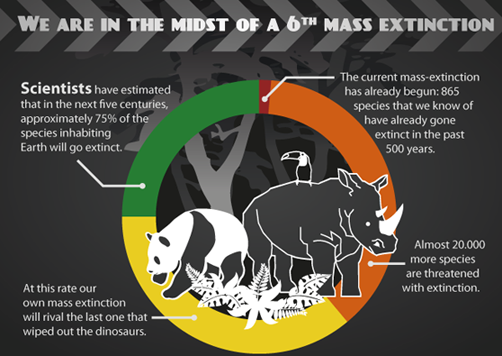

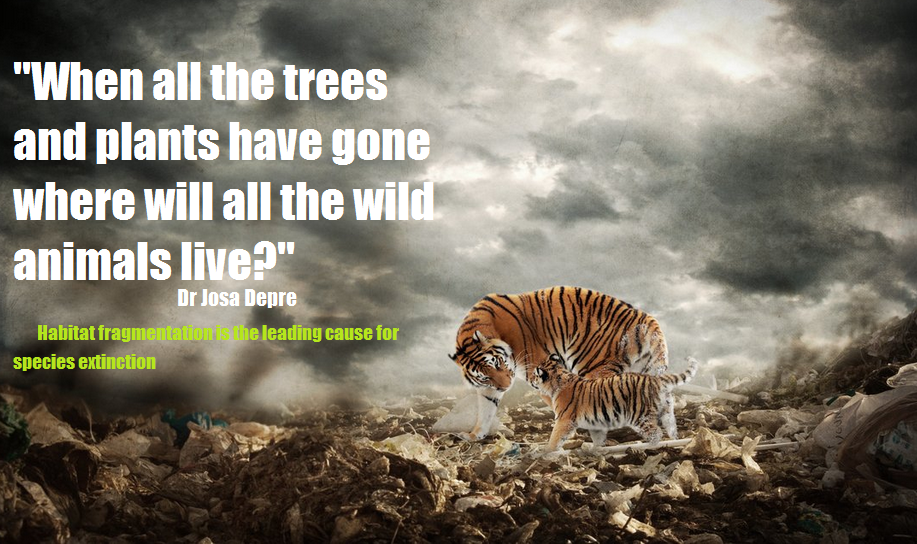
 From the threatened extinction of nearly a quarter of the world’s plants, to the Facebook discovery of an unknown giant carnivorous specimen, the first-ever evaluation of the world’s flora is complete.







 The Free