
it is a source of livelihood for many
As vociferously anti-colonial as Indonesia has been, it is nothing but colonial in its attitude toward Papua. Institutional racism, mistreatment of ethnic and religious minorities, media blackouts, internet shutdowns and policies that have long neglected the needs and interest of the local community have fueled a long-running insurgency that Jakarta has been unable to quell.
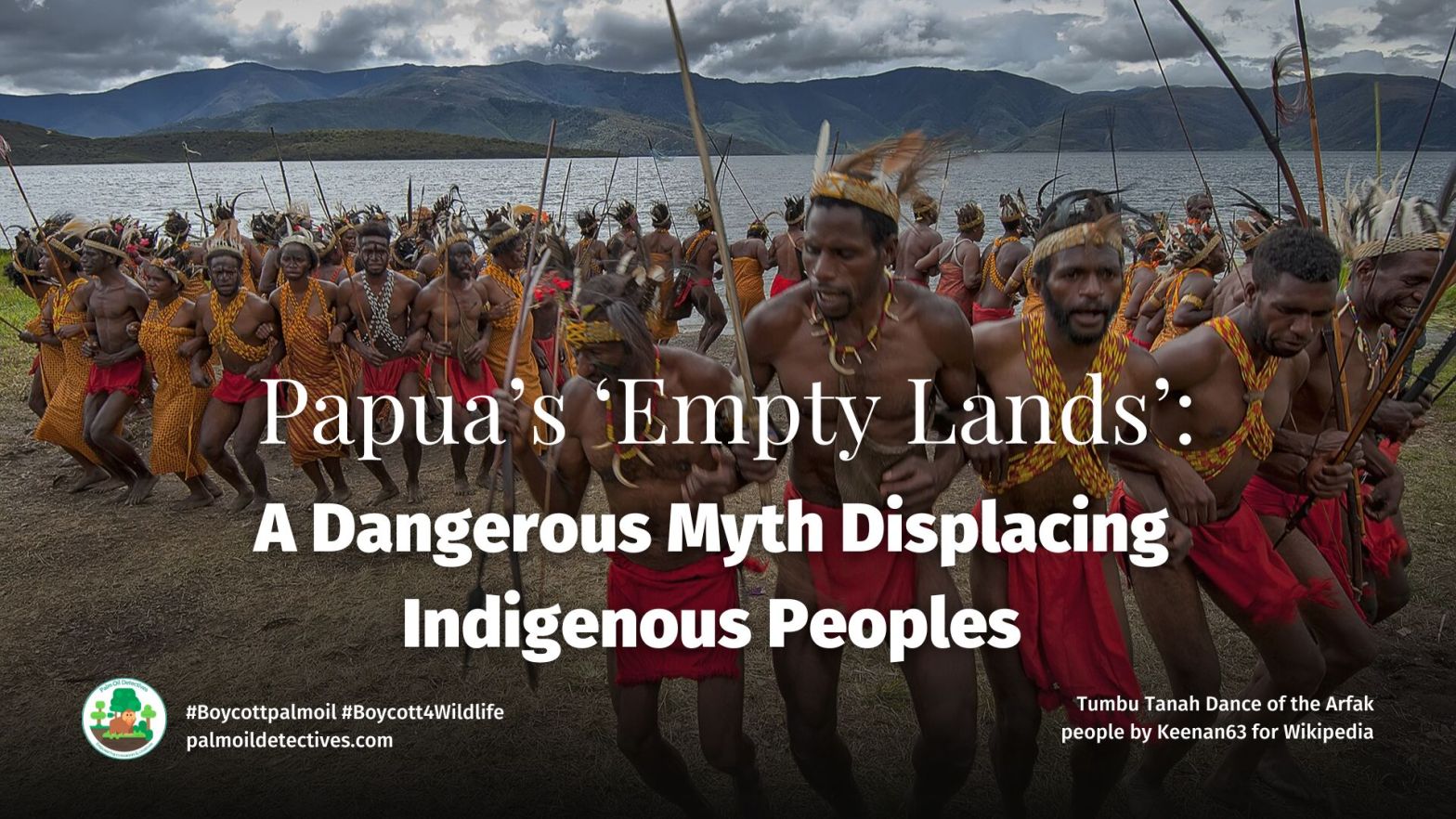
In #WestPapua, on illegally colonised and disputed land taken by violence from Melanesian Indigenous peoples last century by Indonesian forces, authorities label indigenous lands as “empty”. This is done in order to justify large-scale agricultural projects, displacing tribes like the #Malind and Khimaima peoples. These lands are vital sources of food and medicine, supporting traditional ways of life for several millennia. Communities and indigenous rights advocates call for halting exploitative #palmoil and #mining projects and honouring #LandRights #HumanRights #IndigenousRights #BoycottPalmOil
#News: In #WestPapua, “empty lands” are NOT empty—they sustain countless #indigenous #Malind and #Khimaima people for millennia. Large-scale #palmoil projects destroy livelihoods. Support #HumanRights #IndigenousRights and #BoycottPalmOil https://wp.me/pcFhgU-a5N
Jakarta Post| 9 January 2025
by Franky Samperante
Representatives of Indigenous People from Merauke protested against the massive food estate project that affecting their territory in Jakarta, December 2024. Photo: Pusaka
The narrative of “empty land/unproductive forest” or “no forest/no trees” is often used by authorities to negate and delegitimize the existence of indigenous communities and the surrounding natural environment. Most recently, it was used by Hashim Djojohadikusumo, President Prabowo Subianto ’s younger brother, when addressing executives of the Indonesian Chamber of Commerce and Industry (Kadin) in December.
This narrative is painful for the people of Merauke in Papua, a site of the government’s food estate project. It reflects an attempt to roll out the red carpet for private corporations to develop monoculture plantations and massive food and energy industrial complexes, often obliterating the interests of indigenous peoples and local residents in the process with the state’s backing.

Planned deforestation threatens Indigenous land, intact forest landscapes in West Papua… 05 June 2024 Benar News New report Licence to Clear – Greenpeace International shows systematic violations of permitting regulations as plantations were pushed into forest areas. Since 2000, forest estate land released for plantations in Papua Province has totalled almost a million hectares.
The status of national strategic project (PSN) was given unilaterally to these developments by former president Joko “Jokowi” Widodo in 2024. Yet, the idea of monetizing parts of Papua was first proposed in 2010, when president Susilo Bambang Yudhoyono established the Merauke Integrated Food and Energy Estate, which later failed.
Living with the local people engenders empathy for their daily fear of state authority creating a situation in which they do not belong, yet are too afraid to be involved. It is a process of ecological expropriation and extirpation of the lives of both indigenous and local communities in and around forest areas. The end results are the expansion of extractive industries, the seizing of power and control over resources that reap profits for a handful of people and do nothing for the interests of farmers or indigenous Papuans.
Expropriation is an action by government to take over the assets of individuals or organizations, in part or in whole, with or without compensation. Extirpation, on the other hand, is a unilateral act to eliminate or destroy something completely.
Press release: Stop food estate plans in Papua 18 November 2024Benar News….. Ten civil society organizations (CSOs) members of Civil Society Coalition Against Food Estate in Papua strongly reject President Jokowi’s plan to develop a food estate with an area of 2,052,551 ha.
At the time of writing, the land of Merauke’s villagers has been pegged as a new colony. Thousands of hectares of land, both forests and lowland swamps are being destroyed and drained, and then replaced with new industrial commodities.
Indonesians have experienced many failures in implementing the idea of so-called food estates since the Soeharto era, but the Prabowo administration does not seem to have learned anything. What past attempts have left behind are abandoned land and forests controlled by corporations, as well as complex and unresolved land and social conflicts.
One can pose many questions about the real motives when the food estate narrative can no longer mask the ugly reality. Where do the logs harvested from forests go? Who oversees their transport? What is the status of land rights? How was the land seized? What is the purpose of having a bold military presence in Merauke, where local Papuan resistance has diminished over the past two decades at least?
We need to consider the following facts.
The land in Merauke regency for the food estate project spanning more than 2 million ha that Hashim referred to is not empty land. It is customary land that belongs to the Malind, Maklew, Yei and Khimaima indigenous tribes, which have neither been recognized nor received their tenure rights from the state. More than 40,000 indigenous people, or around 80 percent of Merauke’s indigenous population, will be affected by the food estate project.
These tribes rely on the forest as their main source of livelihood. They go into the forest every day to harvest sago as their main food staple, hunt animals and harvest vegetables, even to look for medicinal plants. Now they are not free to enter and leave the forest due to hunting prohibition markers and security patrols.
The involvement of indigenous peoples in the project is minimal, represented only by a few formal institutions and certain individuals. Local administrations, at both the provincial and district/city levels, cooperate in implementing the project that was decided by the national government and ignores the rights of indigenous peoples. Local opposition to the project continues through demonstrations in Merauke and Jakarta.

Revealed: Government officials say permits for mega-plantation in Papua were falsified… Indonesian government have alleged that permits underpinning a multi-billion dollar plantation project in Papua were falsified. The land is being opened up by investors whose identity is hidden behind anonymously owned companies, as part of a plan to develop an oil palm plantation almost twice the size of London in the remote region. …29/10/2020
The Pusaka Bentala Rakyat foundation reviewed the development of the Merauke food estate and observed that the establishment of rice fields, sugarcane plantations and bioethanol production facilities converts and uses large forest areas by ignoring provisions on environmental and technical requirements, including strategic environmental studies.
A study by the Center of Economic and Law Studies (CELIOS) found that Indonesia could potentially double its emissions by simply running the mega food estate project in Merauke, undermining the country’s aim to achieve net-zero emissions. Meanwhile, Forest Watch Indonesia (FWI) revealed that in the past year, forest damage in South Papua increased more than twofold to 190,000 ha, or almost three times the size of Jakarta.
Regardless of the local people’s opposition, the project continues to move forward. The deployment of five battalions comprising 3,455 military personnel in South Papua is an indication of how much the government wants the project to go ahead. The involvement of the Indonesian Military (TNI) has the potential to threaten and eliminate the right to life of the Papuan people and worsen human rights violations, violence and arbitrariness, violating the Constitution, laws and regulations.
Merauke is part of the Trans-Fly Savanna and Grasslands ecoregion, an area rich in endemic freshwater biota that is located on the south coast of the island of New Guinea. It is the largest seasonal wetland area on New Guinea. South Papua has various ecosystems, including seasonal forests, swamplands and marine conservation areas. the World Wide Fund For Nature (WWF) describes this landscape as “the natural gem of Asia-Pacific”.

Indonesia’s massive sugar-bioethanol project in South Papua causes locals to fear exploitation Indonesia is going ahead with a project to convert millions of acres in Papua into a gigantic sugarcane plantation to produce bioethanol. But Indigenous communities and environmentalists worry that the project in South Papua’s Merauke regency will lead to land grabs, ecological damage, and the destruction of traditional livelihoods.
Swamps and savannas dominate most of the plains of Merauke, which has a type of soil deemed less fertile for growing food crops.
Musamus University has studied the suitability of the land in Merauke for rice or agroclimate and found that no area fulfills the high suitability criteria. However, more than 50 percent of the region, primarily the western and southern parts of Merauke regency, meets the medium suitability criteria. This means that the region’s capacity for intensive food crop production is still in question.
The writer is the executive director of the Pusaka Bentala Rakyat foundation, an NGO focusing on environmental justice and indigenous people’s rights.
********************
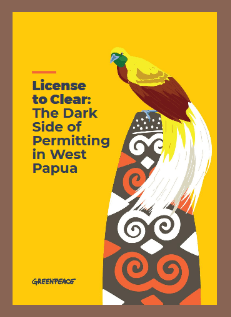
READ HERE (free) on ISSUU 196 page report https://www.greenpeace.org/aotearoa/publication/licence-to-clear/





 The Free