Bullfights used to impose Patriarchy and Nationalism

1313926259_extras_albumes_0

Don’t expect to see a bullfight when you trip to Barcelona, the last stadium is closed and the ”sport” banned. In fact for years it was mainly kept going by the tourist industry.

The popular bumper sticker in Madrid is the bull, representing, for the Catalans,  cruel bullying disguised as ‘heroic’ sexist posturing.

Barcelona  cars on the other hand feature the Catalan donkey, symbolizing just a nice but stubborn animal, and maybe the ability to laugh at themselves.

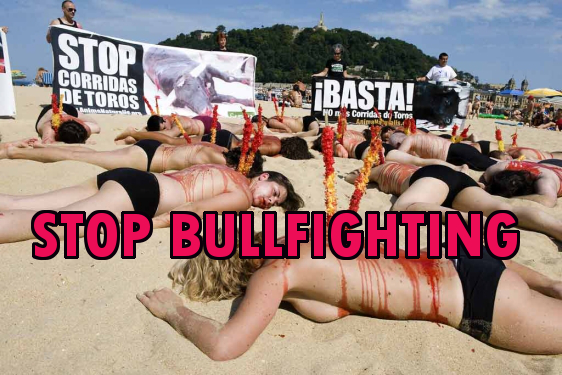
In San Sebastian of the Kings, (real name Donostia in Basque) the battle against bullfighting is in full swing.  Last week there was a new demo against, which was attacked by pro-bullfight thugs, sending one girl to hospital. (see report below) Continue reading “Bullfights used to impose Patriarchy and Nationalism”
Catalonia bans public torturing of bulls

Bullfighting fans in Catalonia are set to see the last fights before a ban on the age-old tradition comes into effect in Spain’s north-eastern region.

About 20,000 spectators are expected to fill Barcelona’s Monumental arena, where top matadors will be performing.

Lawmakers voted for the ban last year – the first in mainland Spain – after 180,000 people signed a petition.

They say the bullfighting is barbaric, but opponents say they will challenge the ban in Spain’s top court.

Cruel killing for entertainment continues however in some local Festivals.

The ban takes effect on 1 January, but Sunday’s fights in Catalonia will be the last events of the 2011 season

She adds that there is also a growing awareness of animal rights and, crucially, the desire of Catalan nationalists to distinguish the region from the rest of Spain and its traditions.

Bullfighting is permitted in all other regions of Spain except in the Canary Islands.

Campaigners hope to extend the ban across the country, but they face a far tougher task in traditional bullfighting heartlands like Andalucia and Madrid, our correspondent says.

Read More    http://www.bbc.co.uk/news/world-europe-15050706