Norway hits the brakes on mining the Arctic Ocean — for now

by Gautama Mehta from Grist home on 18th Decmber 2024 via thefreeonline at https://wp.me/pIJl9-Fcy Telegram t.me/thefreeonline

    Activists from Greenpeace stand next to a ship called the Arctic Sunrise. In the foreground, an activist stands with her back to us, and her shirt reads Stop Deep Sea Mining.
    Ulrich Perrey/DPA

    Over the last decade and a half, deep-sea mining has captured worldwide attention as a potential source for the minerals like manganese, nickel, and cobalt that are needed to make electric vehicle batteries and other technology in support of the global energy transition. 

    While the most coveted seabed area for potential mining — the vast and relatively flat Clarion-Clipperton Zone in the Pacific Ocean — is under international jurisdiction, parts of the world’s oceans controlled by individual nations have also attracted interest.

    https://www.altaposten.no/nyheter/i/rl2nXR/fosen-demonstrasjon-i-oslo-sentrum-i-gang-sperrer-av-kryss-i-karl-johans-gatei

    Some countries, like Papua New Guinea, have taken the step of issuing exploration contracts. France, by contrast, passed an outright ban on mining in its waters. (In Papua New Guinea, reports recently emerged of illegal mining in its waters.) Other countries are still debating what to do.

        Since 2017, Norway has been considering the possibility of mining in the part of the Arctic Ocean set aside as its exclusive economic zone — specifically in an area comprising over 100,000 square miles, about the size of Italy.

        The resources of interest there include two coveted deposits: polymetallic sulfides, which are ores that form around hydrothermal vents, and cobalt-rich ferromanganese crusts, or accretions of metal along the sides of underwater mountains.

        https://www.forskningsradet.no/portefoljer/hav/havforskningstiaret/prosjekteksempler/kan-dyphavsgruvedrift-forega-barekraftig/

        Earlier this year, in January, a proposal to allow companies to survey Norway’s waters and assess its resource potential sailed through parliament with an 80-20 vote. Until that point, seabed mining had not been a widely publicized issue in Norway, but the vote prompted a groundswell of civil society opposition. 

        “To large parts of Norwegian society, this came as a surprise when the Norwegian government suddenly announced that they were going for deep sea mining, and it sparked a lot of outrage,” said Haldis Tjeldflaat Helle, a deep sea mining campaigner at Greenpeace Nordic.

        Environmental organizations found themselves in an unusual alliance with the country’s fishing industry, which organized against the mining plan because of the threat it posed to fish stocks (seafood is Norway’s largest export after oil and gas).


        Continue reading “Norway hits the brakes on mining the Arctic Ocean — for now”

        Economic and Social Strategies for Adapting to Worst-Case Climate Change

        A world with temperatures 3 to 5°C higher than pre-industrial levels would be vastly different from the one we inhabit today.

        On 22nd October 2024 by Garry Rogers at garryrogers.com via https://wp.me/pIJl9-EyC at https://wp.me/pIJl9-EyC Telegram t.me/thefreeonline

        The World Bank[i] cautions that many regions would be unable to adapt to such a temperature increase. Ecosystems would collapse, crops would fail, extreme weather events would become more frequent and severe, and rising sea levels would reshape coastlines and inundate major cities. The social and economic foundations of global civilization would be strained to their limits.

        This article outlines four key strategies that towns and farms can implement to prepare for and adapt to a changed world. While these strategies alone cannot fully prepare us for the scale of the impending disruption, they represent essential steps towards building resilience and maintaining some semblance of societal stability.

        Universal Basic Income (UBI) and Job Guarantee Programs

        As climate change disrupts traditional economic sectors and displaces workers, we need new systems to ensure basic economic security. At the local level, communities can experiment with and advocate for these programs.

        Universal Basic Income (UBI) could provide a crucial safety net as people transition between precarious forms of employment[ii]. For communities, this might involve piloting a small-scale UBI program, starting with the most vulnerable community members, partnering with nearby communities to create a regional UBI pilot, or advocating at the state and federal level for UBI policies.

        Alternatively, a job guarantee program focused on climate adaptation and mitigation work could both provide employment and address crucial climate-related needs[iii]. This could involve creating local government jobs focused on climate resilience projects or establishing a community corps that provides training and employment in climate-adaptive skills.

        Coastal Adaptation for Worst-Case Climate Change September 16, 2024 In “Adaptation for Climate Change”

        These programs will be essential not just for individual wellbeing, but for maintaining social stability in the face of severe economic disruption. Without them, there is a risk of widespread poverty, social unrest, and the collapse of local economies.

        Agriculture and Food Security Adaptations to Worst-Case Climate Change September 23, 2024 In “Adaptation for Climate Change”

        Continue reading “Economic and Social Strategies for Adapting to Worst-Case Climate Change”

        Cop 16: Las Ecologistas Reclaman realizar el Plan Estratégico y frenar la Pérdida Catastrófica de biodiversidad

        El 21 de octubre comienza en Cali, Colombia, la Cumbre Mundial de la Biodiversidad, COP16, que está previsto finalice el 1 de noviembre. Es la primera COP que se celebra tras la aprobación del Marco Mundial de Biodiversidad de Kunming-Montreal..

        por EcologistasEnAccion el 22 de Octubre de 2024 via thefreeonlinehttps://wp.me/pIJl9-EwR Telegram t.me/thefreeonline

        la Cumbre de Biodiversidad (COP16)

        Las organizaciones ecologistas reclaman una mejora del Plan Estratégico de Patrimonio Natural para asegurar el cumplimiento del Marco Mundial y frenar la pérdida de biodiversidad de aquí a 2030

        Del 21 de octubre al 1 de noviembre se celebra en Cali, Colombia, la Conferencia de las Partes del Convenio sobre la Diversidad Biológica (COP16), donde se revisará la implementación y seguimiento de lo que se acordó en el Marco Mundial de Biodiversidad Kunming-Montreal aprobado en Canadá, en el 2022

        [COP15 Biodiversidad] Oportunidad perdida para lograr un acuerdo global que ponga fin a la pérdida de biodiversidad

        Ecologistas en Acción en la COP16 de Biodiversidad

        La COP16 debe lograr que los diferentes países empiecen a aplicar los objetivos y las metas del Marco Mundial de Biodiversidad de Kunming-Montreal, que se cuente con la necesaria financiación y nuevos mecanismos que logren la integración de la biodiversidad en las políticas sectoriales,

        ¿Qué es la COP?.. ¿Qué es el Marco Mundial de Biodiversidad de Kunming-Montreal?

        Apertura oficial de la Cumbre de Biodiversidad (COP16)

        Oct 20, 2024

        Aunque la Cumbre de Biodiversidad (COP16) se inicia el lunes 21 de octubre, hoy Cali vivió su inauguración oficial en el Centro de Eventos Valle del Pacífico, en la llamada Zona Azul, con delegaciones de más de 190 países. Y un importante número de representantes de comunidades locales, académicos, jóvenes, y organizaciones como Ecologistas en Acción…..

        [COP15 Biodiversidad] Oportunidad perdida para lograr un acuerdo global que ponga fin a la pérdida de biodiversidad

        Dic 19, 2022 Castellano | Catal

        Finaliza la COP15 de Montreal con la aprobación del acuerdo Kunming-Montreal, importante pero insuficiente, ya que no logra los avances necesarios para lograr detener la pérdida de biodiversidad para 2030……

        La COP16 debe establecer mecanismos eficaces y financiación para asegurar el cumplimiento del Marco Mundial de Biodiversidad

        La COP16 debe establecer mecanismos eficaces y financiación para asegurar el cumplimiento del Marco Mundial de Biodiversidad

        Oct 18, 2024 Castellano | Català

        El 21 de octubre comienza en Cali, Colombia, la Cumbre Mundial de la Biodiversidad, COP16, que está previsto finalice el 1 de noviembre….

        Coral Reef Destruction’s threat to Human Rights adds pressure to control Acidification & Overfishing

        from the Scientific Inquirer via thefreeonlinehttps://wp.me/pIJl9-EhQ t’gram t.me/thefreeonline

        Coral reef destruction a threat to human rights

        FIGURE 1

        Open in Report

        Human rights-based framework for coral reef conservation. The five key principles are legality, accountability, non-discrimination and equality, empowerment, and participation. A summary of each principle within the framing of reef conservation is provided.

        Linking the protection of coral reef ecosystems to human rights highlights how crucial healthy ecosystems are for human well-being and underscores the inherent connection between human and nonhuman life.

        Great Barrier Reef before and after: Shocking pictures

        A human rights-based approach to coral reef protection could ensure governments are held to account for safeguarding marine ecosystems and empower local and Indigenous communities to demand sustainable solutions and climate justice, a new study suggests.

        Continue reading “Coral Reef Destruction’s threat to Human Rights adds pressure to control Acidification & Overfishing”

        Calls to Halt Construction of Massive Oilfield in One of Africa’s Last Wildernesses /+ video

           from Human Wrongs Watch and (IPS) By Ed Holt* Jul 8 2021

        Wildlife and environmental campaigners have called for international action as concerns grow over a project to create a massive oilfield in one of Africa’s last wildernesses.

        A large part of the oil exploration areas in both Botswana and Namibia falls within the Okavango River Basin which flows into the Okavango Delta, a UNESCO World Heritage Site. Fracking is banned in some countries and has been blamed for serious water pollution, among others, and threats to the regional water supply are among environmentalists’ biggest concerns.Credit: Servaas van den Bosch/IPS

        Okavango Delta under threat from oil, gas exploration ...

        ReconAfrica, a Canadian oil and gas company, has licensed drilling areas in over 34,000sq km of land in parts of northern Namibia and Botswana that overlap with Africa’s Kavango-Zambezi Trans-frontier Conservation Area (KAZA), which includes land in Angola, Botswana, Namibia, Zambia, and Zimbabwe.

        A large part of the exploration areas in both Botswana and Namibia falls within the Okavango River Basin which flows into the Okavango Delta, a UNESCO World Heritage Site which supports the world’s largest remaining population of endangered savanna elephants, as well as dozens of other endangered or vulnerable species such as rhinos, wild dogs, and pangolins. It is also home to 200,000 people.

        Paradise is Closing Down: The Ghastly Spectre of Oil ...

        Paradise is Closing Down: The Ghastly Spectre of Oil …

        Continue reading “Calls to Halt Construction of Massive Oilfield in One of Africa’s Last Wildernesses /+ video”

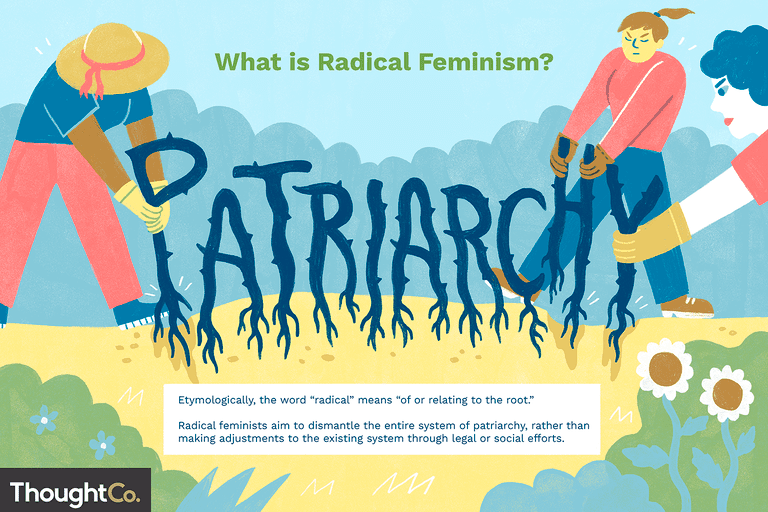
        Smash Patriarchy to free Women, curb Climate Change and save the Planet

        shared from Al Jazeera. ….Smash the patriarchy to save the planet Most illustrations added

        The same forces that feed into the violence against migrant women are also undermining climate action.

        Belen Fernandez

        by Belen Fernandez 25th Nov 2019

        Maria Meza, a migrant woman from Honduras, runs away from tear gas with her five-year-old twin daughters Saira and Cheili at the US-Mexico border on November 25, 2018 [File: Reuters/Kim Kyung-Hoon]
        Maria Meza, a migrant woman from Honduras, runs away from tear gas with her five-year-old twin daughters Saira and Cheili at the US-Mexico border on November 25, 2018 [File: Reuters/Kim Kyung-Hoon]

        Last December, the Trump administration enacted a scheme requiring Central American asylum seekers to remain in Mexico while their legal proceedings drag on indefinitely in the United States.

        The Migrant Protection Protocols policy – a handily perverse euphemism – is the approximate equivalent of calling the Exxon Valdez oil spill the Marine Life Protection Initiative. As various human rights and advocacy organisations have pointed out, the border programme has exposed tens of thousands of asylum seekers to violence; including rape, kidnapping and assault, in the unsure border regions of Mexico.

        In light of the surplus of rapes and other abuses already documented as a result of so-called “protection”, the International Day for the Elimination of Violence against Women – marked annually on November 25 – is an ideal occasion to reflect on the violence facing migrant women in an era of mass migration.

        Pervasive violence

        As the UN Women website observes : ” Rape is rooted in a complex set of patriarchal beliefs, power, and control that continue to create a social environment in which sexual violence is pervasive and normalised.”

        The feminist revolution in Rojava, N.Syria, shows how patriarchy can be defeated, even in a rural and strictly religious society. The revolution is now being destroyed by a Turkish invasion with a strongly patriarchal mentality. The Rojava kurds formed the SDF (Syrian Democratic Forces) in 2015 and welcomed dozens of Arab, Assyrian, yazidi, Christian..militias into a common front, spreading their revolutionary methods (eg in Manbij Council).Yazidi women victims have formed their own militia within SDF and recently the first arab women’s militia has been formed (July ’17). There are profound feminist implications in the context of previous extreme social repression.

        For an idea of the extent of normalisation, just recall Patriarch-in-chief President Donald Trump‘s own previous advice about fondling women without their consent: “Grab ’em by the p****.”

        Migrant women, of course, are particularly vulnerable to “grabbing” – and much worse – especially given that crimes against migrants are not generally reported or prosecuted. And for Central American women transiting Mexico to the US border, sexual assault is frequently par for the course.

        Continue reading “Smash Patriarchy to free Women, curb Climate Change and save the Planet”

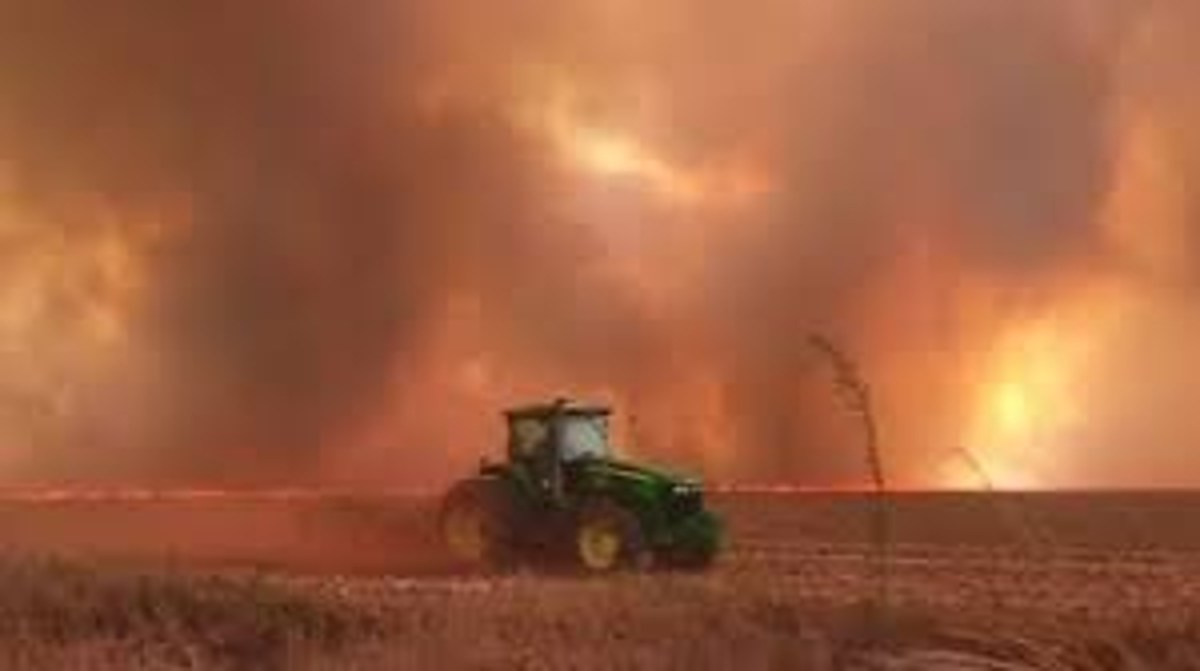
        Record surge in Amazon fires: Our House Is Burning Down!

        More and more people are realizing that irreversible Climate change is happening now. This coincides with the far right takeover of the Brazilian State, hitching it to the insane policies of greed and destruction of the US Regime. But the militarist and misogynist Brazilian right is not yet all powerful. We can still exert pressure in many ways, perhaps in Europe by supporting threats to cancel the upcoming EU/Mercosur trade agreement if the Brazilian regime continues its policies and its campaign to destroy the Amazon Rainforest, which belongs to nobody and us all.

        Amazon burning: Brazil reports record surge in forest fires

        Brazilian Amazon beset by 9,500 new forest fires since Thursday, prompting fresh scrutiny of President Bolsonaro’s environmental stewardship.

        Fires raging in Brazil‘s Amazon rainforest have hit a record high number this year, according to new data from the country’s space research agency, as concerns grow over President Jair Bolsonaro‘s management of the environment.

        7 Steps You Can Take to Help Save the Amazon Rainforest

        Nearly 73,000 fires were recorded between January and August, compared with 39,759 in all of 2018, the National Institute for Space Research (INPE) said on Monday. The surge marks an 83 percent increase over the same period last year and is the highest since INPE records began in 2013.

        Satellite images spotted more than 9,500 new forest fires since Thursday alone, mostly in the Amazon basin, home to the world’s largest tropical forest and seen as vital to slowing the pace of global warming.