Ocean Dumping – Crime against Biosphere or Climate Solution? – Chaotic rush to dump Carbon in Sea

“It’s like the Wild West. Everybody is on the bandwagon.” Insane predator capitalism is jumping on often false and disastrous”solutions” for profit that could permanently destroy our biosphere and climate.

from Rocky Mountain News April 21, 2025 by Earthpages.org via thefreeonline at https://wp.me/pIJl9-GHK Telegram t.me/thefreeonline/2948
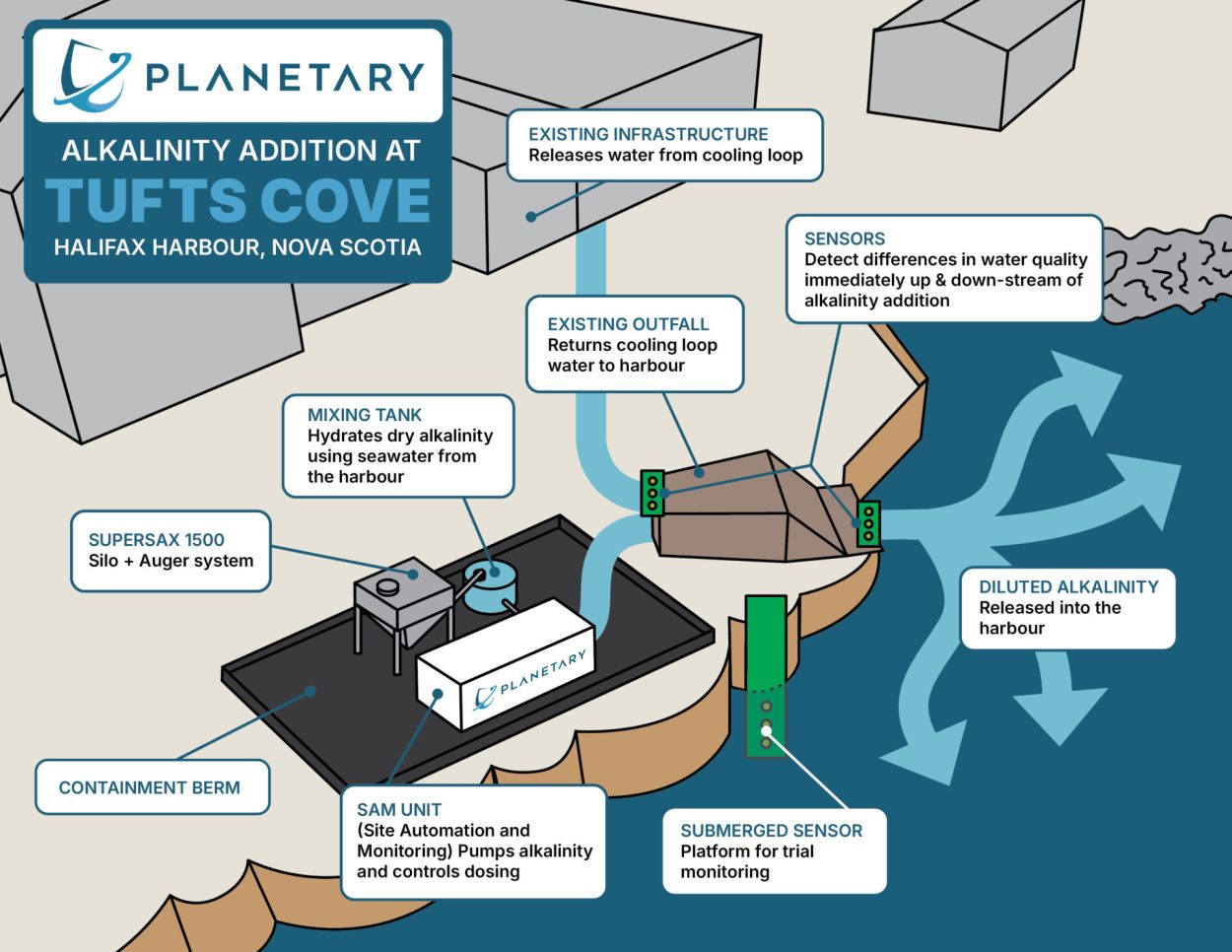
From the grounds of a gas-fired power plant on the eastern shores of Canada, a little-known company is pumping a slurry of minerals into the ocean in the name of stopping climate change.

WTF??

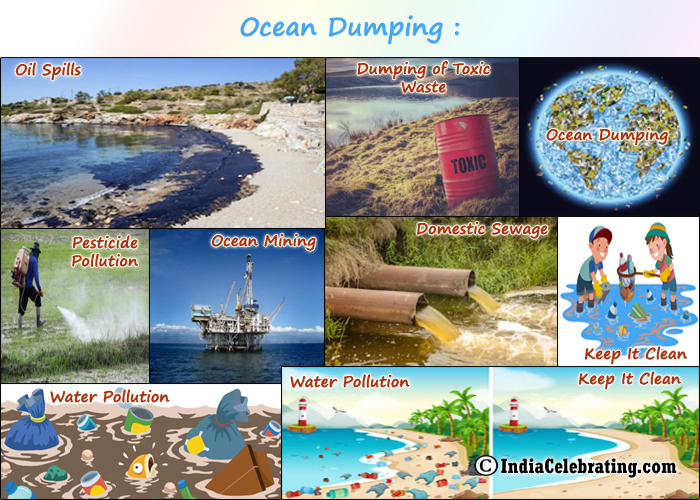
A growing industry is betting on the ocean to help fight climate change by developing methods to capture and store carbon dioxide, such as adding minerals like magnesium oxide to seawater, promoting plankton or seaweed growth, and sinking organic waste to the ocean floor.

While these techniques may show local promise for locking away CO₂, scientists and local communities are concerned about the destruction of marine ecosystems and the impossibility of monitoring long-term effectiveness.

Panic and Denial abound as last year marked the hottest year in Earth’s history, even as global carbon emissions are projected to reach another all-time high.

The above video is an example of how ‘insane predator capitalism is jumping on false and disastrous “solutions” for profit that could permanently destroy our biosphere and climate

Transcript

Ocean dumping – or a climate solution? A growing industry bets on ocean carbon capture

by KHOU 11 1.06M 328 views Mar 21, 2025

From the shores of eastern Canada to the beaches of North Carolina to New Zealand’s open sea, companies are exploring a new frontier to fight global warming.

Soundbite (English) Will Burt, Planetary: “The problem, of course, at its root is that we’ve got too much carbon dioxide in the air and the logical storage place for all for some of that excess carbon is going to be the biggest reservoir by far that exists. And that reservoir is the ocean.”

Climate experts say that even if countries stepped up efforts to reduce greenhouse gas emissions, it wouldn’t be enough to cool the planet. Carbon dioxide also needs to be removed from the atmosphere.

Oceans naturally absorb heat-trapping gases, but researchers are looking to supercharge that capacity.
Soundbite (English) David Ho, (C)Worthy): “I always say that, you know, for this to work—carbon dioxide removal—it has to go from something that most people have never heard of to the largest thing that humanity has ever done in a really short time. Right. And it’s daunting. Yeah.”

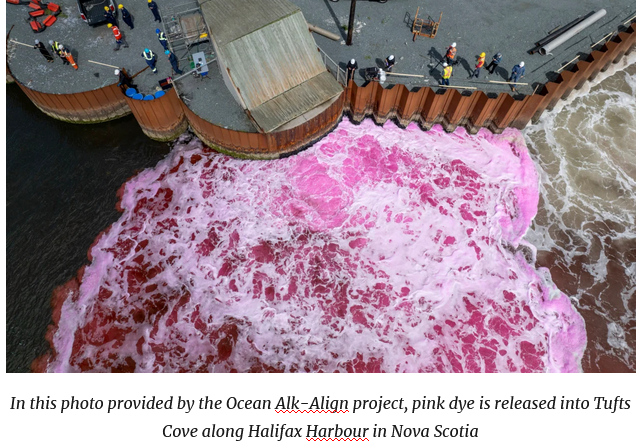
Near Halifax, Planetary Technologies is pumping out magnesium oxide, a powdery white mineral used in everything from water treatment plants to heartburn pills. Here, a red dye is added to track how it flows out to sea.

The company hopes the chemical reaction caused by the magnesium oxide will allow the ocean to absorb more CO2.

Soundbite (English) Will Burt, Planetary: “You add an alkaline or a basic mineral to the ocean and that that mineral is essentially an antacid. This alkaline mineral neutralizes carbon dioxide acid in the ocean.”

Dozens of other projects have been launched in recent years, including sinking sugarcane waste to the ocean floor to trap carbon.

Last summer, another company, Vesta, poured shiploads of the mineral olivine, an ingredient used to manufacture steel, off the coast of North Carolina. GigaBlue is taking a different approach – hoping to increase the growth of algae through added nutrients

But some projects are facing strong opposition over concerns that dumping foreign matter into the ocean could have unintended consequences.

Planetary paused its project in Cornwall, England, after residents protested. And some locals in New England are fighting a proposed experiment off the coast of Massachusetts.

Soundbite (English) Meghan Lapp: “We created the Clean Water Act to ensure that we have clean water, (that) we’re not dumping chemicals into the ocean.”

The Woods Hole Oceanographic Institution plans to study the effects of sodium hydroxide in the North Atlantic Ocean. The scientists have been meeting with the community but Meghan Lapp, who represents a Rhode Island fishing company, is still concerned.

Soundbite (English) Meghan Lapp: “To be doing that in the name of carbon capture to me is just irresponsible.”

The industry is so new that many countries have yet to adopt guidelines and standards for how to dump nutrients, crops or minerals for carbon capture. In the U.S., federal agencies have recently issued some of the first-ever permits for these ocean projects.

Soundbite (English) Will Burt, Planetary: “We can’t spend half a century digging into the details of how the solution might work, because the whole point here is, is to mitigate against a rapidly accelerating climate crisis. We have to act with safety and integrity, but we also have to act fast.”

Most of the ocean start-ups are selling carbon credits to finance their work.

Soundbite (English) David Ho (C)Worthy): “The experiments that are being done now and the scale at which they’re being done, it’s pretty safe. The question is what happens when you scale it up to billions of tons every year? And that’s still to be determined. I think there’s still some work to be done there.”

AP Video: Alex Turnbull, David Goldman Other video: Ocean Alk-Align, GigaBlue, Vesta PBC, Alban Roinard, Carboniferous Production: Serginho Roosblad

Save the Climate? Growing industries bet on the ocean to capture carbon

https://phys.org/news/2025-03-ocean-dumping-climate-solution-industry.html

by Helen Wieffering
From the grounds of a gas-fired power plant on the eastern shores of Canada, a little-known company is pumping a slurry of minerals into the ocean in the name of stopping climate change.

Whether it’s pollution or a silver bullet that will save the planet may depend on whom you ask.

From shore, a pipe releases a mixture of water and magnesium oxide—a powdery white mineral used in everything from construction to heartburn pills that Planetary Technologies, based in Nova Scotia, is betting will absorb more planet-warming gases into the sea.

Continue reading “Ocean Dumping – Crime against Biosphere or Climate Solution? – Chaotic rush to dump Carbon in Sea”
3–4°C Becomes the Gateway to a Post-Civilization Dark Age – Hansen

Posted by xraymike79 on 22nd March 2025 via thefreeonline at https://wp.me/pIJl9-GqM Telegram t.me/thefreeonline/2691

James Hansen’s recent analysis paints a dire picture: 3°C by 2050 is not just plausible but probable due to underestimated feedbacks and political inertia. Crossing 2°C unleashes irreversible feedback loops that render 3°C unavoidable, even with rapid emissions cuts.

The only hope is a Reset from below, a horizontal revolution to destroy collapsing Capitalism and States in favour of federations of workers Coops, to decarbonize, restore albedo, and prepare for a destabilized climate.

Without this, Earth’s systems will push civilization beyond adaptation limits by mid-century.

Under current policies (SSP2-4.5), CO₂ likely reaches 500–550 ppm by 2050, but Hansen’s effective forcing (including feedbacks) pushes Earth’s energy imbalance closer to 600 ppm-equivalent—enough to trigger 3°C warming even before mid-century.

Current Emissions Trajectory

    • CO₂ Levels (2024): ~425 ppm (pre-industrial: 280 ppm).
    • Effective CO₂: ~557 ppm when factoring in albedo loss (+138 ppm equivalence).
    • Annual Emissions: ~40 billion tons of CO₂/year, with no decline in fossil fuel use (oil/gas demand still rising).

Feedbacks Locking in 3°C

A. Ice Sheet Melt and Albedo Loss

    • Greenland/Ice Sheets: Already losing 1.2 trillion tons/year, contributing to sea-level rise and reducing Earth’s reflectivity.
    • By 2050: Ice-free Arctic summers darken oceans, adding +0.3–0.5 W/m² of absorbed solar energy (equal to ~50 ppm CO₂).
    • Antarctica: Thwaites Glacier collapse accelerates, injecting freshwater into oceans, disrupting the AMOC (Atlantic circulation) by 2040–2050.

B. Permafrost Thaw

    • Carbon Release: Arctic permafrost holds 1,400 gigatons of CO₂ and methane (twice atmospheric CO₂). At 2°C, thawing emits 50–100 gigatons by 2050, adding ~0.2–0.3°C to warming.
    • Methane Bursts: Subsea permafrost in the East Siberian Arctic Shelf leaks methane—a greenhouse gas 84x more potent than CO₂ over 20 years.

C. Cloud Feedbacks

    • Stratocumulus Clouds: Over tropical oceans, these reflective clouds thin or dissipate at ~1,200 ppm CO₂, adding +0.8°C globally.
    • Earlier Impact: Hansen suggests this threshold could be crossed sooner due to combined CO₂ and albedo forcing.

Why 2°C Triggers “No Return”

At 2°C (likely 2030–2035 per Hansen):

    • Greenland Tipping Point: Melt becomes unstoppable, committing to 7m sea-level rise over centuries.
    • Amazon Dieback: 40–60% of rainforest transitions to savannah, releasing 90 billion tons of CO₂.
    • Permafrost Carbon Bomb: Thawing becomes self-sustaining, emitting 10+ gigatons CO₂/year by 2050.

These feedbacks add ~0.5–1.0°C to warming by 2050, even if emissions stop.

Likelihood of 3°C by 2050

FactorIPCC AR6 (2023)Hansen et al. (2025)
Climate Sensitivity3°C per CO₂ doubling4.8°C per CO₂ doubling
Aerosol Cooling LossPartially modeledUnderestimated by ~1.0°C
2°C Threshold~2040–20502030–2035
3°C by 2050Low probabilityHigh probability

Hansen’s Conclusion:

Current policies (SSP2-4.5) lead to 3°C by 2050 due to:

    • Higher sensitivity (4.8°C vs. 3°C).
    • Albedo loss equivalent to +138 ppm CO₂.
    • Fast feedbacks (permafrost, ice melt) accelerating warming.

Regional Impacts at 3°C

    • Heatwaves: 60+ days/year above 40°C (104°F) in Chicago, Paris, and Beijing.
    • Food Collapse: 50–70% crop failures in breadbaskets like the U.S. Midwest and India.
    • Water Wars: Colorado River and Nile Basin nations clash over dwindling resources.
    • Mass Migration: 1–2 billion refugees from tropics and coasts.

Can We Avoid 3°C?

    • Immediate Action Required:
    • Phase out fossil fuels by 2040, not 2050.
    • Scale carbon removal to 10+ gigatons/year (current capacity: 0.01 gigatons).
    • Solar Geoengineering: Temporarily offset albedo loss via stratospheric aerosols (risky but possibly necessary).
    • Current Reality: Policies remain aligned with 2.5–3.5°C by 2100, making 3°C by 2050 likely.

Conclusion

Hansen’s analysis paints a dire picture: 3°C by 2050 is not just plausible but probable due to underestimated feedbacks and political inertia.

Crossing 2°C unleashes irreversible feedback loops that render 3°C unavoidable, even with rapid emissions cuts. The only hope is a wartime-scale mobilization to decarbonize, restore albedo, and prepare for catastrophic climate destabilization.

Without this, Earth’s systems will push civilization beyond adaptation limits by mid-century.

At 3–4°C, Earth becomes a hostile planet where civilization persists only in fragmented, militarized enclaves. The transition would involve unimaginable suffering for billions, with the Global South bearing the brunt. However, humans are resilient—our species would survive, but the social, economic, and technological achievements of the past millennium would unravel.

Coastal megacities like Miami, Shanghai, and Mumbai lie half-submerged, abandoned to rising seas as governments prioritize inland fortress-cities. The tropics, once teeming with life, become uninhabitable dead zones where wet-bulb temperatures exceed 35°C for months on end, rendering outdoor labor fatal and driving billions northward.

In regions like South Asia and the Sahel, collapsed monsoon cycles and dried-up rivers ignite water wars, while failed states fracture into warlord territories battling over dwindling aquifers and arable land.

Agriculture, the bedrock of civilization, buckles under heatwaves and soil depletion. Once-fertile breadbaskets—the U.S. Midwest, India’s Gangetic Plain, China’s North Plain—yield only dust and stunted crops, triggering famines that ripple across supply chains. Global food production plummets by half, leaving 2 billion people chronically malnourished. Oceans, acidified and starved of oxygen, lose their fisheries, collapsing protein sources for 3 billion coastal inhabitants. The global economy, stripped of stability, fractures into hyper-localized survival networks: underground hydroponic farms in abandoned warehouses, black-market water traders, and solar-powered enclaves guarded by drones.

Human society splinters along stark lines of privilege and desperation. Wealthy nations like Canada and Scandinavia fortify their borders with AI-patrolled walls, preserving pockets of climate-controlled normalcy for elites. Meanwhile, equatorial regions descend into chaos, where resource scarcity fuels epidemics, child mortality soars, and ancient cultural traditions vanish.

Mass migrations—1 to 2 billion people fleeing heat, hunger, and conflict—overwhelm borders, sparking xenophobic violence and authoritarian crackdowns. Cities like Chicago and Berlin, struggling under heatwaves and infrastructure decay, ration electricity to a few hours a day, while their wealthy residents retreat into sealed, air-filtered high-rises.

Yet even in this unraveling world, glimmers of adaptation emerge. Polar regions and high-altitude zones—Siberia, Patagonia, the Tibetan Plateau—become lifeboats for humanity. Their cooler climates host starving refugee megacities. Until industrial collapse is completetechnologies like stratospheric aerosol injection and many try chaotically to stem the c9ollapse, only making things worse, contingent on global cooperation that rarely materializes.

Civilization, in any recognizable form, survives only in fractured dystopian remnants. Governance shrinks to city-states and corporate fiefdoms, while democracy vanishes under emergency decrees. Knowledge economies collapse, replaced by subsistence trades and barter systems.

The arts and sciences collapse, their progress halted by the daily scramble for survival. Humanity may survive, but as a desperate diminished species— haunted by the loss of biodiversity, cultural heritage, and the stable climate that once nurtured its rise.

This future is not yet inevitable, but it looms as the trajectory of complacency. Hansen’s work warns that every delay in slashing emissions tightens the grip of feedback loops, sealing a fate where 3–4°C becomes the gateway to a post-civilizational dark age.

The difference between survival and collapse hinges on this decade’s choices: rapid decarbonization, global equity, and a moral awakening to defend the fragile systems that sustain life. As Hansen warns: “Delay is denial.”

Posted by xraymike79 in Climate Change, Collapse of Industrial Civilization, Ecological Overshoot, Environmental Degradation

Related

Analysis: How Soon Will Large Scale Collapse HappenMarch 20, 2025In “Climate Change”

The Exact Timing of Near-Term Human Extinction Is AcademicMay 29, 2014In “Climate Change”

More Evidence of Overly Conservative IPCC Estimates Hiding the Coming CatastropheNovember 10, 2012In “Capitalism”

TAGS 6th Mass Extinction, Albedo Loss, Amazon Die-Off, Antarctic Ice Melt, Anthropogenic Climate Disruption (ACD), Climate Change, Coral Die-Off, Dystopic Future, Insurance Industry Collapse, James Hansen, Megadrought, MegaFires, Sea Level Rise

China Celebrates Completion of 1,800-mile Green Belt surrounding its Harshest Desert- after nearly 50 years

by True Activist on 7 Feb 2025 via thefreeonline at https://wp.me/pIJl9-FX3

China’s largest desert fully encircled with green belt

For nearly five decades, China has undertaken a monumental ecological effort to combat desertification in one of the world’s most hostile environments—the Taklamakan Desert.

On Thursday, the People’s Daily reported that the ambitious project to encircle the desert with a green belt of trees has been completed, marking the end of a journey fraught with setbacks but full of determination.

A ‘Green’ Great Wall for the Taklamakan

Last week, workers planted the final 100 trees on the southern edge of the Taklamakan Desert, completing what is often referred to as China’s “Green Great Wall.”

This initiative aims to mitigate the adverse effects of the Taklamakan, a vast sea of shifting sands located in northwestern China. Known as the second-largest shifting sand desert in the world, its name ominously translates to “Go in and don’t come out,” reflecting its inhospitable nature.

The desert is also the farthest point from any ocean, making its surrounding areas some of the most isolated and impoverished regions in China.

The Taklamakan Desert has long posed challenges for northern and western Chinese provinces, as strong winds carry dust and sand into these regions.

These storms degrade air quality, threaten agricultural productivity, and contribute to desertification.

In response, China initiated the “Three-North Shelterbelt” project in 1978 under the leadership of Deng Xiaoping, aiming to combat these environmental challenges by planting trees on a massive scale.

Transforming the Landscape

Since its inception, the project has led to the planting of over 30 million hectares (116,000 square miles) of trees.

Continue reading “China Celebrates Completion of 1,800-mile Green Belt surrounding its Harshest Desert- after nearly 50 years”

Ecology against Capitalism – Seeking a Renewed Relationship to Nature

Originally published on Komun-Academy, Written by Hêlîn Asî, 2019

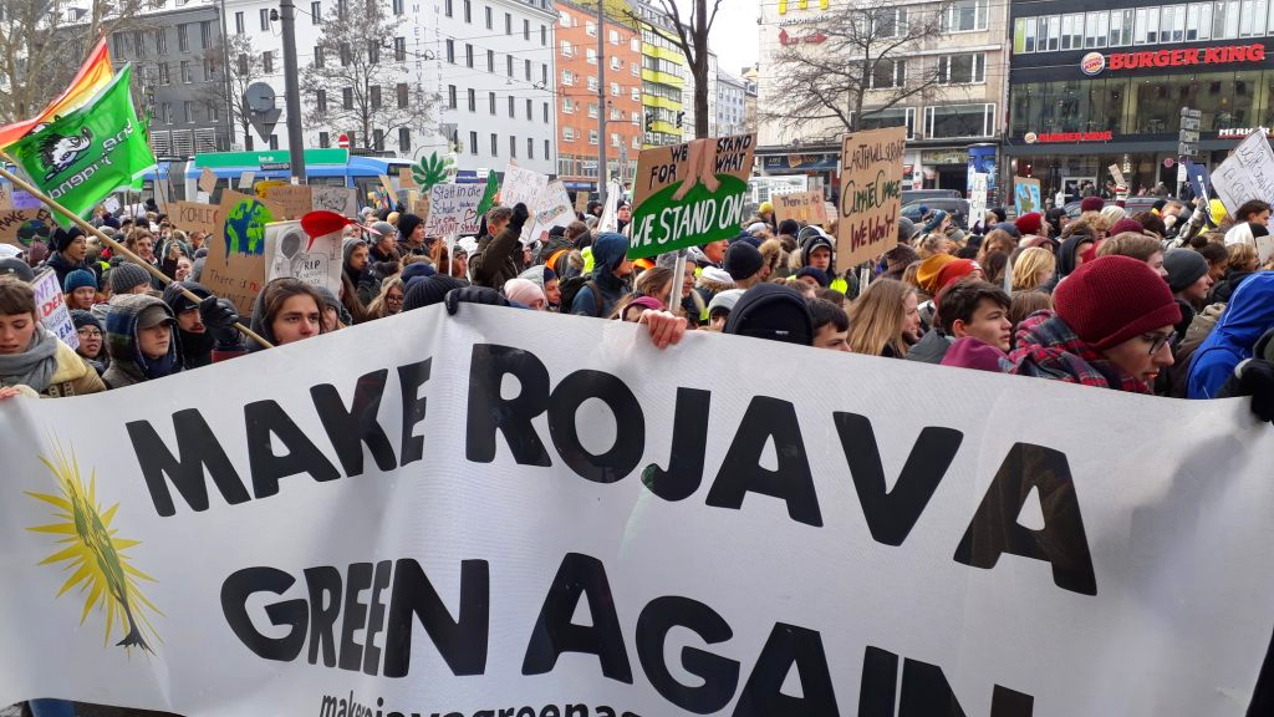
Around the world, currently, thousands of people, especially youth, protest and demand action against climate change. Under the slogan Fridays for future global strikes and mass demonstrations are taking place. In light of the statistics and prognoses about the causes and effects of climate change over the last few years, the climate question has become one of the most urgent questions of our time.

While on one side, individuals must bear responsibility, it is clear that it does not suffice to merely criticize individual lifestyles without challenging larger structural political and economic conditions. Analyzing climate change as independent from capitalism means depoliticizing the issue. In fact, nearly all conditions that have contributed to climate change can be traced back to the capitalist-consumerist system.

Internationalist Commune of Rojava   June 26 at 12:23 AMMany people requested it and finally we managed to organise it: It is from now on possible to donate via paypal for MRGA.  https://makerojavagreenagain.org/donate Continue reading “Ecology against Capitalism – Seeking a Renewed Relationship to Nature”

Carribean climate chaos, dead zones, plastic dumps, coral collapse, predatory Capitalism ..

”World Oceans Day also offered us an opportunity to showcase new and emerging opportunities e.g. wave and tidal energy potential, international telecommunication (through submarine cables) and for making the sustainable use of coastal and marine resources an integral part of our development agenda and in so doing ensuring that measures are put in place to safeguard this resource for future generations.

Why do we celebrate World Oceans Day? To remind everyone of the major part the Ocean has in everyday life. They are the lungs of our planet, providing most of the oxygen we breathe. To inform the public on the impact of the human actions on the Ocean.  .. To develop a worldwide movement of citizens, towards the Ocean. …To celebrate together the beauty, the wealth and the promise of the Ocean” …..

STOP Predator Capitalism Destroying the Carribean

Christopher Corbin interviews CARICOM’s Secretary for CARICOM Today.   …Mr. Corbin: What are some critical issues that the Region needs to address ?

  1. 1.POLLUTION: We must prevent, reduce and control the level of pollution entering the Caribbean Sea from both land and marine based sources. These include pollution from untreated sewage, from garbage which eventually ends up as marine litter, from agrochemical run-off – pesticides and fertilisers, from the run-off of soil from poor land-use practices and from maritime transportation including oil spills and discharge of ballast water. Continue reading “Carribean climate chaos, dead zones, plastic dumps, coral collapse, predatory Capitalism ..”

Time to Pull the Plugs: Only Anti-Capitalism could Save The Planet

..

Capital will not lead the exit from the fossil economy. Only a movement of movements can amass a social power greater than the enemy’s in the little time that is left.

Andreas Malm             Illustrations by  Zoran Svilar

Our best hope now is an immediate return to the flow. CO2 emissions have to be brought close to zero: some sources of energy that do not produce any emissions bathe the Earth in an untapped glow. The sun strikes the planet with more energy in a single hour than humans consume in a year.

Put differently, the rate at which the Earth intercepts sunlight is nearly 10,000 times greater than the entire energy flux humans currently muster — a purely theoretical potential, of course, but even if unsuitable locations are excluded, there remains a flow of solar energy a thousand times larger than the annual consumption of the stock of fossil fuels.

The flow of wind alone can also power the world. It has nothing like the overwhelming capacity of direct solar radiation, but estimates of the technically available supply range from one to twenty-four times total current energy demand.

Other renewable sources — geothermal, tidal, wave, water — can make significant contributions, but fall short of the promises of solar and wind. If running water constituted the main stream of the flow before the fossil economy, light and air may do so after it. Continue reading “Time to Pull the Plugs: Only Anti-Capitalism could Save The Planet”

Activist Facing 21 Years for Turning Off Keystone Pipeline’s Valve

      from Creative Resistance

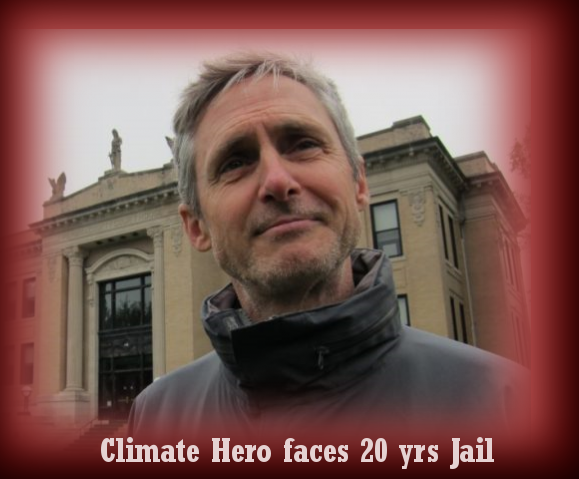
Foster says he deliberately broke the law by turning off a valve of the Keystone pipeline in North Dakota because he felt action was necessary.

In October of last year, the group Climate Direct Action turned off a valve on the Keystone Pipeline. Last week, activist Michael Foster was convicted for being involved in the action.

If North Dakota courts, where he is being tried now, find him guilty, he could be facing up to 21 years in prison. The sentencing is set for January.

‘If we don’t stop, we can’t correct … it will be too late for this generation.’ – Michael Foster, activist

Despite that hefty prison sentence hanging over his head, the former mental health counsellor from Seattle is still speaking out because he says he wasn’t allowed to tell his full side at his trial. Continue reading “Activist Facing 21 Years for Turning Off Keystone Pipeline’s Valve”