The Pink Fire: inspiring fight for Social Revolution in Barcelona

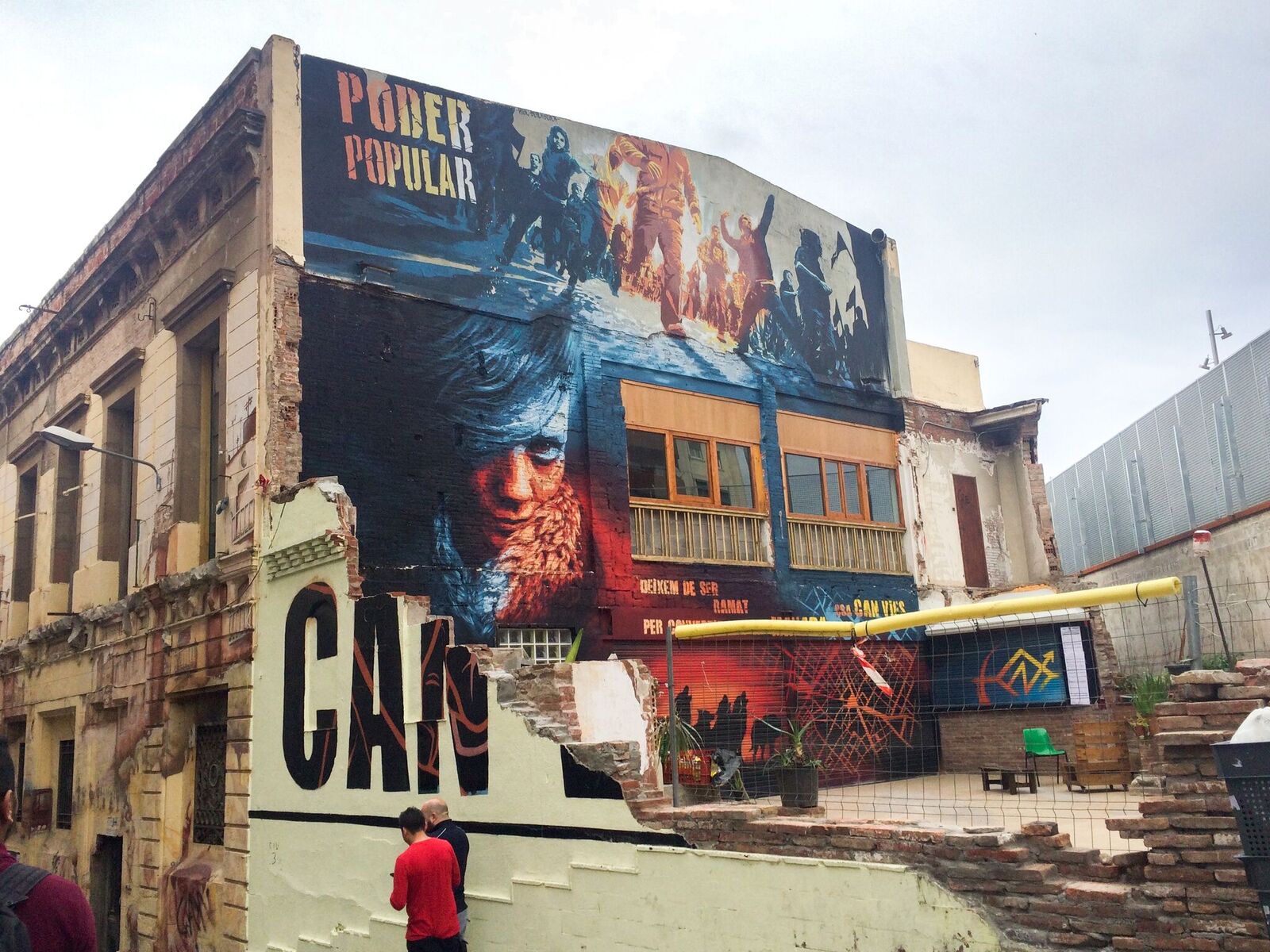
unspecified3by Jen Stout, reblogged with thanks.. “A solar panel”, says Pablo Cotarelo, “is a way to redistribute wealth”. The energy analyst is sitting in the little courtyard of Rosa de Foc, a social centre in Barcelona. Inside, members of the food co-op are collecting their weekly fruit and veg; here in the yard a group of activists from the UK are listening to Cotarelo describe the ‘energy revolution’ planned for the city. They’ve come over on a social movement ‘tour’ with Global Justice Now, a group which campaigns against poverty and injustice and pushes for democratic ownership of resources.

“We are trying to establish a kind of co-operative with state ownership – a ‘public citizen’ company. It’s a very new proposal, not tried before in Spain”, explains Cotarelo. The radical plan is made possible by the takeover of City Hall by ‘citizen’s platform’ Barcelona En Comu last year. De-privatising water and energy is high on the agenda. Continue reading “The Pink Fire: inspiring fight for Social Revolution in Barcelona”

Gaziantep, Turkey, Syrian refugee camp: mass rapes of Syrian women, slave trade, criminal trafficking with complicity between Turkish authorities and jihadist-terrorists

syrianpatriots's avatarthe real Syrian Free Press

fsa-refugee-camp-2

Syrian Refugees in Turkey:
Cases of Slavery, Rape ‘Go Unnoticed by Officials’

(Sputnik) ~ Chairman of the Bar Association of Gaziantep, Bektaş Şarklı, spoke with Sputnik in an interview regarding the atrocious conditions under which refugees in the Syrian refugee camp of Gaziantep are living.

According to statisticsGaziantep has the second largest number of Syrian refugees residing in camps.

There are cases of mass rapes of Syrian women, slave trade and ongoing cooperation of local authorities with jihadists which makes all of these factors a permanent source of instability and threat for the local population and the country as a whole.

“On April 12, 2015, we sent a request to the prosecutor of Gaziantep, asking him to investigate the case of Yazidi women into slavery. Unfortunately, it should be noted that the prosecutor’s office failed to conduct a proper investigation of the case.”

“The case file contains thousands of…

View original post 438 more words

La Mitad De Brasil Bloquea Carreteras En Contra Del Impeachment

A horas de que el Senado brasileño decida si la presidenta Dilma Rousseff deberá o no someterse a un juicio político, una serie de protestas “en contra del golpe” bloqueó el martes las carreteras en 14 de los 27 estados del país.

photo: Manifestantes en contra del juicio político contra Rousseff bloquean una calle con neumáticos quemados. Brasilia, 10 de mayo de 2016.

Las marchas, convocadas a través de las redes sociales por colectivos como el Movimiento de los Sin Tierra y la Central Única de los Trabajadores, la mayor unión de sindicatos del país, formaron parte del llamado Día Nacional de Paralización y Movilizaciones Contra el Golpe Continue reading “La Mitad De Brasil Bloquea Carreteras En Contra Del Impeachment”

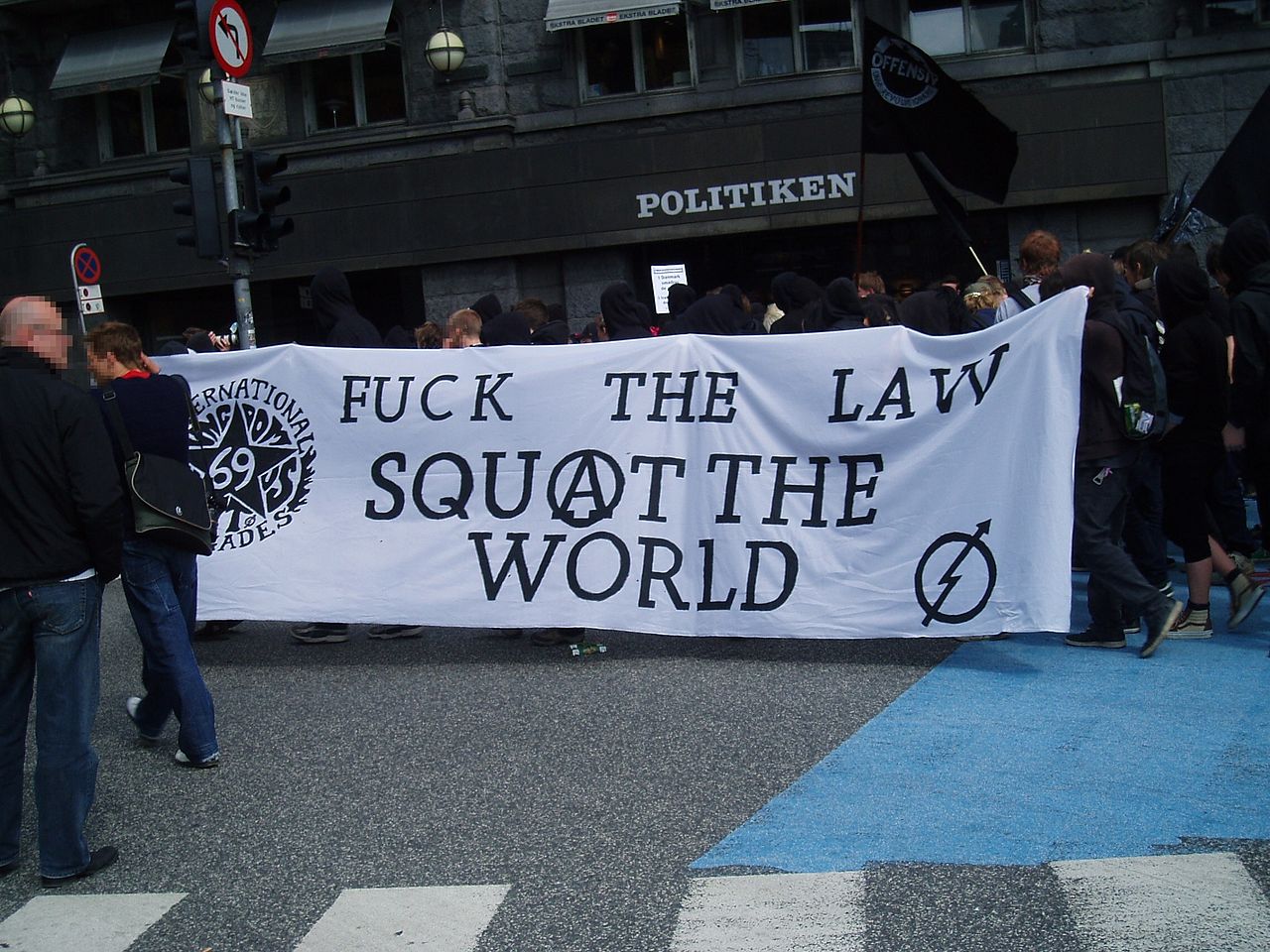
Fuck Nations, Squat the world – call for a month of actions (Greece)

1280px-Squat_the_world

Insurrection News's avatarInsurrection News

stwFuck Nations, Squat The World

The undertaking of a squat, was, is, and should continue to be a powerful tool in the hands of the comrades surrounding it. This tool is evolving through the time-space continuum, and thus we feel it is necessary to present a couple of historical “points”. Squatting, as a stable infrastructure makes its first appearance in Greece, but also in many other countries in and beyond Europe, during the 70s.

Both in Europe in general, and in Greece in particular, a number of squats that took place over the years, were more than a place used for housing or to accommodate alternative means of entertainment. They were instead a living, breathing political cell which would occasionally take aggressive characteristics.

In Barcelona we meet the squat “Can Masdeu” where occupants, in one year faced hard oppression. Merely eleven squatters stood against 100 cops ordered to evacuate the premises, refusing to hand over the…

View original post 2,207 more words

Rebellion in all France after Govt. uses special powers to Impose Slave Labour Law

The cabinet has used special powers to pass the changes without parliamentary approval.

//platform.twitter.com/widgets.js

Rioting has broken out in cities across France
The only way the bill can now be stopped is by  a vote of no confidence – that was filed by two right-wing parties to be held Thursday. the only way this could pass is if at least 65 Socialists voted against, bringing down the government.
Massive demos have been called forThusday

Kew Report: Extinction of Quarter of the World’s Plants

Study reveals plant extinctions and new discoverieswhenif11

New report marking first-ever assessment of global flora calls for radical action to protect world’s plants.  by  Nick Clark

From the threatened extinction of nearly a quarter of the world’s plants, to the Facebook discovery of an unknown giant carnivorous specimen, the first-ever evaluation of the world’s flora is complete.

Darlingtonia_californica_-top 10-amazing-beautiful-carnivorous -plantsIt’s staggering and somehow gratifying to find that every year around 2,000 new species of plants are discovered. But it’s troublesome and deeply worrying to learn that more than 10 percent of the world’s landcover type has changed in just 10 years, mostly from forest to farmland.

The State of the World’s Plants report took 80 scientists from the prestigious laboratories and archives of the Royal Botanic Gardens at Kew in west London a year to complete.

ca2be54e2464d761748e8250ede35c3eIt was unveiled by Kew’s director of science, Professor Kathy Willis.

“We’ve had no end of the state of the world reports on everything from sea turtles to antibiotics,” Willis said. “But never plants.

“And I find this remarkable because plants are fundamental to the lives we lead. They underpin almost everything we know – from food, to clothing, to regulating the climate. They make living possible.”

And when you factor in how climate change appears to be turning the natural world upside down, threatening crop production and fuelling fears of food insecurity, never has the time been more apposite for such an assessment.

“Someone had to take the lead and shove plants to the top of the agenda,” Willis said.

Throughout years of domestication, traits have been bred into crops to create, say, the perfect banana or coffee plant. But these traits will not necessarily protect them from the ravages of climate change.

So the Kew scientists say we need to go back to the wild relatives of Amazing-Healing-Plantsthe crops and tap that pool of genetic variation.

These relatives have evolved over thousands of years and have huge climate resilience, which could then be bred back into our crops.

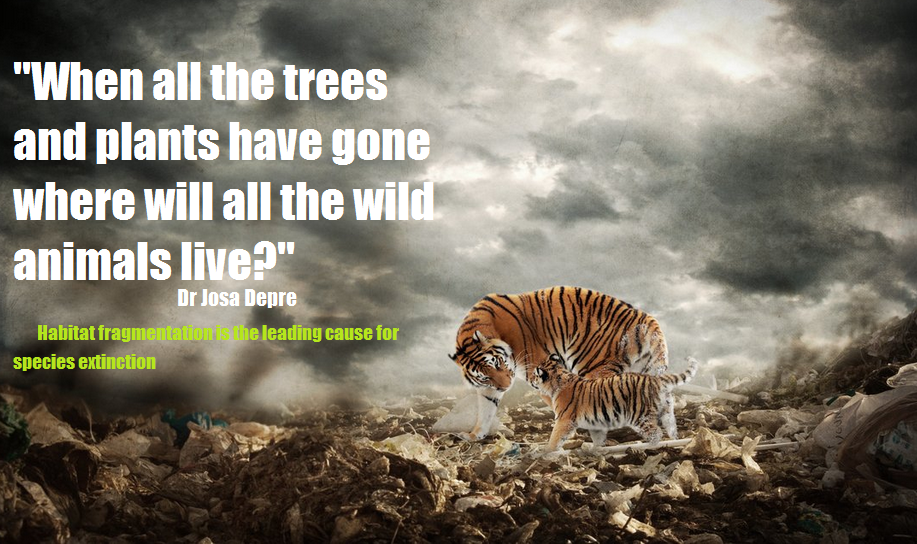
The problem is many of those wild populations are under considerable threat, due to deforestation and change of land use.no plants

“We need to become global landscape planners to really understand which of the most important areas to preserve because of the plant diversity they contain,” Willis said.

Kew has a botanical pedigree second to none. It was established in 1759 and now boasts more than eight million specimens, many dating back to Victorian times.


‘Doomsday’ seed vault comes to Syria’s rescue


Among the stars are cuttings taken by Charles Darwin during his voyage on the Beagle as he gathered evidence for his seminal work On the Origin of the Species.

I examined a sheet on which was pinned the fern-like Henslovianum, browned with age but surprisingly intact, its date and place of collection painstakingly recorded – September 3, 1835, Galapagos.

Adiantum Henslovianum, part of Charles Darwin’s collection from Galapagos in 1835, is displayed in the herbarium [Kirsty Wigglesworth/AP]
Alongside lay a specimen collected by David Livingstone, another famous Victorian Briton, while on expedition in South Africa. The old, greying paper is stained, you imagine with the sweat of the man himself.

Dr Timothy Utteridge is Kew’s head of plant identification and says that such detailed records are an invaluable resource.

“We can look at a specimen taken from say, Malaysia in the 1830s and know precisely where, when and by whom it was taken,” 235-cactus-species-extinctUttteridge said.

“We can then refer to Google Earth and see what’s there today. We might find no original trees at all – maybe a palm oil plantation instead. But it’s a good baseline to assess where we’re at today.”

Just like in Victorian times Kew still sends out botanists to far-flung corners of the Earth in search of new discoveries. And they frequently come home flush with success.

But there was that one that came from the unexpected direction of social media.

Apparently Brazilian amateur botanist Reginaldo Vasconcelos posted a photo on Facebook of a large carnivorous sundew plant in 2013, while exploring the mountains near his home.magnifica3

A year later it was spotted by a plant expert, who checked it out and yes, there it was, Drosera Magnifica, a new discovery.

The wonders of the plant kingdom it seems, still have the ability to surprise, but deep within this most important element of the planet’s biodiversity, there lies a warning to humankind, which we ignore at our peril.WOW-Amazing-FI-Plant-Forms

Underwater plants like these are among the most imperilled due to ocean acidification, pollution and climate change..amazing_ocean_plants_by_andrea1981g-d4y9z5z

Stabbing the Belly of the Beast: Anonymous Takes 9 Central Banks Offline

proxy

Anonymous Takes 9 Central banks Offline – Massive Assault on ´Global banking Cartel´’

by Jay Syrmopoulos          After a global call to arms, the Anonymous campaign against the global banking industry, OpIcarus has gained major momentum… eight more financial institutions have been taken down after the initial attack on the Central Bank of Greece – followed by a similar DDoS attack on the Central Bank of Cyprus.ChQcAtYW4AMbs5_According to a video released in conjunction with OpIcarus, the attack on Bank of Greece marked the beginning of a “30-day campaign against central bank sites across the world.” This massive push, according to the video, aims to “strike at the heart of [the] empire by once again throw[ing] a wrench into the machine.”


Continue reading “Stabbing the Belly of the Beast: Anonymous Takes 9 Central Banks Offline”