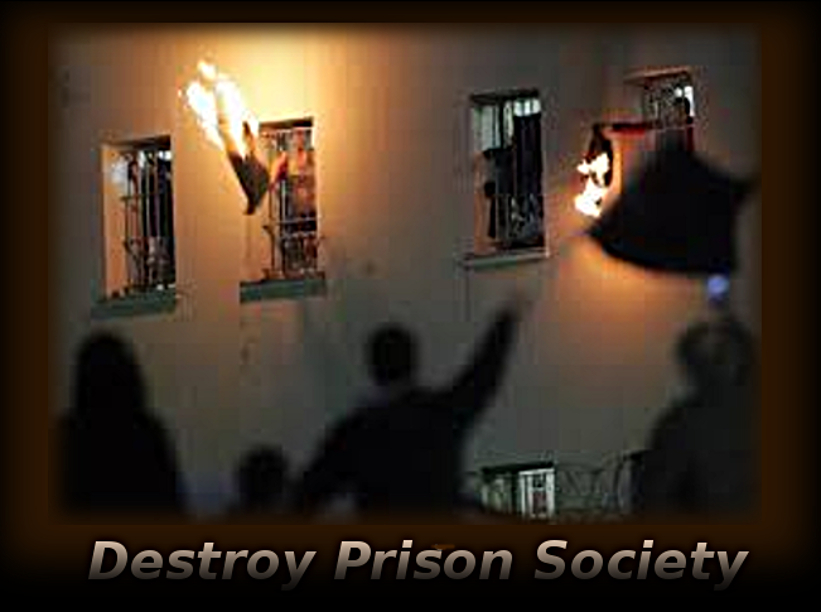
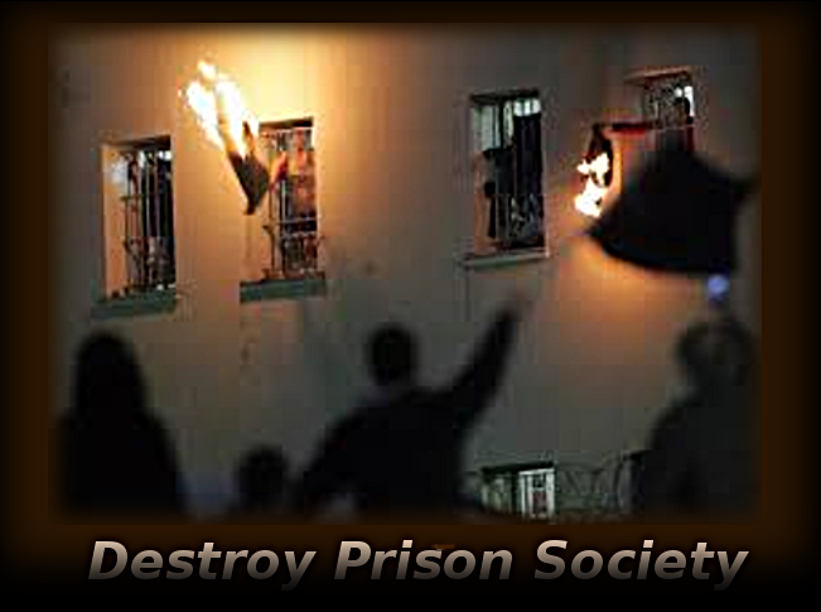
This is a call for a raucous night of strong solidarity with those imprisoned by the state on one of the noisiest nights of the year. On New Year’s Eve gather your crew, collective, community, organization, or just yourself and come together to raise a racket and remind those on the inside that they are not alone.
Internationally, noise demonstrations outside of prisons are a way to remember those who are held captive by the state and a way to show solidarity with imprisoned comrades and loved ones. We come together to break the loneliness and isolation.
Carlos Aznarez No one had predicted before that youthful irruption in the Chilean Metro, that this year was going to present us with the conflict scenario that we are now seeing. A scenario that demonstrates that after the agreed withdrawal of the Pinochet dictatorship from the government and the emergence of a pseudo-democracy overseen by the empire (called Concertación) the system smells of rot.
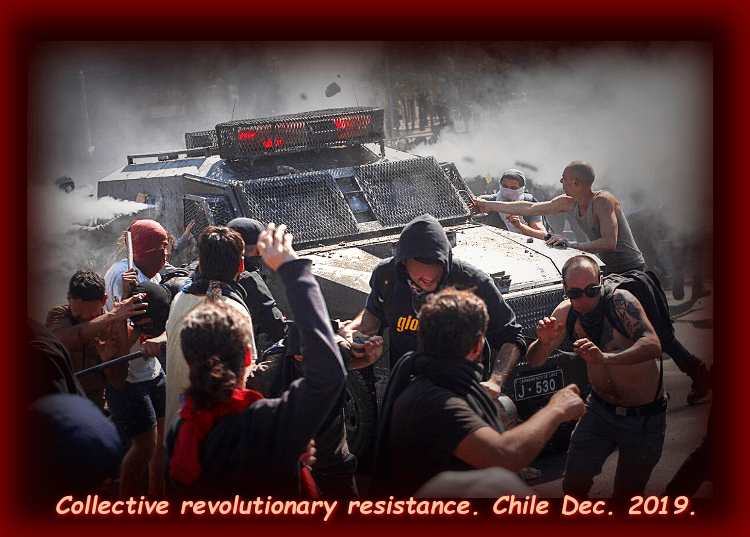
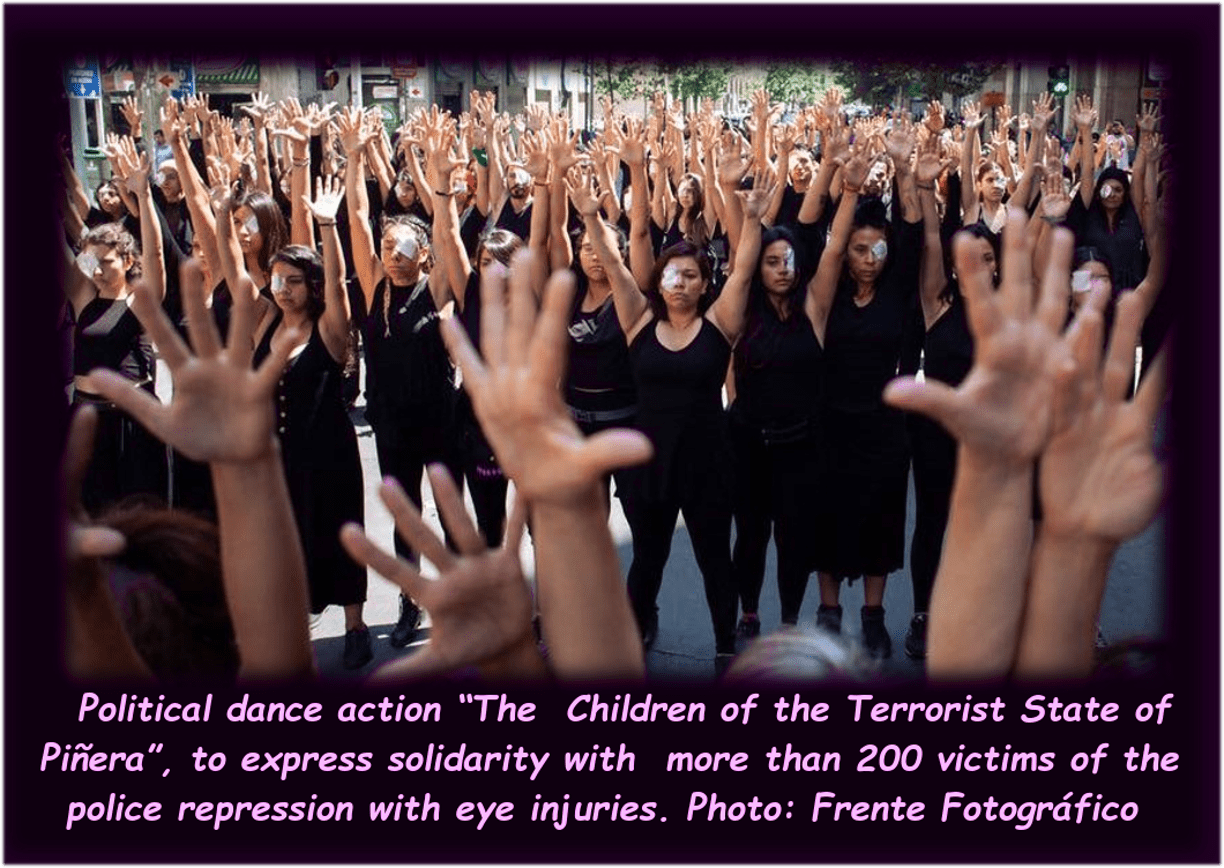
That is precisely what the young people (13 to 25 years old) are shouting when they participate daily in the flaming barricades while confronting the criminal repression of the pacos, the militarized police force that acts as a machine to do as much damage as possible.
These courageous youths, whose adrenaline and political awareness are needed to go out into the streets unarmed to confront the machinery of hate promoted by President Piñera, are the ones who have set in motion the restoration of Chilean dignity, who have awakened society as a whole and who, in the process, have recalled that solidarity, comradeship and tenderness are a treasure that has not been lost.
Spending time with the union members of Chapare, who run society in a collective fashion, offers special insights into the resistance to the coup. They succeeded in expelling the police, but now fear a bloodbath in retaliation.
By Ollie Vargas
Cochabamba, Bolivia — Known as Bolivia’s Chapare region, the Tropico of Cochabamba is a sanctuary for elected President Evo Morales’ most dedicated base of support. Since the November 10 coup, it has effectively become a self-governing territory where the military junta is absent.
The police and military were sent in full retreat from this area the coup began and were told they would only be welcomed back if the they “get on their knees and apologize” to the community.
The struggle goes on here & I hope to stay for as long as possible. There is great local media that serves the community, but everyone here is keen for coverage in other languages. I encourage others to come here too, it'll become even more urgent to share these voices. pic.twitter.com/EcSTc8aUwA
In this 12,000 square kilometer swath of land, hundreds of unions have flourished over the years. I spent several days with the union rank and file, witnessing how they run society in a collective fashion, and how they have organized ferocious resistance to a right-wing coup government that threatens to destroy them.
Despite the resilience on display here, there is also a sense of dread. Union leaders told me that if the state decides to militarize the region, as it has threatened, a bloodbath is practically inevitable. If the violent crackdown arrives, it could unravel a social structure they have been steadily constructing for decades.
Kaosenlared.net translation by The Free original en español abajoby Salvador Soler shared with thanks.
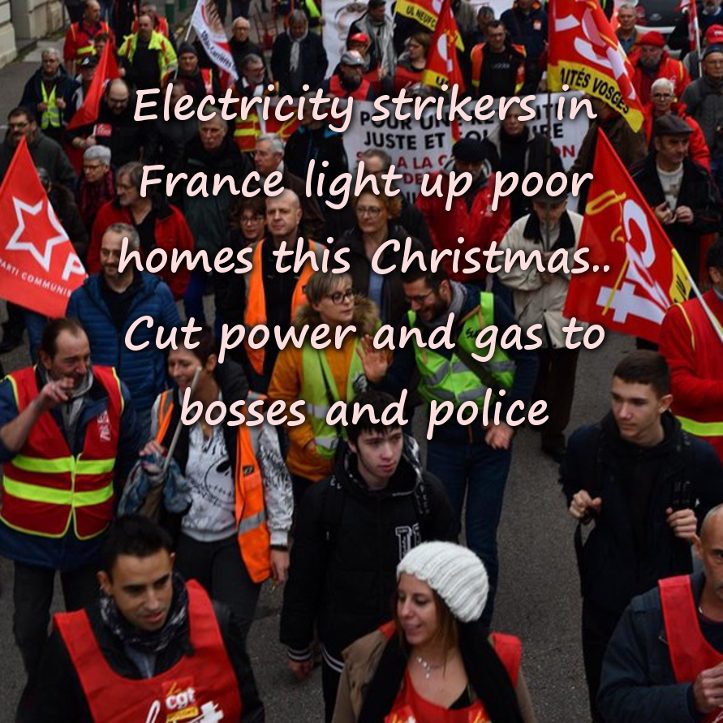
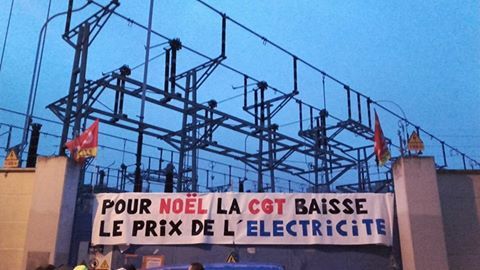
There is no “Christmas truce” for the workers of the Electricity Company of France (EDF) who are on strike. Workers are reconnecting service to poor families and lowering the price of tariffs to popular sectors,
while cutting off power to police stations, management and large companies.
Since the beginning of the strike on December 5, electricians and energy workers maintain power outages against Macron’s pension reform. A fighting method that exposes the strength of the workers and the strategic place they occupy, with the possibility of paralyzing government buildings and large companies with power outages.
While the strike has had a greater impact among workers of the SNCF (railway), RATP (metropolitan transport company of Paris), National Education or even health, energy workers are not far behind.
CGT, FO , CNT et #GiletsJaunes devant la gare de Cherbourg: vente de légumes et de miel à prix libre pour aider financièrement les cheminots en grève. Productions données par un agriculteur bio solidaire de la grève https://t.co/ynGXaXE270pic.twitter.com/gFxGCYWL0i
Among them are electricians and gas workers. Of the main companies in the sector there are 41.4% of striking workers in EDF (Electricity Company of France), 39% in Engie and more than 60% in Enedis. From Tuesday, December 10, the strikers voted in assemblies to generate localized power cuts. Michaële Guégan, director of human resources at Enedis, the most important electricity distribution network, notes that there have been selective cuts “in certain public buildings, a commercial area in Bordeaux, a university in Lyon and even a hospital center.”
Workers announced that tens of thousands of poor households are being reconnected to have electricity and gas during the holidays. Thanks to the actions of the Electricity of France (EDF) workers, the poorest families will enjoy an illuminated dinner. This will reduce the power supply of the richest areas of cities, shopping centers, police stations and prefecture to leave them in total darkness.
This is a call for a raucous night of strong solidarity with those imprisoned by the state on one of the noisiest nights of the year. On New Year’s Eve gather your crew, collective, community, organization, or just yourself and come together to raise a racket and remind those on the inside that they are not alone.
Internationally, noise demonstrations outside of prisons are a way to remember those who are held captive by the state and a way to show solidarity with imprisoned comrades and loved ones. We come together to break the loneliness and isolation.
(Greenpeace International)* — Like many ecologists, every week I read announcements about a new “game changing” technology that promises to turn our ecological crisis around. The game rarely changes.
Governments and corporations cling to the belief that the world economy can grow forever, even as resources are depleted and carbon emissions keep increasing.
Who likes chocolate that has been destroyed by forests where gorillas live?
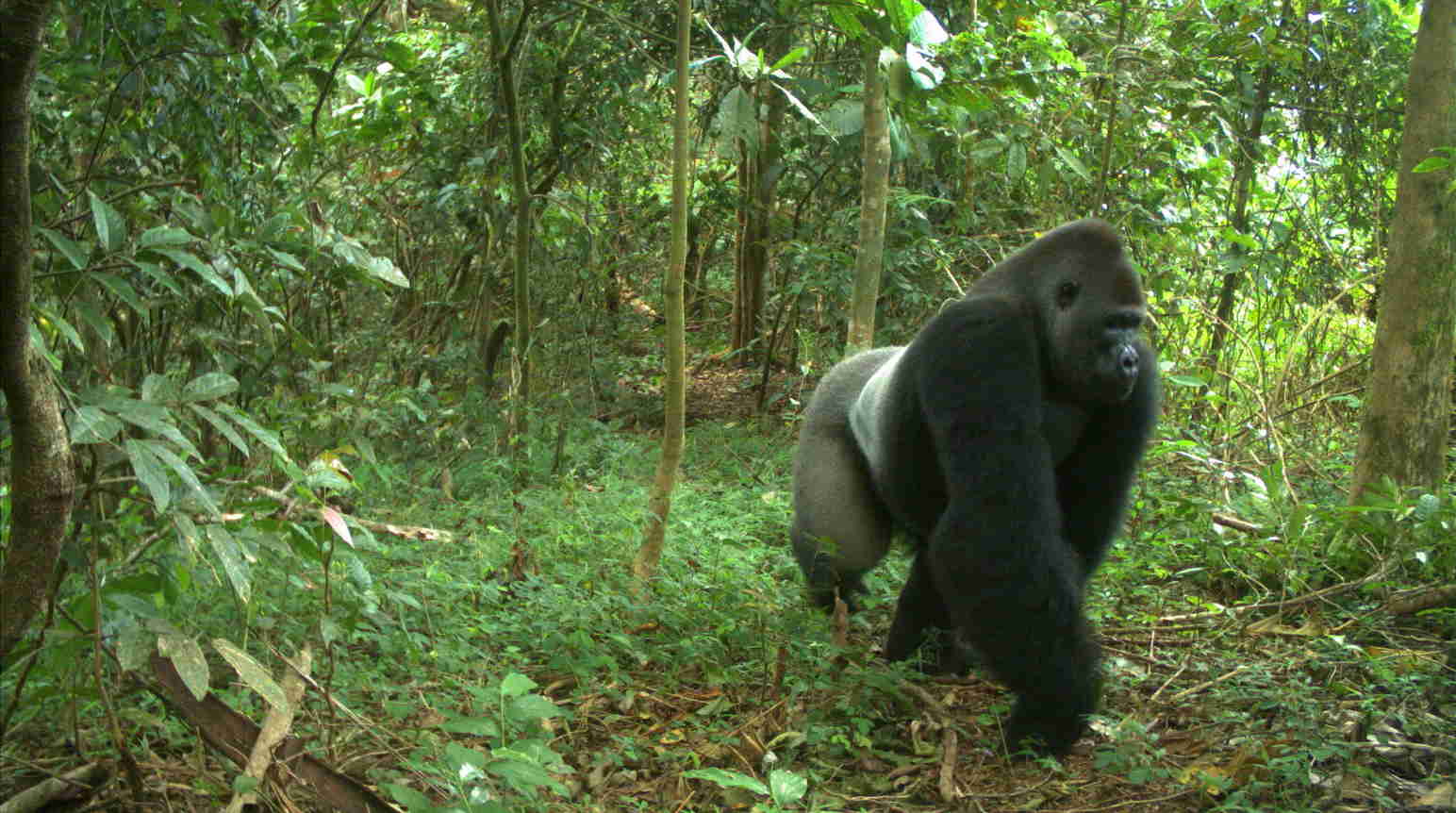
This is exactly what is happening in Nigeria: cocoa farms invade the last retreat of the endangered primates.
The overexploitation is fueled by the lust of chocolate lovers in Europe. But the forest of the gorillas must not die for sweets. Cross River gorillas are the most endangered great ape in Africa with only 200-300 individuals remaining in the wild.
Nigeria gives rise to despair and hope at the same time: the country’s forests are almost completely destroyed, 96 percent have disappeared. The state of Cross River in the southeast is a ray of hope. The forests are among the most biodiverse in the world and even offer gorillas a habitat.
But Cross River also loses forest: In 2017, more than 16,000 hectares were destroyed. That is four times more than last year. The main causes…














 The Free