
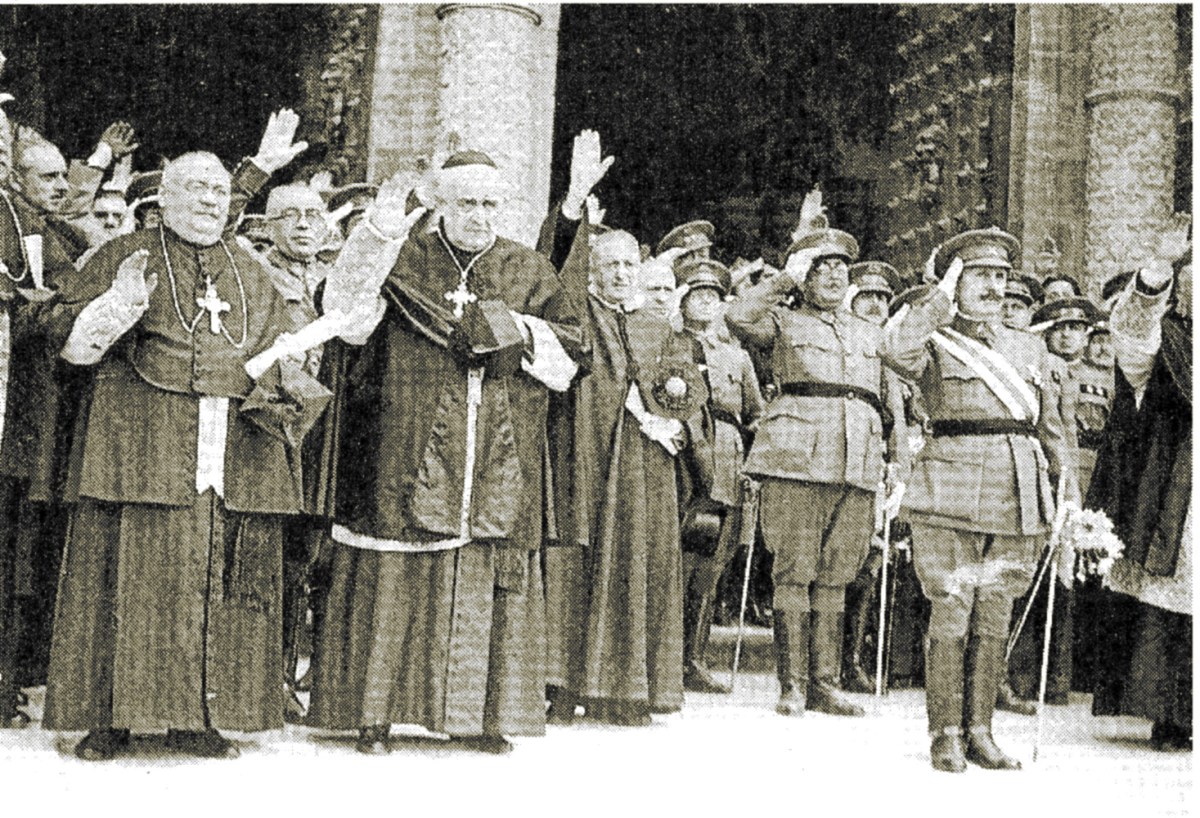
In 1936 for a brief moment in Spanish history, the reactionary grip and the real and mental Inquisition of the Catholic Church was broken in large areas of the country and the mystique of religion shattered by the cathartic violence of anticlerical militants.
As one aspect of the Social Revolution hundreds of churches were destroyed and priests killed, followed by at least 100,000 arbitrary executions in revenge, often with the aid of the church, by the conquering fascist rebels, backed by Hitler and Mussolini.

‘‘My Kingdom is not of this World”.. Really?? // ‘Give Back the Stolen Patrimony’
The Catholic church regained power, property and riches, and the Spanish Inquisition returned, joining the Franco regime in persecuting gays, women, leftists and anyone suspected or denounced, even stealing and selling tens of thousands of ‘red’ babies and controlling every aspect of daily life.
When ”democracy” finally returned in the 70’s, 40 years later, it was only with an amnesty for all crimes and looting committed, with the church exonerated and exalted with tax free status, and the far right oligarchy retaining ultimate control.
Though the church is still in decline in Iberia today it retains huge wealth and influence in the legal, security and political institutions and a staggering and now exponentially growing portfolio of tax free property.
The Catholic Church has registered 3,722 properties in its name in Catalonia, without any title proving its ownership, as reported today by the Catalan Government.

By PostDigital, shared with thanks (see original in Spanish below)
These data appear in the set of property records for all of Catalonia, according to inscriptions made between 1946 and 2015, much of it in Lleida (58%).
These are the so-called ”inmatriculations” of rustic properties (41%) and buildings dedicated to worship (50%), such as temples, hermitages, cemeteries, chapels, ecclesiastical groups and sanctuaries. The rest of inscriptions are from buildings (9%) such as rectories, garages or palaces.
………………..
A new law in 1998 made it simple for the Church to quietly claim the huge amount of property that was traditionally built and maintained by the public in common, with nobody listed as the owner. By 1998 the church business of selling babies had finally ended and a new way was found to update the practice of diverting vast sums of cash and power to the coffers of the dwindling institution.

‘During the Franco dictatorship and later with the Aznar government, the Catholic Church found in the act of registering the perfect instrument to increase its real estate assets based on cemeteries, flats, orchards, parishes and other types of properties that until then belonged to the people or to individuals. Until now, the Government has always refused to offer data on these ”registrations”… https://raizdiario.es/iglesia-catolica-inmuebles oct 17, 2019
……………………….
These data appear in the set of property records for all of Catalonia, according to inscriptions made between 1946 and 2015, much of it in Lleida (58%).
The Lleida counties of Pallars Sobirà, Pallars Jussà and Alt Urgell are the three districts most affected in all of Catalonia by this policy of the Catholic Church and the municipalities with the most registrations are Pont de Suert (Lleida) and Olesa de Bonesvalls (Barcelona), with 82 each.
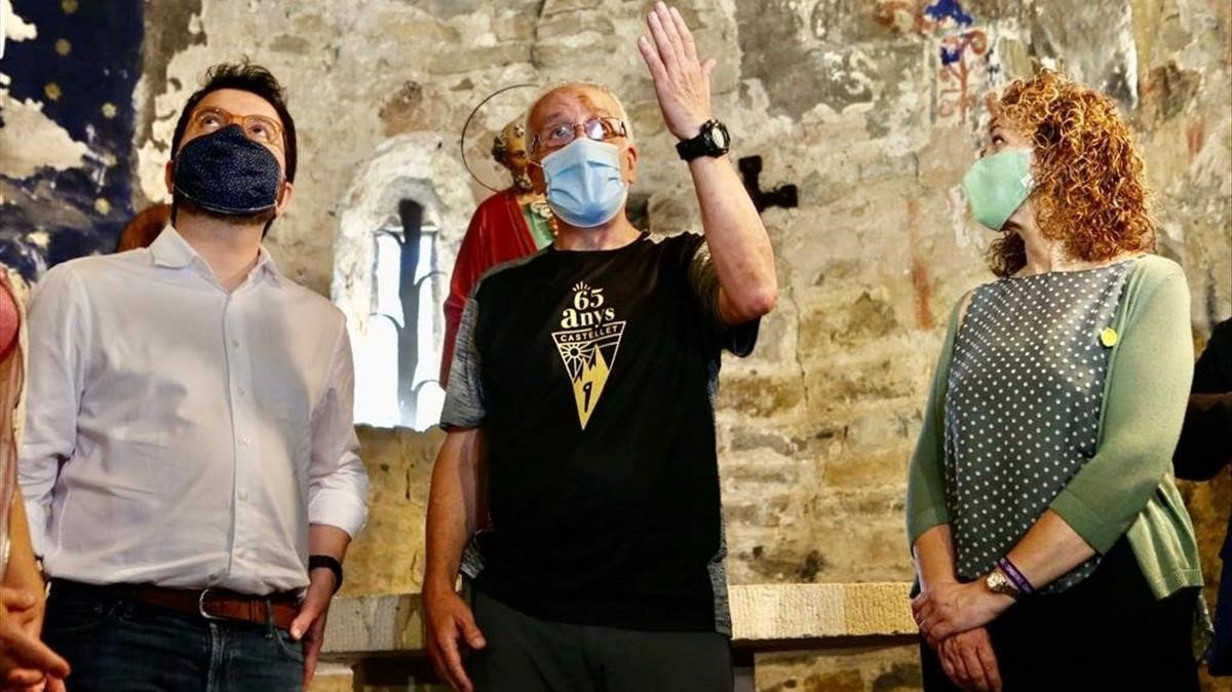
The Vice President of the Govern, Pere Aragonés, and the Minister of Justice, Ester Capella, have publicly disclosed these data today at a press conference held at the estate where the chapel and house of the Campaner de Sant Pere de Vallhonesta is located, Sant Vicenç de Castellet (Barcelona).
………………………..

Check out the example of Navarra. And its cathedral. Millions in repairs were paid for with public money months before the diocese stole (‘registered’) it: 15 million euros. In 2006, the bishopric made it their own and they put a price on the visits and the activities that took place there: “The Church wants the property for three things, to sell, rent or mortgage. We know that it is already being sold and rented, and we do not know if it is being used for mortgages,” says Josemari Esparza ‘ https://elpais.com/diario/2011/07/11/sociedad/1310335203_850215.html
………………………..
The Archbishop of Urgell, Joan Enric Vives, has subsequently defended that the Church “has not misappropriated any property”, and has stated that the registrations that have been made in Catalonia have always been carried out legally. According to the law that says they can steal it.
Vives has assured the media that it seems to him “very fine” that a map of the ”registrations” – his diocese is one of the most presented – is drawn up. He has said the Church has acted “always legally, always according to the current legality. The law has never been violated, in any way. ”
The registration of Sant Pere de Vallhonesta by the Bishopric of Vic (Barcelona) was denounced in 2018 by the agricultural union Unió de Pagesos, which warned of these actions and that they could cause “defenselessness” of the affected farmers.
The Bishopric of Vic assured at that time that documentation had been provided at the time of urging the registration of hermitages, such as pastoral visits, consecrations of old churches or electricity receipts.
The hermitage of Sant Pere de Vallhonesta has been restored and occupied as a hiking center for many years, as the mayor of Sant Vicenç de Castellet, Adriana Delgado, recalled today.
Justice Department Has Created an Registration Mediation Office
The Department of Justice has created the Office of Mediation on ‘Registrations, which is a service of the Mediation Center of Catalonia, aimed at the Church and at individuals and entities that claim ownership of unregistered property without title.
Organizations such as the aforementioned Unió de Pagesos and the Association of Micro-Towns of Catalonia have publicly claimed ownership of various assets unregistered by the Church in recent years in Catalonia.
Most of these assets are places of worship located on private properties and rustic plots as well as sports facilities and public squares around churches and rectories. Registration is the registration of real property for the first time, and recognizes the ownership of the church over it in the Property Registry, even though it does not have the documentation and deeds that prove it.
On the other hand, if the hitherto considered legitimate owner wants to recover the unregistered property, she/he must start a court case to demonstrate and document that the property belongs to them.

Resistance to Church repression and property seizures in Spain has seen various uprisings over the last 2 centuries. This photo is of churches burning in the 1909 rebellion in Barcelona.
The Department of Justice now says it ‘promotes the constitution of a working group to identify the cases that may require public action aimed at recovering the assets that are to be enjoyed by society as a whole, and to support municipalities that properties or unregistered buildings .
The assets registered in the name of the Church have their origin in the Mortgage Law that was approved in 1946, during the Franco dictatorship, in force until December 2015, and which established that the Church, like the administration, could register title of a property despite having no title proving ownership of the property, as recalled today by the Generalitat in a statement.
Source: PostDigital

In all Spain the Catholic Church has already legally stole almost 35,000 properties in its name, just between 1998 and 2015
By Root Journal –
October 17, 2019
In total 34 984 properties were registered by the Catholic Church in Spain from 1998 to 2015, as concluded by the report that the College of Registrars has finally been forced to share because of the Transparency Law.
Until now, the Government has refused to offer data on registrations, nor have they provided specific data on the report that has been in the hands of the Executive for more than a year.
Now, on the other hand, we know that of the total of properties 18,535 are temples or complementary dependencies of the same, and 15,171 are properties with other destinations. In other words, less than half of the heritage is strictly religious, the rest can be farms, garages, residential buildings, …

The Church registered 4,075 of the properties providing ecclesiastical certification and other property papers. The rest, 30,245 specifically, were registered only by ecclesiastical certification, despite the fact that most were not temples.
The Mosque of Córdoba, the Giralda and the Cathedral of Zaragoza or that of Seville are some of the emblematic monuments that the Catholic Church has registered for just a few euros.
Recuperando, an association that struggles to recover the assets that the Catholic Church has registered, now warns that the number of assets could be much higher, since many registrations incorporate several properties under the same property. In addition, from Recuperando, they warn that many of the properties are being sold, so an irreversible process is taking place.
During the Franco dictatorship and later with the Aznar government, the Catholic Church found in the act of registering the perfect instrument to increase its real estate assets based on cemeteries, flats, orchards, parishes and other types of properties that until then belonged to the people in common or individuals.

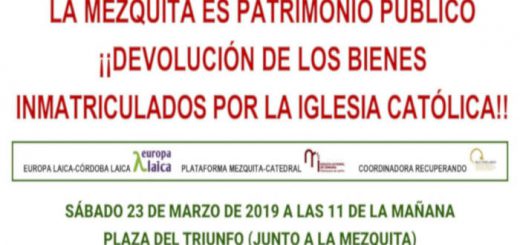
The great Mosque of Cordoba, stolen for 30 euros by the Catholic church, which, with collusion of the Spanish State, runs a thriving tax free tourist business in the buildings, showing all from a Catholic bias. It should be an international scandal equal to that of the Hagia Sophia in Turkey.
…………………………………………………………………….
original en castellano
La Iglesia ha inscrito 3.722 inmuebles en Catalunya sin ningún título que acredite su propiedad
La Iglesia católica ha inscrito 3.722 inmuebles a su nombre en Catalunya, sin ningún título que acredite su propiedad, según ha informado hoy jueves el Govern.
Por Redacción PostDigital Publicado el Jul 25, 2020Compartir
Publicidad
La Iglesia católica ha inscrito 3.722 inmuebles a su nombre en Catalunya, sin ningún título que acredite su propiedad, según ha informado hoy jueves el Govern. Estos datos constan en el conjunto de los registros de la propiedad de toda Cataluña, según inscripciones hechas entre los años 1946 y 2015, gran parte de ellas en Lleida (58 %).
…..
‘Durante la dictadura franquista y más tarde con el Gobierno de Aznar, La Iglesia Católica encontró en la acción de inmatricular el instrumento perfecto para incrementar su patrimonio inmobiliario a base de cementerios, pisos, huertos, parroquias y otro tipo de propiedades que hasta ese momento pertenecían al pueblo o a particulares. Hasta ahora el Gobierno se había negado a ofrecer datos de las inmatriculaciones y tampoco se habían ofrecido datos concretos del informe que lleva más de un año en manos del Ejecutivo.‘ https://raizdiario.es/iglesia-catolica-inmuebles octubre 17, 2019
Se trata de las llamadas inmatriculaciones de fincas rústicas (41 %) o construcciones dedicadas al culto en su mayoría (50 %), como templos, ermitas, cementerios, capillas, conjuntos eclesiásticos y santuarios. El resto de inscripciones son de edificios (9 %) como rectorías, garajes o palacios.
La Iglesia católica ha inscrito 3.722 inmuebles a su nombre en Catalunya, sin ningún título que acredite su propiedad, según ha informado hoy jueves el Govern. Estos datos constan en el conjunto de los registros de la propiedad de toda Cataluña, según inscripciones hechas entre los años 1946 y 2015, gran parte de ellas en Lleida (58 %).
……..
La Iglesia también ha inscrito a su favor el casino de Os Prados …
Los vecinos se reunirán el sábado para decidir qué medidas adoptan tras detectar un cambio en el registro del inmueble durante 2015, apropriandose del casino de Os Prados, ha sido inscrito en fechas recientes a nombre de la Iglesia. En este caso, se trata de una inscripción a nombre del Obispado de Santiago y ….
………….
Se trata de las llamadas inmatriculaciones de fincas rústicas (41 %) o construcciones dedicadas al culto en su mayoría (50 %), como templos, ermitas, cementerios, capillas, conjuntos eclesiásticos y santuarios. El resto de inscripciones son de edificios (9 %) como rectorías, garajes o palacios.
Las comarcas leridanas del Pallars Sobirà, Pallars Jussà y Alt Urgell son las tres comarcas más afectadas de toda Cataluña por esta política de la Iglesia católica y los municipios con más inmatriculaciones son Pont de Suert (Lleida) y Olesa de Bonesvalls (Barcelona), con 82 cada uno.
Las comarcas del Pallars Subirà, Pallars Jussà y Alt Urgell son las afectadas por inmuebles inmatriculados propiedad de la Iglesia
El vicepresidente del Govern, Pere Aragonés, y la consellera de Justicia, Ester Capella, han dado a conocer hoy públicamente estos datos en una rueda de prensa celebrada en la finca donde se encuentra la ermita y la casa del Campaner de Sant Pere de Vallhonesta, a Sant Vicenç de Castellet (Barcelona).
El arzobispo de Urgell, Joan Enric Vives, ha defendido posteriormente que la Iglesia “no se ha apropiado indebidamente de ninguna propiedad”, y ha afirmado que las inmatriculaciones que se han hecho en Catalunya se han realizado siempre legalmente.
El arzobispo de Urgel ha replicado al Govern diciendo que la Iglesia “no se ha apropiado indebidamente de ninguna propiedad”
Vives ha asegurado que le parece “muy bien” que se elabore un mapa de las inmatriculaciones –su diócesis es una de las que más presenta–, pero ha remarcado que la Iglesia no se ha apropiado indebidamente de ninguna propiedad. Ha dicho que en las inmatriculaciones la Iglesia ha actuado “siempre legalmente, siempre según la legalidad vigente. Nunca se ha vulnerado la ley, de ninguna manera”.
La inmatriculación de Sant Pere de Vallhonesta por parte del Obispado de Vic (Barcelona) fue denunciada en 2018 por el sindicato agrario Unió de Pagesos, que alertó de estas actuaciones y de que las mismas podían causar “indefensión” a los agricultores afectados.
El Obispado de Vic aseguró en aquel momento que se había aportado documentación a la hora de instar la inmatriculación de ermitas, como visitas pastorales, consagraciones de iglesias antiguas o recibos de luz.

La ermita de Sant Pere de Vallhonesta ha sido restaurada y ocupada por un centro excursionista desde hace muchos años, como hoy ha recordado la alcaldesa de Sant Vicenç de Castellet, Adriana Delgado, en el mismo acto, al que también ha asistido la delegada del Govern en la Cataluña central, Alba Camps, y el director de Derecho y de Entidades Jurídicas, Xavier Bernadí.
El Departamento de Justicia ha creado una oficina de mediación sobre inmatriculaciones
El Departamento de Justicia ha creado la Oficina de Mediación sobre inmatriculaciones, que es un servicio del Centro de Mediación de Cataluña, dirigido a la Iglesia y a las personas y entidades que reclamen la propiedad de los bienes inmatriculados sin título de propiedad.
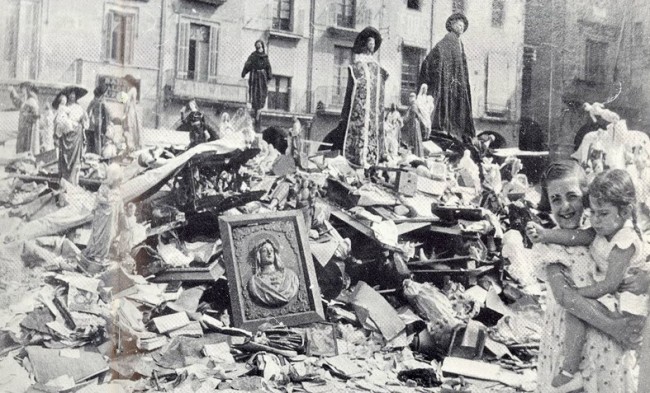
Objects taken from the destruction of religious centers by anti clerical protestors in 1936.
Organizaciones como la citada Unió de Pagesos y la Asociación de Micropueblos de Cataluña han reclamado públicamente la titularidad de diversos bienes inmatriculados por la Iglesia en los últimos años en Cataluña.
La mayor parte de estos bienes son lugares de culto ubicados en propiedades privadas y solares rústicos así como equipamientos deportivos y plazas públicas alrededor de iglesias y rectorias. La inmatriculación es el registro de un bien inmueble por primera vez, y reconoce en el Registro de la Propiedad la titularidad de la iglesia sobre él, aunque esta no disponga de la documentación y las escrituras que lo acrediten.
………………….
..’Volvamos a Navarra. Y a su catedral. Con dinero público se pagaron millonarias reparaciones meses antes de que la diócesis la inmatriculara: 15 millones de euros. En 2006, el obispado la hizo suya y pusieron precio a las visitas y a las actividades que allí se desarrollaban, explican en la plataforma. “La Iglesia quiere la propiedad para tres cosas, vender, alquilar o hipotecar. Sabemos que ya se está vendiendo y alquilando, y desconocemos si se usa para hipotecas”, dice Josemari Esparza…. en Navarra las jerárquicas sotanas han arrasado el territorio. A nombre de la diócesis figuran ya cientos de templos parroquiales, ermitas, basílicas, con todo lo que tienen dentro; también tienen a su nombre casas, almacenes y hasta cementerios, garajes o frontones.’.https://elpais.com/diario/2011/07/11/sociedad/1310335203_850215.html
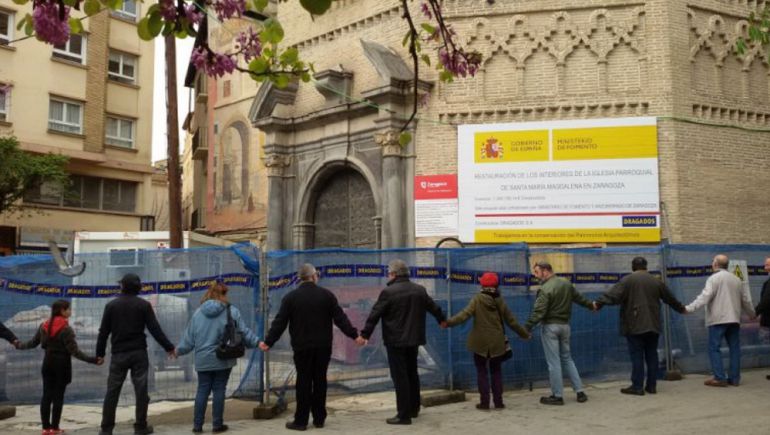
Abrazo a la iglesia de La Magdalena, en Zaragoza, el pasado 26 de marzo de 2017 / Esther Orera De las 1.751 fincas que la Iglesia registro a su nombre en Aragón, cuando el Gobierno de Aznar modificó la Ley Hipotecaria en 1998, ha dicho Gimeno que realmente son muchas más, porque de la información pedida a los 43 registros de la propiedad, han contestado la mitad.
…………………
En cambio, si el hasta entonces considerado legítimo propietario quiere recuperar la finca inmatriculada, debe acudir a los juzgados para demostrar documentalmente que el inmueble le pertenece.
El Departamento de Justicia promueve la constitución de un grupo de trabajo para identificar los supuestos que puedan exigir una actuación pública orientada a recuperar los bienes que hayan de ser disfrutados por el conjunto de la sociedad, para apoyar a los municipios que reclaman fincas o edificios inmatriculados.

The Spanish Inquisition existed officially for 300 years.
Los bienes inmatriculados a nombre de la Iglesia tiene su origen en la Ley Hipotecaria que se aprobó el año 1946, durante la dictadura de Franco, vigente hasta diciembre de 2015, y que establecía que la Iglesia, al igual que la administración, podía inmatricular una finca a pesar de no tener ningún título que acreditara la propiedad, según ha recordado hoy la Generalitat en un comunicado.
Fuente: PostDigital
En España la Iglesia Católica ha robado legalmente casi 35 000 inmuebles entre 1998 y 2015 a través de ‘inmatriculaciones’
Por Diario Raíz – octubre 17, 2019 0 413
En total 34 984 fincas fueron inmatriculadas por la Iglesia Católica en España de 1998 a 2015, tal y como ha conluído el informe que el Colegio de Registradores se ha visto obligado a compartir por culpa de la Ley de Transparencia. Inmatricular, en la jerga administrativa, es inscribir un bien inmueble por primera vez e incorporarlo al Registro Público de Propiedad.
Hasta ahora el Gobierno se había negado a ofrecer datos de las inmatriculaciones y tampoco se habían ofrecido datos concretos del informe que lleva más de un año en manos del Ejecutivo.
Ahora, en cambio, sabemos que del total de las fincas 18 535 se tratan de templos o dependencias complementarias de los mismos, y 15 171 a fincas con otros destinos. Es decir, menos de la mitad del patrimonio es estrictamente religioso, el resto pueden ser fincas, garajes, edificios de viviendas, …
La Iglesia registró 4 075 bienes del listado, aportando la certificación eclesiástica y otro título de propiedad. Los restantes, 30 245 en concreto, fueron inscritos únicamente por la certificación eclesiástica, a pesar de que algunos no fuesen templos.
La Mezquita de Córdoba, la Giralda y la Catedral de Zaragoza o la de Sevilla son algunos de los monumentos emblemáticos que la Iglesia Católica ha inmatriculado por apenas unos euros.
Desde una asociación que lucha por recuperar los bienes que la Iglesia Católica ha inmatriculado advierten de que el númeri de bienes podría ser mucho mayor, ya que muchas inmatriculaciones incorporan bajo una misma propiedad varios inmuebles. Además, desde Recuperando, advierten de que muchas de las fincas están siendo vendidas, por lo que se está produciendo un proceso irreversible.

Durante la dictadura franquista y más tarde con el Gobierno de Aznar, La Iglesia Católica encontró en la acción de inmatricular el instrumento perfecto para incrementar su patrimonio inmobiliario a base de cementerios, pisos, huertos, parroquias y otro tipo de propiedades que hasta ese momento pertenecían al pueblo o a particulares.
Ver también
La Iglesia inscribe como propios miles de inmuebles …
https://elpais.com/diario/2011/07/11/sociedad/1310335203_850215.htmlLaIglesia inscribe como propios miles de inmuebles. Una ley de 1998 permite a los obispos adueñarse de templos de culto de forma opaca – Pueblos de toda España descubren con sorpresa la …

 The Free
