Armed with smartphones, brave protestors are holding cops and fascists to account.
The way the Buffalo Police Department tells it, 75-year-old Martin Gugino “was injured when he tripped and fell” during a June 4 protest. This statement was quickly contradicted when footage from a nearby journalist’s phone showed that Gugino fell after two police officers pushed him. The man’s head hit the ground with a sickening crack and blood poured out of his ear. Most of the officers then walked on by him. The video swiftly went viral.
As local politicians and the police union tried to defend the rule of law, tens of millions watched one of the videos of the cops pushing Gugino, who is a longtime peace activist, to the ground. On Tuesday, President Trump tweeted, without evidence, that Gugino “could be an ANTIFA provocateur” who was “scanning” police communications and possibly faked his own fall. These conspiratorial claims were quickly debunked.
Trump’s tweet does, in a roundabout way, shed light on a dynamic unfolding as anti-police brutality protests sweep the nation. Typically, you think of police as the ones doing surveillance during a protest; they are aggressively monitoring the demonstrations around the country. Law enforcement even flew a Predator droneover protesters in Minneapolis last month. But now, with these protests, the president is paranoid that it’s the people who are surveilling the police. He’s not entirely wrong.
The Gugino video is just one of many recent incidents where activists, journalists, and bystanders have caught police responding to anti-police brutality protests with more police brutality. An NYPD officer was charged with assault after a video of him beating a protester went viral on social media, where he was identified.
An array of video evidence proved that, ahead of a Trump photo op, police used chemical agents on peaceful protesters near the White House, despite the government’s official denial. And the video of George Floyd’s death is perhaps the most powerful example of a bystander’s footage swiftly disproving the police narrative.
The imprisoned deported Sardinian anarchist comrade Davide Delogu informs us that in the Caltagirone prison (in Sicily), where he has just been transferred, he has once again been subject to regime 14 bis. Updates will follow.
Sardegna Anarchica [Anarchist Sardinia] Cassa di Sostegno per l’Anarchico Sardo Prigioniero Deportato Davide Delogu [Support Fund for the Imprisoned Deported Sardinian Anarchist Davide Delogu]
Note: Article 14 bis of the Italian penitentiary law (not to be confused with 41bis) provides for special supervision of a prisoner.
We are calling for international actions in solidarity with the Squats. Make the Greek state, the Greek capital and its partners regret the choice they made to attack the movement and its spaces in Greece. To defend Dervenion 56 and all squats,to prepare the ground for the coming social uprising.
On Friday 26/6, in Exarchia, the Greek state evacuated and sealed Dervenion 56 squat and the building at Dervenion 52. An immediate gathering of solidarity was held at Exarxia Square for several hours.In the evening of the same day, a solidarity march was held with the participation of 300 people. The march ended at Dervenion squat, barricades were set up around the perimeter and then comrades broke the concrete blocks of shame. Read the rest of this entry »
A test on rabbits has been standard for decades to test products for possible contamination by pyrogens.
For this, rabbits are fixed in a small box in which they cannot move for several hours, and the test substance is injected into an ear vein. If they develop a fever, the production unit is not released for sale. After a certain “period of use”, the rabbits are killed.
In addition, NON ANIMAL TESTING can be carried out in vitro with greater speed and less expense than by animal experiments.
In 2018, 6,291 rabbits were used in pyrogen tests nationwide. The numbers in the previous years were similarly high.
An animal-free method, the monocyte activation test (MAT), which works with human blood, was developed 30 years ago and internationally validated in 2005.
In 2010 he was included in the European Pharmacopoeia.
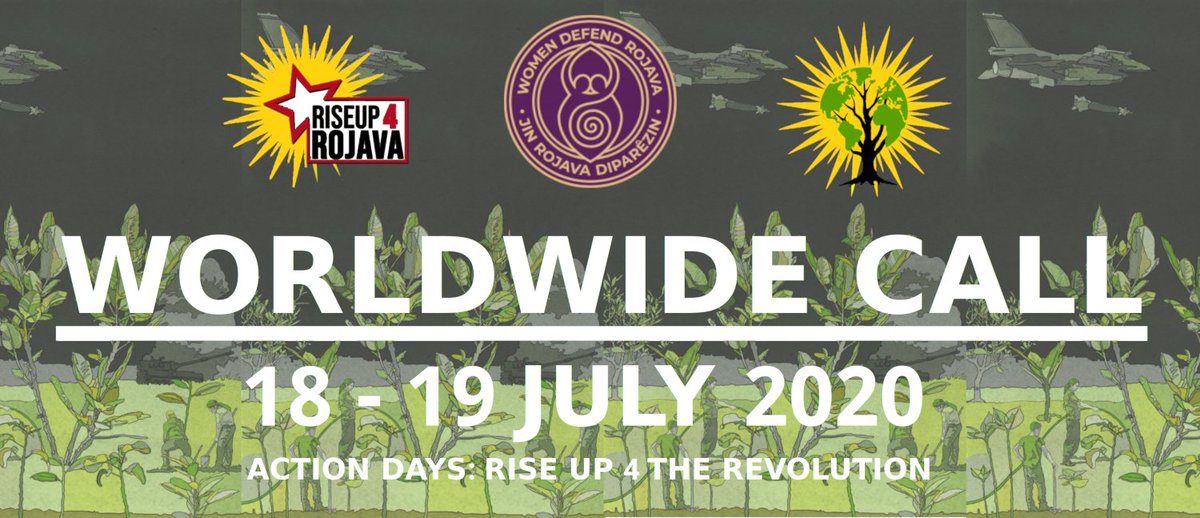
Together with the campaigns Rise Up 4 Rojava and Women Defend Rojava, we call for two international days of action on the 18 th and 19 th of July 2020, against the bombing and invasion of Basûr (Southern Kurdistan, Iraq) and the occupation of Rojava regions by the Turkish army.
Together, we call on all people who share the values of democratic confederalism – democracy, ecology and feminism – to take to the streets and to Rise Up 4 the Revolution. From our side, we would also particularly want to call for all ecological groups, movements and parties and to all people who feel and see themselves as ecologist to join the demonstrations and actions.
War is the antithesis of ecology : We think that to be ecologist means also to be against all the wars of aggression. Because, wars are the contrary of what we, as ecologists, fight for. While we are trying to build an ecological and ethical world where all living things can co-exist in harmony, wars are only further destroying and polluting our planet.
While we give so much effort in reforesting deserts, in building ecological energy infrastructures, in providing non-polluted and non-toxic food and water to all people, wars can destroy all of it in few days and pollute the soil, the air and the water with long-lasting effects.
El autoconsumo de electricidad consiste en generar electricidad para utilizarla en el mismo sitio donde se genera y por el mismo usuario. Muchos negocios y particulares están ya usando paneles solares fotovoltaicos. En todos los países ya es rentable. Si tienes espacio y un puñado de euros, no te lo pienses más. Un reciente informe […]
Un reciente informe del Observatorio de laSostenibilidad propone para España un millón de tejados solares en 2025, que producirían 15.400 GWh para abastecer una población de 7,5 millones de personas (un sexto de la población española). Así, se generarían 15.532 empleos, se evitarían 4,2 millones de toneladas de CO2 y las inversiones se recuperarían en solo 5,7 años.
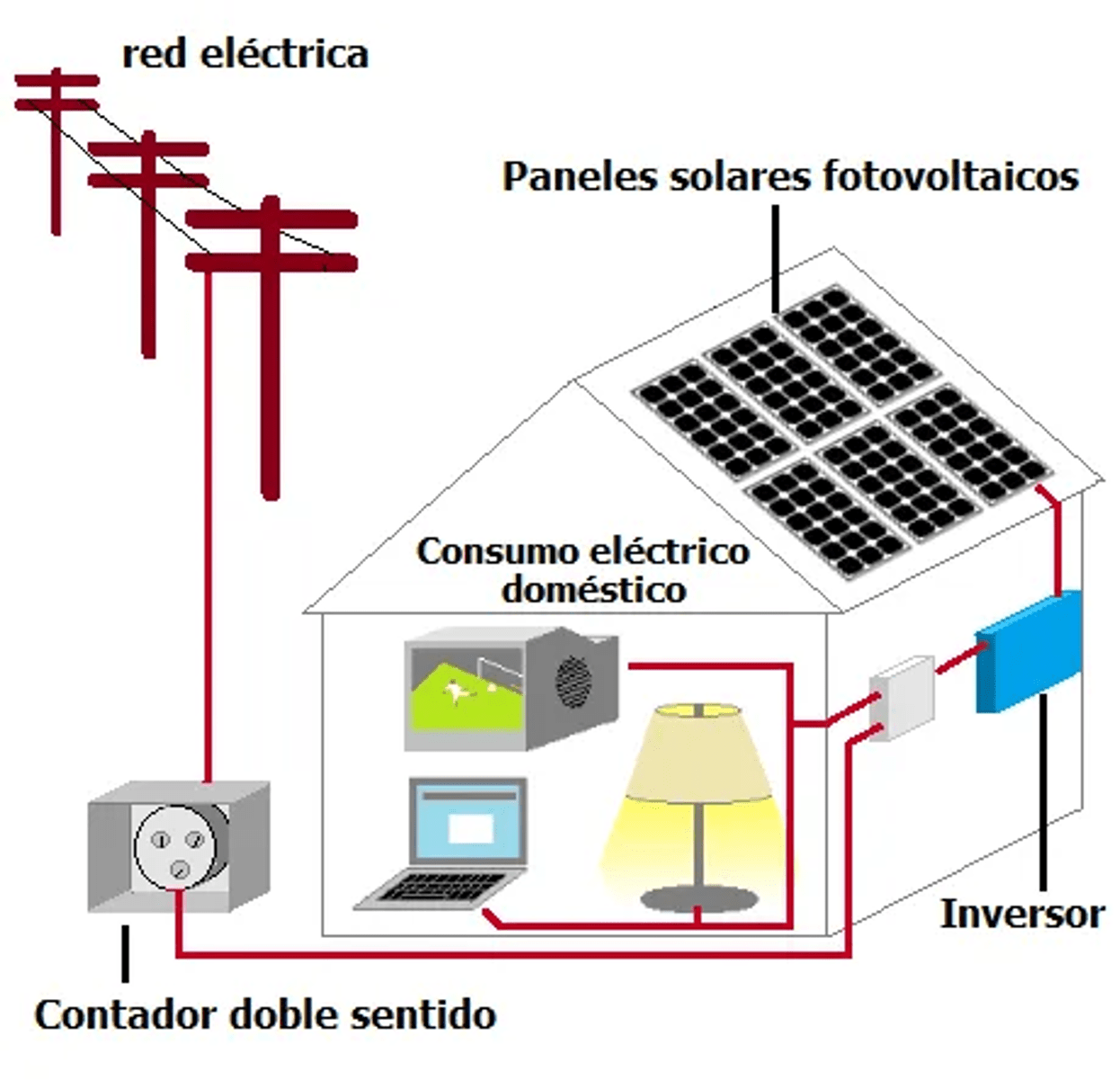
Los paneles solares son un electrodoméstico que ahorra electricidad en vez de consumirla y que en vez de estar dentro de casa está fuera. La electricidad se consume en el momento en el que los paneles la generan. Si se necesita más electricidad, se usará la de la red, como de costumbre. Si se produce más de la que se emplea, la electricidad sobrante se vierte a la red —no se pierde— y te genera un ahorro en tu factura eléctrica.
Cualquier empresa instaladora podrá explicarte los detalles de la legislación, pero independientemente de las leyes, es algo tan barato que compensa, especialmente a pequeña escala (instalaciones de menos de 10kw).
En este artículo pretendemos hacer balance de las ventajas del autoconsumo frente a las energías sucias.
Seis graves inconvenientes de la electricidad procedente de energías sucias
Contaminación y afecciones a la salud: Se emiten gases perjudiciales (CO2 y otros tóxicos), que provocan problemas sanitarios y cambio climático, con todas sus serias consecuencias. Hay que sumar la contaminación de transportar y extraer esos combustibles, sus vertidos, desastres de la minería, etc. La contaminación de la industria nuclear es aún peor, por ser residuos tóxicos de altísima duración.
Pérdida de valiosos recursos no renovables: Quemar petróleo nos hace perder esa materia prima para otros usos.
Dependencia energética del país: Importar energías sucias hace que el país dependa del exterior, lo cual es malo para la balanza de pagos.
Dependencia de los ciudadanos: Gracias a la energía fotovoltaica los ciudadanos no tienen que depender al 100% de empresas productoras de electricidad. Eso no significa desconectarse de la red eléctrica (lo cual sería más caro y contaminante por las baterías). El autoconsumo de electricidad es como plantar tus propios tomates en tu ventana, lo cual no te impide comprarlos en la frutería de tu barrio (mejor que en el supermercado).
Pérdidas en el transporte: El sistema de producción centralizada tiene mayor pérdida de energía en las líneas de transporte de electricidad, lo cual requiere grandes inversiones.
Quita espacio a la naturaleza y reduce la biodiversidad: No solo se ocupa el espacio donde se instalan las centrales y donde se almacenan sus residuos (cenizas, basura nuclear…), sino también toda la extensión que requieren las líneas eléctricas. A eso hay que sumar la gran cantidad de aves que mueren electrocutadas. Algunos parques eólicos también requieren ocupar mucho terreno y también provocan daños a las aves.
Ahorra dinero con poca inversión. El coste depende de factores como la potencia a instalar, pero la rentabilidad es estupenda tanto para empresas como para particulares. Podemos resumir diciendo que invertir en energía fotovoltaica es más rentable que cualquier plan de pensiones. La amortización está asegurada, pero calcular el plazo es complejo (como lo es calcular en cuántos años se amortiza un vehículo comparado con el transporte público), pues depende de la potencia, del lugar de la instalación, de si te lo instalas tú mismo, de nuestros hábitos de consumo, de la evolución de los precios de la electricidad, del tipo de paneles, de las subvenciones que se reciban, etc.
La instalación es simple. No se requieren obras y se instala en pocas horas. La empresa instaladora se encargará del papeleo técnico. Esquema de Sistema fotovoltaico conectado a red para autoconsumo instantáneo
La electricidad que sobre se vierte a la red y te genera dinero. En España y en muchos países las compañías eléctricas están obligadas a descontar dinero en la factura eléctrica por esa electricidad vertida. Esto hace que la rentabilidad sea mayor. Nuestro país dependerá un poco menos del exterior y estaremos avanzando hacia la sostenibilidad.
Para potenciar el autoconsumo, en todo el mundo hay muchos países que han regulado el “balance neto” o sistemas similares.
El autoconsumo es clave para poner fin a la crisis energética. Por supuesto que las energías renovables no son la solución a todos los problemas ambientales, pero si conseguimos sociedades sostenibles será gracias a dos aspectos esenciales: reducir el consumo de energía y hacer la transición hacia energías solo renovables.
El autoconsumo reduce muchos gastos de nuestra sociedad: Se reduce la necesidad de nuevas centrales y nuevas líneas. Al reducir la contaminación, se ahorran también muchos gastos sanitarios.
El autoconsumo es una actitud de exigencia de libertad y sostenibilidad. Es un gesto de economía, pero también de rebeldía ante quienes se lucran con la contaminación.
Facilitar el autoconsumo de electricidad es gratis para el Estado, porque lo pagan aquellas personas y empresas que lo deseen. Solo pierden unas pocas empresas energéticas que se lucran contaminando el planeta.
El futuro de la producción energética es descentralizado: pequeños generadores distribuidos son mejores que grandes centrales eléctricas. De la misma forma, el futuro de la producción de alimentos es también descentralizado: pequeños huertos urbanos (en tu balcón, por ejemplo) son mejores que grandes campos de agricultura intensiva, pero ese es otro tema.
Captain of Lebanese cargo ship carrying 52 migrants rescued in the Mediterranean says food and water are running out.
The Talia’s captain was forced to accommodate the stranded people in the vessel’s dirty cattle cages [Courtesy of The Talia]
A Lebanese cargo ship carrying 52 migrants rescued in the Mediterranean has been denied access to Italy and Malta, forcing its captain to accommodate the stranded people in the vessel’s dirty cattle cages.
“I am running out of food and water to give them,” said Mohammad Shaaban, the captain of the Talia, the ship used for transporting livestock that on Friday rescued the migrants from a sinking dinghy heading from Libya to Europe, in a phone interview with Al Jazeera.
“This is a place for animals, not for humans. Malta, Italy, or even Spain must take these people, I am not a government agency, the company cannot bear more losses,” he said.
Most of the Talia’s passengers are from Somalia and Djibouti, and many need urgent medical care after surviving war in Libya and enduring five days at sea, according to Shaaban.
On Sunday, Malta’s armed forces allowed the medical evacuation of two people from the Talia, but refused to take others.
Most of the Talia’s passengers are from Somalia and Djibouti [Courtesy of the Talia]
One of the stranded migrants, 16-year-old Yaakouba Barry, said he was jailed for 14 months in an unofficial prison in the Libyan city of Bani Walid, where he was tortured in an attempt to extort a ransom from his family.
“My father is dead and my mother is an old woman who owns nothing. I thought they would kill me because I couldn’t pay”, Barry told Al Jazeera.
El punto fundamental de todo esto es simple: la Tierra está increíblemente delicadamente equilibrada con una gran cantidad de fuerzas que componen este equilibrio y hacen posible la vida.
El arco iris invisible: una historia de electricidad y vida …
por Robert J. Burrowes En su libro recientemente revisado y actualizado The Invisible Rainbow: A History of Electricity and Life, el científico Arthur Firstenberg ha hecho comprensible tanto la ciencia como la historia al explicar la importancia y el significado para la vida en la Tierra de una consideración vital que durante mucho tiempo ha sido ‘invisible’: electricidad.
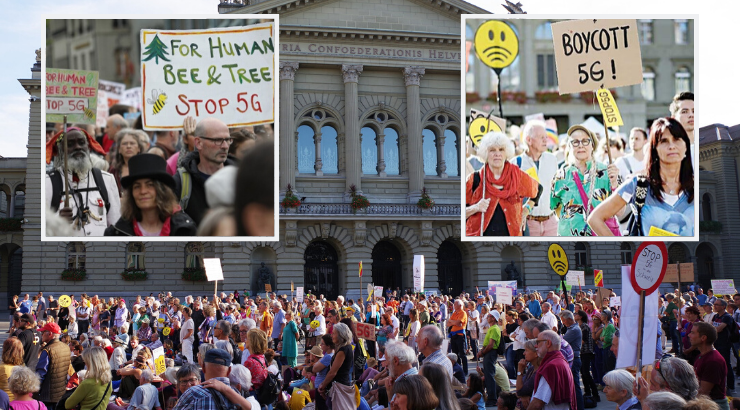
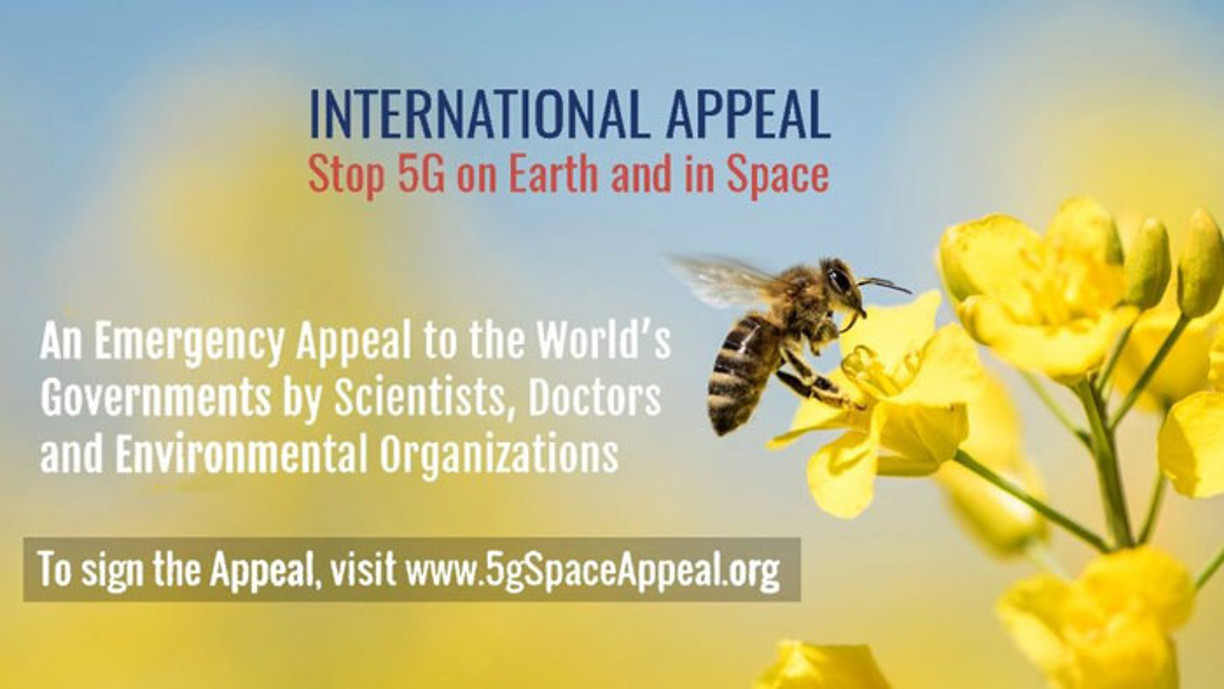
5g no respeta los ecosistemas; es un peligro para todo lo vivo,mata las abejas, los insectos, los pájaros y los árboles. #Stop5g#5gmata Debilita nuestro sistema inmune y nos hace propensos a los patógenos #Covid_19pic.twitter.com/U72zpDtSFs
De hecho, como lo deja en claro Firstenberg, si queremos entender la vida en la Tierra, no podemos hacerlo sin entender el papel que juega la electricidad para hacer posible la vida, curarla y, si se abusa de ella, amenazarnos a todos.
El libro de Firstenberg es inusual en al menos dos cuentas. Basado en décadas de investigación científica, explica cuidadosamente cada punto en un lenguaje accesible para los no científicos mientras documenta su caso con una claridad excepcional y detalles complementados por una bibliografía de 138 páginas.
Si realmente quieres entender este tema y lo que está en juego, te harás un favor leyendo este libro.









![The Talia's captain was forced to accommodate the stranded people in the vessel's dirty cattle cages [Courtesy of The Talia]](https://www.aljazeera.com/mritems/imagecache/mbdxxlarge/mritems/Images/2020/7/6/0243fb2111dc48ce8bbef8d2aa87fae7_18.jpg "Italy, Malta reject 52 migrants stranded on animal cargo ship")

 The Free