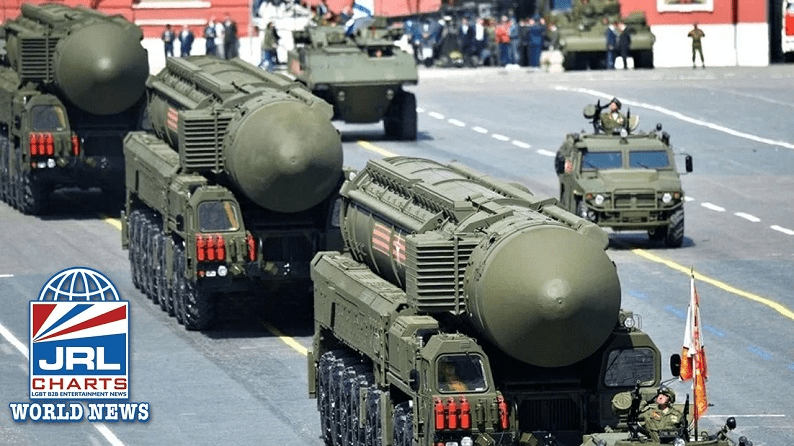
Russian President Vladimir Putin has ordered placing the Russian army’s deterrence forces on a special alert.
“Top officials of leading NATO countries make aggressive statements about our country, so I order the defense minister and the chief of the General Staff to put the Russian army’s deterrence forces on a special alert,” Putin said during a meeting with Defense Minister Sergei Shoigu and Chief of the Russian Armed Forces General Staff Valery Gerasimov.
Speaking on state television on Sunday, he said: “As you can see, not only do Western countries take unfriendly measures against our country in the economic dimension – illegitimate sanctions that everyone knows…
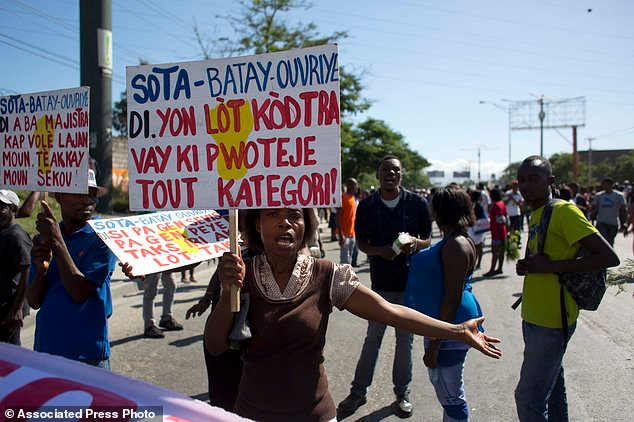
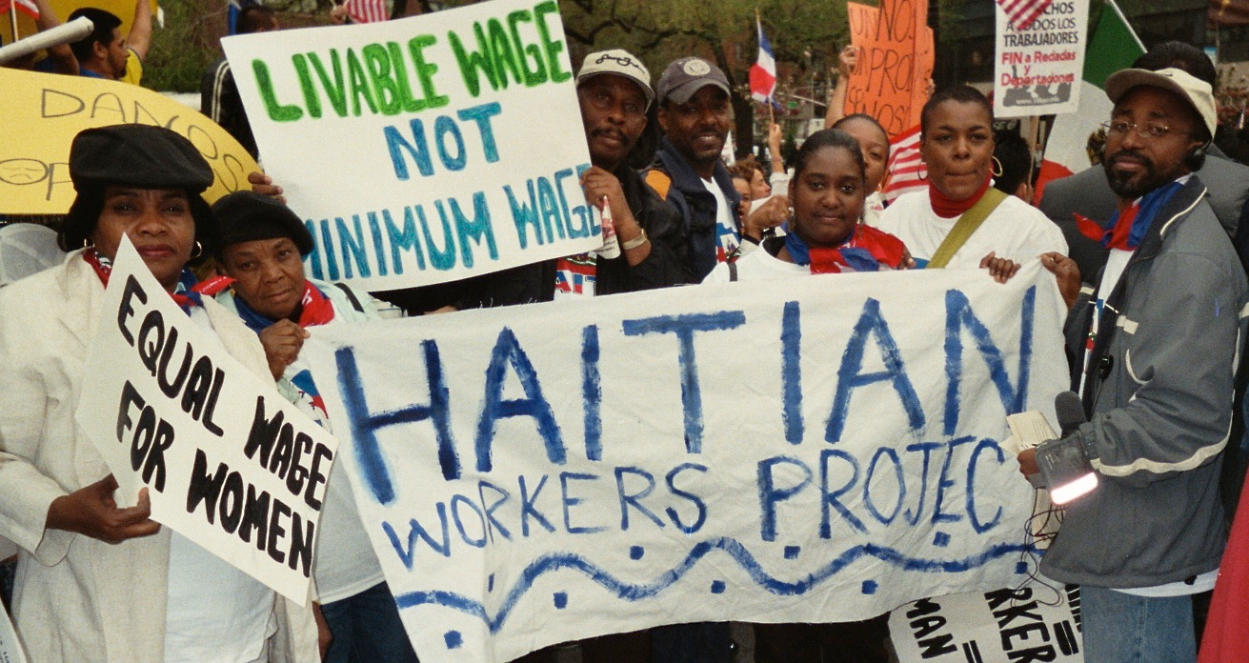
Since mid-January, thousands of workers have demonstrated on the streets of Port-au-Prince to demand an increase in the minimum wage, social support and better working conditions in the textile industries that employ more than 57,000 people, mostly young women.
Haitian Prime Minister Ariel Henry responded by increasing the minimum wage from 500 gourdes (about $5) to 685 gourdes ($6.71), far from the 1,500 gourdes (about $15) demanded by workers.
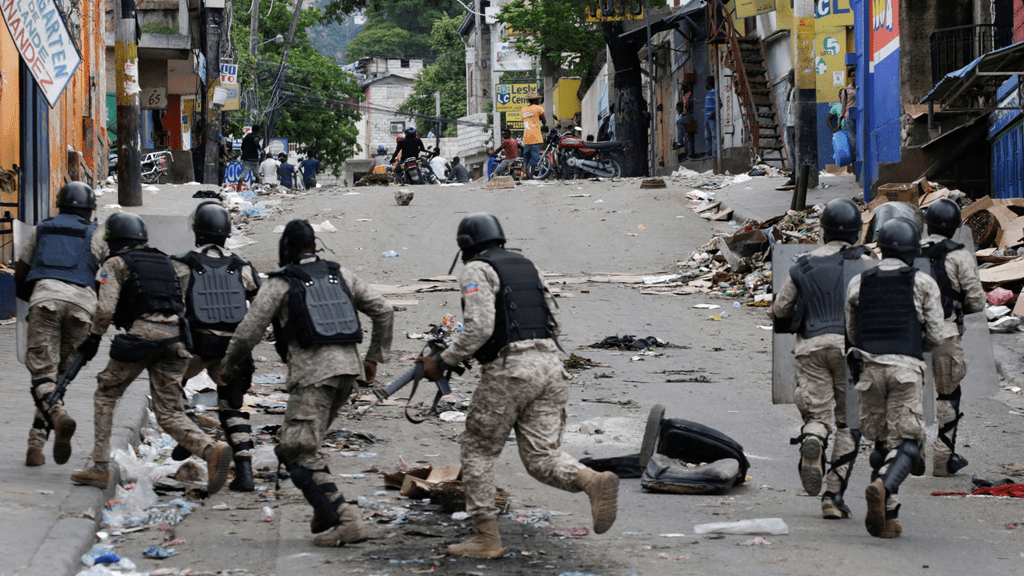
The prime minister’s decision caused resentment among the workers, who organized two major protests this week, in the last of which a photojournalist was killed and two reporters were injured when police opened fire on the demonstrators, according to eye witnesses.
President of the Senate, Joseph Lambert, and organizations such as the National Human Rights Defense Network have expressed support towards the workers.
“In the face of the mobilizations to demand an adjustment of the minimum wage, the Haitian State, with the complicity of the employers, prevents the increase,” Dominique St-Eloi, coordinator of the National Union of Haitian Workers, told EFE.
While there has been no increase in wages for three years, the prices of basic necessities have risen, including transport, he said.
“We ask for 1,500 gourdes and we have the social support. Employers and authorities treat workers harshly. They condemn workers with a salary for so many years, without adjusting it,” said St Eloi, underlining that inflation is 24.6 percent, and that hospitalization costs and drug prices have increased.
According to Jean Eddy Lucien, a professor at the State University of Haiti, workers’ salaries was a “really complicated” issue as to what they receive for their work.
“If we look at the textile sector in Haiti, investors come because they are certainly attracted to the minimum wage,” he told EFE.
The professor pointed out that a worker who in the United States earns $15 an hour, gets $120 for eight hours of work.
“A worker who works 8 hours for less than $5 (as in Haiti) is a salaried slave. The labor movement is another awakening of the Haitian social movement. Workers are revolutionaries, they can change history,” Lucien said.
The trade unionist St-Eloi claimed that the current minimum wage of 500 gourdes was not enough even to meet the daily expenses of food and transport.
People participate in a demonstration in Port-au-Prince, Haiti, 23 February 2022. EPA-EFE/FILE/Johnson Sabin
“And let’s not forget that the worker lives in a house, has a family, and has to pay the school fees of his children every month,” he said, adding that some workers suffer from tuberculosis and stomach ulcers because they cant afford sufficient food.
St-Eloi denounced police repression of demonstrations and criticized employers who retain workers’ health insurance money, depriving them of access to medical care.
Lucien, for his part, claimed that the police force was a method to harshly repress the trade union movement in favor of foreign investors as a guarantee of capital stability.
“The police are more repressive with the workers than with any other social group,” he argued.
Cobalt is essential for making gadgets like smartphones and laptops and necessary in transitioning from fossil fuels to renewable energy. The sad part is people who supply it are not likely to benefit from cobalt’s unique properties any time soon.
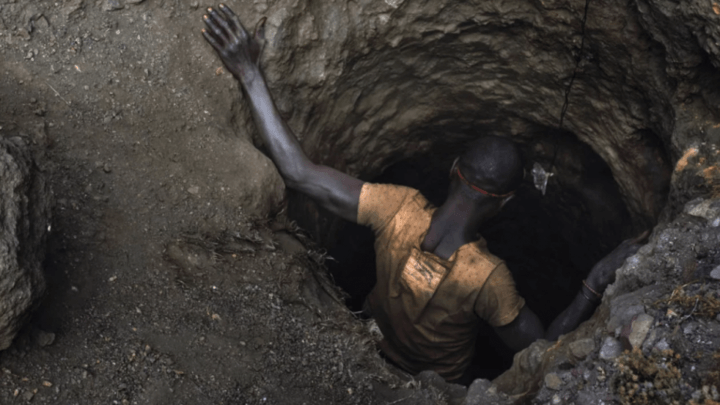
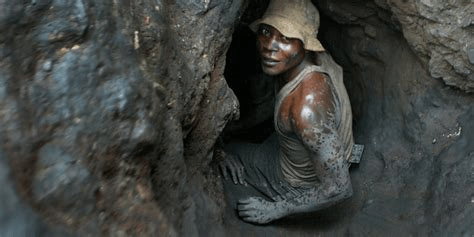
Many miners in the Democratic Republic of Congo, where the bulk of the world’s cobalt is found, are forced to extract and process the ore by hand, which causes serious health problems and environmental pollution.
The minerals are cleaned in river water, which pollutes it. Though there is no specific research, there’s a direct correlation between some widespread illnesses among mineral mine workers and the overall health level of the population.
Also, a lot of children and pregnant women work in quarries. Children exposed to cobalt ore often have a problem with delayed growth. They either grow slower or, at some point, stop growing at all.
As for pregnant women, there are occasional deformities in newborns. So if a pregnant woman is working in a quarry, her baby might have fetal abnormalities or be stillborn.
Watch the film to get more perspective on the situation.
2:54 – Children working in the quarry may present with delayed growth
5:47 – Trezor and all of his family work at the quarry
8:08 – Jean works in the quarry to earn money for education
12:00 – American and Chinese companies dug the quarries
14:06 – Tresor can mine five bags a day 17:05 – Cobalt’s price is based on its concentration
18:24 – The state prohibits pregnant women from working in the mines
21:11 – Employers often cheat and leave workers underpaid 23:49 – When the ore is extracted, it’s delivered directly to warehouses
25:31 – In 2022, the number of children employed in the mines will be reduced
RT Documentary offers you in-depth documentary films on topics that will leave no one indifferent.
Social and environmental issues, shocking traditions, intriguing personalities, history, sports and so much more – we have documentaries to suit every taste, travelling far and wide to bring you diverse and compelling stories.
26 Feb 2022 Source: Agencies By Al Mayadeen Net After an eight-year hiatus, water is restored to Crimea via the North Crimean Canal, after Russian forces destroyed a dam constructed by the Ukrainian authorities in the Kherson region.
Ukrainian authorities had previously announced the construction of a dam that would prevent water flows to the north […]
The Russian military special operation in Ukraine coincided with the planned launch of U.S. military biolaboratories in Kiev and Odessa. On February 26, the US Embassy in Ukraine rushed to delete all documents about 11 Pentagon-funded bio-laboratories in Ukraine from its website. All these documents (now deleted by the Embassy), you can read HERE.
In October 2021, the U.S. Defense Threat Reduction Agency (DTRA) of the U.S. Department of Defense published on the U.S. government procurement website an additional agreement on “combating highly dangerous pathogens.
The document concerns the final stage of work on the launch of two bio-laboratories in Ukraine: in Kiev and Odessa. The additional agreement covers the equipping and training of personnel and commissioning of the facilities.
The cost of the work is 3.6 million dollars, but some figures in the document are hidden for reasons of secrecy. According to the document, the laboratories were more than 90 per cent ready.
Mariupol is a big port city, mainly ethnic Russian, situated in the part of Donetsk still controlled by Ukraine, between the Russian controlled areas of Donetsk Repuiblic (DPR) and Crimea. The Ukranian Nazis aim to again keep the city by any means (as they did in 2014) and have prepared a trap which threatens to cause a bloodbath as Russian troops close in.
On February 26, Ukrainian nazi forces killed a family, who were trying to leave the city of Mariupol. Then, they opened fire on other civilian cars.
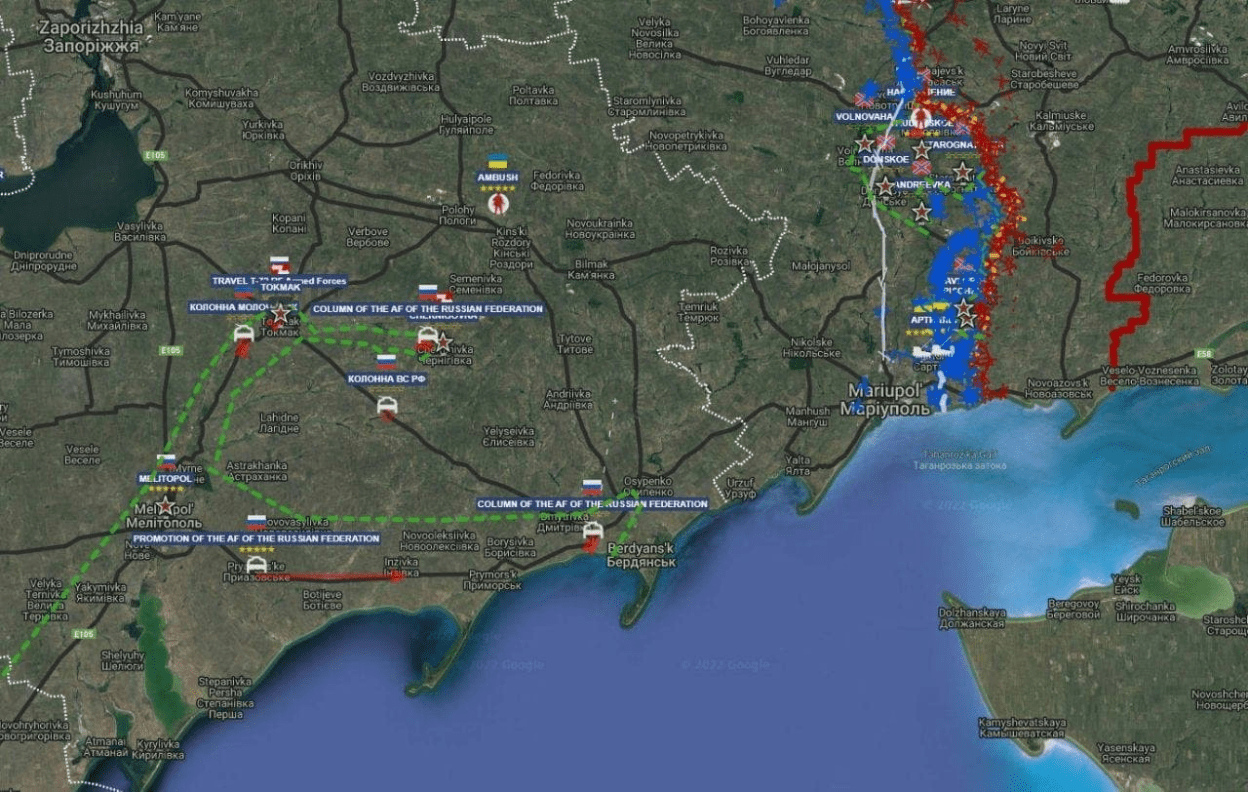
The DPR sources shared the following map showing the positions of the joint forces in the region (26th Feb 22):
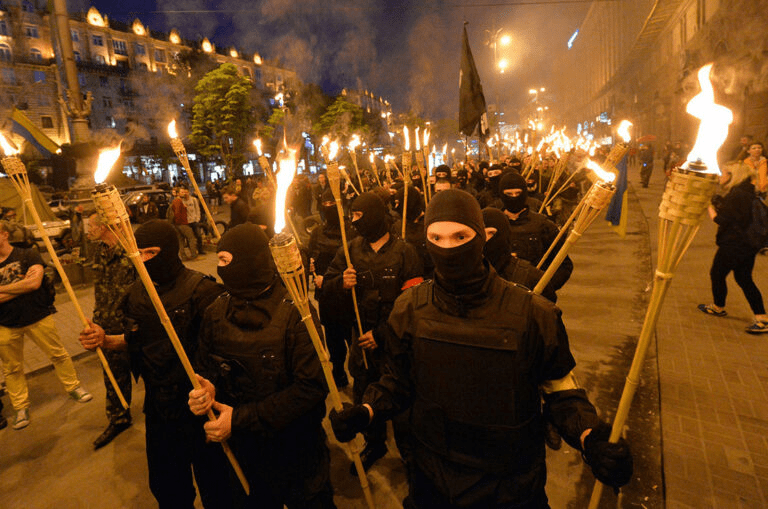
The situation in the city remains tense. While the joint Russian, DPR forces are advancing to the city, members of Nazi units like Azov and Gaidar are ‘cleaning’ Mariupol from alleged ‘Russian saboteurs’, killing civilians who are trying to flee from the ‘hostage’ in the city.
While civilians were prohibited to leave the city, more Ukrainian heavy equipment is being deployed on the streets of Mariupol. The Ukrainian tank took its position between two schools:
In the afternoon, Russian troops renewed their advance towards Mariupol.
Following the advance of the Crimean group of Russian troops, which has passed through Berdyansk, the DPR forces reportedly managed to cut off Volnovakha from Mariupol and now can target the route to Mariupol. Ukrainian forces are close to be trapped in the city.
Acting mayor of Berdyansk (to the west of Mariupol) Alexander Svidlo reported that Russian troops were moving toward Mariupol and the Berdiansk airport.
“Part of (Russian) forces that was near Primorsk went in the direction of Mariupol. Part of the heavy military equipment is heading near the village of Azovskoye, following cross-country terrain, towards Berdyansk airport. As for the shooting heard by the locals: we have no information about any strikes on residential buildings or infrastructure facilities“. – Svidlo claimed.
The troops are moving with air support from the Russian Air Force. The Russian Air Force conducted at least six strikes on UAF positions in Sartana, north of Mariupol.
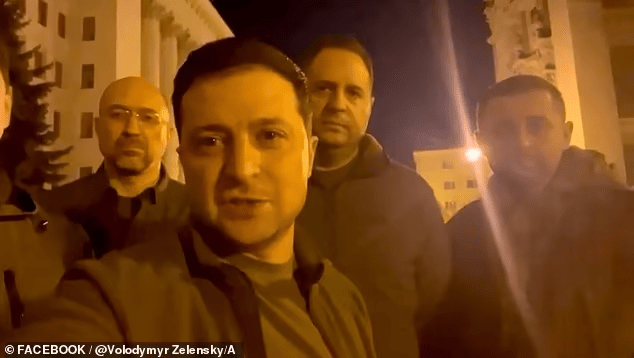
Ukrainian President Volodymyr Zelensky has left Kiev and moved to Lviv, located in the west of the country, Russian State Duma Chairman Viacheslav Volodin reported, citing deputies of the Verkhovna Rada of Ukraine.

Volodin adds that Zelensky was no longer in the capital on February 25.
As for the videos that he posted on social networks, they would have been recorded beforehand.
It was deputies of the Verkhovna Rada, who had planned to meet the president in Kiev but were invited to Lviv, who informed Volodin of his absence in the capital.
On February 25, Zelensky offered his Russian counterpart, Vladimir Putin, a seat at the negotiating table. Kremlin press secretary Dmitri Peskov assured that Russia is ready to send his delegation to Minsk to negotiate with Ukraine.
But he later claimed that Ukraine emphasized that it was reconsidering the idea of negotiating with Russia in Minsk, chose Warsaw, and then disappeared.
original in sputnik Spanish.. translatedby theFreeOnline
************
original en Español
El presidente de Ucrania abandona Kiev, según diputados de la Rada Suprema
El presidente de Ucrania, Volodímir Zelenski, abandonó Kiev y se trasladó a Leópolis, ubicado al oeste del país, informa el presidente de la Duma de Estado de Rusia, Viacheslav Volodin, citando a unos diputados de la Rada Suprema de Ucrania.
Volodin agrega que Zelenski ya no estaba en la capital el 25 de febrero.
En cuanto a los videos que publicó en las redes sociales, habrían sido grabados de antemano.
Fueron unos diputados de la Rada Suprema, que tenían previsto reunirse con el presidente en Kiev pero fueron invitados a Leópolis, quienes informaron a Volodin de su ausencia en la capital.
El 25 de febrero, Zelenski ofreció a su homólogo ruso, Vladímir Putin, sentarse a la mesa de negociaciones. El secretario de prensa del Kremlin, Dmitri Peskov, aseguró que Rusia está lista para enviar su delegación a Minsk para negociar con Ucrania.
\Pero más tarde afirmó que Ucrania enfatizó que estaba reconsiderando la idea de negociar con Rusia en Minsk, eligió Varsovia y luego desapareció.











 The Free