Shocking accusations of massacre and torture have again appeared in the MSM worldwide. Confirming again that ‘Putin is a monster’. Here’s the other side of the story.
The bodies “appeared’ in the street 4 days later” when the international and Ukrainian press arrived. All men. Hardly any blood…..
Thr Russians ordered their forces to pull back and stop the partial siege of Kyiv, saying this was a trust boosting measure after Ukraine offered to become a Neutral Country at the negotiations.
We don’t know how or why but immediately Ukrainian forces attacked with all their forces, and the Russian had to retreat under heavy artillery fire, losing many soldiers.
The Russians responded desperately replying to the firing, and may have loosened their policy of avoiding all civilian casualties.
Nevertheless Russia claims no civilians were killed by them, that 4 days passed befiore…
German-language media has already been going crazy lately about future purchases of oil and natural gas.
Since Germany is included in the list of “unfriendly countries” by Russia, it, like all the EU states, will only be allowed to purchase Russian natural gas for rubles, and not for euros or US dollars.
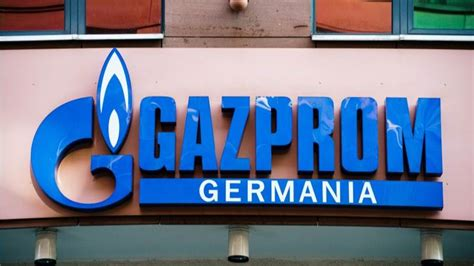
And now comes this bit of news, which should make the German talking heads go super-double-crazy: Germany will be left without Russian gas because its contract is not with Gazprom but with its subsidiary Gazprom Germany, which Gazprom has abandoned.
Barely a day or two ago, German officials were loudly declaring that their contract with Gazprom provides for payment in euros or dollars, and therefore Germany will not pay for Russian gas in rubles.
That ought to make everything perfectly clear. However, Germany’s gas supply contract is with Gazprom Germania GmbH, located in Berlin, and not with actual Gazprom, headquartered in St. Petersburg!
Do the German authorities even know that these are now two completely different organizations?
Gazprom Germania GmbH is the headquarters of the diversified conglomerate Gazprom Germania Group, which includes 40 enterprises operating in more than 20 countries in Europe, Asia and North America.
Until Friday, it was a 100% subsidiary of the Russian Gazprom. On Friday, Gazprom pulled out of Gazprom Germania and no longer has anything to do with its former Berlin subsidiary.
With that, Gazprom Germania has lost any connection to Russian gas.
Worse yet, it is believed to be insolvent and likely to go bankrupt within a few weeks, at which point it will be liquidated.
All of its customers will now be forced to buy gas from Gazprom Russia and it pay (indirectly) in… rubles. No rubles—no gas!
Having imposed anti-Russian sanctions as demanded of it by Washington, Germany has already frozen Russian foreign exchange reserves.
The country’s largest gas storage facility in Rehden (Lower Saxony) is only 0.5% full—an all-time low.
Until this Friday, this vault, as well as a number of other facilities located at key points in Germany’s energy infrastructure, indirectly belonged to Russia’s Gazprom—but not any more!
If earlier the German government threatened to nationalize Russian gas assets on its territory, now such threats have become hollow. Germany has nothing more that it can threaten to steal from Russia to force it to keep the gas flowing.
[Instead, Germany’s representatives now have to fly to St. Petersburg and negotiate a new deal with Gazprom directly, in rubles.
Except that they can’t do that either!
According to the Energy Charter and the Third Energy Package of the European Union, every single supplier of energy resources to the EU is required to be part of the EU legal system—perhaps not directly, but definitely through subsidiaries such as Gazprom Germania GmbH.
Thus, all of Gazprom’s contracts with buyers from the European Union were signed by Gazprom Germania GmbH and its other subsidiaries. It could not have been otherwise, for otherwise the contracts would be outside the jurisdiction of the European Union and the Europeans considered this unacceptable.
But now the Europeans will need to come to Russia and sign contracts under Russian law, with payment stipulated in rubles.
Of course, the European Commission will never agree to this… and now we have to wait impatiently to see just how quickly this “never” will come to an end.
India, Brazil, UAE, Pakistan, Hungary, Israel and so on all deciding to remain on the fence in what actually is a huge snub to the US. Saudi’s selling oil in Yuan? (bye bye USD) India buying Russian oil in Rubles? (bye bye USD) The EU starting the paperwork to pay for Russian gas in Rubles? (bye bye USD)
‘Blocking Russian energy exports would force Hungarians to “pay the price of the war,” Orban said, noting that 85% of Hungary’s gas and more than 60% of its oil comes from Russia’…./…
The FDA does not like ivermectin because it works and this costs the pharmaceutical industry hundreds of billions of dollars in lost vaccine profits.
Almost everyone who works at FDA is auditioning for a job with a big pharmaceutical company. So the FDA ran and continues to run hit pieces against this Nobel Prize winning treatment, calling it “horse medicine.”
Of course many (most?) medicines have dual use in human and other animals — including antibiotics, pain relievers, chemotherapy drugs etc. So the FDA staff debased and degraded themselves in service of the cartel and now no one trusts them.
Well, to add insult to mass murder, it turns out that the whole time that the FDA was incorrectly calling ivermectin “horse medicine” it was developing with Merck, an actual horse medicine to treat Covid:
Molnupiravir began as a possible therapy for Venezuelan equine encephalitis virus at Emory University’s non-profit company DRIVE (Drug Innovation Ventures at Emory) in Atlanta. But in 2015, DRIVE’s chief executive George Painter offered it to a collaborator, virologist Mark Denison at Vanderbilt University in Nashville, Tennessee, to test against coronaviruses. “I was pretty blown away by it,” Denison remembers. He found that it worked against multiple coronaviruses: MERS and mouse hepatitis virus.
But here’s the kicker — molnupiravir is a mutagen — it changes DNA which will accelerate the creation of new variants and thus prolong the pandemic. It costs $700 per full course of treatment. Of course the FDA granted an emergency use authorization.
So to recap:
Safe and effective treatment for Covid, costs pennies, won the Nobel Prize for Medicine = ridiculed by FDA.
Actual horse medicine (TO TREAT AN ACTUAL HORSE VIRUS) that costs a fortune, changes your DNA, and prolongs the pandemic = praised by the FDA.
Arrest all of the FDA leadership and dismantle that building brick by brick.
Cuando Dai entra en un espacio colectivo, politizado o no, su primera pregunta al conocer a alguien por primera vez es siempre la misma: ¿pronombres?
Preguntar por los pronombres es otra manera de señalar cómo presuponemos automáticamente el género de alguien. Dai tiene 22 años, se define como persona no binaria, admite todos los pronombres y forma parte de la asamblea del Orgullo Crítico Murcia desde este verano.
En este espacio encontró un lugar en el que no tenía que dar explicaciones ni decir quién era. No se ha sometido nunca a ningún proceso de hormonación, no está operade y no lo ve necesario.
¿Qué reacciones encuentras normalmente cuando haces esa pregunta?
A ver, no le pregunto por ejemplo a gente de mi familia porque es una pregunta fuera de contexto que no tiene sentido y sería como sacar un debate que no viene a cuento, pero sí que lo hago con gente que creo que puede sentirse identificada con otros pronombres diferentes a los que aparentan y es verdad que incluso dentro de espacios más o menos politizados la reacción es de sorpresa en plan, pues masculino, o femenino, como si fuera algo obvio, algo evidente que no hay que plantearse o discutir.
Shocking accusations of massacre and torture have again appeared in the MSM worldwide. Confirming again that ‘Putin is a monster’. Here’s the other side of the story.
The bodies “appeared’ in the street 3 days later” when the international and Ukrainian press arrived. All men. Hardly any blood…..
Thr Russians had ordered their forces to pull back and stop the partial siege of Kyiv, saying this was a trust boosting measure after Ukraine offered to become a Neutral Country at the negotiations.
We don’t know how or why but immediately Ukrainian forces attacked with all their forces, and the Russian had to retreat under heavy artillery fire, as evidenced by the craters and many destroyed tanks, etc..
The Russians responded desperately to the firing, and may have loosened their policy of avoiding all civilian casualties.
Nevertheless Russia claims no civilians were killed by them, that 3 days passed befiore the international press circus arrived, that the Azov nazis arrived after they left and got permission to execute people without blue Ukrainian armbands. (see clip published and later deleted by Ukrainian military commander, Azov nazi Sergey Korotkih)
Civilians had been asked to wear white armbands by the Russians to show they were non-combatants. Many of the bodies found had white armbands or had their hands tied with them. etc.
The Russian military has firmly denied accusations of mass killings of civilians in Bucha, a Ukrainian town northwest of Kiev. The claims have been raised by Ukraine itself, some Western media outlets and human rights groups, after Moscow had withdrawn its troops from the outskirts of Ukraine’s capital.
“All photographs and video materials published by the Kiev regime, allegedly showing some kind of “crimes” by Russian military personnel in the town of Bucha, Kiev region, are yet another provocation,” the Russian Ministry of Defense said Sunday.
Russian troops had been pulled out from the area on March 30, the military said, pointing out that “the so-called ‘evidence of crimes’ in Bucha appeared only on the fourth day” after the withdrawal, when Ukrainian intelligence and “representatives of Ukrainian television arrived in the town.”
“Moreover, on March 31 the mayor of Bucha, Anatoly Fedoruk, confirmed in his video address that there was no Russian military in the town, but did not even mention any local residents laying shot in the streets with their hands tied,” the Russian military also pointed out.
“It’s particularity concerning that all the bodies of people whose images were published by the Kiev regime, after at least four days, have not stiffened, do not have characteristic cadaveric spots, and have fresh blood in their wounds,” the military noted, adding that all these inconsistencies show that the whole Bucha affair “has been staged by the Kiev regime for Western media, as was the case with the [fake news from the] Mariupol maternity clinic.”
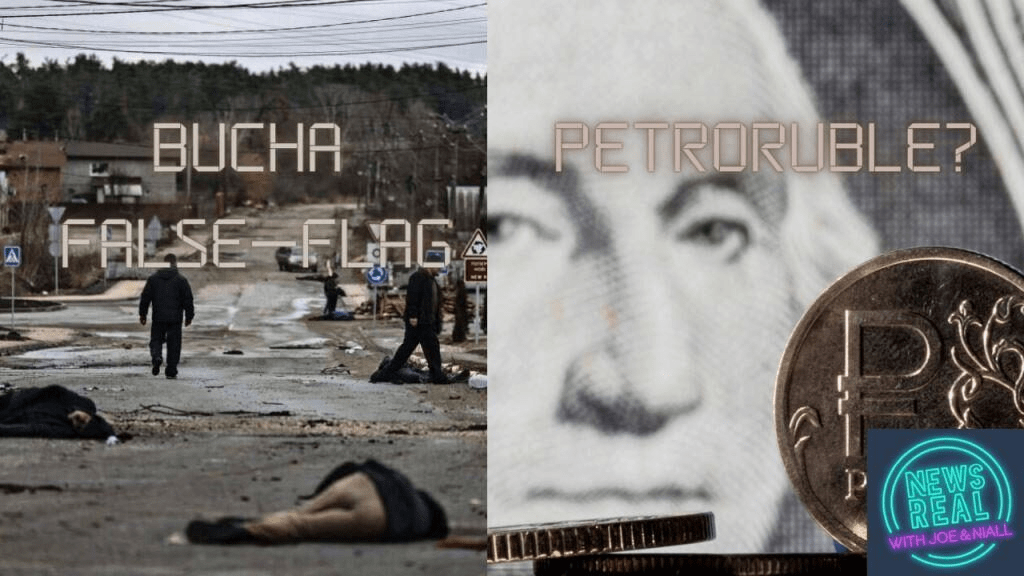
Graphic footage from Bucha shows multiple bodies in civilian clothing lying in the middle of a street. Some of the dead apparently had their hands tied, while others wore white armbands, commonly used by Russian forces and civilians in areas under Russian control.
Kiev has blamed the Bucha killings on Moscow, with Ukrainian foreign minister Dmytro Kuleba claiming it was a “deliberate massacre” by Russian troops.
“The Bucha massacre was deliberate. Russians aim to eliminate as many Ukrainians as they can. We must stop them and kick them out. I demand new, devastating G7 sanctions NOW,” Kuleba wrote on Twitter.
Top Western politicians have backed Kiev’s assessment of Bucha, with some explicitly pinning the blame for the killings on Moscow as well. “Russian authorities will have to answer for these crimes,” French President Emmanuel Macron said.
A similar stance was voiced by the UK, with Foreign Secretary Liz Truss stating that such “indiscriminate attacks” on civilians should be probed as war crimes. “We will not allow Russia to cover up their involvement in these atrocities through cynical disinformation,” she said.
The Russian Defense Ministry confirmed that Kiev’s information about the mass killings in the Ukrainian Butcha is not true, and the footage was staged.
The Russian Defense Ministry stated that all the facts irrefutably confirm that the photos and video frames from Bucha are another staging of the Kiev regime for the Western media, as it was a case in Mariupol with the maternity hospital, as well as in other cities.
It was added that:
— All units of the Russian troops completely withdrew from Bucha on March 30, and these shots appeared on the 4th day after that, when SBU officers and representatives of Ukrainian TV arrived there;
— During the stay of Russian soldiers in Bucha, not a single civilian was injured;
— 452 tons of humanitarian aid were delivered and issued to civilians by Russian servicemen in the settlements of the Kiev region.
Following the withdrawal of Russian forces from the Kiev region, towns located near the capital where fierce fighting has just ended are now the main area covered by the Ukrainian media.
Footage shared by locals days ago confirmed that there were civilians killed in fierce clashes that broke out during the Russian withdrawal.
As soon as Ukrainian journalists reached the area, the streets of Bucha turned out to be covered by corpses. Obviously, Russian servicemen are blamed of mass shooting of civilians when leaving the area.
Video Player
00:00
01:07
This video from Bucha was shared by almost all Ukrainian media at once. In the rearview mirror you can see a Ukrainian zombi getting up, likely to give an interview to the reporters.
00:00
00:12
According to the Ukrainian media reports, civilians were shot dead by Russian servicemen when running out of the town. This likely should be a reason why the corpses are laying all together.
In the video, one can see:
all the dead are lying face down;
people lie mixed up a body with demonstratively tied hands is seen next to the dead without tied hands, someone is laying next to a bicycle, a few meters away there are bodies with white armbands (sign for civilians in the areas under the Russian control);
there almost no blood near the dead who were allegedly shot dead by Russian servicemen at close range along the road;
there are no women and children, only male bodies seen on the video;
one of the dead is getting up.
Russian forces left the city on March 30. It took four days to prepare fake shocking reports from Bucha.
In general, the installation spread by the MSM clearly shows the approaches that have been repeatedly used in Syria within the anti-Russian propaganda campaign.
More footage from the area leaves no questions on who is behind shelling on civilians. Soon after Russian forces left the town, Ukrainian militants of the so-called territorial defence entered Bucha. They deliberately shot all men who had no blue armbands.
This was confirmed by the video published by the leader of the Kiev territorial defence, Sergei Korotkov, call-sign “Bossman”, on April 1.
The video was titled “The work of the Boatsman Boys in Bucha”
Lat night, Sergey “Boatsman” Korotkikh, infamous Neo-Nazi & member of Azov, posted a video titled “The BOATSMAN BOYS in Bucha”. At the 6 second mark you can clearly hear the dialogue: “There are guys without blue armbands, can I shoot them?” #Ukraine#Russia#BuchaMassacre#WarCrimes
Slovakia will pay for Russian natural gas in rubles if that’s what it takes to keep the commodity flowing, Slovak Economy Minister Richard Sulik has said on national television.
“If there is a condition to pay in rubles, then we will pay in rubles,” Sulik said. He stressed that Russian imports account for roughly 85% of all Slovakian gas supplies, so the country’s authorities will remain pragmatic on the issue.
“We cannot be cut off from gas,” Sulik emphasized, urging the rest of Europe to jointly seek a solution.
Nearly all of the countries of the European Union, of which Slovakia is a member, slapped Russia with economic sanctions over the past month, jeopardizing Russia’s ability to receive payments from trade partners in the European currency. In response, Russian President Vladimir Putin last week signed a decree introducing a new ruble gas payment mechanism.
Although it is viewed by some as going against existing gas contracts, the mechanism does not imply a change of the currency of payment. It enables buyers to open ruble accounts with Russian Gazprombank to facilitate the transfer of European companies’ payments to Russian suppliers.
According to Putin’s press secretary Dmitry Peskov, “de facto nothing will change for European companies… They will pay, as they used to, in euro, the same currency that is indicated in the contracts,” but the seller, Russia’s major gas exporter Gazprom, will be able to receive the funds in Russia’s national currency. Despite extensive explanations, however, many Russian buyers found themselves puzzled by the change. The initial reaction was mostly one of protest, with countries claiming they would not pay for gas in rubles. However, it appears that this will not be necessary at all.
The Slovakian economy minister, along with a number of other European politicians, said the situation calls for diversification of suppliers. But he said this may take years, while Slovakia has only two months to solve the current problem with fuel purchases.
*************
Germany’s Russian Gas contract was with now Defunct Gasprom subsidiary: The Plot Thickens…/Club Orlov
German-language media has already been going crazy lately about future purchases of oil and natural gas.
Since Germany is included in the list of “unfriendly countries” by Russia, it, like all the EU states, will only be allowed to purchase Russian natural gas for rubles, and not for euros or US dollars.
And now comes this bit of news, which should make the German talking heads go super-double-crazy: Germany will be left without Russian gas because its contract is not with Gazprom but with its subsidiary Gazprom Germany, which Gazprom has abandoned.
Barely a day or two ago, German officials were loudly declaring that their contract with Gazprom provides for payment in euros or dollars, and therefore Germany will not pay for Russian gas in rubles.
That ought to make everything perfectly clear. However, Germany’s gas supply contract is with Gazprom Germania GmbH, located in Berlin, and not with actual Gazprom, headquartered in St. Petersburg!
Do the German authorities even know that these are now two completely different organizations?
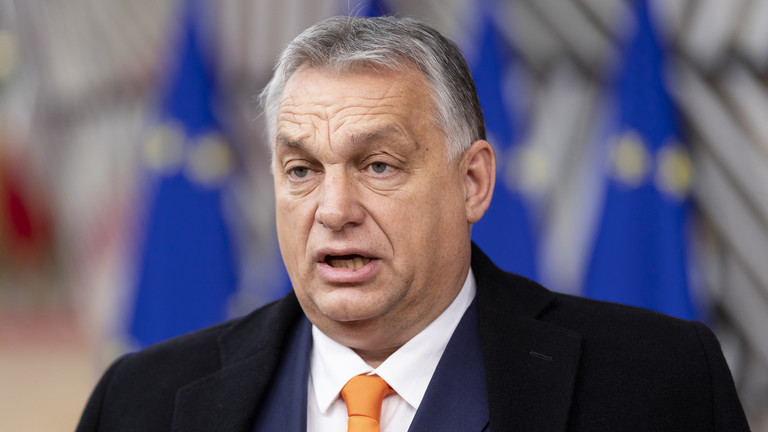
Hungarian Prime Minister Viktor Orban said, on Friday, that there are countries which will not be able to substitute Russian gas with the more expensive American alternative.
Speaking to local radio station Kossuth, ahead of this weekend’s parliamentary election, Orban said Russian gas is his country’s only option, as Hungary is landlocked and won’t be able to directly receive liquified gas from the US.
Orban reiterated that Hungary condemns Russia’s attack against Ukraine, and that he understands the efforts of Ukrainian President Volodymyr Zelensky, as his country is in trouble and he is looking out for Ukrainian interests, but stated that Hungary “can’t help the Ukrainian people by destroying itself.”
This war is not our war, we can’t win here, but we can lose everything. The question is will we have an economy left by the end of it or not.
‘Impossible’ for Austria to ban Russian gas – energy giant
The repercussions for the economy would be too great
Austria is unable to stop buying Russian natural gas this year, the head of energy giant OMV, Alfred Stern, said in response to calls for European states to place an embargo on Russian supplies.
“Embargo on Russian gas is impossible if we are not ready to accept the dire consequences. Some countries could do it, but for Austria it is not possible this year… The phase-out of Russian gas comes at a price,” he stated in an interview with Die Presse.
Stern explained that unlike some EU countries, Austria “is in a difficult position” when it comes to alternative energy sources, having “no access to the sea, no access to liquefied petroleum gas.”
Stern is not alone in his views regarding Austria’s dependence on Russian energy. Austrian Chancellor Karl Nehammer said earlier this week that he does not support any restrictions on the supply of oil and gas from Russia to Europe.
“From us there should be a clear rejection of any ideas about stopping the import of Russian gas or Russian oil,” Nehammer said in an interview with OE24 TV.
Currently, gas storage facilities in Austria are only 13% full, media reports, citing industry sources.
Germany has refused to comply with Russia’s demands
Germany – one of Europe’s industrial powerhouses – is a major importer of Russian natural gas, with 34% of the fuel consumed in the country last year coming from Russia
Germany has refused to comply with Russia’s demands, describing them as “blackmail” which runs counter to the terms of the existing gas contracts. However, refusing to pay for its gas would be financial suicide.
Moscow and the EU are currently at loggerheads regarding payment for future gas deliveries, as Brussels rejected Moscow’s demand of payments in rubles. The Kremlin says currencies like the dollar and the euro have been compromised by the sanctions and Russia will not deliver gas for free.
A Latvian gas operator says the procedure doesn’t breach Western sanctions
Latvia’s main gas operator says it won’t rule out paying for Russian natural gas in rubles, revealing that the new settlement method announced by Moscow is being evaluated from a legal and business perspective.
“According to the first impression, the settlement procedure in Russian rubles does not formally violate the sanctions regime and is possible,” Latvijas Gaze said in a statement.
Earlier, Aigars Kalvitis, the board chairman of Latvijas Gaze, which is partially owned by Russia’s Gazprom, said the company couldn’t pay for natural gas supplies from Russia in rubles, since the current contract stipulates that all transactions must be made in euro.
Last week, Russian President Vladimir Putin ordered the government to take necessary steps to switch all payments for gas sales involving “hostile” countries to Russian currency from April 1. According to the Kremlin, the change concerns nations that imposed sanctions against Russia with the intention of damaging the country’s economy, which includes most EU member states.
Putin warned EU countries that they would need to set up ruble accounts to pay for Russian gas, saying that existing contracts would be halted if the payments were not made.
On Saturday, the head of Latvia’s natural gas storage operator Conexus Baltic Grid said that all the Baltic states – Latvia, Estonia and Lithuania – were no longer importing Russian natural gas.
see also:
Hungary’s Orban criticized for ‘neutrality’ in Ukraine war …https://japantoday.com ‘Blocking Russian energy exports would force Hungarians to “pay the price of the war,” Orban said, noting that 85% of Hungary’s gas and more than 60% of its oil comes from Russia’…./…India, Brazil, UAE, Pakistan, Hungary, Israel and so on all deciding to remain on the fence in what actually is a huge snub to the US. Saudi’s selling oil in Yuan? (bye bye USD) India buying Russian oil in Rubles? (bye bye USD) The EU starting the paperwork to pay for Russian gas in Rubles? (bye bye USD)
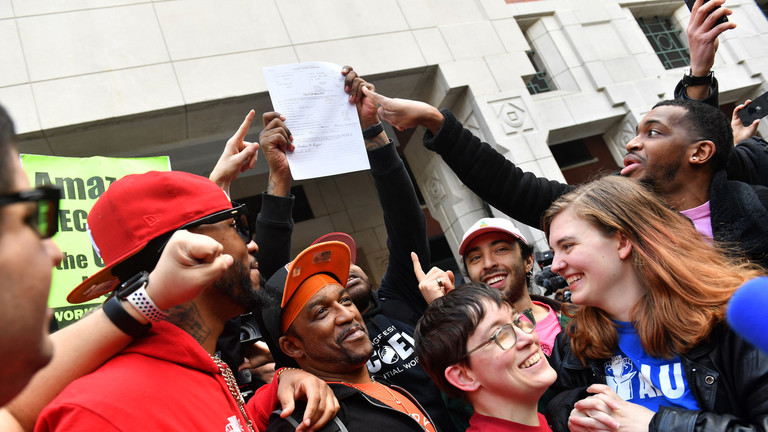
Employees of Amazon’s largest New York City warehouse have voted to unionize, overcoming the trillion-dollar company’s ferocious opposition, to become its first American workers to successfully organize.
The vote came in on Friday, with 2,654 votes for and 2,131 against union membership, and while it remains to be officially certified by the National Labor Relations Board (NLRB), Amazon has not challenged enough ballots to change the total.
Workers at the Staten Island facility known as JFK8 will become part of the Amazon Labor Union, whose demands include “more reasonable” productivity rates in the warehouse, higher wages, more paid breaks and vacations, among other demands.
ALU, which launched last April in an effort to organize JFK8 and the three other Amazon facilities on Staten Island, is a grassroots effort established by a former colleague who got the axe for his own worker organizing efforts in 2020.
Founder Christian Smalls was fired as a warehouse manager a month after the Covid-19 pandemic hit New York, accused by Amazon of violating social distancing rules while he himself claimed the company had retaliated against him for protesting its lackluster Covid-19 safety precautions.
Smalls’ protest attracted the attention of Amazon’s general counsel, who dismissed him in a company memo as “not smart or articulate” and suggested he be used to smear all employee resistance as similarly incompetent.
But the former warehouse worker doubled down on his organizing efforts, denouncing the company’s Dickensian treatment of its workers at rallies and even suing Amazon for alleged racial discrimination, using the executive’s comments as evidence.
After watching an effort by Amazon workers to unionize in Bessemer, Alabama, fail, Smalls formed ALU, reasoning that a brand-new union made up of solely Amazon employees was the best way to take on the mega-corporation.
The Bessemer warehouse staged a do-over vote after the NLRB ruled Amazon inappropriately interfered in its previous effort to unionize with the Retail, Wholesale, and Department Store Union last year.
While the votes were counted as of Thursday, with pro-union numbers lagging behind, the NLRB and Amazon have both challenged over 100 votes, and it remains to be seen who will be victorious.
Amazon responded with disappointment to the Staten Island election results, revealing in a statement posted to its website that the company is “evaluating our options, including filing objections based on the inappropriate and undue influence by the NLRB that we and others (including the National Retail Federation and US Chamber of Commerce) witnessed in this election.”
Workers might object to this characterization, however, reportedly laboring in a workplace papered with banners reading “Vote No,” forced to attend mandatory weekly anti-union meetings, and subject to the depredations of Global Strategy Group, a polling firm closely tied to Democratic political groups.
The company launched a spin-heavy website on which it attempted to frame its own benefits as superior to those offered by unions, though it’s not clear whose unions they compared themselves to, given that no American Amazon employees are union members.












 The Free