“We’re looking at a form of corporate tyranny previously unseen in America.” Pam Martens, Wall Street on Parade.
by Brian ShilhavyEditor, Health Impact News
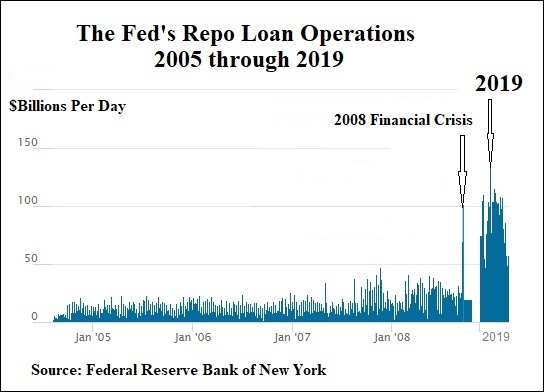
Pam and Russ Martens of Wall Street on Parade have reported on the mega giant bank bailouts during the 4th quarter of 2019, just months before COVID was declared to be a “pandemic” giving further evidence from a series of events at the end of 2019 that the “war on the virus” that has enslaved the entire world, was all planned long in advance by the Globalists.
Not reported in the media, either corporate news media nor anywhere else in the Alternative Media that I have seen, the Martens have exposed the fact that the bailouts of the biggest banks in New York far exceeded the bailouts during the 2008 financial crises.
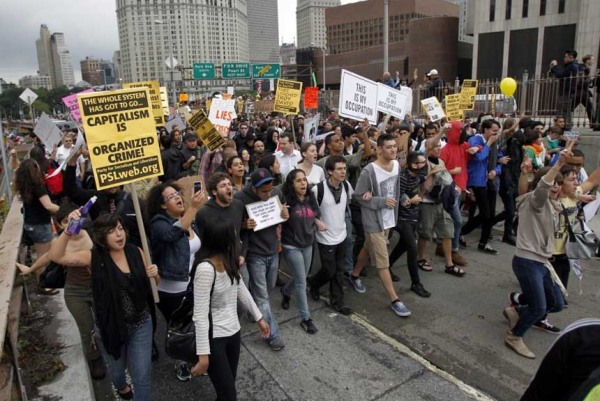
This bailout of Wall Street in 2008 was the fuel that gave rise to the “Occupy Wall Street” movement that started in September of 2011, and spread around the world.
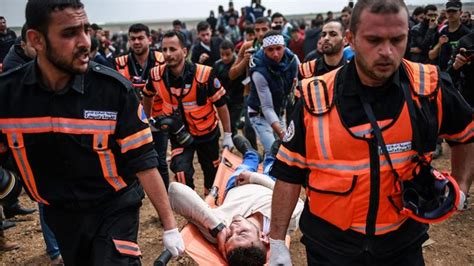
Israeli occupation forces, detained thirteen Palestinian civilians, and shot six others with live rounds during military invasions into different parts of the occupied West Bank, local sources reported.
On Sunday evening, an undercover Israeli force (Musta’ribeen) stormed Al-Ram town, northeast of occupied Jerusalem and abducted a Palestinian young man identified as Muhammad Abu Sobeih.
Occupation forces detained, on Sunday evening, a resident of Silwan town in Jerusalem, identified as; Zain Simrin, while he was close to Bab Al-Asbat or Lion’s Gate, one of the main gates leading to the Old City of occupied Jerusalem.
East of Bethlehem, in the southern occupied West Bank, the army invaded and searched the home of a Palestinian young man, identified as; Muhannad Abu Qadoum, before detaining him.
Soldiers stormed, at dawn Sunday, the Al-Jalazoun refugee camp north of Ramallah, in the central West Bank, triggering fierce confrontations by local Palestinian youths.
The army shot five young men with live rounds, one of whom was struck in the abdomen, and subsequently transferred to a local hospital for medical intervention, while four young men were shot in their legs with “Toto” expanding bullets.
Three civilians, identified as; Saeed Nakhleh, 64, a former prisoner, Amr Khalil Amer, 20, and Ahmed Mahmoud Amer, 18, were all detained by the occupation army.
May Day is one of the days on which anarchists celebrate self-determination and self-realization.
People have lit bonfires to mark the end of winter for thousands of years; it wasn’t until industrialization forcibly disconnected people from the land base that nourished them that May Day came to be observed as a labor holiday. At base, May Day isn’t about labor: it’s about abundance. It’s about excess, pleasure, freedom—the burgeoning source of life itself.
As a millennia-old holy day honoring the return of spring, May Day directs our thoughts to nature—a wild and beautiful chaos that flows through us and nourishes us, which we can enjoy but never control.
Our joyous acts of rebellion do not point to a world in which workers are paid a little better for their labor, but to the possibility that we could sweep away all the forms of oppression that stand between us and the tremendous potential of our lives.
May Day 2012 in Seattle.
Here follow a few recent exciting moments in the centuries-old legacy of May Day. All the best in your own efforts today: as the folk singer croons, “To fight for something is to make it your own.”
Before May Day became the international day to celebrate labor struggles, workers and other rebels observed March 18, the anniversary of the beginning of the Paris Commune in 1871.
For example, on March 18, 1877, the young Peter Kropotkin joined Pindy, Stepniak, and anarchists from all around Switzerland for a march in Bern. Kropotkin is largely remembered as a peaceable advocate of science and mutual aid, but he and his friends brought flagpoles, brass knuckles, and other weapons to defend themselves.
After a lengthy street confrontation, they managed to rescue their red flag from police who tried to seize it, and proceeded to a 2000-strong meeting at which they recited speeches, sang revolutionary songs, and read out telegrams of encouragement from France and Spain.
Meeting in Chicago on October 7, 1884, the Federation of Organized Trades and Labor Unions resolved to demand that the workday be limited to eight hours by May Day 1886. The leadership of this organization, which later became the American Federation of Labor (AFL), secretly issued a statement advising members not to become involved in the movement around this demand, but the rank and file embraced it in large numbers.
1886
The anarchist organizers Albert and Lucy Parsons led 80,000 people down Chicago’s Michigan Avenue in the first modern May Day Parade, chanting, “Eight-hour day with no cut in pay!” Over the next few days, 350,000 workers around the US went on strike at 1200 factories, including 70,000 in Chicago, 45,000 in New York, and 32,000 in Cincinnati.
Four days later, the police attacked a labor rally in Chicago, someone responded by throwing a bomb, and the rest is history.
Albert Parsons and four other anarchists lost their lives in the ensuing show trial, which was so widely regarded as rigged and unjust that in 1893 the governor overturned the convictions and criticized the court proceedings. Lucy Parsons, later a co-founder of the Industrial Workers of the World, dedicated herself to a life of revolutionary organizing.
1891
Determined to avenge the Haymarket martyrs and build a revolutionary movement capable of abolishing capitalism and the state, the seasoned anarchist organizer Errico Malatesta secretly returned to Italy in order to prepare fierce demonstrations for May Day.
On the afternoon of May 1, 1891, thousands of workers gathered in the plaza of Santa Croce in Rome to hear a series of speakers. A march of thousands more soon arrived, including members of the anarchist federation with red-trimmed banners. As the police chief noted, “The appearance of the Federazione Anarchica stimulated immediate excitement in the crowd.”
The anarchist Amilcare Cipriani, who had been condemned to death and then exiled to New Caledonia as punishment for acting as Chief of Staff during the defense of the Paris Commune, rose to speak. Noting the forest of bayonets with which hundreds of soldiers and mounted cavalry had surrounded the plaza, Cipriani pleaded for calm, arguing that it was not the proper time to confront the authorities. Yet an unscheduled speaker, the anarchist Galileo Palla who had lived in exile in Argentina with Malatesta, leapt onto the rostrum and exhorted to the crowd to rise in revolt, concluding, “Long live the revolution!”
The ensuing riots spread throughout the city and lasted well into the night.
1894
Massive rioting swept Cleveland, Ohio on May Day 1894 in protest against unemployment stemming from the economic crisis of the previous year. The Pullman Strike began a few days later, on May 11, culminating with countrywide disruptions and the murders of many workers by police and other mercenaries.
In response, President Grover Cleveland announced that Labor Day in September would become a national holiday, attempting to coopt workers’ struggles without affirming the anniversary of the Haymarket incident. Samuel Gompers, a founder of the AFL and a virulent opponent of immigration, anarchism, socialism, and, later, the Industrial Workers of the World, supported the federal government in crushing the Pullman Strike and backed Grover Cleveland’s effort to undermine the momentum of May Day. Make no mistake: the official leadership of legalized labor organizations has largely aimed to tame and hobble them from the very beginning.
A collection of posters illustrating the diverse ideologies competing to define the meaning of May Day.
1909
Two labor rallies were announced for May Day 1909 in Buenos Aires. One was organized by the socialist General Union of Workers (UGT); the other, by the anarchist Argentine Regional Workers’ Federation (FORA).
As historian Osvaldo Bayer recounts, “After noon, the Plaza Lorea began to fill with folk not habitués of the city: lots of mustaches, berets, neckerchiefs, patched trousers, lots of fair hair, lots of freckled faces, lots of Italians, lots of ‘Russians’ (as the Jewish immigrant was called in those days) and quite a few Catalans. Along came the anarchists with their red flags: ‘Death to the bourgeois! War on the bourgeoisie!’ were the first cries heard.”
The rowdiest crew seemed to be the anarchists from the association “Luz al Soldado” (“enlighten the soldier”). According to the day’s police report, they wrecked trams, liberated horses from city cabs, and smashed bakeries that refused to shutter their storefronts in observance of the workers’ holiday.
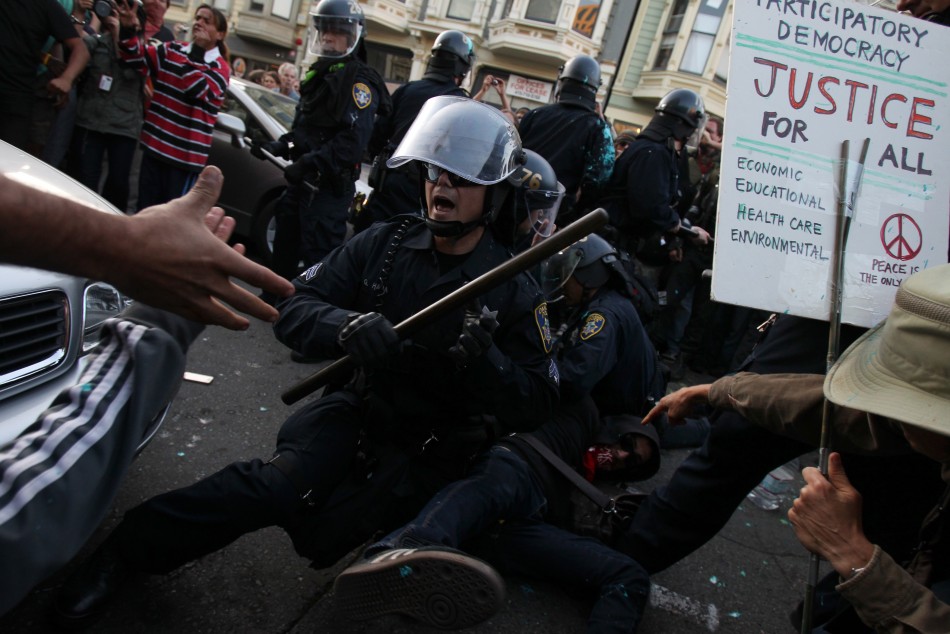
Police chief Colonel Ramón Falcón arrived and gave the order to attack. Police cracked heads, shot demonstrators, and trampled them on horseback, killing several workers and severely injuring dozens more.
Socialists joined the anarchists in calling for an open-ended general strike demanding Falcón’s resignation. The Colonel responded with arrests and raids and shut down the anarchist press. On May 4, 33 years to the day after the Haymarket incident, a crowd of up to 80,000 gathered to accompany their martyrs’ remains to the cemetery. Falcón’s police showed up again to beat and shoot at the bereaved.
One of the anarchists impacted by the May Day massacre was a Ukrainian-born teenager, Simon Radowitzky. Six months later, Radowitzky used a homemade bomb to blow up Falcón’s carriage, killing the Colonel and his secretary Juan Lartigau. When finally caught and beaten by police, he shouted, “Viva el anarquismo!” Radowitzky became one of the most prominent political prisoners in Argentinian history.
Nuclear: the stress corrosion phenomenon could affect all of France’s reactor models. Four additional reactors, including one of 900 megawatts (MW), could be affected by the “stress corrosion” phenomenon detected on portions of auxiliary piping in the primary circuit of certain EDF nuclear reactors.
This announcement is part of the review of certain welds initiated at the end of 2020 and which should be completed in 2024. The company is continuing its discussions with the Nuclear Safety Authority (ASN) “on the overall strategy of controls, expertise and treatment of this phenomenon”.
On April 14, when updating its information note on the subject, EDF announced that “indications were detected during the performance of non-destructive ultrasonic testing” on portions of the pipes of the B3 reactors at Chinon (Indre-et-Loire), reactor 3 at Cattenom (Moselle), reactor 2 at Flamanville (Manche) and reactor 1 at Golfech (Tarn-et-Garonne).
Pilar Sánchez Llabrés nació en Palma (Mallorca) en 1903. Vivía en el barrio obrero de la Soledad. Estaba casada con Miquel Borel. Eran padres de 4 hijos y militaban en el Partido Socialista, circunstancia que Pilar llevaba de forma muy activa y apasionada. Pilar se dedicaba a vender comestibles en la actual plaza Mayor de Palma, donde manifestaba públicamente sus posiciones políticas, era una mujer de empuje que no se arrugaba ante las adversidades.
🔴🏥💉💉DON DE SANG DES INJECTÉS 💉💉🚨🥁📣 Nicole et Gérard Delépine tous les deux docteurs en Médecine au micro de Culture Populaire sur le sang des injectés. "LA PÉNURIE DE SANG EST DUE À LA DIFFICULTÉ DE PRÉLEVER LE SANG COAGULÉ DES VACCINÉS" pic.twitter.com/nSPEGa8h9m
The UK Government claims over 160,000 people have died of Covid-19 in England since March 2020, and they have used these claimed deaths to frighten people into compliance with ridiculous rules for the past two years.
But reports published by England’s National Health Service (NHS) reveal that as of 20th April 2022, just 5,115 people have died of Covid-19 in England since the alleged pandemic began.
And the same reports also reveal that Covid-19 deaths have increased by 176% compared to the number of alleged deaths that occurred prior to the first Covid-19 injection being administered in England. Is this what we would expect to see if the jabs are 95% effective at preventing death?
The Exposé is now censored by Facebook & Twitter. Let’s not lose touch, subscribe today to receive the latest news from The Exposé in your inbox…
The NHS has been publishing a weekly report on the number of Covid-19 deaths to have occurred in England’s hospitals since the beginning of the alleged Covid-19 pandemic.
The report shows us that the NHS claim 114,721 people have died in hospitals in England after testing positive for Covid-19 since March 2020. But what’s suprising here is the extremely low number of people who had no pre-existing conditions and have died of Covid-19 alone.
Of the 114,721 deaths just 5,115 have been solely attributed to Covid-19, and 109,606 deaths have occurred among people suffering with pre-existing conditions such as chronic kidney sisease, chronic pulmonary disease, and heart disease among several others.
This equates to just 4.45% of all alleged Covid-19 deaths since March 2020 being solely due to Covid-19. Yet the UK Government claims over 150,000 people have died of Covid-19 in England within 28 days of a positive test since March 2020.
However, there is something else that is unusual about these figures that can only be realised once we look at the numbers in a historical report.
The first Covid-19 injection was administered in England on the 9th December 2020, and as we will all know through endless propaganda, it was claimed to be 95% effective at preventing infection, hospitalisation and death.
The claim that it was 95% effective at preventing infection is both deeply troubling and hilarious when you look at the Covid-19 case rates in England at the moment.
Official data from the UK Health Security Agency shows the Covid-19 case-rates per 100,000 are highest among the triple vaccinated in all age groups.
But authorities still claim the injections are extremely effective against death. But if this were true, then why does NHS data show overall Covid-19 deaths have increased by 163.5% since the first Covid-19 injection was administered in England.
The following table is taken from the NHS ‘COVID-19 total deaths – weekly summaries’ report published 10th December 2020, and it conveniently shows the number of Covid-19 deaths in England’s hospitals up to 9th December 2020; the first day a Covid-19 injection was administered –
The table reveals that as of 9th December 2021 there had been 43,537 Covid-19 deaths in England’s hospitals, 41,683 of which were among people with serious pre-existing conditions, and 1,854 of which were solely due to Covid-19.
This means that as of 20th April 2022, Covid-19 deaths among people with pre-existing conditions have increased by 163%, and deaths solely due to Covid-19 have increased by 176% since the first Covid-19 injection was administered in the UK.
Here’s a chart showing the increase in Covid-19 deaths by age group –
What’s interesting here is every age group has seen a higher increase in deaths solely due to Covid-19, than Covid-19 deaths alongside pre-existing conditions.
Does this data at least show that the Covid-19 injections are at best completely ineffective? There are other variables to of course take into account but these are certainly interesting statistics.
Just 5,115 people have actually died of Covid-19 in England, but that’s an increase of 176% on the number of Covid-19 deaths that had occurred prior to the first Covid-19 injection being administered in England.







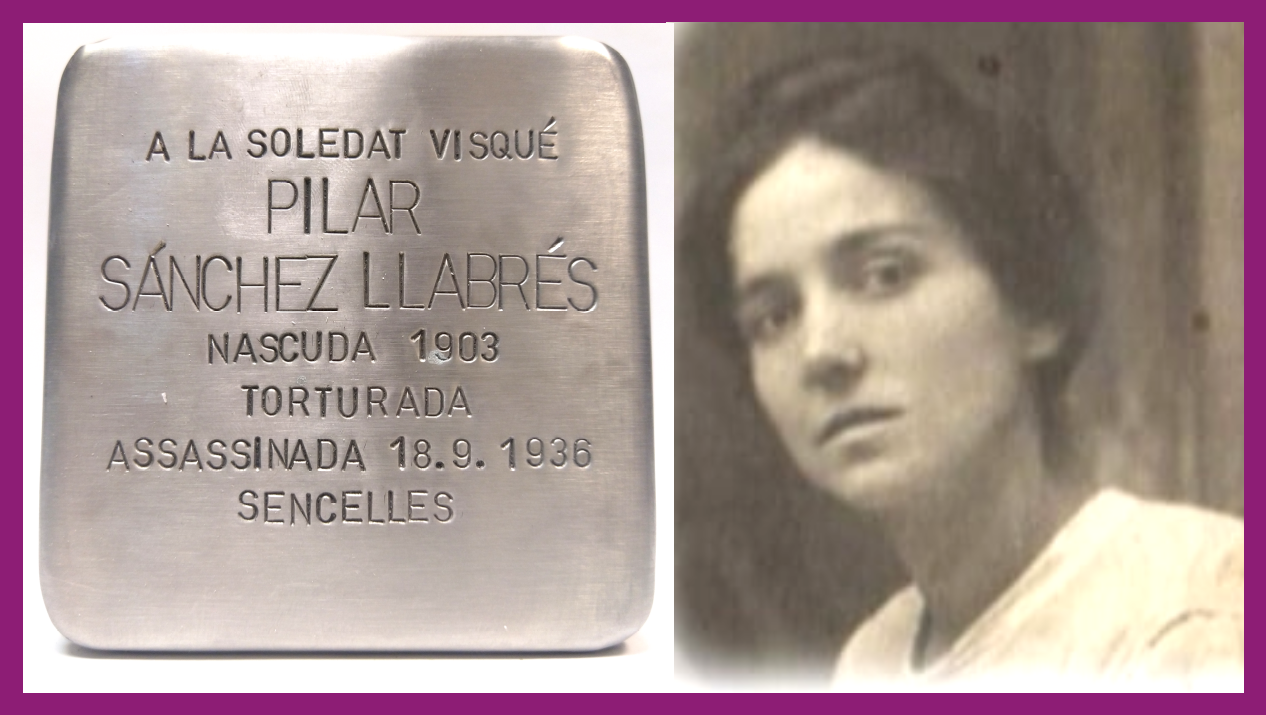 Pilar Sánchez Llabrés nació en Palma (Mallorca) en 1903. Vivía en el barrio obrero de la Soledad. Estaba casada con Miquel Borel. Eran padres de 4 hijos y militaban en el Partido Socialista, circunstancia que Pilar llevaba de forma muy activa y apasionada. Pilar se dedicaba a vender comestibles en la actual plaza Mayor de Palma, donde manifestaba públicamente sus posiciones políticas, era una mujer de empuje que no se arrugaba ante las adversidades.





 The Free