Turkish courts handed down a total of 27 years in prison to 60 journalists last month, according to the 2022 September Press Freedom Report.
According to the report, announced by Utku Çakırözer, a lawmaker from the main opposition Republican People’s Party (CHP), 60 journalists were sentenced to 27 years, seven months and 19 days in total in prison for their articles, comments or social media messages, while two of them were detained.
“September was the darkest month of the year for press freedom,” Çakırözer said.
In addition a number of journalists were allegedly subjected to physical violence, as they were following news stories last month.
The report said police pressure on members of the press has increased and that dozens of journalists following protests and other events in various cities in September were prevented from doing their jobs due to the use of excessive force on the part of the security forces.
Çakırözer stated in his report that news about corruption and bribery scandals involving government officials and their families was blocked and that access to some news sites publishing such news was prevented.
“Journalists are beaten, imprisoned and blocked in Turkey. The government, which was expected to improve the working conditions of journalists, is presenting new bills to the Turkish parliament to intensify repression and censorship. We will not allow such bills, which will further increase the pressure on the press, to pass through parliament,” the lawmaker said.
The bill that Çakırözer was referring to adds the offense, titled “Publicly Disseminating Misleading Information,” to Law No. 5237 of the Turkish Penal Code in clause A of Article 217, which says, “Anyone who publicly disseminates false information regarding the internal and external security, public order and general health of the country, with the sole motive of creating anxiety, fear or panic among the public, in a way that is suitable for disturbing the public peace, is sentenced to imprisonment from one year to three years.”
The Justice and Development Party (AKP) government has been relentless in its crackdown on critical media outlets, particularly after a coup attempt on July 15, 2016.
Rights groups routinely accuse Turkey of undermining media freedom by arresting journalists and shutting down critical media outlets, especially since President Recep Tayyip Erdoğan survived a coup attempt in July 2016.
Take a second to support Stockholm Center for Freedom on Patreon!
Yesterday saw two significant developments or incidents with regard to the conflict in Ukraine.
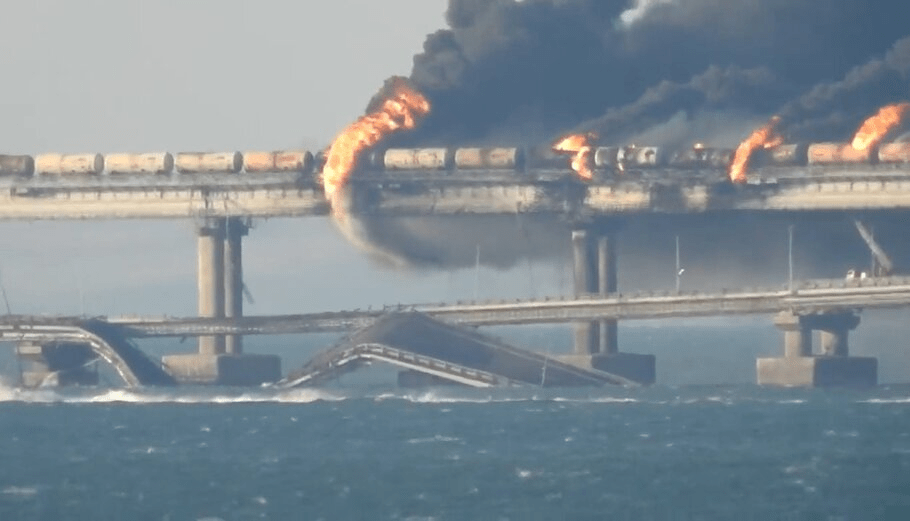
The Kerch bridges which connect Crimea with Russia, one for cars and one for trains, were sabotaged. At least one of the two road spans has fallen down while tanker rail cars on the parallel train bridge caught fire.
CCTV footage shows that a truck exploded while passing the bridge. Here is a video of the damage. One of the two road spans seems to be intact.
As the pillars of the bridge seem unaffected a repair of the broken road span is possible but will take some time. The more sturdy railway bridge may have some superficial fire damage but Russia is one of the few countries that has designated railroad troops specialized in and equipped for railway repairs. The railway traffic is likely to be back within a few day or weeks.
This is a severe handicap for Russian logistics to the frontlines in south Ukraine but not a catastrophe as alternative rail and road routes, as well as ferries, are available. Military logistics is designed to work even under significant constraints. It will find ways to work around the problem.
***********
Catastrophic Ukraine communication failure as Russians block Starlink
Meanwhile the Ukrainian side of the conflict experiences a communication failure that is likely way more consequential.
Some of the outages led to a “catastrophic” loss of communication in recent weeks, said one senior Ukrainian government official with direct knowledge of the issue..https://t.co/zyZmm4U1ot
Evidently the Starlink system is down over the front lines of Ukraine. @elonmusk should make a statement about this, or, this should be investigated. This is a national security issue.
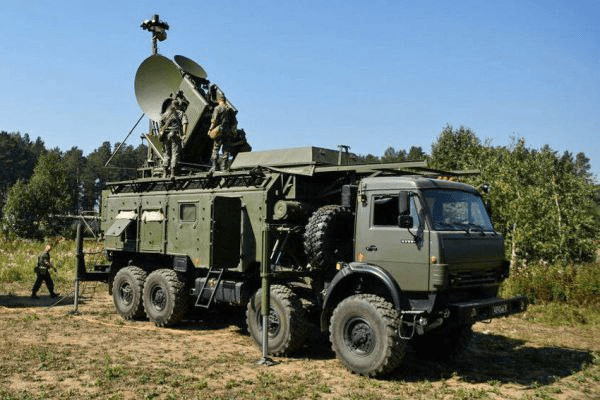
The Russian army is leading globally in its abilities to wage electronic warfare. It can disable ground based radio traffic on any frequency. It has now found ways to also disable ground to satellite connections as used by the Starlink constellation.
At the beginning of the war the Ukrainian military was supplied with thousands of Starlink ground terminals that can connect to the swarms of small Starlink satellites, which were financed by the Pentagon, but managed by Elon Musk’s companies.
They allowed for communication between Ukrainian ground units as well as for general command and control of larger operations. Without Starlink the Ukrainian command will depend on cable based field telephone, runners and couriers.
All of which are extremely vulnerable in an artillery rich environment.
Since 2001 Russia developed the Tirada 2 electromagnetic system which can disable ground to satellite traffic in specific areas.
Russian military in the near future can get into service systems that can disable enemy communication satellites, an informed Interfax interlocutor in the military-industrial complex said 05 January 2018.
“One of the projects is Tirada 2. Development work was started back in 2001,” he said. According to him, this complex will be able to disable communication satellites from the ground. “It acts by electronic suppression. This is a multi-million dollar project,” he said.
The fact that the Russian Federation is working on the creation of weapons to suppress satellites was announced on November 30 last year by Oleg Achasov, deputy head of the Federal State Budgetary Institution “46 Central Scientific Research Institute”. … In November 2018, the FSB called the “threat to national security” a project to cover the globe with high-speed satellite Internet.
In 2019 an OSCE observer drone took pictures of a Tirada complex in the Donbas region.
The disablement of the Starlink communication traffic was only a question of time.
The traffic had to be analyzed to identify the frequencies and algorithms used by the transmitter and receiver. Software had to be written to implement a matching radio jamming pattern.
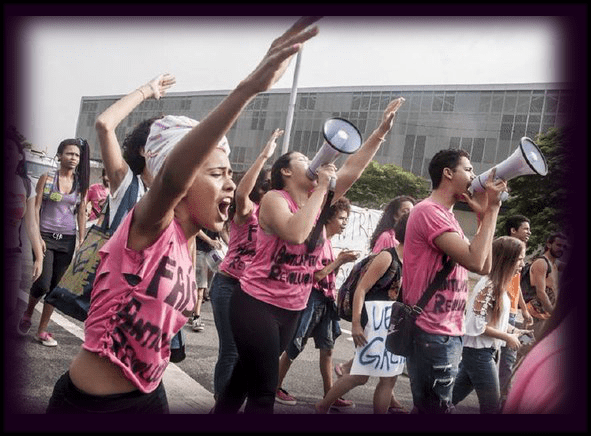
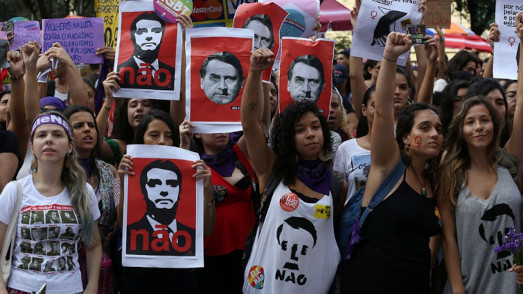
‘Ele Nao’.. (Not HIM) the huge 2018 womens campaign against Bolsonaro’s oppression
The election result will change Brazil and the world. It’s not just one man or party :-The major section of corrupt deputies and parties are committed to supporting whoever is the new President. In the balance is the key future of the Amazonia climate tipping point. In the balance is the direction of the BRICS alliance and the future of the campaign for a multipolar world future. In the balance is the end of extreme racism, poverty, misogyny, neo-liberalist looting and ….
(continues after interview below)
Interview with a Brazilian Anarchist on Lula, Bolsonaro, and Social Struggle
Bruno Lima Rocha is a political scientist, professional journalist and professor of international relations based in Brazil, and is a member of the editorial board of the Institute for Anarchist Theory and History (IATH-ITHA).The following interview has been lightly edited for clarity.
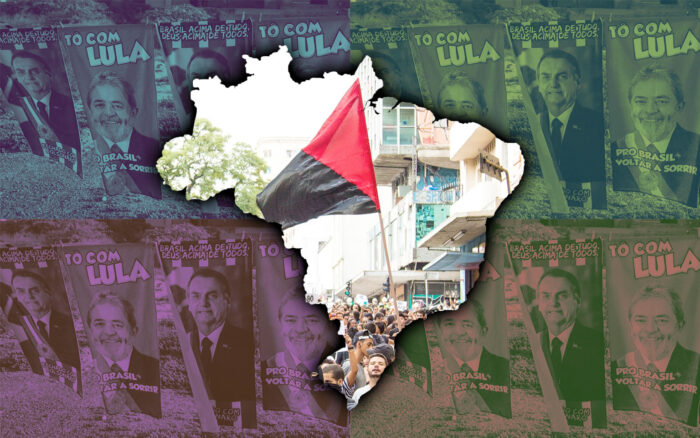
Looming over much of the political landscape in Brazil is the presidential election, in which former president Lula da Silva is expected to win in the second round over incumbent Jair Bolsonaro, in part by taking up space in the political center. How has this election campaign impacted social forces on the left and the right in Brazil?
In the first round of the general elections, Lula (PT plus eight parties) had just over 48% of the votes and Bolsonaro 43.5%. It gives an average of about 6 million votes, in a universe of 156 million voters, in a total with 20% abstention. The number of null and blank votes was low compared to other years. On the far left, we had candidacies from small parties such as Popular Unity (of Maoist origin), PCO (a line of Trotskyism), PSTU (Trotskyist Morenism) and PCB (neo-Stalinists).
In all 26 states and the Federal District, the set of these small electoral parties more to the left does not reach 2% of the electorate. Thus, the left’s space in the political debate is small, because the program of Lula and his deputy Geraldo Alckmin could be called social-liberal: social democrat in social policies and post-neoliberal in economic policy and state design. The radicalism in this election is marked by the extreme right, with Bolsonaro and his version of tropical Trumpism.
Despite the glowing picture that progressives and social democrats paint of Lula, it was under the PT (Worker’s Party) that Brazil’s government made its turn toward austerity. Given that this will likely be a second term in office for him, how effective do you think left organizations and movements will be at wringing concessions from a Lula-led PT government?
The turn to “austerity” took place in Dilma’s second government (January 2015 until her impeachment without legal cause, in April 2016), when the re-elected president appointed economist Joaquim Levy, a Chicago Boy, as finance minister.
That made an immediate inflection for the inflation of administered prices, cut of social policies, reduction of industrial policies and of funds for education (including scientific research). Even all that could not stop the parliamentary coup that Dilma suffered.
There is not much room immediately for a left turn in Lula’s government if he wins in the second round: Bolsonaro left a fiscal bomb, without the Brazilian State’s financing capacity. Social dissatisfaction could arise and with great energy if we have the predicted recession in 2023 and the first half of 2024.
In general, are anarchist organizations advocating abstention or participation in the general election, or are they focusing their communications elsewhere entirely? As CAB wrote in its Analysis of the Brazilian Conjuncture in June, there has been an increase in far-right political violence, including the murders of journalists. There has also been over the past decade a steady increase in the military’s presence within the civilian state. Both are matters of significant concern. Where is the sharpest edge of the far right in Brazil?
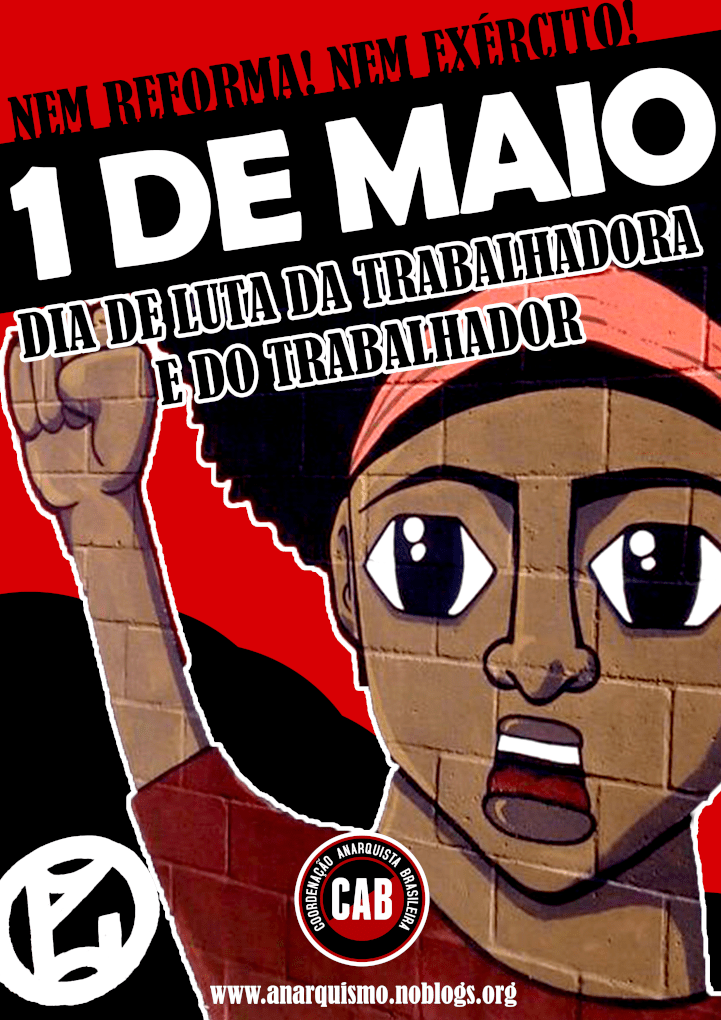
Organized anarchism in Brazil is very active in the anti-fascist struggle and is not campaigning electorally.
As for the extreme right, their forces are clearly visible. The high command of the armed forces (brigadiers, admirals and generals) earn more than four times their regular salaries, and there are more than 11,000 military and ex-military in civil administration posts — a historic rematch of the military that gave us the 1964 coup d’état and implemented a dictatorship until 1985.
Bolsonaro and the PL should not be underestimated. The far-right president beat the polls by a not-insignificant five points and his party still holds the most seats in the lower house and the Senate. Several Bolsonaro fanatics were elected to Congress, including the candidate who pulled the most votes of any, Nikolas Ferreira, at 1.4 million. We can also recall how unlikely the prospects of a Bolsonaro presidency seemed just four years ago.
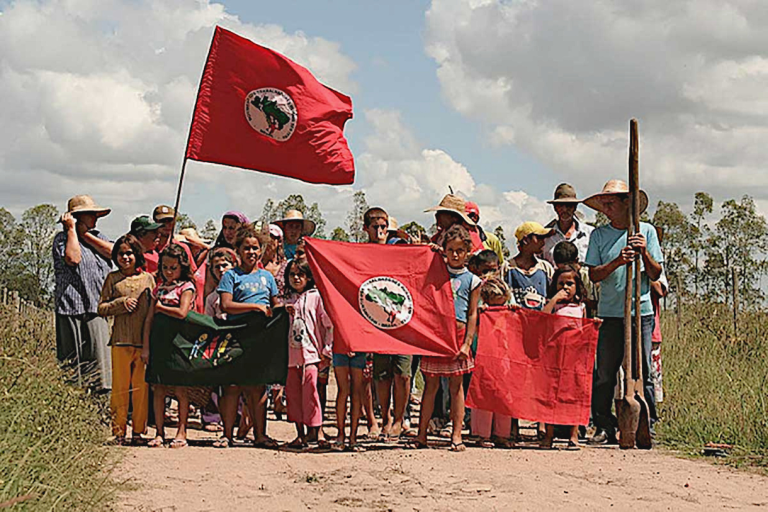
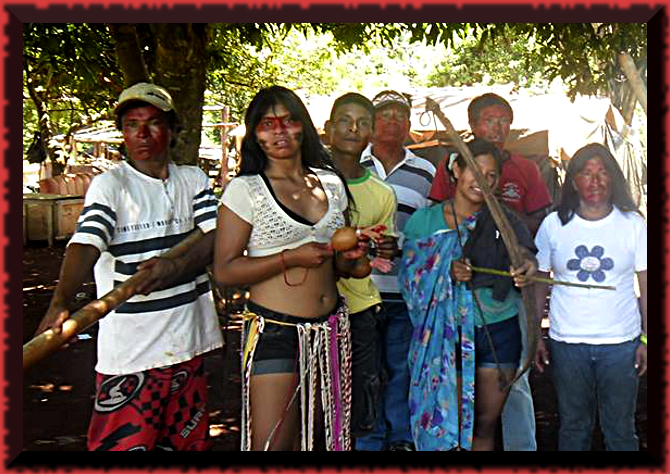
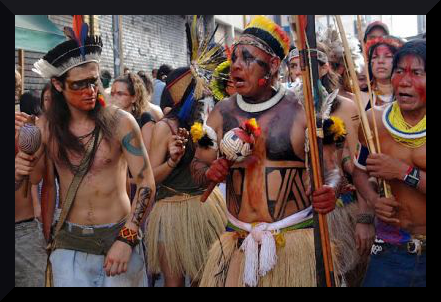
Another wing of the extreme right are the political-economic leaders of environmental crime: advancing on agricultural land, destroying biomes, threatening indigenous and quilombola lands and applying agricultural poisons prohibited in other countries.
There is also the neo-Pentecostal, Pentecostal and conservative Protestant extreme right, reproducing in Brazil the same agenda of the bible belt in the religious right wing of the Republican Party in the U.S.
The newest far right is a tropical Trumpism, which explains the relations between Steve Bannon and the Bolsonaro family.
In Brazil a tiny oligarchy still owns most of the land
And then there is the new neoliberal right, based in speculative finance, with a sizeable portion supporting Bolsonaro. Bolsonaro’s Minister of Economy is an authentic Chicago Boy, Paulo Guedes (he even worked in Chile during the Pinochet dictatorship), who operates as a defender of the interests of Brazil’s most unproductive capital.
There is also a broad sector of the police: Bolsonaro is supported by the police’s extreme right and has direct involvement with para-police formations, especially in his electoral base of origin, Rio de Janeiro.
In terms of international support, Bolsonaro is a strategic ally of Zionism and its interests in promoting the State of Israel.
Finally, there is a fauna of far-right fractions, neo-fascists, Brazilian fascists, supremacists, neo-Nazis and the like that explicitly support Bolsonaro.
Abortion rights are an active terrain of struggle across the Americas, with victories in Argentina, Colombia, and Mexico, and setbacks in the United States. Abortion is criminalized in Brazil, though of course that doesn’t halt abortions, just make them more dangerous. Is the feminist movement positioned to make progress in Brazil on the interlinked issues of abortion access, rape, and femicide?
In Brazil we have a huge mobilization of both women and people of African descent. Those in the hegemonic media that oppose Bolsonaro may discuss matters of gender but are clearly against reproductive rights. The same is true for the defense of the LGBTQI+ population and peripheral metropolitan regions. The religious right’s veto powers, as well as its direct ownership of three of the top five media outlets, manages to keep the abortion debate silenced. In Brazil, the generalist media conglomerates are, in this order of audience and importance:
Globo
Record and SBT (tied)
Rede Bandeirantes
TV Brasil and other small or regional broadcasters
Globo has 50% of the audience and is very in tune with the agenda of the U.S. Democratic Party. Record and SBT are more popular and reproduce conservatism with significant social penetration. Bandeirantes is divided on the position and Rede TV supports Bolsonaro. I say all this because the popularization of the themes of women’s and anti-racist struggles has only been accomplished via struggle on a societal scale, not through the world of entertainment and professional communication.
Marinalva Manoel was stabbed to death after campaigning for her tribe’s ancestral land.
Another sector, as large as the first, is positioned on social networks against the advancement of women’s rights and radically against the decriminalization of abortion. For example, in 2018, women mobilized in the Ele Não (“Not Him”) campaign, which opposed Bolsonaro’s first run for president.
The right responded to that campaign with a dirty internet war, asserting imbecilities like claiming that Fernando Haddad (PT’s presidential candidate in 2018) would distribute “penis-shaped bottles in children’s schools.”
Religious conservatives have 180 votes in Congress, out of a total of 513 federal deputies and 81 senators.
The people of Brazil are suffering from the combined economic, pandemic, and ecological catastrophes in ways that are recognizable across the globe. How have anarchists participated in popular efforts of not just survival but organization and radicalization? In what sectors or regions are anarchists most active in Brazil? What activities and strategies is it most important for anarchists there to strengthen over the next few years?
I speak for the Institute of Anarchist Theory and History (ITHA) and not any particular anarchist political organization in Brazil. My basis for analysis is especifista anarchist theory and the strategic studies derived from it, but I cannot comment in terms of identifying the social forces where we have significant presence and insertion.
I hope I have answered the questions in a way that generates information and reflection from comrades who will read these modest words. For socialism and freedom.
***********
And if Bolsonaro WINS?
The election will change Brazil and the world. It’s not just one man or party. The major section of corrupt deputies and parties are committed to supporting whoever is the new President. In the balance is the key future of the Amazonia climate tipping point. In the balance is the direction of the BRICS alliance and the future of the campaign for a multipolar world future. In the balance is the end of extreme racism, poverty, misogyny and neo-liberalist looting…
….(by Bradley Blankenship…) “Bolsonaro has been a steadfast supporter of Uncle Sam’s imperialistic ambitions in the region, even earning Brazil the designation of “non-NATO ally” from the West’s foremost military alliance.
The far-right president has been a key player in the US-led efforts to oust Venezuelan President Nicolas Maduro.
He has also supported US multinational corporations in their efforts to destroy and commercialize the land of the Amazon Rainforest. Lula looks set to kneecap all of this.
For the world, the return of the leftist president also has serious implications. For all of Lula’s accomplishments, one of the things that many forget is just how important his presidency was in helping Brazil attain its rightful reputation as a country of global import.
Indeed, that was Lula’s ambition. He wanted Brazil to be an important country diplomatically, closely in-line with the non-aligned movement.
For example, Brazil led the global charge in rebuilding Iraq after the American invasion.
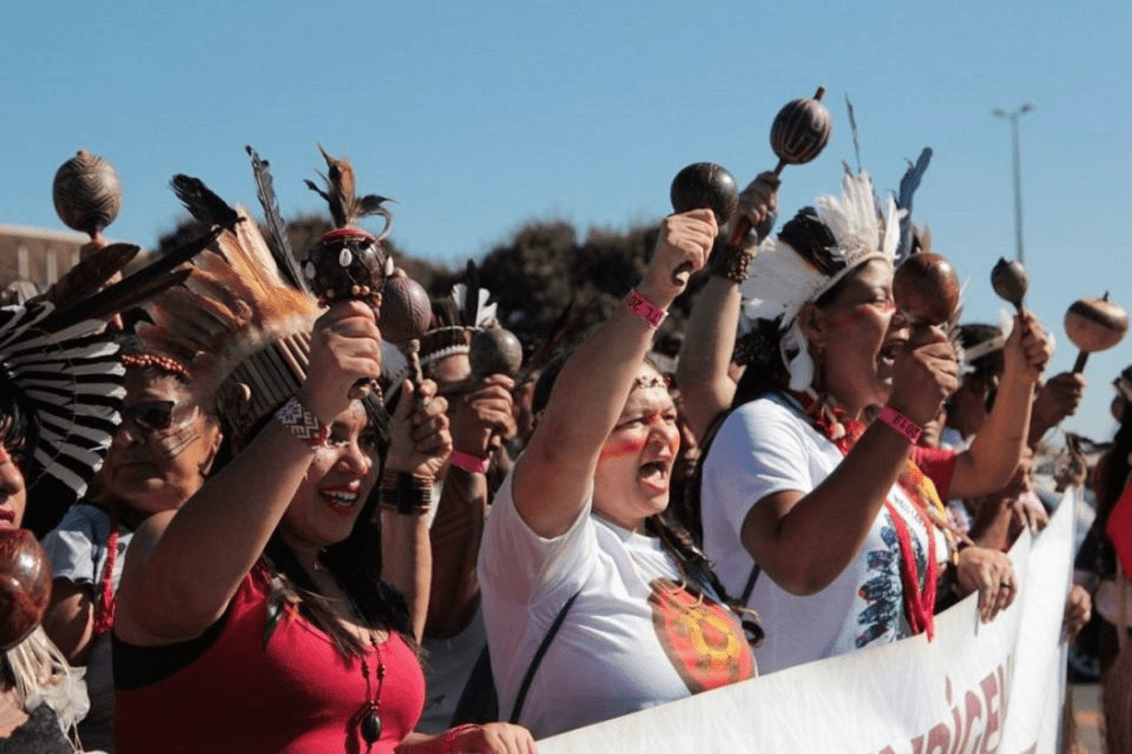
The ‘Daisies’ Margaridas March is the largest demonstration held by organized, female rural workers in Latin America | Mídia Ninja/Collaborative Media Coverage
Brazilian diplomat Sergio Vieira de Mello served as United Nations special representative for Iraq before he was killed in a bombing in 2003, which marked an end to the UN’s role – and thus multilateral peace efforts – in the Middle Eastern country.
Lula also helped to found BRICS (an acronym for Brazil, Russia, India, China and South Africa) in 2009, then called only BRIC before South Africa joined in 2010.
The group’s aim from the outset was to get developing countries more involved in international affairs and to reform financial institutions whilst improving the global economic situation, which at that time was marred by the financial crisis of 2007-08.
One key issue for BRICS even to this day is developing alternatives to Western-dominated global finance, which was initially sparked by US mismanagement of the global economy as the world’s financial center and is now largely owed to Washington’s unilateral sanctions.
This is a hugely important discussion that, if Lula wins, would benefit greatly from Brazil’s renewed effort.
We could also see Brazil develop closer ties with China, like some other leftist Latin American governments have, and sign up formally for the Belt and Road Initiative (BRI).
While Bolsonaro is not an enemy of China, and indeed his government has made lucrative deals with the Chinese, he has stopped short of making any moves that might raise eyebrows from his leash-handlers in Washington.
Again, Lula could shake things up by joining the Beijing-led infrastructure program.
But even with so much monumental change queued up pending a Lula victory, no matter how favorable the polls look or how strong a showing he was able to muster in the first round of voting, this year’s election is still up in the air.
Anyone who cares about Brazil’s future should be, as she said, “cautiously hopeful” about this election and a potential Lula victory….”
Helen Savage responds to government support for fracking from the West Sussex village of Balcombe, scene of anti-fracking protests in summer 2013.
Drilling equipment leaving the Balcombe site in 2013. Photo: David Burr
A fortnight ago, the business secretary, Jacob Rees-Mogg, formally announced the lifting of the moratorium on fracking in England. He described opponents of fracking as Luddites and later suggested that the shale gas industry should canvass for support door-to-door, like politicians at election time.
The oil site at Balcombe has been largely mothballed since Cuadrilla drilled an exploration well nine years ago. Since then, villagers have established the solar company, RePower Balcombe. A bid to test the Balcombe well was refused by West Sussex County Council last year. A decision on an appeal is awaited.
LA CONVOCATORIA EN EL PERFIL DE WIKILEAKS EN TWITTER LLAMA A UNIRSE A MILES DE PERSONAS EN EL PALACIO DE WESTMINSTER. ACTIVISTAS POR LOS DERECHOS HUMANOS CONVOCARON A REALIZAR ESTE SÁBADO LA PRIMERA CADENA HUMANA EN EL REINO UNIDO ALREDEDOR DEL PARLAMENTO CON EL FIN DE EXIGIR LA LIBERTAD DEL FUNDADOR DE WIKILEAKS, JULIAN ASSANGE. […]
The attack was reportedly carried out with a US-supplied HIMARS systems
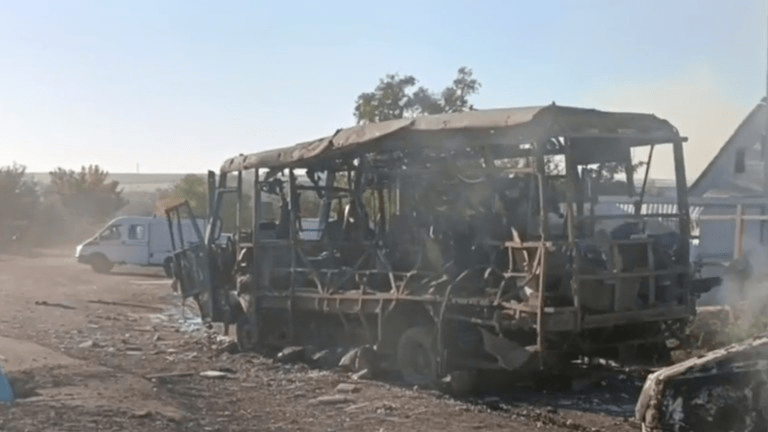
At least five people were killed when Ukrainian shelling hit a bus in Russia’s newly incorporated Kherson Region early on Friday, local health authorities have said.
“Unfortunately, as a result of the shelling, five people were killed and five were injured,” Kherson Region’s health department announced on Telegram.
The injured passengers, who suffered shrapnel wounds, have been hospitalized, with their condition described as moderate, it added.
The Ukrainian shelling of the Daryevsky Bridge over the Ingulets River took place at around 7am local time, with a missile hitting a bus carrying local residents to work, according to Kherson Region’s administration.
A source in the emergency services told RIA-Novosti that a US-supplied HIMARS multiple rocket launch system had been used in the attack, with four missiles fired at the bridge.
The first sparks of the revolution started in Saghez of Kurdistan, the home town of Mahsa Amini. Mahsa Amini was a 22-year-old Kurdish girl who was beaten to death by the police for “improper Hijab.” Mahsa was better lnown as Zhina among friends and family. In the Kurdish language, Zhina means life. The Islamic Republic of Iran snuffed out her life and countless others as sacrifices to the altars of Patriarchy, Religion, Racism, & Capitalism.
screenshot
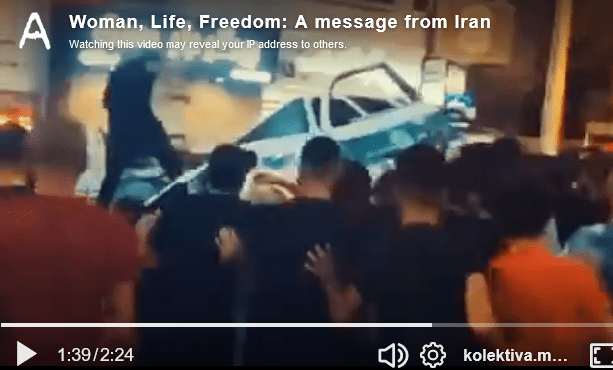
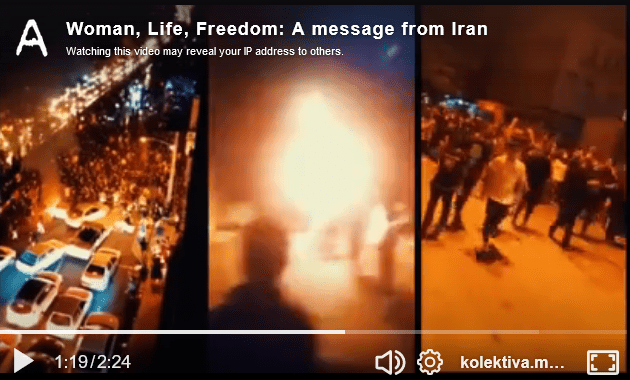
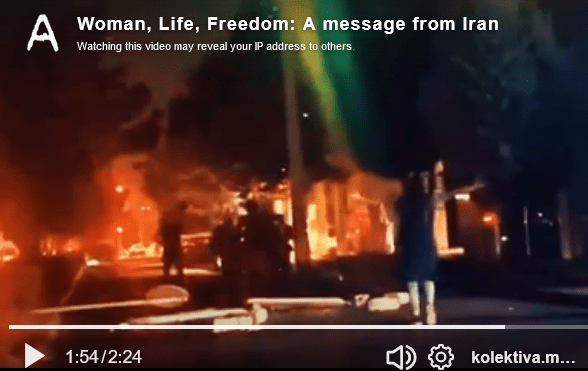
The original sparks of revolt started by the chants “Jin, Jiyan, Azadi,” “Woman, Life, Freedom” are now a evolution spreading to all 31 provinces and hundreds of cities. Even the ideological strongholds of the regime, Qom and Mashhad, are revolting. For the first time, the police are the direct target of people’s ire. The Police have been driven back, beaten, and killed. Police cars flipped, burned, and destroyed. Police stations taken over and set aflame. People are no longer scared of them.
screenshot
The revolution is bearing fruits. Oshnavieh is the first city liberated and in full control of people on September 24th. We are but one step away from overthrowing the death cult that is Islamic Republic of Iran. It has yet to be seen if we would take that final step. But, the people of Iran have already proven that they shouldn’t be underestimated.















 The Free