The meat industry’s misinformation is even worse than the fossil fuel industry’s.
Bully Beefs
Everything that makes campaigning against fossil fuels difficult is 10 times harder when it comes to opposing livestock farming. Here you will find a similar suite of science denial, misinformation and green washing.
But in this case, it’s accompanied by a toxic combination of identity politics, nostalgia, machismo and the demonisation of alternatives. If you engage with this issue, you don’t just need a thick skin; you need the skin of a glyptodon.
You will be vilified daily as a “soyboy”, a “hater of farmers” and a dictator who would force everyone to eat insects. You will be charged with undermining western civilisation, destroying its masculinity and threatening its health. You will be denounced as an enemy of Indigenous people, though generally not by Indigenous people themselves, for many of whom livestock farming is and has long been by far the greatest cause of land-grabbing, displacement and the destruction of their homes.
You will find yourself up against those who promote paleo diets (with or without added anabolic steroids), “agrarian localists” pushing impossible dreams of feeding 21st-century populations with medieval production systems, and culinary conservatism, which ranges, in different forms, from Donald Trump to MasterChef.
You will find yourself fighting not only a very modern and peculiarly vicious demagoguery, but also a very old and deep-rooted romanticism, which still portrays the pastoral life much as the Greek poets and the Old Testament prophets did. There’s a powerful, de facto alliance between the two.
Perhaps most often, you’ll be denounced as a puppet of the World Economic Forum (a target of multiple conspiracy fictions), or a stooge of corporate or institutional power, in the pay of plant-based meat, precision fermentation, Big Lettuce or Big Bug, which are depicted as monstrous behemoths stamping on traditional businesses.
The World Bank reported that back in 2022, a total of 37 states had outstanding debt to Russian creditors, amounting to $28.9 billion, a $2.3 billion (or 8.7%) increase from 2021.
The Russian government will no longer base its foreign loan decisions on credit ratings compiled by Western agencies and the Organization for Economic Co-operation and Development (OECD).
African countries can be denied loans on bad credit ratings caused by historical repayment defaults due to colonialist looting.
Based on estimates cited by RBK, in 2021, Russia ranked fifth among the largest sovereign lenders to developing countries.
A corresponding decree was signed by Russian Prime Minister Mikhail Mishustin last week, and the document was later published on the government’s official portal.
Poor credit ratings have historically blocked many nations in securing loans. Under the previous regulations, in order to receive a loan from Moscow, foreign countries had to belong to credit risk groups with a score no lower than six (out of eight) according to the OECD’s classification, or with a long-term credit rating higher than B- (according to the Fitch and Standard & Poor’s rating systems), and higher than B3 (according to Moody’s).
These provisions no longer apply, which means Russia will be able to provide loans to countries that don’t meet these requirements, according to the latest decree.
African countries are showing great interest in joining the expanding BRICS+ coalition and gaining future access to ‘no strings attached’ financing , thus evading World Bank, US dollar and IMF blackmail and debt traps.
Dec 3, 2023 A ship carrying 25,000 tons of humanitarian wheat from Russia arrived in Somalia on Thursday.
Russian President Vladimir Putin has also promised to send free grain to Burkina Faso, Zimbabwe, the Central African Republic, Mali, and Eritrea.
In addition, the analyst Onyango Ogola pointed out that Western countries always impose additional conditions on the transfer of grants and aid. Besides, the fact that the UK and other European countries “have classified African countries as middle-income economies” does not allow them to provide many grants, as the focus is on low-income countries, Onyango Ogola said.
Western profits from African resources always far exceed conditional ‘Development Aid’….. read more here
The free grain has been described as a WIN/WIN gift as Russia has a surplus of wheat after another record harvest in 2023.
The previous grain export deal allowing export of Ukrainian wheat under US led Sanctions was on the condition it be used to relieve world hunger.
That grain deal was finally cancelled by Russia which long complained that the promise to deliver grain to Africa was flouted by the west and the cheap grain supply went mainly to animal feed in Europe.
However Russia has few problems exporting its own grain and other agricultural products to 3rd countries despite sanctions and another record grain harvest is predicted in 2024.
Among other things, the far-right President intends to govern by granting himself legislative powers for up to 4 years.
Newsletter
On Thursday, the General Confederation of Labor (CGT), Argentina’s largest labor union, called for a general strike and a march to the Congress on January 24th to protest against the decree of urgent necessity and a bill that grants “superpowers” to the far-right president Javier Milei to govern discretionally for two years.
The general strike will take place one day before the date on which the Milei administration intends to have Parliament vote in favor of his neoliberal reform package, which seeks to deregulate and liberalize the Argentine economy and downsize the State.
As political processes are currently happening in Argentina, however, parliamentary approval could become just a formality, since Milei’s anti-worker reforms began to come into force de facto from December 29.
On Wednesday, Milei also sent another bill to Parliament to declare Argentina in “public emergency” until the end of 2025, a measure that could be extendable until 2027.
If this bill is approved, the far-right President could govern his four-year term by attributing himself broad legislative powers in matters related to the economy, finance, taxes, social security, defense, goods and services tariffs, energy, and public administration.
The text reads, “The Argentine police repress demonstrations against Milei in Cordoba. The population bravely faces police violence. Freedom is won by fighting. A general strike is being prepared throughout the country. Let’s fight!. Milei is dictatorship, Milei is hunger, Milei is a scam.”
“If a president is allowed to assume all public power for a period of two years renewable for two years, we will live in a country where the president will have all the power, and institutions will not be respected,” CGT Secretary Hector Daer said, warning that Milei’s intentions are against collective and individual rights.
Among other things, Milei’s new bill includes electoral regulation reform, changes in the Penal Code to control street protests, a deep labor flexibility, the privatization of 41 large state-owned companies, and authorizations to incur more public debt.
“The mobilization is a clear fight against the reinstatement of the conservative neoliberal model in its cruelest version,” said Luis D’Elia, the leader of the Federation of Land, Housing, and Habitat, one of the organizations that blocked roads on the outskirts of Buenos Aires as a protest measure on Thursday.
After assuming the presidency on December 10th, Milei, a far-right politician who claimed that his dead dogs communicate with him and advise him on state matters, launched a “shock” plan to supposedly balance the Argentine macroeconomy.
Reports on December 31 that the USS Gerald Ford aircraft carrier is heading out of the Mediterranean is also raising eyebrows in Iran and the region. The Saga Of The Navy’s Newest Problem-Plagued Carrier continues as it is called home despite the Gaza emergency.
For the hour, the guests speak about prisoner support, putting the book together, the implications and effects of long term isolation related topics.
This week on the show, you’ll hear part of our conversation with Eric King and Josh Davidson. Josh has been on a few times to talk about collaborative inside-outside projects he works on such as the Certain Days calendar, the greeting cards he helped make of Indigenous political prisoner Oso Blanco’s artwork to benefit Zapatista schools in Chiapas, and the Rattling The Cages book that he co-edited with Eric King.Audio Player
Eric is an anarchist who was incarcerated for an attempt to molotov the office of a Democratic Party official in Kansas City in solidarity with the then-going Ferguson Uprising following the murder of Michael Brown by police there.
One of a small, but high-profile group of startups attempting to decouple food production from agricultural land, Solar Foods uses carbon dioxide and hydrogen instead of sugars to feed its bacteria.
Assuming the energy-intensive parts of the process are powered by renewables, says the firm, the technology has clear environmental benefits over animals for protein production: lower emissions, reduced water and land use, and the ability to locate plants nearer to the end consumer.
Solar Foods secured novel foods approval for Solein in Singapore last year and hopes to be self-GRAS (Generally Recognized as Safe) in the US by next summer. It has submitted a safety dossier to EFSA (European Food Safety Authority) for EU approval as a novel food, and in the most optimistic scenario hopes to secure an opinion late next year.
Cofounder and CEO Pasi Vainikka: “The front end of the factory is similar to an oil refinery, the middle part is like a brewery, and the downstream part is like dairy.” Image credit: Solar Foods
Gas fermentation: Decoupling food production from agricultural land
Finnish startup Solar Foods—which makes a yellow, protein-packed ingredient called Solein by feeding microbes elements from the air—has raised another €8 million ($8.8 million) in a Series B round carried out through the Finnish-based investment group Springvest.
Venezuela always disputed the UK’s inclusion of the great Essequibo forest in Guyana. Now its Indigenous Cultures and pristine Ecology are up for grabs by Capitalist Looters.
High school students walk past ExxonMobil flags as they arrive at a job fair at the University of Guyana in Georgetown on April 21, 2023 (Photo: AP Photo)
In recent years, Venezuela has witnessed Guyana’s aggressive attitude in the dispute over the Essequibo.
With unilateral actions within the framework of the territorial controversy, denying Venezuelan historical rights and violating the consensual resolution mechanism, the 1966 Geneva Agreement, a plot is woven in which corporate influence is the driving force.
Attention is directed, as we well know, towards ExxonMobil, whose shadow is projected over the strategic reserves on the Atlantic façade of Guyana Esequiba.
How has this American corporation managed to penetrate Guyana, shaping its posture and unleashing a series of events that transcend the point of violent confrontation against Venezuela, putting the security of the region at risk?
Aerial view of Georgetown city where the Demerara River meets the Atlantic ocean. The city is extremely vulnerable to flooding due to sea level rise. Guyana‘s capital city is among the top nine coastal locales in the world that are likely to drown by 2030.
In her article titled “How Exxon Conquered a Country Without Firing a Shot” “Cómo Exxon conquistó un país sin disparar un tiro“published in The Intercept, journalist Amy Westervelt meticulously breaks down the corrupt ways in which ExxonMobil has woven its web of influence in the Guyanese state, based on a court case. which recently had a ruling favorable to Guyanese citizens against ExxonMobil and the Guyana Environmental Protection Agency (EPA).
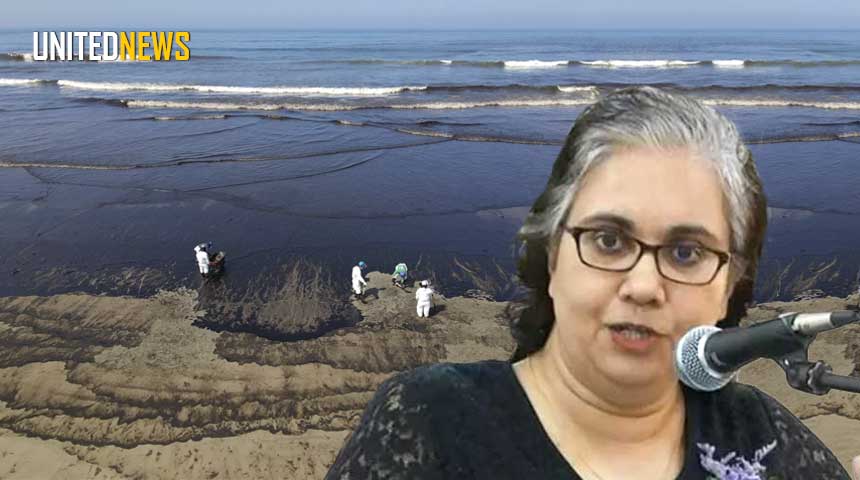
Two Guyanese nationals brought the case accusing the EPA of failing to obtain an assurance from ExxonMobil or its subsidiary, Esso Exploration and Production Guyana Limited, that the company would cover all costs related to a potential oil spill.
ExxonMobil’s drilling project in Guyana is the riskiest because it involves intense pressure on complex equipment.
The company’s own environmental impact assessments indicate that such a disaster in Guyana could send oil onto the beaches of 14 different Caribbean islands, most of which rely on fishing and tourism, and all of which could hold the Guyana for the damage.
Esso joined the case with the EPA, arguing that the plaintiffs were misinterpreting the law, that an agreement had been reached between the company and the agency, and that Guyanese citizens did not have the right to bring these types of cases anyway.
Judge Sandil Kissoon ruled in favor of the plaintiffs across the board, concluding that the insurance and warranty requirements were clearly stated in Esso’s permit, that the EPA did not obtain those guarantees, and that Guyanese citizens had every reason to question that failure.
“In Guyana, it has become difficult to distinguish where the oil company ends and the government begins.
ExxonMobil executives join the Guyanese president in his suite at cricket matches, and the vice president regularly holds press conferences to defend the company. oil company.
Vincent Adams, a Guyanese petroleum engineer and former head of the country’s EPA, has been one of the agency’s harshest critics.”
Adams, who worked at the US Department of Energy, talks about the lack of oversight and monitoring of oil production in Guyana by ExxonMobil.
He mentions that, during his time working in the United States, there were always offshore personnel to supervise the operations of the oil companies. In Guyana this supervision has been canceled and the transnational’s files and permits are locked in the director’s office. Cloudy business? Cricket will cover them up
La revelación de que ExxonMobil pagó los honorarios de los abogados de Guyana en la Corte Internacional de Justicia plantea serias dudas sobre la imparcialidad en la controversia del territorio Esequibo. https://t.co/yP8VJMel3e
In response to Kissoon’s order, the EPA was directed to immediately issue an enforcement action against Esso, requiring an unlimited financial guarantee from ExxonMobil and evidence of adequate liability insurance.
The EPA appealed the decision, and on June 8, an appeals court judge temporarily stayed the order until the appeal is resolved, although he requested that Exxon post a $2 billion interim guarantee.
In the article, the local lawyer in the case, Melinda Janki, believes that regardless of the outcome of the appeal, this situation represents an important victory for Guyanese against ExxonMobil in court.
During Cheddi Jagan’s government in the early 1990s, Melinda Janki, then immersed in the corporate sphere, became involved in the drafting of the Environmental Protection Law in 1994, being hired as a consultant for said process.
Melinda Janki,
The version of the law proposed by Janki was officially ratified in 1996. In subsequent years, the country entered into its first oil contract with a partnership between ExxonMobil and Shell, although there was no major impact with the laws since no major exploration began during those years.
Janki also advocated for the inclusion of an amendment to the Constitution to protect the human right to a healthy environment, achieving its ratification in 2003.
After Venezuela nationalized oil and expelled foreign oil majors, including ExxonMobil, in 2008, companies began exploring undemarcated waters with Guyana, under the unilateral and illegitimate authorization of Georgetown.
It was precisely ExxonMobil the company that, in 2015, announced the discovery of important reserves of high-quality light and sweet oil.
This discovery generated great expectations among the people, which was not spontaneous, but rather manipulated by the company and the government, who actively promoted the idea of oil wealth in Guyana.
As part of this strategy, ExxonMobil sponsored a major cricket tournament and broadcast the games on television.
“‘When you walked the streets, you heard all the Guyanese saying, ‘Thank God for Exxon! If it weren’t for Exxon, we would never have been able to watch cricket live on television,'” said Glenn Lall, editor of a local newspaper. Kaieteur News. —Do you see how dangerous that is?
Organizations such as the International Monetary Fund and the World Bank are able to admit that the agreement between ExxonMobil and Guyana is unfair to the latter.
In response to that obvious and controversial truth, the company resorts to extolling the sponsorship and conservation contributions of cricket. The article describes one of the advertising campaigns launched last year regarding that.
“Exxon’s marketing team put together a Facebook video that begins—where else?—at the National Cricket Stadium. The first minute and a half focuses on the company’s investments in cricket before the relationship leader Exxon public officials take to the streets, choosing ‘random’ people to talk about the contract. And then back to the cricket stadium for a briefing.”
The company’s commitment to Guyanese cricket was heightened in March when they announced a $17.7 million investment in the construction of a new stadium in the easternmost region of the country, close to future oil and gas export facilities.
Abuses of power to the detriment of the population
Janki has filed seven lawsuits against the government to ensure compliance with environmental laws he helped draft.
Only two of these lawsuits have been resolved in favor of the country. In 2020, ExxonMobil’s drilling permit was reduced from 23 to five years. The other “victory” is the one reported at the beginning of this article, without taking into account the result that will follow the appeal made by EPA.
The attempt to enforce environmental laws in Guyana faces numerous obstacles.
The lack of lawyers and secretaries who are not in conflict of interest with ExxonMobil is just one of them.
In addition, ExxonMobil funds conservation organizations that could oppose how resources are being exploited on the high seas.
An example of this is the Iwokrama International Center for Rainforest Conservation and Development, considered “the crown jewel of conservation in Guyana and a world leader in sustainable forestry.”
On the other hand, according to the investigation published by The Intercept, ( SEE BELOW) ExxonMobil and the government have hired journalists to control information about oil and gas extraction in the country.
The offer includes a big pay rise, a high title and a free car, which has led many journalists to accept the proposal. This has left the country with very few journalists reporting on the issue with a critical eye.
The dark elements that surround the activities of the American transnational are not even compensated with effective social investment to lift Guyanese out of poverty, beyond marketing strategies to promote the idea that some of the wealth will go to the population.
It is public knowledge that the agreements with ExxonMobil have been established under unfavorable conditions for Guyana, especially with regard to the distribution of benefits generated by the exploitation of resources.



 Newsletter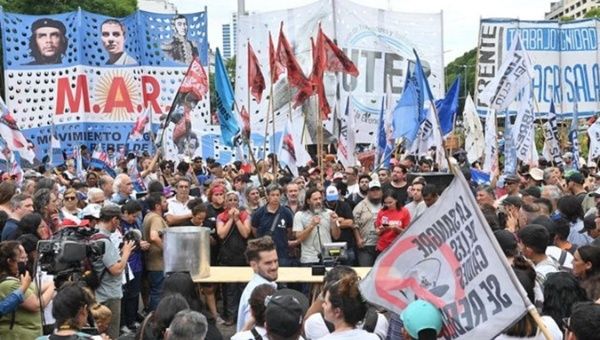









 The Free