
from thefreeonline on 1st Jan 2024 by Misión Verdad and The Intercept. .
Venezuela always disputed the UK’s inclusion of the great Essequibo forest in Guyana. Now its Indigenous Cultures and pristine Ecology are up for grabs by Capitalist Looters.

High school students walk past ExxonMobil flags as they arrive at a job fair at the University of Guyana in Georgetown on April 21, 2023 (Photo: AP Photo)
In recent years, Venezuela has witnessed Guyana’s aggressive attitude in the dispute over the Essequibo.
With unilateral actions within the framework of the territorial controversy, denying Venezuelan historical rights and violating the consensual resolution mechanism, the 1966 Geneva Agreement, a plot is woven in which corporate influence is the driving force.
Attention is directed, as we well know, towards ExxonMobil, whose shadow is projected over the strategic reserves on the Atlantic façade of Guyana Esequiba.
How has this American corporation managed to penetrate Guyana, shaping its posture and unleashing a series of events that transcend the point of violent confrontation against Venezuela, putting the security of the region at risk?

Aerial view of Georgetown city where the Demerara River meets the Atlantic ocean. The city is extremely vulnerable to flooding due to sea level rise. Guyana‘s capital city is among the top nine coastal locales in the world that are likely to drown by 2030.
In her article titled “How Exxon Conquered a Country Without Firing a Shot” “Cómo Exxon conquistó un país sin disparar un tiro“published in The Intercept, journalist Amy Westervelt meticulously breaks down the corrupt ways in which ExxonMobil has woven its web of influence in the Guyanese state, based on a court case. which recently had a ruling favorable to Guyanese citizens against ExxonMobil and the Guyana Environmental Protection Agency (EPA).
Two Guyanese nationals brought the case accusing the EPA of failing to obtain an assurance from ExxonMobil or its subsidiary, Esso Exploration and Production Guyana Limited, that the company would cover all costs related to a potential oil spill.
ExxonMobil’s drilling project in Guyana is the riskiest because it involves intense pressure on complex equipment.
The company’s own environmental impact assessments indicate that such a disaster in Guyana could send oil onto the beaches of 14 different Caribbean islands, most of which rely on fishing and tourism, and all of which could hold the Guyana for the damage.
Esso joined the case with the EPA, arguing that the plaintiffs were misinterpreting the law, that an agreement had been reached between the company and the agency, and that Guyanese citizens did not have the right to bring these types of cases anyway.
Judge Sandil Kissoon ruled in favor of the plaintiffs across the board, concluding that the insurance and warranty requirements were clearly stated in Esso’s permit, that the EPA did not obtain those guarantees, and that Guyanese citizens had every reason to question that failure.
“In Guyana, it has become difficult to distinguish where the oil company ends and the government begins.
ExxonMobil executives join the Guyanese president in his suite at cricket matches, and the vice president regularly holds press conferences to defend the company. oil company.
Vincent Adams, a Guyanese petroleum engineer and former head of the country’s EPA, has been one of the agency’s harshest critics.”
Adams, who worked at the US Department of Energy, talks about the lack of oversight and monitoring of oil production in Guyana by ExxonMobil.
He mentions that, during his time working in the United States, there were always offshore personnel to supervise the operations of the oil companies. In Guyana this supervision has been canceled and the transnational’s files and permits are locked in the director’s office.
Cloudy business? Cricket will cover them up
In response to Kissoon’s order, the EPA was directed to immediately issue an enforcement action against Esso, requiring an unlimited financial guarantee from ExxonMobil and evidence of adequate liability insurance.
The EPA appealed the decision, and on June 8, an appeals court judge temporarily stayed the order until the appeal is resolved, although he requested that Exxon post a $2 billion interim guarantee.
In the article, the local lawyer in the case, Melinda Janki, believes that regardless of the outcome of the appeal, this situation represents an important victory for Guyanese against ExxonMobil in court.
During Cheddi Jagan’s government in the early 1990s, Melinda Janki, then immersed in the corporate sphere, became involved in the drafting of the Environmental Protection Law in 1994, being hired as a consultant for said process.
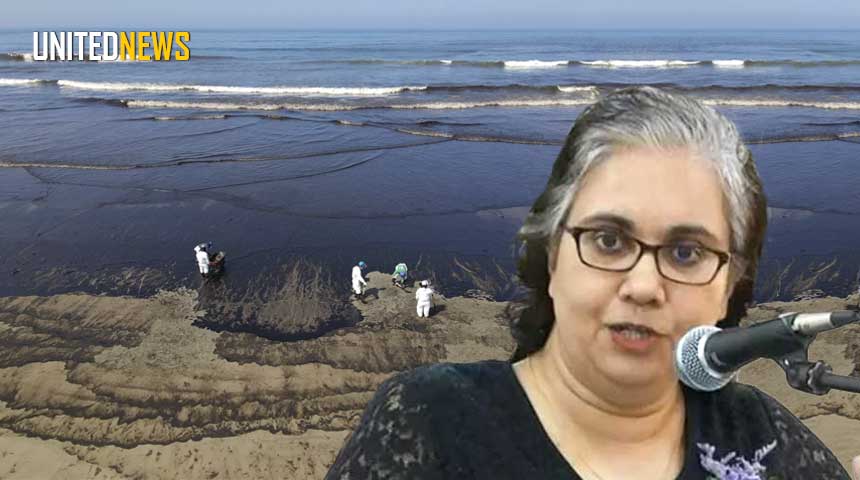
Melinda Janki,
The version of the law proposed by Janki was officially ratified in 1996. In subsequent years, the country entered into its first oil contract with a partnership between ExxonMobil and Shell, although there was no major impact with the laws since no major exploration began during those years.
Janki also advocated for the inclusion of an amendment to the Constitution to protect the human right to a healthy environment, achieving its ratification in 2003.
After Venezuela nationalized oil and expelled foreign oil majors, including ExxonMobil, in 2008, companies began exploring undemarcated waters with Guyana, under the unilateral and illegitimate authorization of Georgetown.
It was precisely ExxonMobil the company that, in 2015, announced the discovery of important reserves of high-quality light and sweet oil.
This discovery generated great expectations among the people, which was not spontaneous, but rather manipulated by the company and the government, who actively promoted the idea of oil wealth in Guyana.
As part of this strategy, ExxonMobil sponsored a major cricket tournament and broadcast the games on television.
“‘When you walked the streets, you heard all the Guyanese saying, ‘Thank God for Exxon! If it weren’t for Exxon, we would never have been able to watch cricket live on television,'” said Glenn Lall, editor of a local newspaper. Kaieteur News. —Do you see how dangerous that is?
Organizations such as the International Monetary Fund and the World Bank are able to admit that the agreement between ExxonMobil and Guyana is unfair to the latter.
In response to that obvious and controversial truth, the company resorts to extolling the sponsorship and conservation contributions of cricket. The article describes one of the advertising campaigns launched last year regarding that.
“Exxon’s marketing team put together a Facebook video that begins—where else?—at the National Cricket Stadium. The first minute and a half focuses on the company’s investments in cricket before the relationship leader Exxon public officials take to the streets, choosing ‘random’ people to talk about the contract. And then back to the cricket stadium for a briefing.”
The company’s commitment to Guyanese cricket was heightened in March when they announced a $17.7 million investment in the construction of a new stadium in the easternmost region of the country, close to future oil and gas export facilities.
Abuses of power to the detriment of the population
Janki has filed seven lawsuits against the government to ensure compliance with environmental laws he helped draft.
Only two of these lawsuits have been resolved in favor of the country. In 2020, ExxonMobil’s drilling permit was reduced from 23 to five years. The other “victory” is the one reported at the beginning of this article, without taking into account the result that will follow the appeal made by EPA.
The attempt to enforce environmental laws in Guyana faces numerous obstacles.
The lack of lawyers and secretaries who are not in conflict of interest with ExxonMobil is just one of them.
In addition, ExxonMobil funds conservation organizations that could oppose how resources are being exploited on the high seas.
An example of this is the Iwokrama International Center for Rainforest Conservation and Development, considered “the crown jewel of conservation in Guyana and a world leader in sustainable forestry.”
On the other hand, according to the investigation published by The Intercept, ( SEE BELOW) ExxonMobil and the government have hired journalists to control information about oil and gas extraction in the country.
The offer includes a big pay rise, a high title and a free car, which has led many journalists to accept the proposal. This has left the country with very few journalists reporting on the issue with a critical eye.
The dark elements that surround the activities of the American transnational are not even compensated with effective social investment to lift Guyanese out of poverty, beyond marketing strategies to promote the idea that some of the wealth will go to the population.
It is public knowledge that the agreements with ExxonMobil have been established under unfavorable conditions for Guyana, especially with regard to the distribution of benefits generated by the exploitation of resources.
And that is preceded by the Guyanese government’s record in the management of other natural resources, including those that correspond to Guyana Esequiba.
“‘Where’s the gold money? Where’s the bauxite money? Where’s the diamond money?
************
How Exxon Captured a Country Without Firing a Shot
Guyana is poised to become Exxon’s top global oil producer. Where the company ends and the government begins is increasingly unclear.


- Amy Westervelt https://theintercept.com/2023/06/18/guyana-exxon-mobil-oil-drilling/
- Guyana, Exxon, and the Making of a New Petro State
Guyana’s high court handed down a historic ruling in May against both the country’s Environmental Protection Agency and Exxon Mobil’s subsidiary in the region. If it sounds strange that the EPA and Exxon were co-defendants in a case, yes, that’s precisely the point.
The case was brought on behalf of two Guyanese citizens, Frederick Collins and Godfrey Whyte. They accused the EPA of failing to enforce the requirements of its own permits by never securing a guarantee from Exxon or its subsidiary, Esso Exploration and Production Guyana Limited, that the company would cover all costs related to a possible oil spill.
“Guyana taxpayers are currently exposed,” Tom Sanzillo, director of financial analysis for the Institute for Energy Economics and Financial Analysis, said. “The potential consequences for Guyana are catastrophic.”
That’s because Exxon’s drilling project in Guyana is the riskiest kind: deep-water offshore drilling, which involves intense pressure bearing down on complex equipment. The conditions are similar to those that preceded the Deepwater Horizon explosion in 2010, which spewed oil and gas throughout the Gulf of Mexico, costing BP $69 billion.
Guyana is poised to become Exxon’s top global oil producer.
Exxon’s own environmental impact assessments indicate that such a disaster in Guyana could send oil to the beaches of 14 different Caribbean islands, most of which depend on fishing and tourism — and all of which could hold Guyana liable for damages.
The costs would be astronomical, which is why the permits for offshore drilling in Guyana require not only an independent liability insurance policy from Esso, but also an unlimited financial guarantee from its parent company to cover costs that exceed those covered by insurance.

The Exxon Mobil office in Georgetown, Guyana, on April 12, 2023. Photo: Matias Delacroix/AP
Esso joined the case with the EPA, arguing that the plaintiffs were misinterpreting the law, that a deal had been worked out between the company and the agency, and that Guyanese citizens didn’t have standing to bring these sorts of cases anyway. Justice Sandil Kissoon ruled in favor of Collins and Whyte across the board, concluding that the insurance and guarantee requirements were clearly stated in Esso’s permit, the EPA failed to secure those assurances, and Guyanese citizens had every reason to question that failure.
“The EPA has relegated itself to a state of laxity of enforcement … putting this nation and its people in grave potential danger of calamitous disaster,” Kissoon wrote in a blistering 56-page ruling that called Esso “disingenuous and deceptive” and the EPA “derelict, pliant, and submissive.”
Taking aim at the government and Exxon Mobil at the same time is a bold move that has some in the country worried for Kissoon’s safety, but advocates point to the ruling as confirmation that Guyana’s courts, at least, have not been captured by the oil business.
In Guyana, it’s become hard to distinguish where the oil company ends and the government begins. Exxon executives join the Guyanese president in his suite at cricket matches, and the vice president regularly hosts press conferences to defend the oil company. Vincent Adams, a Guyanese petroleum engineer and former head of the country’s EPA, has been one of the agency’s harshest critics.
“When I was working in the United States, we always had people at the offshore site 24/7 with the oil companies,” said Adams, who spent decades at the U.S. Department of Energy. “Because 99 percent of the time what they tell you is happening out there is not what is happening.”
When Adams was tapped to run Guyana’s EPA, he planned to have monitors on board Exxon’s floating production vessels. “That’s all been canceled. Even Exxon’s files and permits, which used to be in the document center with everyone else’s, are under lock and key in the director’s office,” he said. “There’s no oversight happening because Exxon does not want oversight.”
“There’s no oversight happening because Exxon does not want oversight.”
“We have complied with all applicable laws at every step of the exploration, appraisal, development, and production stages,” said Meghan Macdonald, who handles media and communications for Exxon Mobil in Guyana.
“We are committed to responsibly developing the resources offshore Guyana to maximize value for all stakeholders, including the government and people of Guyana.”
Nonetheless, Kissoon ordered the EPA to issue an immediate enforcement action against Esso, requiring that it provide an unlimited financial guarantee from ExxonMobil and proof of sufficient liability insurance, or its drilling permit would be suspended.
The EPA appealed, and on June 8, an appeals court judge temporarily stayed the order until the appeal is heard but required Exxon to put up a $2 billion guarantee in the meantime.
It’s a significant pumping of the brakes on Exxon’s operation in Guyana, which the company has projected could outpace the Texas Permian Basin, making Guyana Exxon’s top oil-producing region, responsible for more than a quarter of the company’s global output, within five years.
The local attorney on the case, Melinda Janki, has been working to stop oil drilling in her home country for more than a decade. For Janki, the ruling is significant no matter the outcome of the appeals process.
“The top line is that two ordinary citizens in this little country, which most people can’t find on the map, have gone to court and they’ve beaten the EPA, but they’ve also beaten Exxon Mobil, and this is really a victory for the people, by the people.”
Janki said the ruling should send a message to people on the ground that they have the power to oppose projects like these. “Justice Kissoon put the rule of law above the interests of Exxon Mobil, and that’s massive,” Janki said. “That’s what every judge in every country should be doing, and I think this decision sets the standard for judges everywhere, not just in Guyana.”
What’s been happening over the past five years in Guyana is emblematic of a broader wave of extractive colonialism playing out in countries across the Global South.
As Carroll Muffett, president of the Center for International Environmental Law, put it, “Countries that don’t have a history or any significant history of oil and gas development or oil and gas dependence are being pushed into that at the very moment when the world knows we need to be phasing out fossil fuels.”
The Exxon Mobil office in Georgetown, Guyana, on April 12, 2023. Photo: Matias Delacroix/AP
Right to a Healthy Environment
In 2015, when Exxon Mobil announced it had found oil — lots of it — off the coast of Guyana, only a handful of people there knew what that news really meant. One of them was Janki. “My heart just sank,” she said. “Because I know oil is a disaster, and it’s the worst possible thing that could have happened to Guyana.”
Janki came to her conclusions about oil in a somewhat surprising way: working for BP in the U.K. Janki grew up in Guyana, but her family left when she was around 12 due to political turmoil kicked off by U.S. and U.K. concerns that Guyana was becoming a “new Cuba.”
Infiltrating various political groups and stoking racial tensions, the CIA and its allies in Britain successfully destabilized the country and installed a leader who suited them. Janki’s family moved to Zambia and then Trinidad.
Eventually, Janki made her way to the University of Oxford. She went to law school and, after a few years working at a corporate firm in London, started looking for a new challenge.
“At the time, it seemed like BP was a good place to go,” she said. Janki negotiated deals and traveled all over Europe for BP, learning some key lessons along the way. “I think sometimes people don’t realize that the purpose of an oil company is to make money, and they have no other purpose,” she said. “They’re not there to promote human rights. They’re not there to protect the environment.
They’re there to put the share price up and to give big, fat dividends to their shareholders. … They’re very good at what they do, and they’re very good at telling people a story about how beneficial they are for the world.”
When the appeal of working for BP wore off and political tensions back home had cooled, Janki returned to Guyana, moving back to the capital, Georgetown. At the time, Guyana was just beginning to build an independent democracy. In 1992, the country had its first completely free elections, and Cheddi Jagan — the candidate the CIA had spent decades trying to defeat — was elected president. His government made two significant moves:
It proposed major reforms to the constitution and passed a comprehensive Environmental Protection Act that established Guyana’s EPA. Although she was still working in the corporate sphere at the time, Janki had a keen interest in environmental law.
The government began drafting the Environmental Protection Act in 1994. “There was a meeting at the Pegasus Hotel, which is this big hotel in Georgetown,” Janki said. “I had no way to go because I was just this completely unimportant individual.” But a friend helped her score an invite.
“It was interminably boring, but in the break, I was able to talk to one of the government officials and say to him that I had looked at their draft environmental act and I thought that it was inadequate.”
It wasn’t the sort of thing that a “completely unimportant individual” would generally say, but the official didn’t brush her off. “He said, ‘Well, send me something about it,’ and maybe that was a brush-off, but I saw it as a really exciting opportunity,” Janki said. “So I wrote a paper explaining why I thought this act was inadequate.”
The official asked Janki if she’d like to work as a consultant on drafting the act, and she jumped at the chance. “I put in all the stuff on the environmental impact assessments,” she said. “I put in the impact on the climate, the impact on the atmosphere, and I put in principles of environmental management, so things like the polluter pays and the precautionary principle and principles of natural capital.”

The Scorched-Earth Legal Strategy Corporations Are Using to Silence Their Critics
Janki’s version of the act was ratified by Jagan’s government in 1996. Just a few years later, the country signed its first contract with an oil company: a partnership between Exxon Mobil and Shell. The contract granted the partnership the right to explore for oil in Guyana, but for several years, the companies didn’t do much with their permits. Oil was plentiful and easier to get in other South American countries, so Guyana wasn’t a priority.
Meanwhile, Janki began lobbying Guyana’s Constitutional Reform Commission to add an amendment protecting the human right to a healthy environment. “I looked at constitutions around the world that, at that time, had the right to a healthy environment written into them. And then I put forward the arguments for having it in Guyana’s constitution.”
Once again, it worked. The right to a healthy environment for current and future generations was ratified as part of Guyana’s constitution in 2003.
3.

The Boom
It wasn’t until 2008, a few months after Venezuela nationalized oil and booted out most of the foreign oil majors, that the companies began exploring the waters offshore Guyana in earnest. Still, they came up empty. Shell left the partnership in 2014, while Exxon brought on two new partners: Hess Corporation, an independent American oil company best known as an early mover in the fracking boom, and the China National Offshore Oil Corporation. The very next year, Exxon announced it had found oil, more than 10 billion barrels of it. And not just any oil: It was light, sweet crude, the oil that’s easiest to refine, commanding the highest price on the global market.
“Suddenly, in 2015, Exxon announced that they had found oil, and people were going crazy talking about oil wealth,” Janki said.
It wasn’t just people talking about oil wealth. Exxon was pushing this idea, and so was the government. The company moved quickly to capture the hearts and minds not only of state officials, but also other members of civil society. One of Exxon’s first big public investments in Guyana was to sponsor the Caribbean Premier League, a popular regional cricket tournament, and the country’s cricket team, the Amazon Warriors. Players have Exxon Mobil emblazoned across the front of their uniforms. The company also helped get cricket games broadcast on TV.
“When you walked in the streets, you would hear every Guyanese saying, ‘Thank God for Exxon!’”
“When you walked in the streets, you would hear every Guyanese saying, ‘Thank God for Exxon! If it wasn’t for Exxon, we would’ve never been able to see cricket live on television,’” Glenn Lall, the publisher of a local newspaper, Kaieteur News, said. “You see how dangerous that is?”
The company and the government hired journalists working on the oil and gas beat away from the country’s papers and into corporate public relations and state-run newsrooms. One such journalist, who asked that their name be withheld to avoid retaliation, said the standard offer included a big pay bump, a lofty title, and a free car.
“I had some journalists that used to work with me, and the government tried to steal them with big pay. And it worked — they left,” Lall said. “A few of them after a while said, ‘No man, I can’t do what you want me to do,’ so they left there too, but none of them are doing journalism anymore.”
As a consequence, Lall said, there are few journalists left who report on oil drilling with a critical eye. Of the six reporters who once covered oil and gas for Kaieteur News, only one remains.
Since Exxon shipped its first barrel of oil in 2019, Janki has filed seven separate lawsuits against the Guyanese government asking it to do one thing: enforce the environmental laws she helped draft.
She had an early win in 2020 when the government reduced Exxon’s drilling permit from 23 years, as it was originally issued, to five years, the maximum allowed by law. And the recent insurance ruling, if it stands, will require the EPA to follow the country’s environmental and permitting laws. The rest of Janki’s cases are still making their way through the Guyanese courts. One argues that the offshore drilling project violates citizens’ constitutional right to a healthy environment. Others urge the government to do something about the constant burning of excess gas from Exxon’s offshore production platforms, a practice called flaring.
Janki said she’s struggled to find lawyers and clerks to work with her. Given how many firms Exxon and its partners, subsidiaries, and suppliers have contracted with in Guyana, it’s hard to find someone who’s not conflicted out. “I couldn’t get anybody to help with cases until a senior counsel who was based in Trinidad agreed to do it with me,” she said. “We had no clerk. I had to go and line up at the court registry with the documents and wait my turn.”
Exxon has also funded conservation organizations that might object to oil drilling in the country, including the Iwokrama International Center for Rain Forest Conservation and Development, Guyana’s crown jewel of conservation and a global leader on sustainable forestry.
“Yes, the obvious question is, you know, should we be taking money from the oil company?” Iwokrama CEO Dane Gobin said. “And my answer to that is, OK, oil will be there. We are not advocates. We run a rainforest. We don’t get involved in politics. But we have to take care of our people. And if somebody is saying, ‘Here’s a grant. You can do capacity building and training. You could improve the livelihoods of Guyanese. You could do all kinds of things, mangroves, all of that.’ Why should we say no?”
For Janki, the reason is simple: If you’re taking the oil companies’ money, you’re helping them deceive the public.
“I think it’s disingenuous to be claiming to be a conservation organization and at the same time trying to make allowances for the fossil fuel sector.”
“The oil industry always tells you how good it is for you,” Janki said. “And that has a way of removing every other narrative. … They say, ‘Well, we power the world. We are the energy that keeps the economy going. We heat your homes, we enable you to cook.’ And people say, ‘Oh yes, that’s wonderful.’ The companies don’t say, ‘We’re frying the planet so that we can make money, and we are going to make sure that renewable energy doesn’t get anywhere because that will put us out of business.’”
Whenever it can, Exxon reminds the public of its cricket sponsorship and conservation efforts. A marketing video the company released last year to address controversy around its contract with Guyana is a perfect example. Even the International Monetary Fund and the World Bank, traditionally conservative and pro-oil, have described the deal as unfair to Guyana. So Exxon’s marketing team put together a Facebook videoOpens in a new tab that starts — where else? — at the national cricket stadium. The first minute and a half focuses on the company’s investments in cricket before Exxon’s public relations lead takes to the streets, picking people “at random” to talk to about the contract. And then back to the cricket stadium for a recap.
It’s a master class in building social license. And the cricket sponsorship must be paying off because in March, Exxon increased its investment in Guyanese cricket in a big way, announcing funding for a new stadium in the easternmost part of the country, near the border of Suriname. The Greater Guyana Initiative, a local nonprofit funded by Exxon and its partners in Guyana, is paying $17.7 million to build the state-of-the-art facility, which will host sporting events and concerts in a region that will soon be home to a major oil and gas export port.
“If they didn’t give, they’d be knocked for not giving something back,” Gobin said. Since 2017, his organization has received $7 million from the Exxon Mobil Foundation.
“I think it’s disingenuous to be claiming to be a conservation organization and at the same time trying to make allowances for the fossil fuel sector,” Janki said.
But it’s an approach the government has taken as well. Guyana’s vice president, Bharrat Jagdeo, often talks about how the oil project will fund climate adaptation — and how the country needs to get the oil extracted and sold before anyone has to make good on their net-zero commitments. “We support the vision of a fast-paced development of the resources offshore, particularly in the context of net zero,” he told a crowd of oil executives at the annual CERAWeek conference. “We believe it’s a wise strategy to do as much exploration as possible now, prove the resources, and then have them removed and transferred into financial assets to transform the country.”
The trillion-dollar question is whether Guyana can get rich off oil before it suffers a catastrophic spill, the bottom falls out of the oil market, or the country’s coast — where 90 percent of the population lives— is swallowed by the sea, which is predicted to happen by 2030.

The Resource Curse
Throughout Latin America, the Caribbean, and Africa, the fossil fuel industry is very busy telling the story of fossil fuels as the solution to poverty. As more and more Global North countries pass laws regulating emissions or incentivizing a shift away from fossil fuels, the race is on for the industry to sell as much oil and gas as possible before they have to strand assets. No one wants to be the company left with the most untapped, unmonetized oil and gas reserves dragging down their balance sheets.
Related
13,000 People From the Niger Delta Just Sued Shell for Years of Oil Spills
In the Global South, the message is simple: Having your own fossil fuel industry means everyone will have access to energy and your country will get rich. Only that story hasn’t panned out for any Global South country in decades. Even when it comes to solving energy poverty — a term that describes inadequate access to energy for basic needs like cooking, lights, and temperature control — the industry has not delivered on its promises. Nigeria, which has been in the oil business for more than 50 years, has the lowest access to electricity globallyOpens in a new tab; about 92 million of the country’s 200 million people lack access to power.
Janki knows that Guyana needs money to lift its people out of poverty. She just doesn’t think another cycle of what development economists call “the resource curse” — the phenomenon of countries with an abundance of natural resources winding up with less economic growth, democracy, or development — is going to do that. “Where is the money from the gold? Where is the money from the bauxite? Where is the money from the diamonds? Where is the money from the sugar? Where is the money from the agriculture? Where is the money from the fishing, etc.? The list is almost endless because we are so full of wealth,” she said. “And yet the people in this country are poor.”
She’s in favor of Guyana monetizing its value to the world as a carbon sink, although she doesn’t endorse the government’s recent move to sell $750 million worth of carbon credits to Exxon’s partner, Hess Corporation. Critics of carbon credits argue that they should only be used to offset the emissions of “difficult to abate” sectors — industries or processes for which there are no alternatives — not continued fossil fuel expansion.
Ultimately, Janki said she’d like to see those in the Global North take some responsibility for hundreds of years of colonialism and step up to prevent companies from leading yet another round of it.
“I think it’s really important that people stop thinking of Guyana as a developing country that needs to be helped and start looking at us and saying, ‘Wow, these guys are a carbon sink, and they are under threat because of Exxon Mobil and other oil companies,” Janki said. “And we have a responsibility to rein in those oil companies because those are oil companies coming from the Global North.”
Meanwhile, the outcome of her insurance case could set a precedent that changes the math entirely for drilling in Latin America and the Caribbean. If the ruling is overturned, the case could be taken up by the Caribbean Court of Justice, which sets legal precedents for the entire region. The industry will be watching to see whether bets placed not just in Guyana, but also in Suriname, Trinidad, Argentina, Mexico, and Colombia will suddenly become a whole lot riskier. Whether the ruling sticks or not, the case is likely to inspire similar legal action, according to Muffett of the Center for International Environmental Law.
“Lawyers from around the world who are fighting oil and gas — off the coasts of southern Africa, off the coast of Mozambique, and in other places in the Caribbean — are going to be looking at this decision,” he said, “paying close attention to whether the financial guarantees being provided in other oil and gas exploration and development permits are at an equivalent level.”
Additional reporting: Kiana Wilburg


