
from thefreeonline on 1st Jan 2923 by Elaine Watson at Food Matters

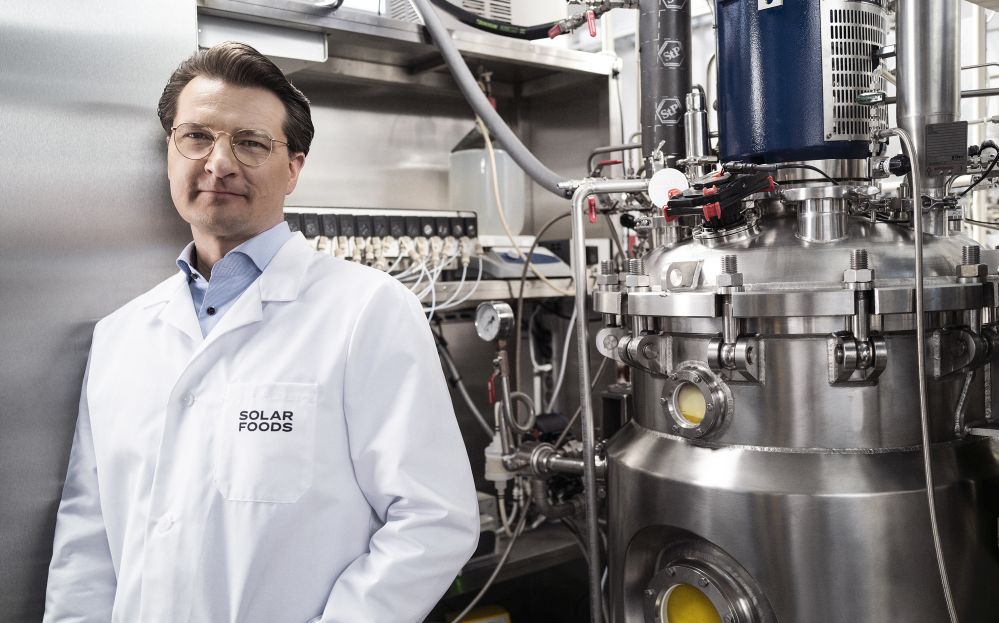
One of a small, but high-profile group of startups attempting to decouple food production from agricultural land, Solar Foods uses carbon dioxide and hydrogen instead of sugars to feed its bacteria.
Assuming the energy-intensive parts of the process are powered by renewables, says the firm, the technology has clear environmental benefits over animals for protein production: lower emissions, reduced water and land use, and the ability to locate plants nearer to the end consumer.

Solar Foods’ Solein: the protein of the future made of hydrogen..
Solar Foods secured novel foods approval for Solein in Singapore last year and hopes to be self-GRAS (Generally Recognized as Safe) in the US by next summer. It has submitted a safety dossier to EFSA (European Food Safety Authority) for EU approval as a novel food, and in the most optimistic scenario hopes to secure an opinion late next year.
Gas fermentation: Decoupling food production from agricultural land
Finnish startup Solar Foods—which makes a yellow, protein-packed ingredient called Solein by feeding microbes elements from the air—has raised another €8 million ($8.8 million) in a Series B round carried out through the Finnish-based investment group Springvest.
A spokesperson added: “On May 30, Solar Foods and the Japanese food and biotechnology company Ajinomoto announced a strategic alliance that includes the development of products using Solein and a marketability study in Singapore, set to begin on Q1 2024.”
‘Electricity is about half of our production costs’
Speaking to AgFunderNews in September, cofounder and CEO Pasi Vainikka said: “PV: Based on the process we have today, we believe we are already cost competitive against whey, pea, and soy protein isolates if we operate at large commercial scale, which would be thousands or potentially tens of thousands of tons per year.”
Asked about rising electricity costs, he said: “Electricity is about half of our production costs, mostly for the electrolysis process. So yes, the viability of our process depends on which country you are in and what type of electricity market it has, so you need an efficient electricity market where you operate.”

Solar Foods create world first sustainable Solein gelato |
According to Vainikka: “The front end of the factory is similar to an oil refinery, the middle part is like a brewery, and the downstream part is like dairy.
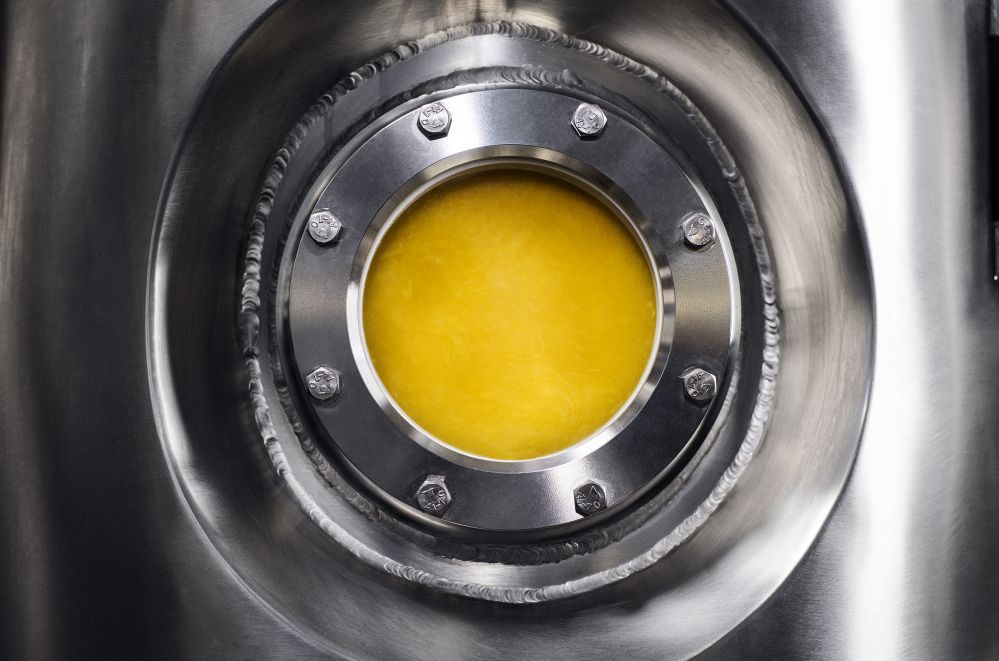
“Our fermenter is like a big SodaStream. The main feedstocks are carbon dioxide gas, hydrogen gas, some oxygen and then some nitrogen in the growth media, water solution ammonia, and then some nutrients that plants typically take through roots.”
He added: “We use electrolysis to get the hydrogen [using electricity to split water into its constituent parts, hydrogen and oxygen], which we bubble through our fermenter using pipes. Right now we source liquefied carbon dioxide, which you can get from different industrial sources.
“But we also source about 10-20% [of the C02 used in the production process] from a direct air capture device connected to our ventilation system at our headquarters, so when we exhale C02, we use that as a feedstock for our production as well to demonstrate we’re making food out of thin air. But of course there’s a whole direct air capture industry developing, so we are candidate customer for that.”

I Tasted Solein Protein Made From Thin Air, And Here’s What I Thought …
‘The broader question in this market is how does this industry scale?’
Prior to the series B, Solar Foods had raised about €35 million ($37.3 million) in equity and about €30 million ($32 million) in debt financing and sale and lease back agreements for the demo factory, plus grants, including an IPCEI [Important Projects of Common European Interest] grant as a ‘clean hydrogen’ company, said Vainikka.

“We have a €34 million ($36.2 million) IPCEI grant at our use for factory 01 and a further €76 million ($81 million) is earmarked for factory 02 [a large-scale commercial facility] if we were to build on European soil.”
Asked how investors were viewing Solar Foods’ technology, he said: “I think the broader question in this market is how does this industry scale? The IPO market is closed. The VC market is what it is and even if it was good, they don’t really like [spending money on] concrete and steel.
And then the strategics are not really in the game yet big time, so if we think of changing the food system with fermentation, how that will become impactful and how that will unfold during the remainder of this decade is really an interesting question.”


