by Deaglan O’Mulrooney on May 28, 2026 via thefreeonline at https://wp.me/pIJl9-I1b
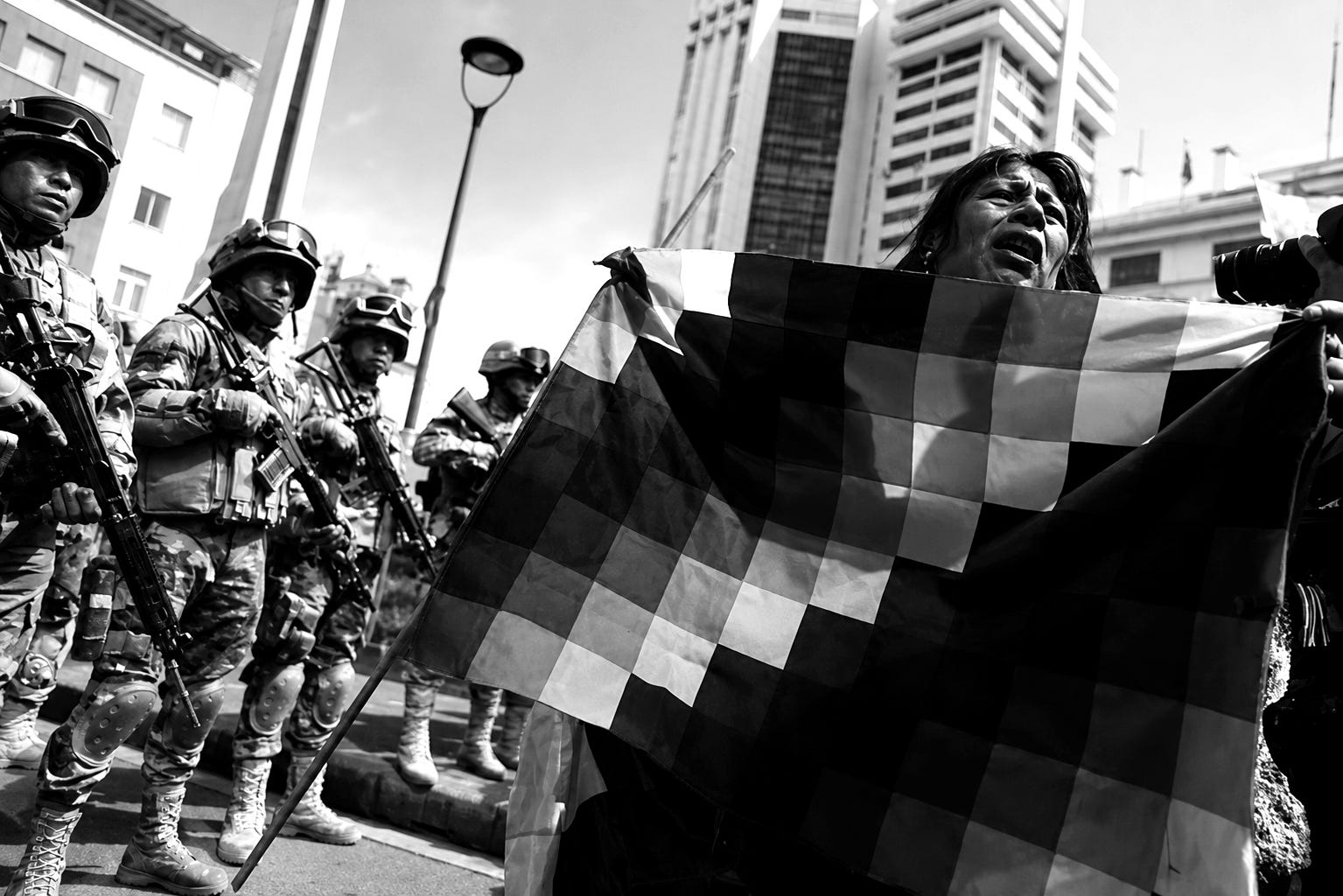
for four weeks, miners, teachers, indigenous communities and factory workers have blockaded the roads into La Paz. The government offered a pay cut. The people say that’s not the point.
Good day, spectators,
And, let me tell you about a man who thinks he can buy off a revolution with a discount.
Rodrigo Paz, Bolivia’s embattled president who you might remember from my recent article ‘the Bolivian people rise up and say ‘No’ as the US just tried to kidnap former president Evo Morales’, stood before the cameras on Monday and announced that he would slash his own salary by 50%.
How magnanimous of this millionaire!
Not only that but his ministers would follow suit, his monthly pay dropping from around $3,600 to roughly $1,800. A gesture, he called it.
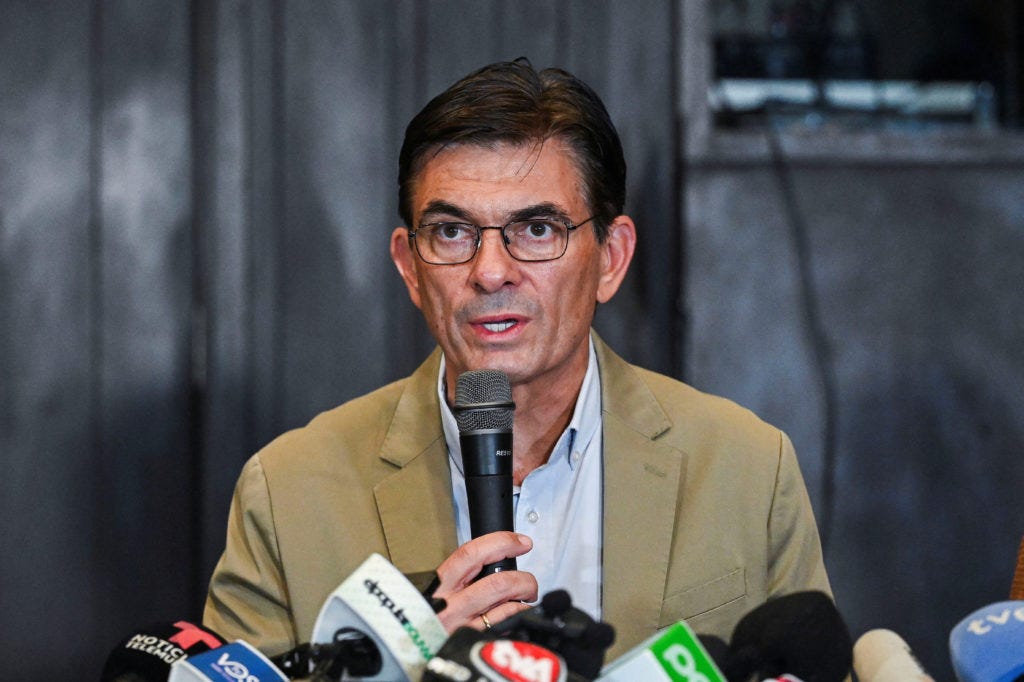
‘It is a profound commitment and sacrifice.’
The people of El Alto, La Paz, and the blockaded highways of the Andes had a different word for it. They called it…nada. Nothing.
And this is because this uprising was never about one man’s salary. It was never about a few thousand dollars, or austerity measures, or any of the other neoliberal band-aids that Paz has been desperately slapping on a wound that requires surgery. The people of Bolivia do not want a pay cut. They want the government to leave post haste.
so what is actually happening?
Rodrigo Paz took office in November of 2025, inheriting a country in severe crisis. It was the worst economic downturn in a generation, there were fuel shortages, dollar scarcity, and inflation above 20%. His solution was the one the Empire always offers: open the doors and pivot toward the United States and international financial institutions. Cut fuel subsidies, sending prices surging by nearly 90%. Court foreign investment. Dismantle two decades of leftist economic policy which was working. And for a few months, it appeared to do something…long lines at petrol stations vanished, the black market currency rate stabilised, and Western delegations swarmed like flies around the capital of La Paz.
Then May arrived, and the people remembered who they were.
On the 1st of May (Workers’ Day) trade unions began protesting for salary increases and stable fuel supplies.
Watch: The Bolivian Workers’ Union (COB) marches toward the seat of government.
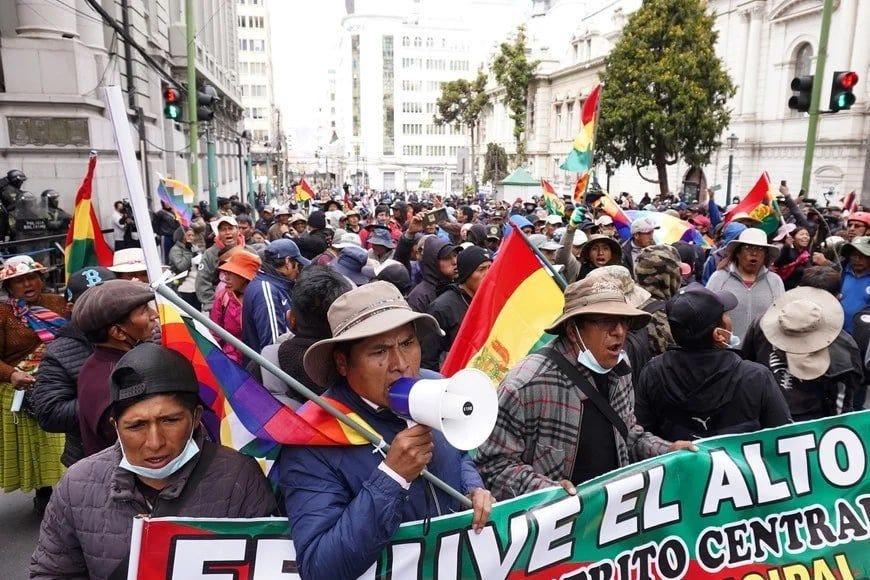
Within days the protests had become something far larger, with miners, teachers, factory workers, indigenous communities, and the coca-growing unions joining the movement. Their weapon of choice is the blockade, and by a handy quirk of Bolivian geography, the roads leading down to La Paz from the altiplano can be sealed by a relatively small number of determined people with weapons. And seal them they have, for four weeks and counting.
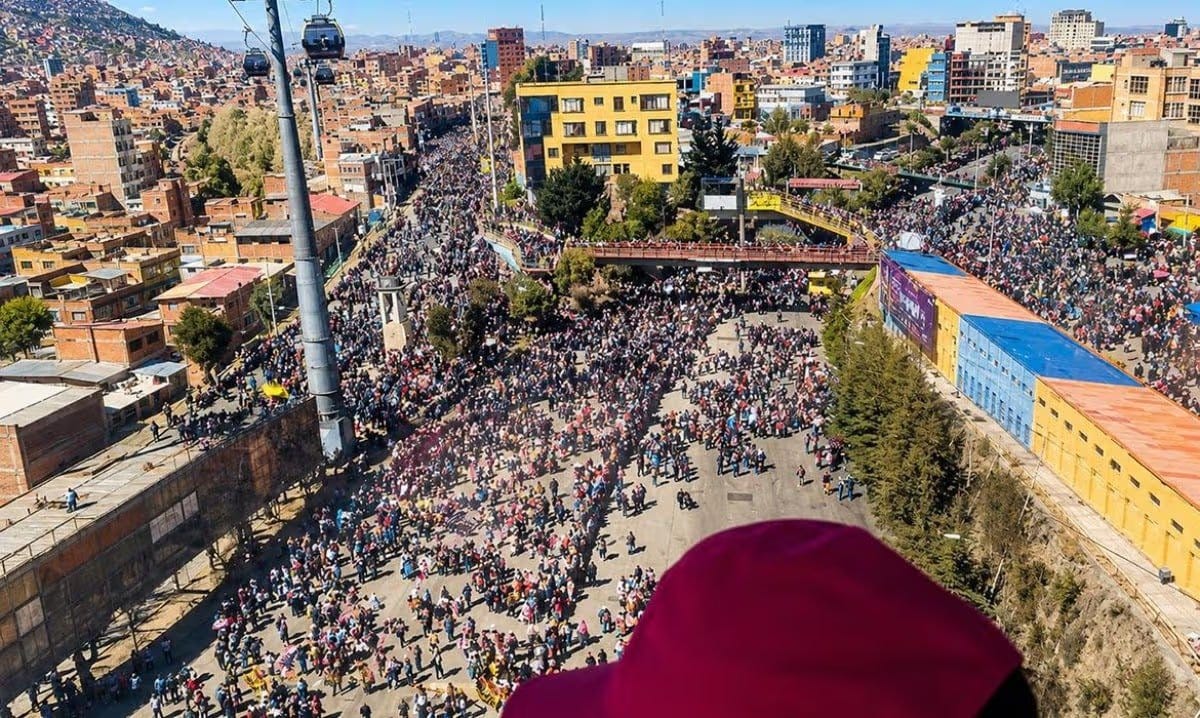
Food, fuel, and medicine are not getting through. Beef, eggs, and fruit have disappeared from supermarket shelves. Hospitals are rationing oxygen supplies. The government says at least four people have died for lack of medical care yet the protesters have history on their side. Both in 2003 and 2005, similar blockades toppled two pro-Western governments, paving the way for the rise of Evo Morales and his Movement Toward Socialism. They know the playbook well because they wrote it.
the Ponchos Rojos are the vanguard.
No account of Bolivia’s current crisis is complete without the Ponchos Rojos which in English would be the Red Ponchos. I briefly touched on them in my previous article but there’s more to be written. This is an Aymara indigenous group from the highlands of La Paz who have been at the forefront of the blockade. They wear traditional red ponchos and carry ancient (and modern) weapons as symbols of resistance, maintaining a military-style organisation rooted in centuries of anti-colonial struggle. They are not a new movement. They are the continuation of a resistance that predates the Bolivian state itself, and they bring to these blockades the same disciplined collective determination that their ancestors brought to every previous fight for sovereignty.
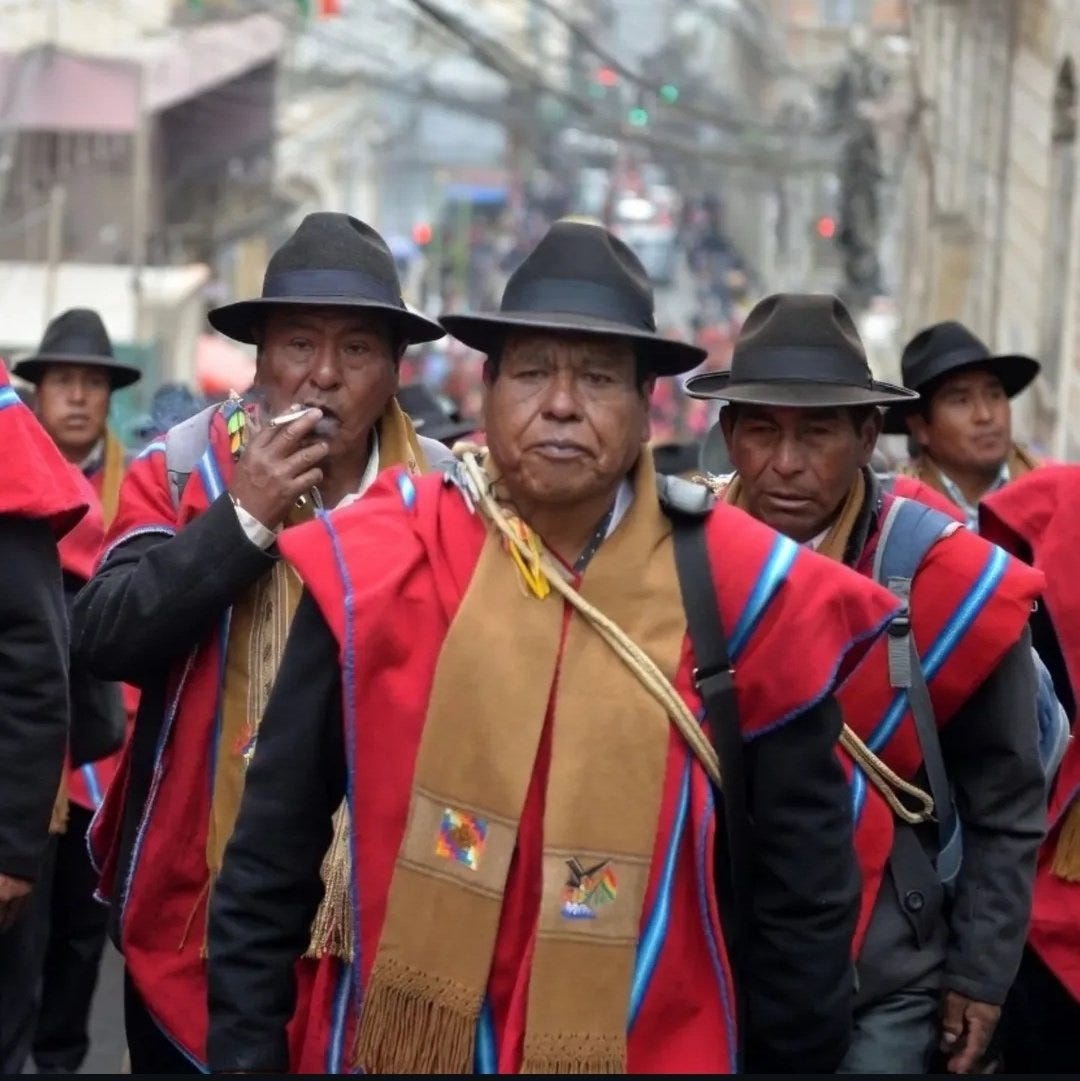
This, spectators, is what genuine people power looks like. Not a hashtag nor a petition or a performative ‘No Kings’ parade, but thousands of people physically placing themselves between their country and the forces that would sell it off. Bolivia may well have the most organised, unafraid, and historically conscious left-wing social movements in the world, and watching them operate is, in its own way, instructive for anyone who wonders what serious resistance actually requires.
Nudge nudge to my American friends.
the government’s response.
President Paz has oscillated between conciliation and repression, and neither is working. He fired his unpopular labour minister, offered cash transfers to vulnerable families, hiked the minimum wage by 20%, repealed a controversial land law, and cut his own salary by half. He also ordered police to clear the blockades. On the 23rd of May, security forces attempted to open a ‘humanitarian corridor’ into La Paz, and a 24-year-old worker named Víctor Cruz Mamani was shot to death according to the forensic report. The government denies responsibility. The protesters don’t believe them.
Watch: Bolivian police clear major road blockades in Parotani following intense anti-government protests.
In the Senate, the ruling party moved to eliminate legal restrictions on the executive branch to act in crisis scenarios. Paz now has the constitutional authority to declare a state of emergency and put the military in charge for 60 days with the ability to use lethal force ‘when necessary’.
He has described it as a last resort. The people are daring him to use it.
The protesters’ demands have been clear from the beginning and they have not changed: Paz must go. ‘We want early elections,’ the marchers chanted on Monday as they descended from El Alto into La Paz. The Bolivian Workers’ Central, the country’s largest labour federation, has refused to attend any dialogue until arrested leaders are released. Morales, watching from the Chapare region, has called for new elections within 90 days. ‘Paz only has two paths left,’ he wrote. ‘A suicidal decision like militarisation or an election in the next 90 days.’
Paz insists he will serve out his five-year term. The people say that decision has already been made for him.
And from the outside, thar seems to be true.
the bigger picture.
The United States, desperate to secure access to Bolivia’s lithium for electric vehicle batteries and weapons systems, helped coup the government and then backed a centre-right government that promised to open the country to foreign capital. Nothing new. Ironically, Marco Rubio has already characterised the protests as a coup attempt, promising that ‘we will not allow criminals and drug traffickers to overthrow democratically elected leaders.’ The protesters hear that language and recognise it immediately because it is the same language used to justify the 2019 coup against Morales, the same language deployed to justify every intervention in Latin America for the past century. They are not fooled, and they are not afraid.
What the Empire did not anticipate was the resilience of Bolivia’s social movements and people, because Bolivia is a country that has spent five centuries resisting. Its indigenous majority has no intention of being colonised again, and the people who fought off Spanish conquistadors and American-backed coups are not about to hand over their lithium for a promise of stability and a 20% minimum wage increase. Bolivia named itself after Simón Bolívar. That was not an accident.
Thanks for reading the spectacle! This is a people’s publication. Subscribe for free below.
Rodrigo Paz offered the Bolivian people a 50% pay cut. They offered him the streets. He thinks this is a negotiation. They know it is a countdown. The question is not whether the government will fall — it is whether the world will pay attention before it does, and whether the people watching from other countries will recognise in Bolivia’s blockades a lesson about what it actually takes to resist the Empire.
The people of Bolivia are showing the world what that looks like. It would be worth watching.
And on that thought, I’ll let you go


One thought on “the Bolivian people have brought their country to a standstill and the government has no idea what to do.”