La apelación de formar grupos de Ayuda Mutua por un miembro del Freedom Collective al empezar la pandemia rápidamente se convirtió en el tema del día en todo el país.
En marzo de 2020, cuando el virus hacía estragos en todo el mundo pero antes de que en el Reino Unido nos diéramos cuenta de lo grave y trágicamente letal que llegaría a ser o de lo problemático que sería a largo plazo, Freedom Press publicó su primera actualización relacionada con Covid en su sitio web de noticias. Titulada Covid Mutual Aid Groups: A List, el texto salió a la luz diez días antes del primer encierro en el Reino Unido y afirmaba:
«Con la llegada de la pandemia mundial de Covid-19, se han empezado a formar varios grupos de ayuda mutua en todo el país. (…) Se calcula que morirán 2-3 personas de cada cien [infectadas por Covid]. Debemos hacer todo lo posible para evitarlo. (…) Al parecer, el gobierno conservador está más preocupado por asegurarse de que la economía no se hunda que por salvar la vida de la gente. (…) Recuerda: esa anciana que ves en la compra y ese camarada que conoces que padece una enfermedad de larga duración: tu trabajo es protegerlos todo lo que puedas».
A esto siguió una lista, inicialmente muy breve, de grupos de ayuda mutua formados en los días anteriores por anarquistas que querían mitigar el posible impacto de la pandemia en sus comunidades en lugar de confiar en que el Estado lo hiciera por ellos.
Unos 59 países de Asia, África, Europa del Este y América Latina han expresado interés en unirse a los BRICS+, entre ellos Turquía, lo que es considerable, pues Turquía es miembro de la OTAN y aspira a integrar la Unión Europea.
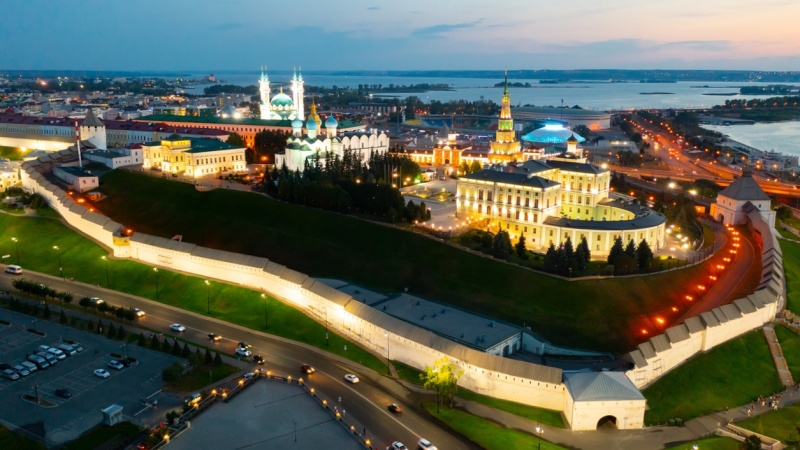
La 16 Cumbre BRICS+ se celebra del 22 al 24 de octubre en Kazán, Rusia.
Otros candidatos a unirse a los BRICS+ son Venezuela, Colombia, Bolivia, Cuba, Honduras, Bielorrusia, Indonesia, Tailandia, Malasia, Kazajistán, Argelia, Kuwait, República Democrática del Congo, Nigeria, Gabón y Serbia.
Las candidaturas de Venezuela, Colombia, Honduras y Bolivia, en particular, constituyen un grave revés para Estados Unidos, que pierde influencia en su otrora patio trasero.
En 2023, el comercio en el seno de los BRICS aumentó significativamente y se espera que alcance 500 mil millones de dólares en 2024. La iniciativa clave de los BRICS es su proyecto de desdolarización, para reducir su dependencia del dólar estadunidense, favoreciendo el uso de sus propias monedas.
China y Rusia están liderando esfuerzos con acciones concretas para realizar este proyecto. Cinco países exportadores de petróleo forman ahora parte de los BRICS+.
Si estas naciones deciden exigir el pago del petróleo en monedas locales, el impacto sobre el dólar estadunidense podría ser muy significativo.
Esto fortalecería la autonomía de los BRICS en las finanzas internacionales y reduciría su dependencia del dólar estadunidense y de los sistemas financieros occidentales como el SWIFT.
Las discusiones están dando paso a acciones concretas, permitiendo el uso de las monedas BRICS o incluso una posible nueva moneda común.
Este desarrollo es un elemento clave de la agenda BRICS+ 2024, cuyo objetivo es fortalecer su papel en el escenario financiero global. Se trabaja para desarrollar una plataforma multilateral de pagos digitales BRICS Bridge, destinada a mejorar la eficiencia del sistema comercial entre los miembros.
Los países del Sur Global están mostrando el deseo de instaurar un orden financiero alternativo que permita eludir tanto al FMI como al dólar gracias, en particular, al Nuevo Banco de Desarrollo BRICS+, cuya gestión está actualmente a cargo de Dilma Rousseff, que reúne todas las condiciones para convertirse en el gran banco del Sur Global porque prestará dinero con la perspectiva de ayudar a los países y no de asfixiarlos.
Recientemente, Vladimir Putin también planteó la idea de construir un propio Parlamento BRICS.
Dicho Parlamento, una ONU alternativa, permitiría la transformación de BRICS+ en una organización con vocación de desafiar y compensar el desequilibrio existente hoy en el seno de las Naciones Unidas.
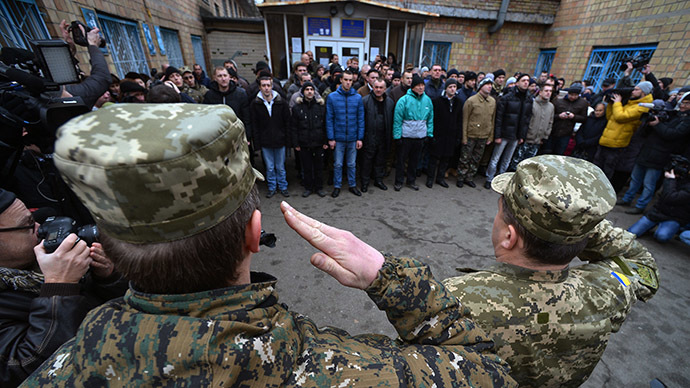
All men in Ukraine are liable for conscription, often extended till they die. Those still free are hunted down as the West demands military results in the hopeless war. … (see below for ‘Conscription in Russia)
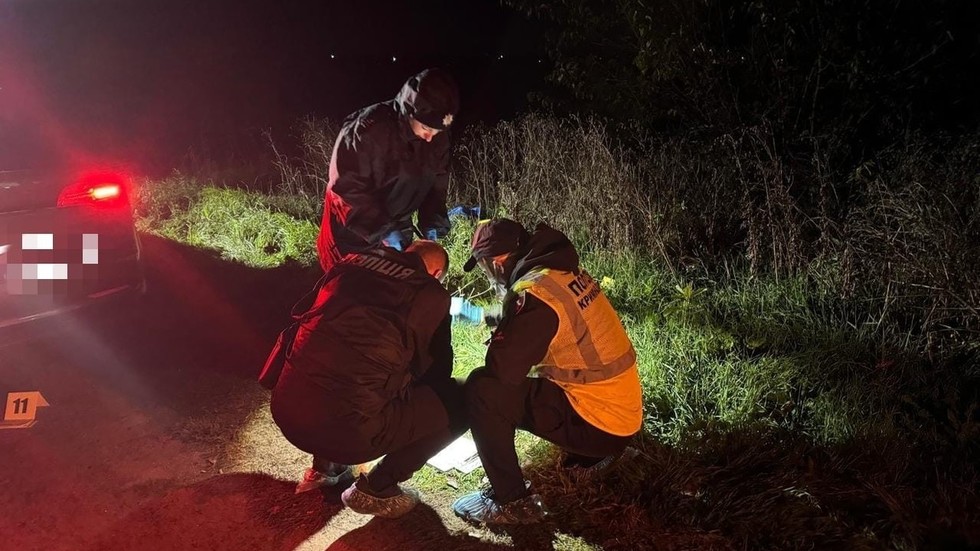
A Ukrainian businessman, involved in the country’s controversial military draft enforcement, has been found dead near Odessa with gunshot wounds, local media reported on Sunday.
The victim, identified as car dealer Gennady Beybutyan by journalist Irina Grib, led a so-called volunteer group that worked closely with conscription officers in locating and apprehending potential evaders.
According to reports, Beybutyan’s group, the “Law Enforcement Assistance Unit,” has played a key role locally in Kiev’s aggressive conscription campaign.
Ukrainian media outlet Strana.ua reported that the group engaged in beating suspected evaders and smashing car windows in their attempts to stop vehicles for conscription checks
According to multiple sources, the group was involved in schemes where potential conscripts could bribe their way out of military service.
The “volunteers” were reportedly instrumental in identifying those willing to pay to avoid the front lines. The unit’s members were allegedly immune from conscription themselves. These entities competed for access to the lucrative corruption opportunities and conscription exemptions offered to their members.
Amid heavy military losses and widespread draft evasion, Kiev has tightened its conscription laws, with ongoing raids targeting men at public venues, such as bars, malls, and even weddings.
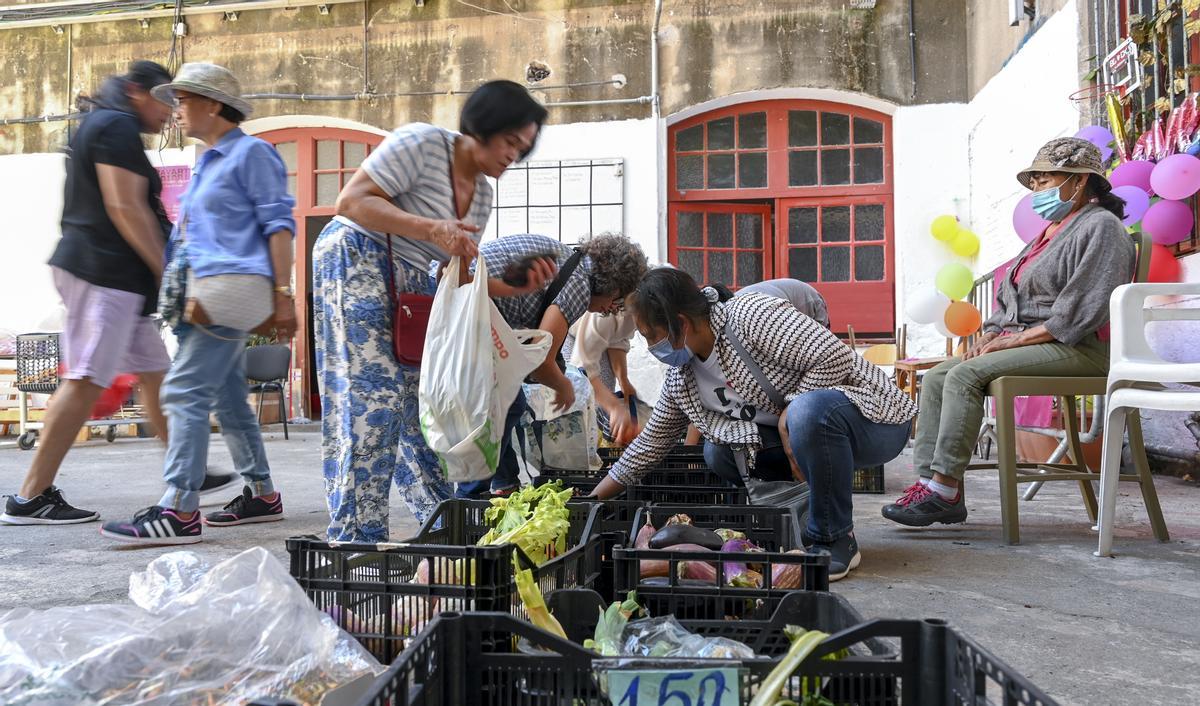
“Nine collectives” are carrying out projects in the occupied Ciutat Vella building.
The organized youth has come out with banners, flags and chants against the council asking to stop the eviction of a space that brings life to the neighborhood and gives tools and resources to people neglected by the administration.
A thousand people demonstrate against the eviction of the old Massana in Barcelona
The building remains occupied pending the judicial eviction order requested by the council CR – Barcelona The demonstration against the eviction of the building in the old Massana in Barcelona started after six in the afternoon.
The Antiga Massana began as an occupied refuge for “illegalized” migrants
Activists have begun to gather in Plaça de la Gardunya at half past six and the procession has started once six columns of citizens from Vallès Occidental, Baix Llobregat, the Eixample, Sant Martí, Sants and also one made up of students who have arrived from the Raval Campus of the University of Barcelona.
The City Council wanted to evacuate the building yesterday Thursday, but was unable to do so due to the “peaceful resistance” of the people who were still there. Faced with this fact, he has requested a court order and is waiting to receive it to execute the eviction.
7,655 Followers, 324 Following, 157 Posts – Antiga Massana (@antigamassana) on Instagram: “#ConcessióAntigaMassana Sindicat Habitatge Escoleta 壘 Gimnas Popular Esplai del Pi Papiro Samidoun OJS La Magrana 徭 Makipomba”
Under the slogan ‘Defend the old Massana’, the demonstrators have gathered in Plaça de la Gardunya to protest against Barcelona City Council’s intention to evict this public space. The participants gathered with banners critical of the management of the Collboni government and chanted chants such as “the old Massana stays in the neighborhood”, “the Massana is defended to the end”, “you for money we for love” or “Jaume Collboni, Albert batlle and PSC evictors”.
On Thursday, the City Council ruled out executing the planned administrative eviction. Several units of the Urban Guard and technicians from the council’s legal services went to Plaça de la Gardunya and found that there was a “peaceful resistance” preventing the eviction.
For this reason, the local executive decided to request a court order to recover the building owned by the municipality.
“WE defend this space of the Working Class- DEMONSTRATION- Space under Popular Control- “
The spokesperson for the former Massana, Elena Martín, recalled minutes before the demonstration began that the group had worked “for two years” with the previous government team for the transfer of the space, a transfer that it had “promised” them and that it had already been approved, as he said, by bodies such as the district plenary, Patrimoni Ciudadà and the government of Ada Colau.
Now, on the other hand, the PSC government has not contacted the activists since it has been in power, even though they have asked to meet with them on repeated occasions.
“The response has been through the district plenary to tell us that we have to leave. And we don’t agree. What we want is the transfer of the space as the previous government had promised us.
We have been working with that government for two years and now all the work is for nothing? What we want is for the government to comply, no matter what color it is,” said Martín.
The spokeswoman for the former Massana also explained that the collective is used to “fighting until the last consequences” and assured that the activists will not “back down”.
He explained that they will continue to defend the initiative “legally and politically” and celebrated the “support” of people and institutions, the last of which is that of the Ombudsman of Barcelona, who has invited the City Council to “reflect” on the eviction.
At the same time, he defended the social project that “nine collectives” are carrying out in the Ciutat Vella building and regretted that the City Council wants to evict them “to close it”, because “there is no planned project”.
In his opinion, “they want to evict us to close the building and then they will ruminate on a project, which in any case is certainly not ready for this legislature”.
Russia has declared solidarity with Iran at a special meeting this week of Putin with the new president and Iran expects to be welcomed into BRICS and sign a close ally treaty with Russia in the Kazan Summit in a few days.
Flotillas of Russian and Omani warships have arrived in Iran’s territorial waters in the Persian Gulf to participate in the Indian Ocean Naval Symposium (IONS) Maritime Exercise “IMEX 2024,” which will be hosted by the Southern Fleet of the Iranian Navy in the coming days.
The warships docked in the southern Iranian port city of Bandar Abbas on Friday and were received by the Iranian Navy and the Islamic Revolution Guards Corps (IRGC) helicopters and naval vessels upon arrival.
Russia has declared solidarity with Iran with a special meeting this week with the new president and Iran expects to be welcomed into BRICS and sign a close ally treaty with Russia in the Kazan Summit in a few days.
The aim is to back up Iran’s campaign to finally force Israel to back down and end its ongoing terrorist impunity in Lebanon, Gaza, the West Bank, Yemen and Iraq.
The Russian fleet is armed with the latest world leading hypersonic missiles. Although Iran also now possesses hypersonic weapons and used them to symbolically hit Israeli military bases in its last response they reportedly only Mach 5 or 6 (times the speed of sound), while Russian missiles are up to 4 times faster and more deadly. (3M22 Zircon – Wikipedia The 3M22 Zircon,is a Russian Mach 9nuclear-capable hypersonic cruise missile for the Russian Navy, the missile utilizes the 3S-14 launch platforms on frigates….)
Iran has suggested that if Israel again attacks it will take out, for example, all its electricity power stations, halting its economy. Nevertheless it will continue to avoid civilian casualties where possible.
The huge previous Iranian missile responses only killed 2 civilians, due to accidental shrapnel, while Israel massacres hundreds every day in its ongoing wrs.
Putin Dares Netanyahu For War? Russia Sends Warships To Iran After Sinwar’s Killing | Watch
Russian and Omani naval fleets have joined Iranian forces for a maritime drill in the Indian Ocean. The joint exercises are set to begin soon, with Iranian vessels welcoming the incoming fleets. This collaboration highlights increased military cooperation amid escalating tensions in the Middle East, particularly following Iranian missile strikes and Israeli threats of retaliation.
Representatives of other countries, like Bangladesh, India, Pakistan, Qatar, Saudi Arabia and Thailand, also landed at Bandar Abbas International Airport to take part in the war game as observers.
The Iranians also talked up the concept of “sustainable collective security and expand multilateral cooperation among the participating countries to safeguard peace in the region,” IRNA reported.
Russian and Omani naval fleets have joined Iranian forces for a maritime drill in the Indian Ocean. The joint exercises are set to begin soon, with Iranian vessels welcoming the incoming fleets. This collaboration highlights increased military cooperation amid escalating tensions in the Middle East, particularly following Iranian missile strikes and Israeli threats of retaliation. Click to know more.Russian, Iranian, And Omani Naval Fleets Conduct Joint Drills In The Indian Ocean.
In his newly published book, Nuclear High-Altitude Electromagnetic Pulse, Steven Starr shows that all it takes is one nuclear explosion to shut down the State and throw the population back into the Dark Ages.
The US electric power grid would be destroyed along with the communications system, the cooling systems at nuclear power plants and all electronic devices.
The reason is that civilian infrastructure is not protected from Electro-Magnetic Pulse (EMP). The military has taken steps to shield its weapon and communication systems, but nothing has been done to protect civilian infrastructure. Bills mandating EMP protection have been defeated in Congress.
Starr reports that only 4% of the US military budget is required to shield the power grid and civilian infrastructure. Instead, the Washington idiots waste trillions of dollars in pointless mass murder wars in Afghanistan, Iraq, Libya, Serbia, Syria, Yemen, Palestine, and Ukraine.
Cities would suffer no effects from blast and fire, such as would be produced by ground level detonation, but the consequences would be just as dire. Starr describes them in a summary on his website.
Effects of a Single High-altitude Nuclear Detonation Over the Eastern U.S.
“105 miles above Ohio, a single nuclear warhead explodes. Because it is far above the atmosphere, there will be no blast or fire effects felt on Earth, however, this high-altitude nuclear detonation will create a gigantic electromagnetic pulse or EMP.
“In one billionth of a second, the initial EMP E1 wave will cause massive voltages and currents to form within power lines, telecommunication lines, cables, wires, antennas, and any other electrically conductive material found beneath the nuclear detonation in a circular area covering hundreds of thousands of square miles.
“Within this region, under ideal conditions, the E1 wave will produce 2 million volts and a current of 5,000 to 10,000 amps within medium distribution power lines.
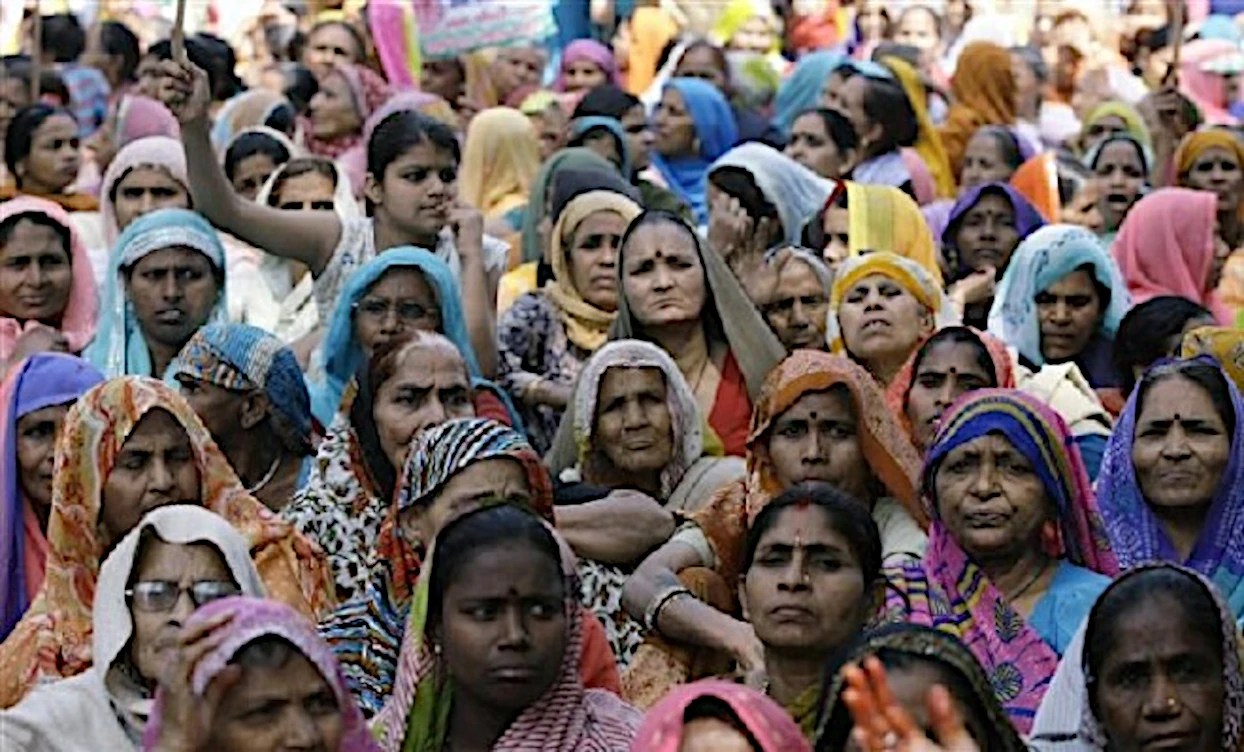
Dos mil millones de mujeres y niñas carecen de acceso a cualquier forma de protección social, una brecha de género que cada vez se hace mayor en la mayoría de las regiones del mundo, de acuerdo con un informe de ONU Mujeres publicado hoy en vísperas de conmemorarse el Día Internacional para la Erradicación de la Pobreza.
De acuerdo con el informe «Aprovechar la protección social para la igualdad de género, la resiliencia y la transformación» aunque los niveles de protección social, -el conjunto de políticas que incluyen dinero en efectivo, protección contra el desempleo, pensiones y atención médica- han aumentado desde el 2015, los avances recientes han beneficiado más a los hombres que a las mujeres.
El informe desglosa las diversas protecciones necesarias para el desarrollo y bienestar de niñas y mujeres y los problemas que enfrentan para tener acceso a ellas como beneficios por maternidad.
A pesar de los avances, más del 63% de las mujeres en todo el mundo todavía dan a luz sin tener acceso a las prestaciones de maternidad.
Apunta que casi el 10 % de las mujeres y niñas vive en hogares en extrema pobreza, en comparación con poco más del 9 % de los hombres y los niños. Eso significa que hay 22 millones más de mujeres pobres que de hombres, específicamente en África subsahariana y Asia central y meridional.
Destaca que como resultado de la pandemia y otras situaciones en los últimos años, el progreso en materia de igualdad de género y erradicación de la pobreza se ha estancado, y el logro de la Agenda 2030 para el Desarrollo Sostenible «parece cada vez más improbable», detalla.
Los conflictos y el cambio climático empeoran el panorama. Las mujeres y las niñas en contextos extremadamente frágiles tienen 7,7 veces más probabilidades de vivir en hogares con ingresos inferiores a la línea de pobreza de 2,15 dólares.
En 2022, el número de mujeres y niñas que vivían en países afectados por conflictos alcanzó los 614 millones, un aumento del 50 % respecto de 2017.
Pero los problemas no son exclusivos de países pobres, ya que incluso en el ‘primer mundo’ se dan situaciones de estigma contra la mujer: así, en EEUU abundan las narrativas sobre los pobres como «perezosos” o “dependientes”, en los que se califica a mujeres, en particular las negras y migrantes, como “reinas de la asistencia social».
Casos específicos de Latinoamérica
En países como Perú y de Bolivia, se apuntan otros problemas como los centros de salud distantes y los largos tiempos de espera y el maltrato por parte del personal, lo que empuja a las mujeres a renunciar a los servicios de salud materna.
En Ecuador algunas indígenas no cobraron los beneficios de transferencias de efectivo porque los guardias privados de la institución financiera que distribuía los fondos las maltrataban, de acuerdo con el informe, que también destaca avances que se han puesto en marcha en materia de prestaciones sociales.
Países como Mongolia han ampliado los beneficios de la licencia de maternidad al tiempo que ha reforzado la licencia de paternidad y en México y Túnez se han tomado medidas para incluir a los trabajadores domésticos en los sistemas de seguridad social.
El informe destaca algunas iniciativas positivas: de la República Dominicana destaca el programa de transferencia monetaria contra la pobreza
de Colombia, el Sistema Distrital de Cuidados de Bogotá, que tiene como objetivo reconocer, redistribuir y reducir el trabajo de cuidado no remunerado, principalmente realizado por mujeres;
de Uruguay, el Monotribut, creado como parte de una reforma tributaria destinada a unificar las contribuciones a la seguridad social, entre otros.
















 The Free