Uri Gordon hosts a Freedom discussion on why it is Labour has accelerated its rightwards journey on topics as wideranging as defence, migration and oversight in the wake of chaotic US change.
With Rojava, Ukraine and Palestine all seeming to be targets for a new, blunter foreign policy from Trump, geopolitics seems darker than ever
Starting next Wednesday, February 26th, Amazon isn’t going to let users download the ebooks they’ve purchased, forcing users to keep everything within the corporation’s proprietary ecosystem.
As covered in The Verge, the mega-corporation is removing a feature that lets ebook readers do what they want with their purchases, including back-up their books, or convert them to different formats, or transfer them to a non-Amazon e-reader. There are a lot of reasons why you may want to download your ebooks, but the basic argument for it is simple: if you buy something, you should be able to do what you want with it.
Amazon’s downloading process has always been a little obscure, requiring a lot of clicks. And if you want to move books to non-Kindle devices, you have to convert the books out of Amazon’s proprietary file type, which can also be tricky. But even this too-onerous process is giving away too much to its customers for Amazon.
This move isn’t terribly surprising coming from Amazon, a bad company that’s getting worse, and being led by a fascist-fascinated billionaire who looks like Mr. Clean’s uncle — the one who is no longer invited to Thanksgiving. This isn’t just an issue of forcing users to cede ownership and keep everything within Amazon systems — Amazon has demonstrated in the past that it’s not a trustworthy librarian.
The company has deleted books that it said were offered for sale by mistake or replaced books with new versions without alerting readers. Amazon’s also not interested in selling their ebooks or audiobooks to libraries, keeping a monopolistic hold on some titles. This is most egregiously the case for “Audible Exclusive” audiobooks, which won’t be available to borrow from libraries or to purchase from other services.
Tech companies selling books, music, and movies have long treated digital purchases more like rental agreements, which is nice for saving space on shelves and hard drives, but means that you’re locked in a strange, almost feudal relationship. The solution is to not give them your business — services like Bookshop.org and Libro.fm not only let you download your own, non-DRM-locked copies of what you buy, but also let you support independent bookstores with your purchases.
If you’ve already bought ebooks from Amazon, you’ve got a week to back them up before the feature disappears. The process seems like it involves a lot of clicking, especially if you have a larger library, but writer Craig Mod shared a tool that apparently helps automate things a bit:
As Elon Musk and his DOGE team set about dismantling Civil Rights many US Americans expected a strong response from Congressional Democrats. Instead, party leaders offered weak statements and little resistance to being refused entry to the very agencies they are tasked with overseeing.
Of course Políticans nowadays are the playthings of the Corporations, Billionaires, Deep State and Israelís who sponsor them.
This lack of urgency amid what’s being called an administrative coup stoked a wave of angry calls to “do more.
In their outrage on social media, many pointed to decisive action taken by politicians in other countries facing crisis.
For example, someone on BlueSky noted that “South Korean politicians were literally scaling fences to protect their government,” while “our senators are sending out pre-scheduled tweets about the Super Bowl.”
South Korea is a particularly apt example in this context. After all, something incredible happened there two months ago, and it could be just the kind of inspiration US Americans need to turn the tide on the Trump administration’s dangerous power-grab.
On Dec. 3, at 10:23 p.m., South Korean President Yoon Suk Yeol unexpectedly declared nationwide martial law, citing the need to eliminate pro-North Korean elements and anti-state forces.
He then established martial law command, mobilized troops and stripped citizens of their fundamental political and social rights.
This included prohibiting all political activities by the National Assembly and political parties, control over all press and publication freedoms, a ban on strikes, slowdowns and assemblies, and the ability to arrest and detain anyone without judicial procedures or warrants.
The martial law situation came to an abrupt end when the National Assembly passed a resolution demanding its withdrawal on Dec. 4 at 1:01 a.m.
In response, martial law forces gradually withdrew from the National Assembly building. The Presidential Office announced the lifting of martial law at 4:26 a.m., and it was formally rescinded through a cabinet council resolution four minutes later, effectively terminating the entire episode within about six hours.
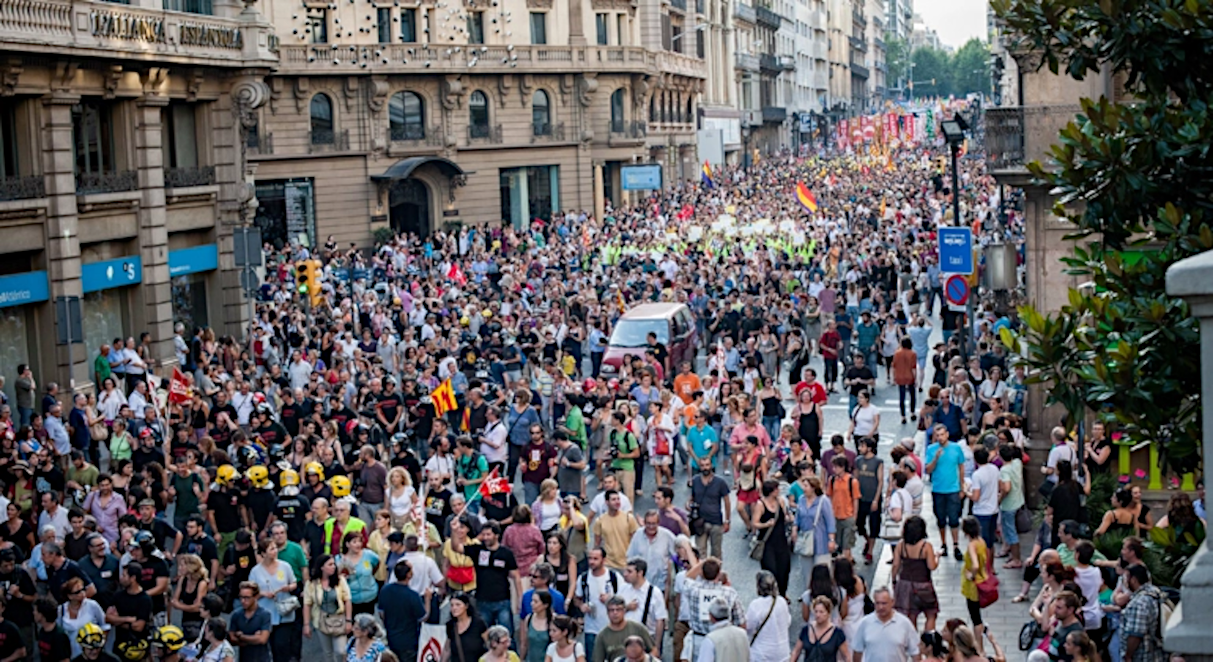
Subsequently, a nationwide movement demanding both the Yoon Suk Yeol administration’s resignation and comprehensive social reform was initiated.
President Yoon is currently under detention and indictment while simultaneously facing impeachment proceedings.
Many high-ranking officials from the Yoon administration have either resigned or been impeached, and numerous general-grade officers involved in the incident have been detained.
There were many reasons that the self-coup failed, including command confusion due to the extremely small number of personnel involved in planning the attempt
However, none of these factors could have halted the coup without civilian action. Here are four key lessons from this movement that contributed to their victory.
1. Take action commensurate with the threat and move quickly
What a coincidence! All members of the new Syrian cabinet have citizenship in Turkey!
Who would have thought….
“In retrospect it’s obvious. The “Transitional” Government ministers are appointees of dictator and self proclaimed President Jolani – Members of the HTS ruling cabal that won the ‘dog eat dog’ battle with 50 other jihadi sects in the Idlib enclave.
Idlib became a protectorate for Al Qaeda, with at least a dozen Turkish bases where conscripts served as human shields against bombing by Damascus or Russia.
Idlib is on the Turkish border, all armaments,”Western Aid” and trade came via Turkey, and with a control pricetag
– So its obvious that the HTS ruling elite were given Turkish citizenship, and access to homes, bank accounts, holidays, hospitals, etcetera in Turkey.
The term ‘Deep State‘ originates in Turkey where an ultra nationalist nazi underground ran the State for decades.
So… there is a now “Transitional” corrupt TURKISH government in Damascus.
But transitional to what?.. As mass killings, poverty, chaos, Al Qaeda, ISIS and Israeli terrorist factions spread like metastatic cancer across the ruined State”…
Trump seeks autocratic technocratic World power- Led by far right bllionaires and mega Corporations -With the rest of us muzzled, pauperised or just culled-Unless forced he won’t be satisfied with ‘concessions’-like personal rights or saving our Biosphere.
He will just grab everything he can get.
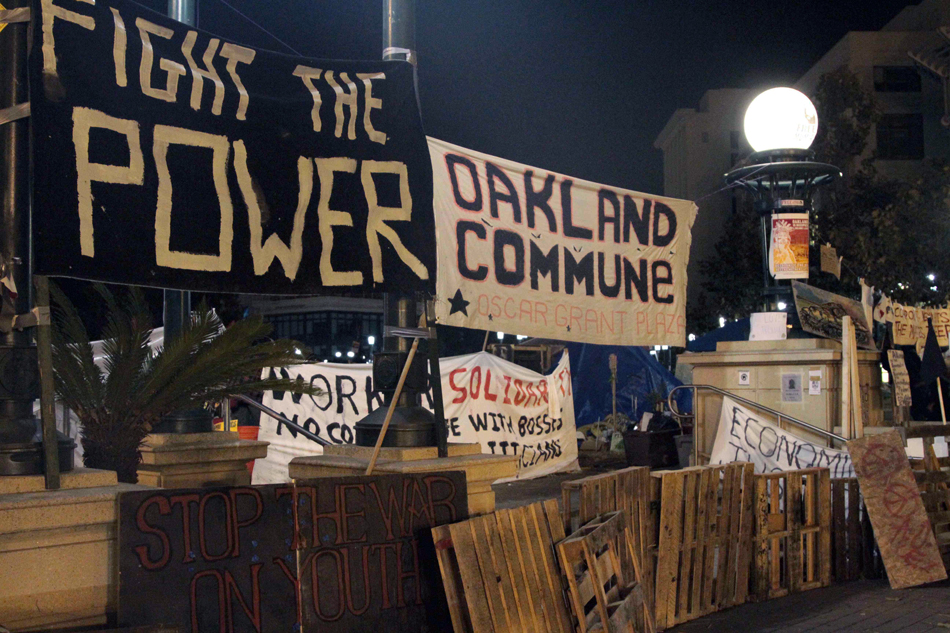
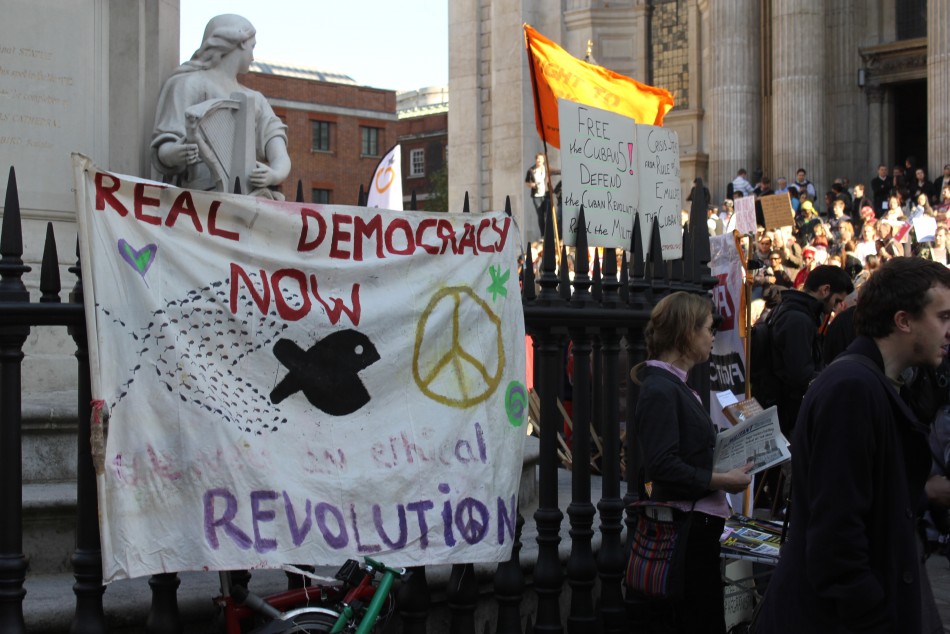
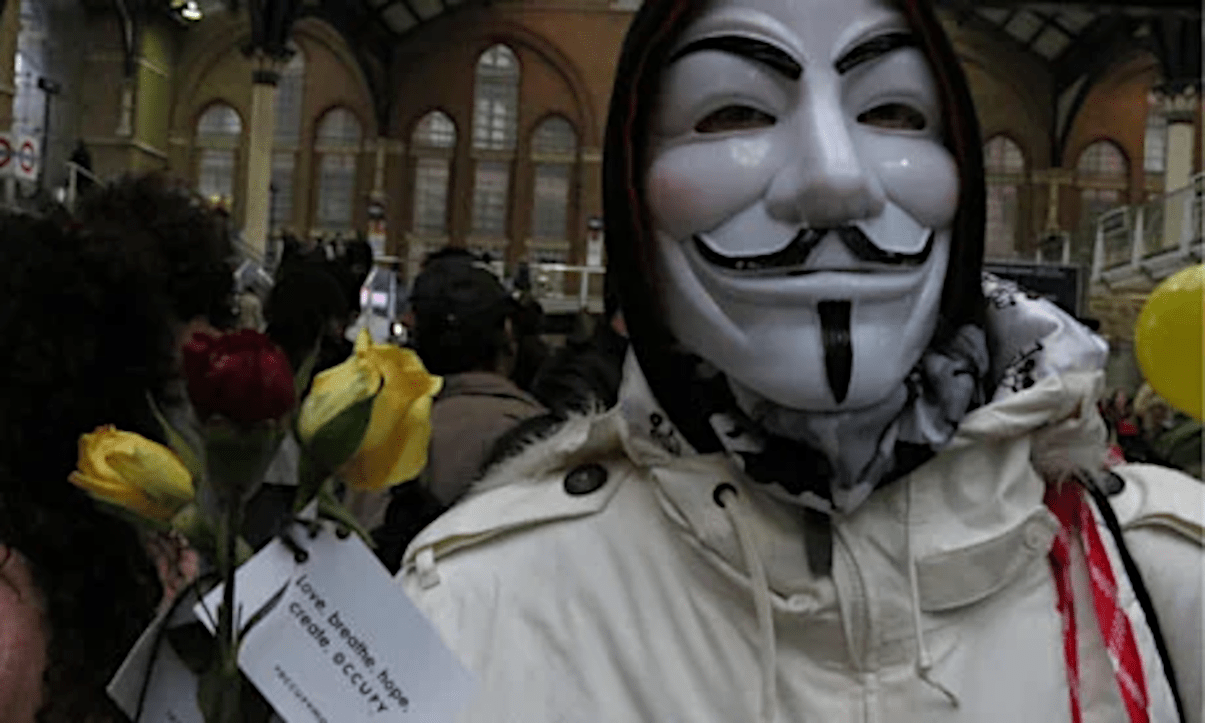
Eight Simple Steps towards Revolution – An Occupy Manifesto-2012
Over the winter, the social momentum that picked up with the occupation of Zuccotti Park has predictably cooled. We can be sure that conflict will intensify again soon, whether with the coming of spring or later; if overseas examples are any indication, we should anticipate new waves of unrest, each sweeping in new sectors of the population. In hopes of helping to prepare for the next phase, we present an eight-point program distilled from the experiences of the last several months.
Once again, please forward this and print out copies to distribute in your community!
People in North America are already under a spell: the spell of private property, of the legitimacy of government, of hopelessness.
None of these are inherently real; they derive their reality from our collective belief and activity. You have to be hypnotized indeed to believe that property is more sacred than the needs of human beings—that the decisions of the government are more legitimate than your own judgment.
To break this spell, cast another. When a few people invest themselves entirely in another vision of reality, they open up space for others to invest in it as well. It doesn’t have to be realistic at first—it just has to spread until it creates the conditions of its possibility. The original call to occupy Wall Street was an example of such a spell. What could take us further?
Facebook and Twitter notwithstanding, we’re more isolated today than ever. There is a fundamental difference between merely circulating information and making connections that enable people to act together. In an era when social networks are effectively mapped and contained, it’s subversive to make these connections beyond your usual social milieu; some of your friends may not have much fight in them after all, while others with goals complementary to yours might be very different from you.
You can’t expect other people to leave their comfort zones unless you’re prepared to leave your own.
Together we can do anything.
Preparing a revolution isn’t a matter of a radical minority building up the skills and resources to change the world; when enough of us get together, we have access to the knowledge and resources of our whole society. It’s not our job to orchestrate every aspect of the struggle, nor could we; we just have to create conduits through which subversive practices and momentum can flow. Preparation could go on endlessly, as the world goes on changing—circulation is what counts.
Until there’s something new happening, something that interrupts the status quo, there’s no reason for anyone to pay attention. It’s not enough to try to start a dialogue in a vacuum; for people to take the dialogue seriously, there has to be something to talk about. Don’t just chant that another world is possible; manifest it, so everyone who might believe in it can. Don’t just talk about abolishing capitalism; pick a pressure point, have a go at it, and see who joins in.
Build the will.
Nowadays most of us don’t know our own strength. We’re not used to relying on our own capabilities; we assume we can always be defeated. Most of the strength of those who hold power is founded on this defeatism. But a little courage can be infectious, and once people get used to wielding power together they won’t quickly give it up.
The first compromise is the last one. Over and over, our occupations and movements are undermined one compromise at a time. Whenever we concede anything, we set a precedent that will be repeated again and again, emboldening those for whom it is more convenient for us to remain passive.
If police don’t arrest us when we stand up for ourselves, it isn’t because they support us, or because we’re within our legal rights—it’s because we’ve mobilized enough social power to make them back down. Timidity, placation, and obedience only detract from this leverage.
Address the 99%, not the 1%.
Demands oriented towards those in power direct the focus away from what we can do ourselves; joint action, on the other hand, empowers us and creates a space where we can weave our differences into collective strength.
To put this in the language of the Occupy movement, why address demands to the 1% at the top of the capitalist pyramid, who will never share our priorities? Why not instead address proposals to the rest of the 99%, whose combined power could render the authority of the 1% meaningless?
We’ve been taught by a thousand classes, newspapers, and job interviews to present everything in the language and logic of our superiors. We must finally learn to speak each other’s languages, to make proposals that are relevant to our own needs rather than “realistic” in the framework of our rulers.
This means dispensing with every conception of legitimacy we inherited from the prevailing order—not just the authority of the politicians and the courts, but also academic prestige and middle-class “common sense” and activist credentials—in favor of value systems that legitimize our voices and our resistance on our own terms.
Aim beyond the target.
Often, to accomplish small concrete objectives, we have to set our sights much higher.
Conversely, it sometimes happens that we accomplish what we set out to easily enough, but have no idea what to do with the new opportunities that open up next. Every time we act, let’s act in a way that points towards the world we want and equips us to go on moving towards it.
The most important thing is not whether we achieve our immediate goals, but how each engagement positions us for the next round.
In this post Laura Riggi from University of Wageningen (Netherlands) presents her work ‘Strip-cropping legacy enhances potato plant defence responses to aphids via soil-mediated mechanisms’.
She talks about the importance of diversity for agriculture, discusses the connections between above- and belowground organisms, and shares how her love for arthropods guided her to made agriculture more […]








 The Free