blog of the post capitalist transition.. Read or download the novel here + latest relevant posts
Author: thefreeonline
The Free is a book and a blog. Download free E/book ...”the most detailed fictional treatment of the movement from a world recognizably like our own to an anarchist society that I have read...
Sonita is an Afghan activist against forced and child marriages. As a child, Sonita was almost married twice—once when she was ten years old, and again when she was sixteen. To gain attention about forced marriages, she released a video called “Brides for Sale.” This was a huge risk—she was living in Iran at the time, where, by law, women are not allowed to sing in public. Despite this, her song became a viral hit, and she received a scholarship that gave her the opportunity to study in the United States. She continues to perform music and inspire young women to stop conforming to restrictive, outdated traditions.
“Everyone is important—both world leaders and everyday people. I hope that together we can create the biggest campaign in the world to end child marriage.”
—Sonita Alizadeh
This excerpt is fromThe Book of Awesome Girlsby Becca Anderson, which is available now through
ACORN Bristol have rallied in support of one of their members who was left without heating and hot water by her landlord over Christmas.
Fadumo, who lives in St Werburghs with her seven children and mother, said that she has suffered problems with her landlord for three years.
Her situation reached a crisis point in December when she was left for three weeks over Christmas with a broken boiler, on top of which her stove didn’t work, windows were broken and the house was affected by damp.
Fadumo said that she was encouraged to contact ACORN by a friend who told her that the community union would be able to help her.
On Monday, a small number of ACORN members spoke with the landlord and demanded that he fix the boiler, windows and stove within 24 hours. He did mend the boiler but the stove and windows remained broken.
In the 21st century, the prevailing social order is only maintained by ever-escalating exertions of brute force.
Following up our coverage of last week’s uprising in Kazakhstan, we have translated an array of perspectives on the situation from various Russian anarchist sources and interviewed two anarchists from Almaty, the largest city in Kazakhstan and the place where the fighting became most intense.
This text also includes previously unpublished photographs taken by our contacts in Almaty.
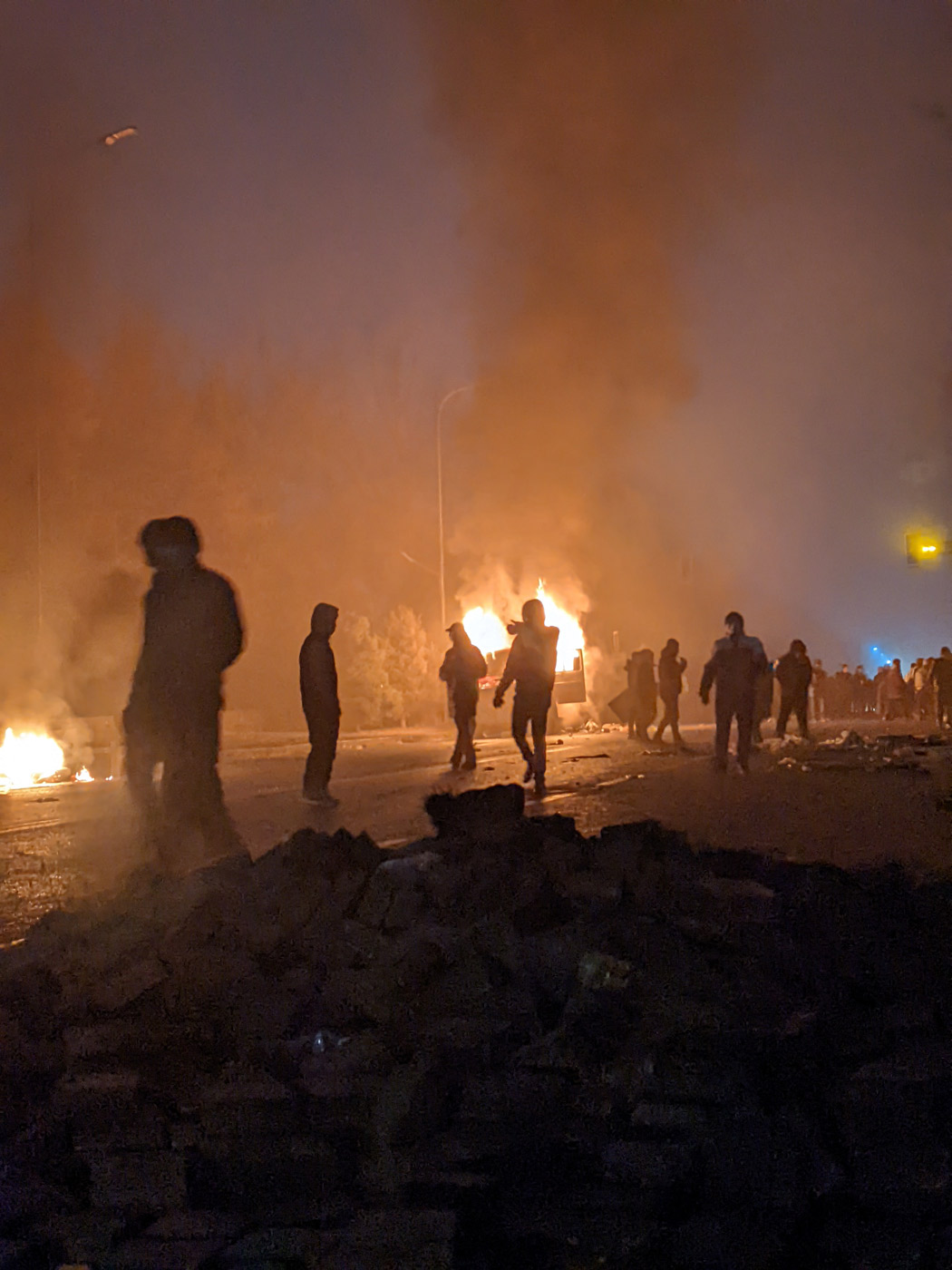
January 5 in Almaty; a photograph taken by Zhanabergen Talgat.
The following sources should serve to debunk any facile misrepresentations of the uprising from the authorities in Kazakhstan, Russia, or the United States—or their misguided supporters.
To those who spread conspiracy theories about the United States attempting to stage-manage a “color revolution” in Kazakhstan, we must point out that the protests began in response to the government canceling its subsidy on gas, which is produced under a profitable state monopoly in Kazakhstan.
Those who defend the governments of Kazakhstan and Russia are defending repressive forces that are imposing neoliberal austerity measures upon exploited workers in an extraction-based economy.
January 6: A view of Almaty. The photographer: “A grim fog hangs from the fires; now everything looks like nuclear winter.”
The honorable place for all who genuinely oppose capitalism is at the side of ordinary workers and other rebels who stand up to the ruling class, not supporting the governments who claim to represent protesters while gunning them down and imprisoning them.
This is not to say that the clashes in Kazakhstan represent a unified anti-capitalist struggle, or for that matter a labor movement. The most credible accounts of the composition of the protests acknowledge that there have been a wide range of different participants utilizing different tactics to pursue different agendas.
Of course, if we are sympathetic to workers who protest against the rising cost of living, we can also understand why the unemployed and marginalized might engage in looting.
A crisis like the uprising in Kazakhstan opens up all the fault lines within a society. Every preexisting conflict is pushed to a breaking point: ethnic and religious tensions, rivalries among the ruling elite, geopolitical contests for influence and power. We saw this to a lesser degree in France during the Yellow Vest movement and in the United States during the George Floyd Uprising and its aftermath, though those crises did not proceed as far as the uprising in Kazakhstan, where, owing to the entrenched authoritarian power structure, any struggle is immediately an all-or-nothing venture.
If it is true, as we have argued, that the protesters in Kazakhstan were opposing the same forces that rest of us face all around the world, then the violent suppression of those protests by the soldiers of six armies poses questions that we all must confront. It seems that such moments of truth are becoming practically inevitable as economic, political, and ecological catastrophes hit one after the other all around the world.
How do we prepare in advance, in order to maximize the likelihood that these ruptures will turn out well despite all the forces that are arrayed against us? In such moments of revolutionary potential, how can we propose transformative questions to the others who make up this society with us, focusing the lines of conflict along the most generative and liberating axes even as we compete with a variety of factions that aim to centralize their own ideologies and interests? How do we avoid both conspiracy theories and manipulation, both defeatism and defeat?
In the following overview, composed in collaboration with Russian anarchists, we present the analysis of the uprising in Kazakhstan that has come out of the ex-Soviet region, then share an interview we conducted with anarchists in Almaty as soon as internet access was reestablished following the crackdown.
The Prison of Nations
Starting on January 1, what began as a single protest against the rising cost of living escalated to a full-scale nationwide uprising, which for now has been brutally suppressed by a combination of domestic and foreign military force.
At first, the protesters sought the resignation of government, a reduction in the price of gas, and the removal of the ex-president—Nursultan Nazarbayev, the Grey Cardinal of Kazakhstan—from the head of the National Security Council. The slogan of the whole country for these days became “Shal ket!”—”Grandpa, go away!” As the protests gained momentum, people quickly came to the point of not wishing to agree to anything less than a complete change in the government, including the ouster of current president Kassym-Jomart Tokayev.
The regime attempted to suppress the protests. Yet the protesters managed to seize weapons from the police and fight back, looting shops and burning down or occupying municipal buildings. President Tokaev declared a state of emergency and sent military against the protesters with orders to shoot on sight anyone who dared to resist. At the same time, Tokaev officially asked the Collective Security Treaty Organization (CSTO, consisting of Russia and several neighboring countries) for support in regaining the control over the country.
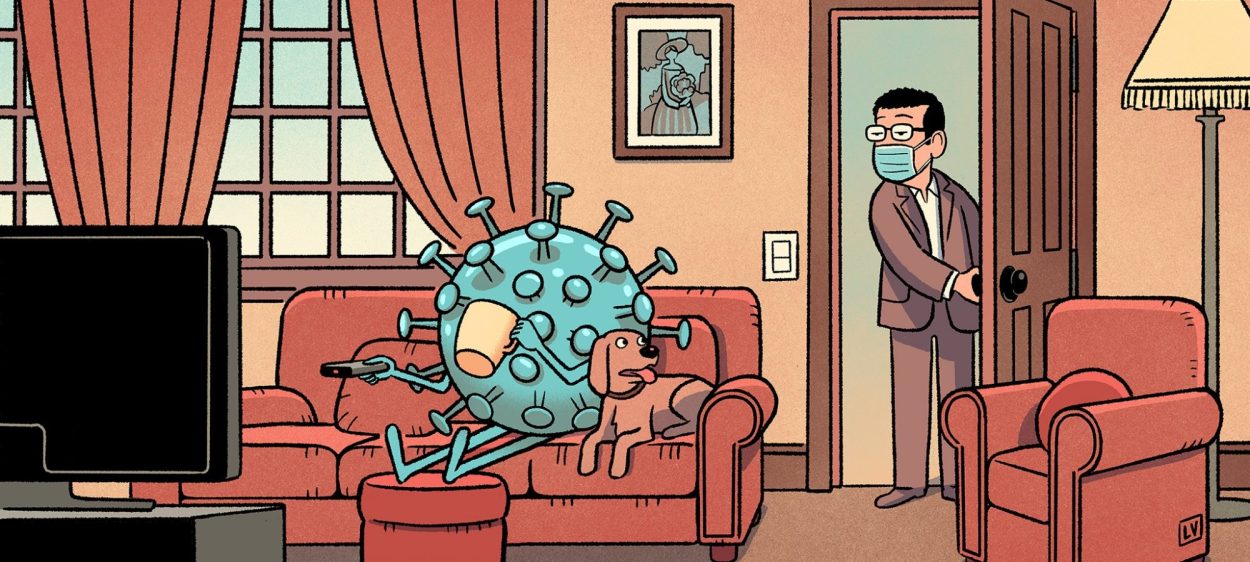
What do they REALLY mean by “living with Covid” Why are media dialling back on the Covid hysteria? Is it because the “pandemic” is really over? Or is it just a Pause in the Control process?
Kit Knightly
The past few days, even weeks, have seen a definite alteration in the media’s attitude to the Covid “pandemic”.
There have been numerous examples of what, if the media were not so tightly controlled, might be referred to as “dissent”. But, since the media is tightly controlled, we must call it an apparent change in the message.
Famously, Dr Steve James, a consultant anaesthetist, confronted UK Health Secretary Sajid Javid over the weakness of the science supporting vaccine mandates. Note this was actually aired on Sky News:
“The science isn’t strong enough”.
Watch the moment an unvaccinated hospital consultant challenges…
Josep C. Verges Report 12.1.22 State terrorist: ‘Scare Catalans’/ TERRORISTA D’ESTAT: ‘SUSTO ALS CATALANS’ ‘I’ve kept working for the Spanish Secret Service trying to fix the mess of the infamous terror attack by the Ripoll imam, a serious error that miscalculated the consequences of giving a small scare to Catalonia’ (Photo: One of the 16 […]
theanarchistlibrary.org is (despite its name) an archive focusing on anarchism and anarchist texts.
Within the scope of our use of the term “anarchism” we have been quite broad, but broad does not mean infinite, and basically shrinks down to a set of ideas against the State and capital.
This immediately rules out the so-called “anarcho-capitalism”, “anarcho-nationalism” and similar crap.
What is so special about this site?
The library provides a high quality online web browser version of the text along with various other formats, like PDFs, plain text, HTML, EPUB, and XeLaTeX. We actively encourage the DIY
printing and the distribution of the texts, so there is no need to ask us for permission to use the texts.
The site provides a way for distributors and friends to change the layout of the PDFs and to create collections of an arbitrary number of texts (1 or more). See the bookbuilder page.
All these features come with some responsibility for the people who want to contribute to the library.
We ask that uploaders contribute a logical representation of the text, with headings, emphasis, quotation blocks, etc. marked up appropriately.
The site provides some tools (inside the web interface) to make this process easy, but some attention and some care is still required. Please be sure to read the manual if you plan to join the project for the mid- to long-term.
I have a text I’d like to see in the library. May I submit it?
Yes, you may! You don’t need an account. Just click Add to Library and read the instructions.
I uploaded something, but you censored me!
When we choose not to publish something, it is usually because the content is not anarchist.
There are also a few other reasons why your text may not have been published, including but not limited to, it being in an incorrect format like an image of PDF file, original work for an unknown previously unpublished author (the library is not a self-publishing website), and finally a common reason is due to the poor text formatting submitted by the user.
Please take due diligence to fix your footnotes, headers, and spacing. Consult the manual for AMUSE markup.
When submitting a text, you are welcome to leave an email address for contact, but it is not necessary.
It is recommended to leave a contact if the content and formatting of the text are in question, so that librarians can email with any questions or recommendations for formatting changes.
You can also contact the library project over Internet Relay Chat (IRC) if you would like to say hello and make a case for the publishing of a particular text. On the IRC, if you ask a question, please be patient as people are not always around.
If you want to publish your zine here, keep in mind that we can’t accept PDFs or raw scans. The texts here are processed to produce various formats, including but not limited to PDF.
Even if inserting images in the text is fully supported, this archive may not be the best solution for graphically heavy texts.
If you think your text only makes sense alongside specific layout (like cut and paste zine), it is best to publish it elsewhere.
What about my scans?
Texts that have been scanned are welcome, but you have to use optical character recognition (OCR) and then follow the library markup to format them. Broken, unreadable texts are rejected. We prefer quality over quantity and are happy to help guide you in formatting your work.
Hey, you started without me. Can I join you?
Sure, you can join the crew. We have a mailing list (library@angrylists.com) and a IRC channel.
If you are interested in creating a new language project, please read this documentation first, and then please contact us.
Of note, at the bottom of the translation documentation we have listed another project anarchistlibraries.net which can also help host your project if you so choose. You can check out their project at the website: anarchistlibraries.net
Tell us about your technology.
All the various components use free software and the code is freely available at https://amusewiki.org.
Why don’t you do X
Perhaps because we haven’t got around to it. Perhaps we have other reasons for not doing X. If you want X to happen at the Anarchist Library, feel free to log onto the IRC channel and talk to us about how X will rock our world, and how to make X happen. We are probably open to do it.
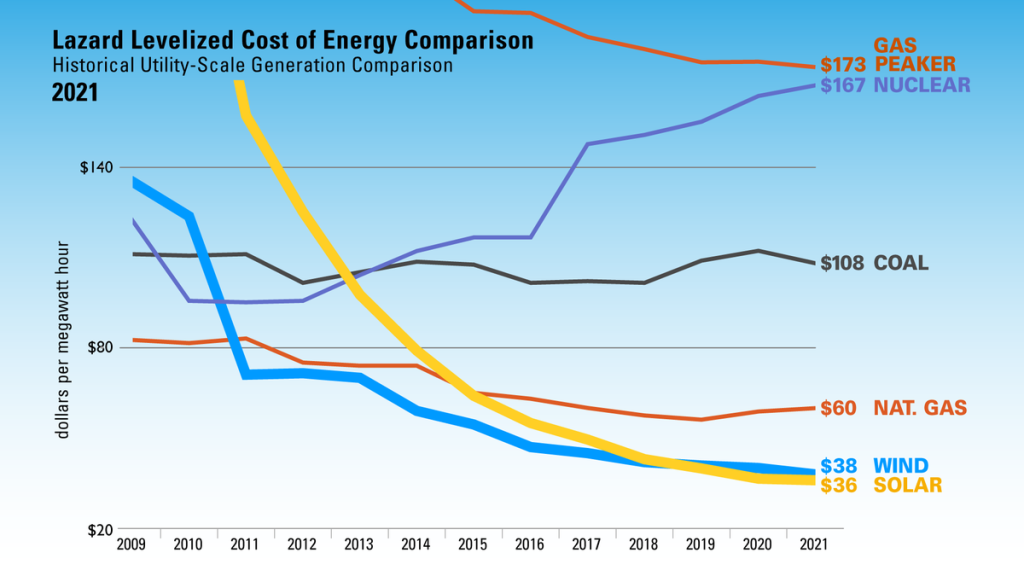
Latest analysis from Mark Jacobson’s energy group at Stanford shows what we’ve come to understand, that a renewable grid is possible, that could actually be more reliable than current service.
One new wrinkle is the understanding of battery storage. We know that a plethora of new battery technologies for energy storage are in development, with prices now dropping as rapidly as solar PV dropped in the past decade. Jacobson’s team produced their results without assuming more than 4 hour battery storage, through a process of linking batteries in sequence, or “concatenating” end-to-end to create more long term storage when necessary. Given that longer term batteries seem inevitable, it gives more confidence that engineers in different systems will have multiple options for maintaining service.
A study led by Stanford University professor Mark Jacobson has demonstrated that the US energy system running on wind, water and solar, coupled with storage…