August 27, 2020 by actforfreedom

August 27, 2020 by actforfreedom

David Graeber, a brilliant thinker and anarchist comrade passed away yesterday. We republish his essay: What’s the Point If We Can’t Have Fun? Image above: David Graeber (left, with microphone) speaks at Maagdenhuis Amsterdam, 2015-03-07 Originally published by The Baffler. Written by David Graeber. My friend June Thunderstorm and I once spent a half an…
David Graeber: What’s the Point If We Can’t Have Fun? — Enough 14 –
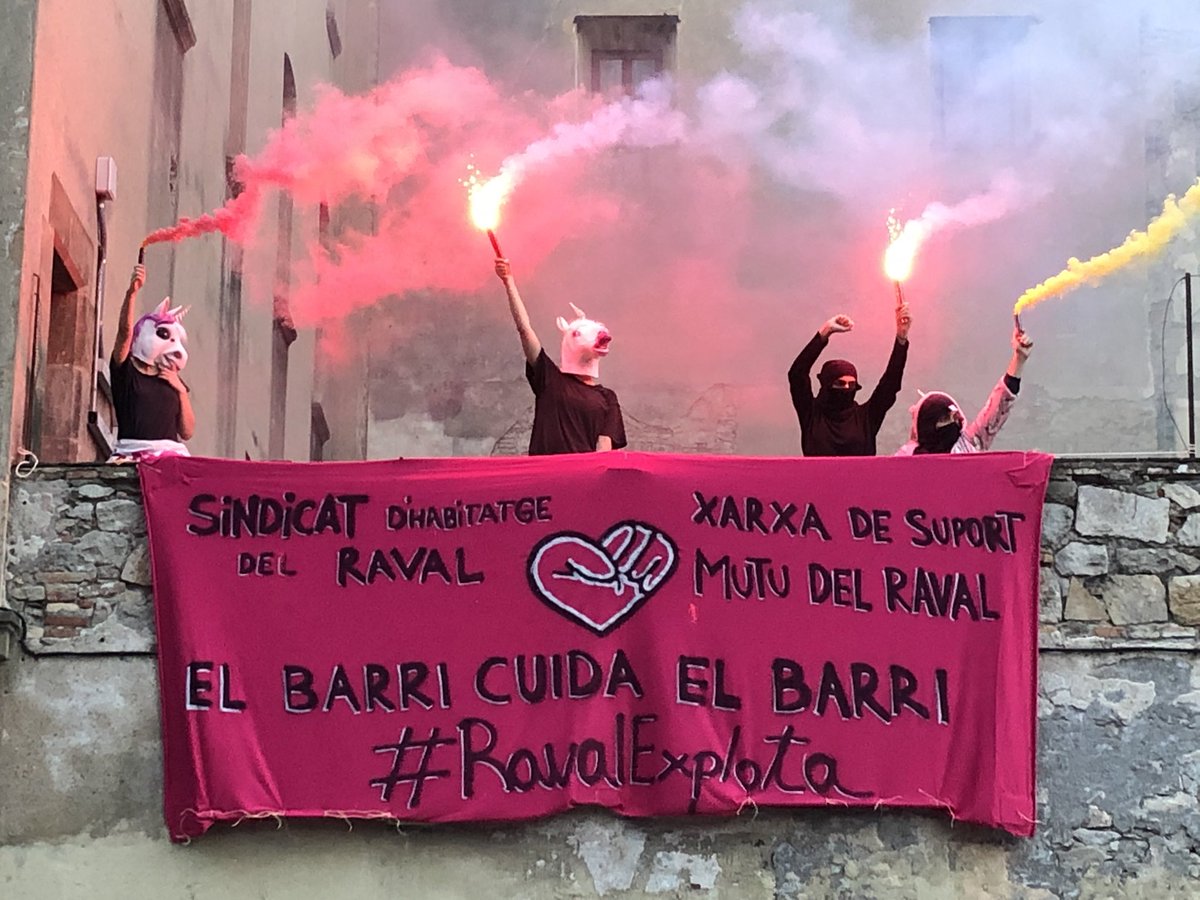
Hundreds if not thousands of Mutual Aid initiatives have sprung up across Iberia during the Capitalist collapse of the pandemic. For us this illustrates the perversity of the ‘Dog Eat Dog’ system and shows how anarchism here is alive and well just under the surface.
We share links to find out much more, and focus on a couple of radical cases in Catalunya.
info: shared from media and participants.translations by TheFreeOnline

Updateable Map of Mutual Aid projects in central Barcelona , by the CUP ‘anarcho-republicans ‘ https://twitter.com/cupbarcelona.

Like many other #mutualaid communities throughout the world, we focus on providing resources and connecting people to their nearest local groups, to willing volunteers and to those in need.
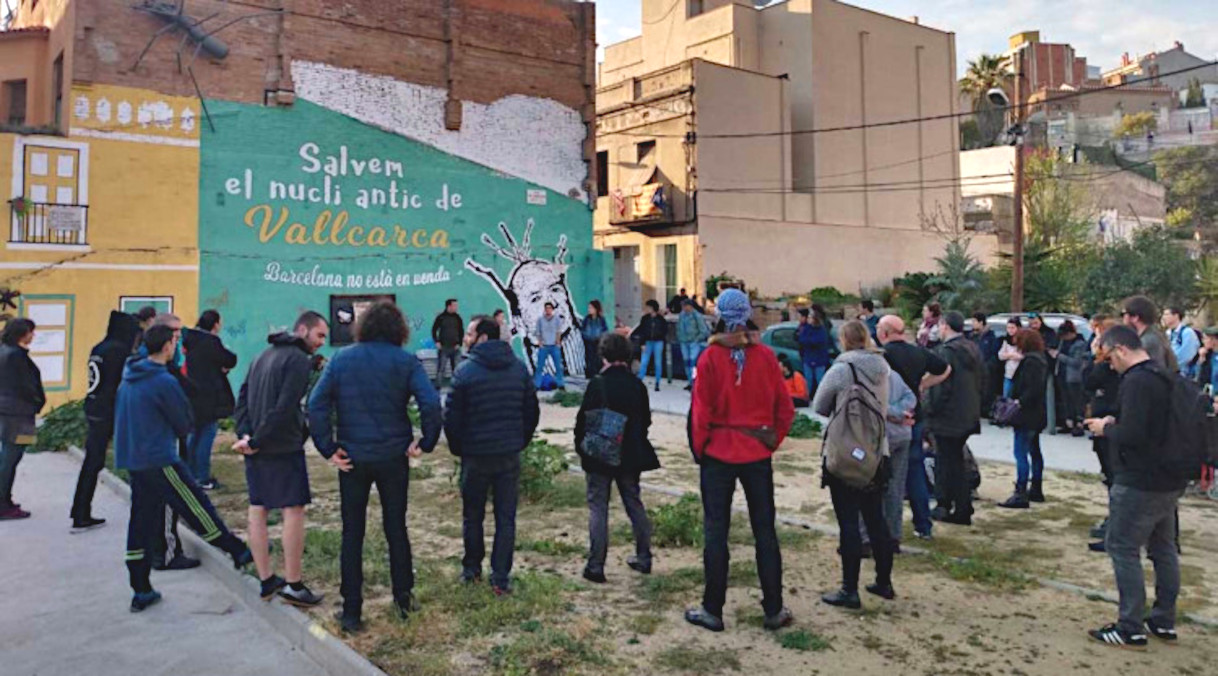
El Raval, an old city centre Barrio is made up of poor families, immigrants, anarchists, old people, students and tourists, mostly employed in the informal ‘black economy’ of bars, restaurants and tourism which simply DISAPPEARED when the Covid virus struck. @RavalSuport @RavalSindicat
Originally published by Verso Books. Written by David Correia.
Don’t call it a nickel ride, like they do in Philly. And it’s not exactly a rough ride, like the kind the cops give in Baltimore. It’s called a Nine Mile Ride in Albuquerque because that’s where the ride ends.

It begins in downtown Albuquerque, often near Steelbridge, the current name of what used to be known as the Albuquerque Rescue Mission. Or sometimes Albuquerque cops grab someone from the International District near the Albuquerque Indian Center, a place they call the “War Zone.” That’s where the ride starts.
If you want to know what happens along the way, head out onto the street. Bring water and Covid-19 masks with you because everyone living on the streets needs both desperately. “In the last three months,” one man told us “they cut every one of our water supplies. Cops carry water but they won’t give them out… They have it, they just don’t give it to you.”
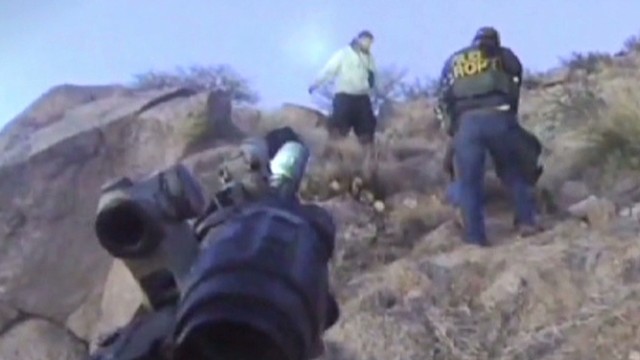
Outrage over fatal shootings by police in Albuquerque
Don’t just start asking questions. First give out water. Distribute masks. Then ask if the cops harass them. We went out into the streets late in the afternoon last month, just as the rain arrived to cut the heat. We met a man at a bus stop in the International District and offered him water and a mask.
He thanked us, and then we asked about the cops. Before we could even finish the question he interrupted to say, “hell yeah, they harass me. It’s everyday. They sit there around the corner, watching us, watching me, and roll up on me.” He’s was sitting at a bus stop telling us that cops roll up on him at bus stops, often the only place he can find shade, and tell him to keep moving. “I’m at a bus stop,” he’ll tell them. No matter. Just keep moving.
So he keeps moving. Everyone tells us this. To be policed on the street is to be constantly on the move. It is to be constantly told by a cop you don’t belong. If you’re Native they’ll say, “Go back to the Rez.” Just keep moving.
Policing is many things and all of them are about mobility. Police arrest mobility through traffic stops and checkpoints, interrupt mobility with borders and curfews, monitor mobility by helicopter or camera, force mobility by firing tear gas or sending in police dogs.
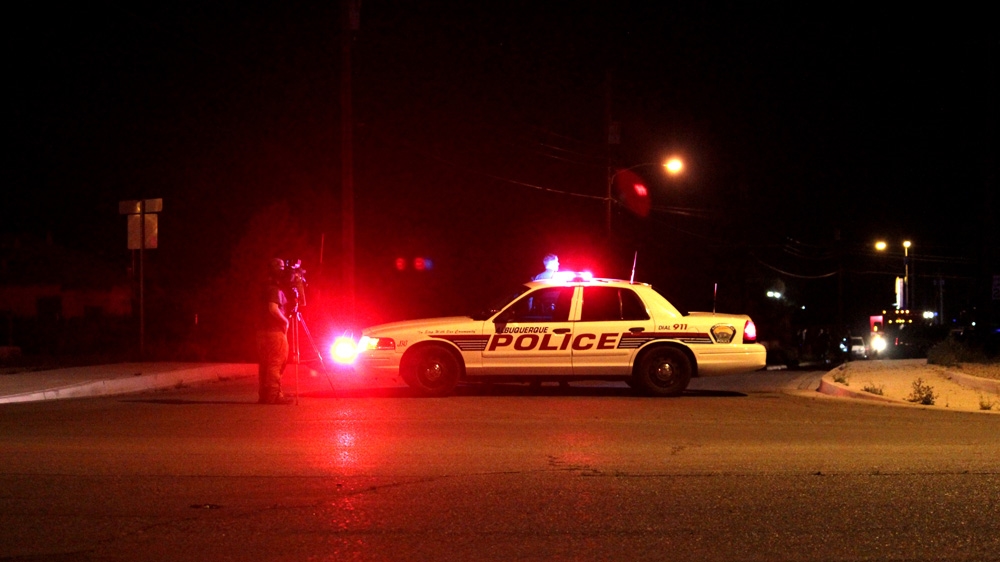
Albuquerque PD: a case study of police brutality | Racism | Al Jazeera
There’s this famous essay from 1982 that most cops have probably never read even though it perfectly describes everything they do. It’s called “Broken Windows” and in it two criminologists explain the importance of mobility. They start by admitting something cops never admit. Police patrol has zero “impact on crime rates.” It doesn’t matter how many cops you send out on patrol. More patrol does not result in less crime. And yet despite this, they emphasize patrol as the fundamental police practice. And this is so because social order, they claim, is a product of police patrol. People are afraid, they write, but they’re not afraid of crime. They’re afraid of something else, something called disorder. And you find disorder, they write, wherever you find people who don’t belong.
And so cops are always on the move, out on patrol, on the beat, in pursuit, on the hunt, confronting those they decide don’t belong. People are afraid of “being bothered by disorderly people,” the Criminologists claim. And so the job of the cop is to be on the move, patrolling, in order to “elevate… the level of public order.”
That sounds vague but they have something specific in mind. The job of police is to confront the “panhandlers, drunks, addicts, rowdy teenagers, prostitutes, loiterers, the mentally disturbed” and tell them to get lost. This, they write, is the job of police. While “citizens can do a great deal, the police are plainly the key to order maintenance.”
by LAMA
AK Press,2020, 300 páginas Barnes & Noble $11.49
 “…the struggle for a better world is never easy, is always provisional, needs to be struggled for both within yourself and among those you live, love, work, and sometimes die with.”…
Deciding For Ourselves e-book $9.50

Deciding For Ourselves: The Promise of Direct Democracy
Cindy Millstein (ed) pp.269 AK Press (Chico, Edinburgh, 2020)
ISBN: 9-781849-353731
There are two basic ways of approaching anarchism. Either as the conscious organising of those who are well versed in an explicit and thoroughly demarcated theoretical tradition. This is big @ Anarchism, people who self-identify with the label and do stuff on that basis.
Continue reading “Book Review: Deciding For Ourselves: The Promise of Direct Democracy”
By COLLEEN LONG and SCOTT BAUERyesterday
WASHINGTON (AP) — President Donald Trump is not waiting for a trial to sort out what happened on the streets of Kenosha, Wisconsin, where prosecutors say a 17-year-old with a semi-automatic rifle fatally shot two men on a night of protest and violence. He’s giving an account at odds with the authorities who charged Kyle Rittenhouse with homicide.
In remarks surrounding and during his trip Tuesday to Kenosha, Trump also falsely claimed credit for National Guard deployments that he actually did not authorize. Wisconsin’s Democratic governor did.
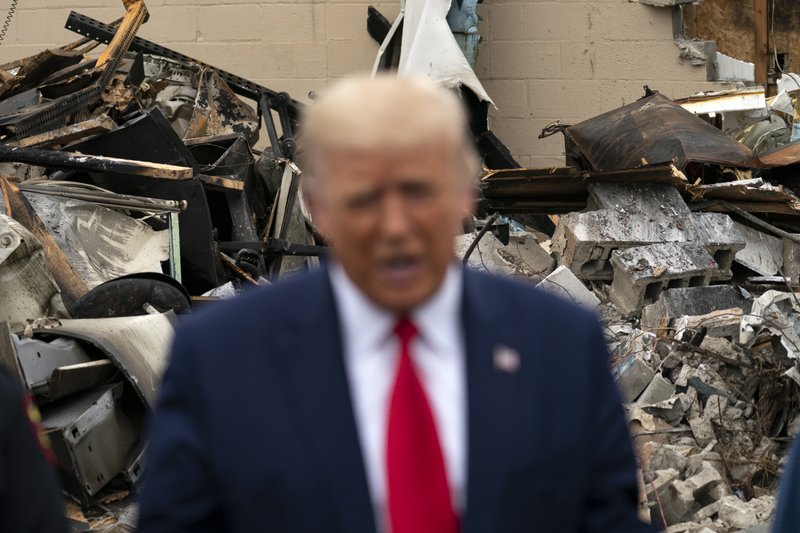
TRUMP, asked if was going to condemn the actions of Rittenhouse: “We’re looking at all of it. And that was an interesting situation. You saw the same tape as I saw. And he was trying to get away from them, I guess; it looks like. And he fell, and then they very violently attacked him. And it was something that we’re looking at right now and it’s under investigation. But I guess he was in very big trouble. He would have been — I — he probably would have been killed.” — news conference Monday before traveling to Kenosha on Tuesday.
THE FACTS: His implication that Rittenhouse only shot the men after he tripped and they attacked him is wrong. The first fatal shooting happened before Rittenhouse ran away and fell.More Fact Checks:
Trump did not say whom he meant by “they” — the two men he shot or others in pursuit of him. But he spoke in defense of someone who opposed racial-justice protesters, who authorities say was illegally carrying a semi-automatic rifle and who prosecutors accuse of committing intentional homicide.
According to the criminal complaint released by prosecutors, victim Joseph Rosenbaum was shot and killed first, after following Rittenhouse into a parking lot, where Rosenbaum threw a plastic bag at the gunman and tried to take the weapon from him.
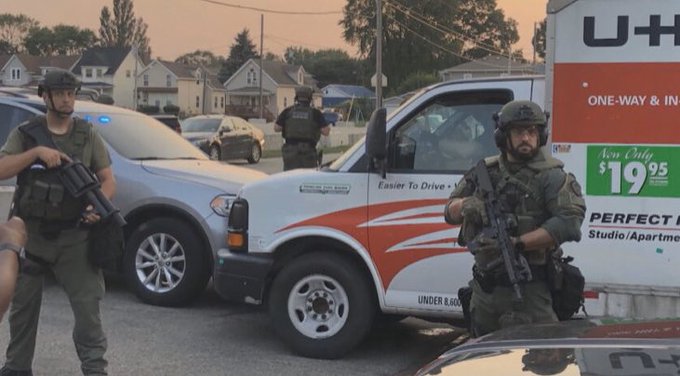
Fifty Shades of Whey@davenewworld_2Level 1:Kenosha PD arrested a church group for supplying food to protestors and still haven’t returned over $1,000 in goods. In a war against civilians, it’s imperative for the oppressor to cut off supply lines. This is what the Saudis did to Yemen. This is fascism.
The medical examiner found that Rosenbaum was shot in the groin and back — which fractured his pelvis and perforated his right lung and liver — and his left hand. He also suffered a superficial wound to his left thigh and a graze wound to his forehead.
Rittenhouse then ran down the street and was chased by several people trying to stop him and shouting that he just shot someone, according to the criminal complaint and cellphone video footage.
He tripped and fell. Anthony Huber, who was carrying a skateboard, was shot in the chest after apparently trying to wrest the gun from Rittenhouse, the complaint said. A third man was shot and injured.
Rittenhouse’s lawyer said he acted to defend himself.Full Coverage: AP Fact Check
___
TRUMP, on Wisconsin officials and the National Guard: “Once they responded and once we took, you know, control of it, things went really well.” — remarks in Kenosha.
TRUMP: “One of the reasons I’m making the trip today and going to Wisconsin is we’ve had such a big success in shutting down what would be, right now, a city — that would’ve been Kenosha — a city that would’ve been burnt to the ground by now. … And it all stopped immediately upon the National Guard’s arrival.” — remarks Tuesday before boarding Air Force One to Wisconsin.
THE FACTS: That’s a distortion. He had nothing to do with the deployment of the National Guard in Wisconsin. The federal government never “took control of it.”
Wisconsin Gov. Tony Evers activated the state’s National Guard the day after a Kenosha police officer shot Jacob Blake, sparking protests and violence over police actions and racism. When National Guard forces from three other states came in to help, it was because the governor had asked for that help from fellow governors, not the White House.

Evers said National Guard troops from Arizona, Michigan and Alabama were operating under the control of those states and Wisconsin, “not in a federal status.” National Guards answer to governors and sometimes state legislatures, not Washington.
The federal government sent deputy marshals from the U.S. Marshals Service and agents from the FBI and the Bureau of Alcohol, Tobacco, Firearms and Explosives, about 200 in all. The restoration of order was primarily in the hands of National Guard units and local law enforcement.
As of Monday, 1,000 National Guard troops from Wisconsin were in Kenosha along with 500 National Guard troops from the other three states, said Wisconsin National Guard Maj. Gen. Paul Knapp.
___
Bauer reported from Madison, Wisconsin. Associated Press writer Kevin Freking contributed to this report.
___
EDITOR’S NOTE — A look at the veracity of claims by political figures.
___
Find AP Fact Checks at http://apnews.com/APFactCheck
Follow @APFactCheck on Twitter: https://twitter.com/APFactCheck

 Four years ago lots of people couldn’t have imagined that Donald Trump was just a few months away from being elected President of the United States.
Within days of the elections, people all across the country took to the streets to protest the election of Trump and to signal the need for a resistance movement that would have the capacity and vision to respond to what was to come.
In Grand Rapids, we wrote about how the Democratic Party was scrambling to respond to the fact that they had lost power. An event was organized in Grand Rapids entitled, Surviving the Trump Apocalypse, an event was focused exclusively how an electoral strategy. At the time, March of 2017, we wrote:
The opposition to the new president is refreshing in some ways, but this is a pattern amongst liberal and progressive circles. Liberals and progressives tend to get activated when…
View original post 1,222 more words


 The Free