by UndercoverInfo On the day Brexit beleaguered Britain gets a new passport there will be the inevitable street parties by flag-waving, jingoistic and nationalistic loons. And accompanying those sickening celebrations there is likely to be a surge in hate crimes against anyone looking ‘foreign’, including tourists.
On the night before Christmas, we’ll all be about. While the people are sleeping, we’ll realise our clout. We’ll expropriate goods from the stores, ‘cos that’s fair. And distribute them widely, to those who need care.Ruth Kinna 20 December 2018
Can we reclaim Christmas for the masses? Credit: Grace Wilson/STRIKE! magazine.
An anarchist guide to Christmas
It’s no surprise to discover that anarchist theorist Pyotr Kropotkin was interested in Christmas. In Russian culture, St. Nicholas (Николай Чудотворец) was revered as a defender of the oppressed, the weak and the disadvantaged. Kropotkin shared the sentiments.
A principle or theory of life and conduct under which society is conceived without government — harmony in such a society being obtained, not by submission to law, or by obedience to any authority, but by free agreements concluded between the various groups…
But there was also a family link. As everyone knows, Kropotkin could trace his ancestry to the ancient Rurik dynasty that ruled Russia before the upstart Romanovs and which, from the first century CE, controlled the trade routes between Moscow and the Byzantine Empire. Nicholas’s branch of the family had been sent out to patrol the Black Sea.
But Nicholas was a spiritual man and sought an escape from the piracy and brigandage for which his Russian Viking family was famed. So he settled under a new name in the southern lands of the Empire, now Greece, and decided to use the wealth that he had amassed from his life of crime to alleviate the sufferings of the poor.
Unpublished archival sources recently discovered in Moscow reveal that Kropotkin was fascinated by this family tie and the striking physical similarity between himself and the figure of Father Christmas, popularised by the publication of ‘A Visit from St. Nicholas’ (better known as ‘The Night Before Christmas’) in 1823.
Kropotkin was not quite so portly as Klaus, but with a cushion stuffed up his tunic, he felt he could pass. His friend Elisée Reclus advised him to drop the fur trim on the outfit. That was a good idea as it would also allow him to wear a bit more black with the red.
The need for a new life becomes apparent. The code of established morality, that which governs the greater number of people in their daily life, no longer seems sufficient.
He’d decided to follow Elisée’s advice on the reindeer, too, and to use a hand driven sleigh. Kropotkin wasn’t normally given to dressing up. But exploiting the resemblance to spread the anarchist message was excellent propaganda by the deed.
Anticipating ‘V’, Kropotkin thought that we could all pose as Santa Claus. On the edge of one page Kropotkin writes: “Infiltrate the stores, give away the toys!”
Faint remnants on the back of a postcard read:
On the night before Christmas, we’ll all be about While the people are sleeping, we’ll realise our clout We’ll expropriate goods from the stores, ‘cos that’s fair And distribute them widely, to those who need care.
His project notes also reveal some valuable insights into his ideas about the anarchistic features of Christmas and his thinking about the ways in which Victorian Christmas rituals might be adapted.
“We all know”, he wrote, “that the big stores – John Lewis, Harrods and Selfridges – are beginning to exploit the sales potential of Christmas, establishing magic caves, grottos and fantastic fairylands to lure our children and pressurise us to buy gifts that we do not want and cannot afford”.
“If you are one of us”, he continued, “you will realise that the magic of
Men lived thousands of years before the first States were constituted…
Christmas depends on Father Christmas’s system of production, not the stores’ attempts to seduce you to consume useless luxuries”. Kropotkin described the sprawling workshops at the North Pole, where elves worked all year, happily because they knew that they were producing for other peoples’ pleasure. Noting that these workshops were strictly not-for profit, craft-based and run on communal lines, Kropotkin treated them as prototypes for the factories of the future (outlined in Fields, Factories and Workshops).
Some people, he felt, thought that Father Christmas’s dream to see that everyone received gifts on Christmas day, was quixotic. But it could be realised. Indeed, the extension of the workshops – which were quite expensive to run in the Arctic – would facilitate generalised production for need and the transformation of occasional gift-giving into regular sharing. “We need to tell the people”, Kropotkin wrote, “that community workshops can be set up anywhere and that we can pool our resources to make sure that everybody has their needs met”!
One of the issues that most bothered Kropotkin about Christmas was the way in which the inspirational role that Nicholas’s had played in conjuring Christmas myths had confused the ethics of Christmas. Nicholas was wrongly represented as a charitable, benevolent man: saintly because he was beneficent. Absorbed in the figure of Father Christmas, Nicholas’s motivations for giving had become further skewed by the Victorian’s fixation with children.
Kropotkin didn’t really understand the links, but felt that it reflected an attempt to moralise childhood through a concept of purity that was symbolised in the birth of Jesus. Naturally he couldn’t imagine the creation of the Big Brother Santa Claus who knows when children are asleep and awake and comes to town apparently knowing which have dared to cry or pout.
But sooner or later, he warned, this idea of purity would be used to distinguish naughty from nice children and only those in the latter group would be rewarded with presents.
Whatever the case, it was important both to recover the principle of Nicholas’ compassion from this confusing mumbo-jumbo and the folkloric origins of Santa Claus. Nicholas gave because he was pained by his awareness of other peoples’ hardship. Though he wasn’t an assassin (as far as Kropotkin knew), he shared the same ethics as Sofia Petrovskaya. And while it was obviously important to worry about the well-being of children, the anarchist principle was to take account of everyone’s suffering.
Similarly, the practice of giving was mistakenly thought to require the implementation of a centrally-directed plan, overseen by an omniscient administrator. This was quite wrong: Father Christmas came from the imagination of the people (just consider the range of local names that Nicholas had accrued – Sinterklaas, Tomte, de Kerstman). And the spreading of good cheer – through festivity – was organised from the bottom up.
Buried in Christmas, Kropotkin argued, was the solidaristic principle of mutual aid.
Kropotkin appreciated the significance of the ritual and the real value that
The education we all receive from the State, at school and after, has so warped our minds that the very notion of freedom ends up by being lost, and disguised in servitude.
individuals and communities attached to carnivals, acts of remembrance and commemoration. He no more wanted to abolish Christmas than he wished to see it republicanised through some wrong-headed bureaucratic re-ordering of the calendar.
It was important, nonetheless, to detach the ethic that Christmas supported from the singularity of its celebration. Having a party was just that: extending the principle of mutual aid and compassion into everyday life was something else. In capitalist society, Christmas provided a space for special good behaviours. While it might be possible to be a Christian once a year, anarchism was for life.
When we see how voluntary societies invade everything and are only impeded in their development by the State, we are forced to recognize a powerful tendency, a latent force in modern society.
Kropotkin realised his propaganda would have the best chance of success if he could show how the anarchist message was also embedded in mainstream culture. His notes reveal that he looked particularly to Dickens’ A Christmas Carol to find a vehicle for his ideas. The book was widely credited with cementing ideas of love, merriment and goodwill in Christmas. Kropotkin found the genius of the book in its structure. What else was the story of Scrooge’s encounter with the ghosts of Christmas past, present and future than a prefigurative account of change?
By seeing his present through his past, Scrooge was given the chance to alter his miserly ways and re-shape both his future and the future of the Cratchit family. Even if it was only remembered once a year, Kropotkin thought, Dickens’s book lent anarchists a perfect vehicle to teach this lesson: by altering what we do today, by modelling our behaviours on Nicholas, we can help construct a future which is Christmas!
This article was originally published by STRIKE! magazine in 2014.
Kropotkin was Right: Cooperation beats Competition
New studies are proving false whole libraries that claim humans are innately selfish and cruel. Starting with a false view of Darwin’s theory of Evolution right wing leaders of opinion have built a tower of lies to justify their crimes against humanity, as argued from the beginning by the anarchist Peter Kropotkin. Humans are innately cooperative and empathetic, and this gives us the basis for a new kind of non-capitalist system. We reprint below a new article by the influential science journalist George Monbiot on these themes.
Human Kind
new evidence shows human cooperation and empathy predominate
Fascinating new lines of research suggest that we are good people, tolerating bad things.
Do you find yourself thrashing against the tide of human indifference and selfishness? Are you oppressed by the sense that while you care, others don’t? That because of humankind’s callousness, civilisation and the rest of life on earth are basically stuffed? If so, you are not alone. But neither are you right.
A study by the Common Cause Foundation, due to be published next month, reveals two transformative findings. The first is that a large majority of the 1000 people they surveyed – 74% – identify more strongly with unselfish values than with selfish values. This means that they are more interested in helpfulness, honesty, forgiveness and justice than in money, fame, status and power. The second is that a similar majority – 78% – believes others to be more selfish than they really are. In other words, we have made a terrible mistake about other people’s minds.
The revelation that humanity’s dominant characteristic is, er, humanity will come as no surprise to those who have followed recent developments in behavioural and social sciences. People, these findings suggest, are basically and inherently nice.
A review article in the journal Frontiers in Psychology points out that our behaviour towards unrelated members of our species is “spectacularly unusual when compared to other animals”. While chimpanzees might share food with members of their own group, though usually only after being plagued by aggressive begging, they tend to react violently towards strangers. Chimpanzees, the authors note, behave more like the Homo economicus of neoliberal mythology than people do.
Humans, by contrast, are ultra-social: possessed of an enhanced capacity for empathy, an unparalleled sensitivity to the needs of others, a unique level of concern about their welfare and an ability to create moral norms that generalise and enforce these tendencies.
Such traits emerge so early in our lives that they appear to be innate. In other words, it seems that we have evolved to be this way. By the age of 14 months, children begin to help each other, for example by handing over objects another child can’t reach. By the time they are two, they start sharing things they value. By the age of three, they start to protest against other people’s violation of moral norms.
A fascinating paper in the journal Infancy reveals that reward has nothing to do with it. Three to five-year-olds are less likely to help someone a second time if they have been rewarded for doing it the first time. In other words, extrinsic rewards appear to undermine the intrinsic desire to help. (Parents, economists and government ministers, please note). The study also discovered that children of this age are more inclined to help people if they perceive them to be suffering, and that they want to see someone helped whether or not they do it themselves. This suggests that they are motivated by a genuine concern for other people’s welfare, rather than by a desire to look good. And it seems to be baked in.
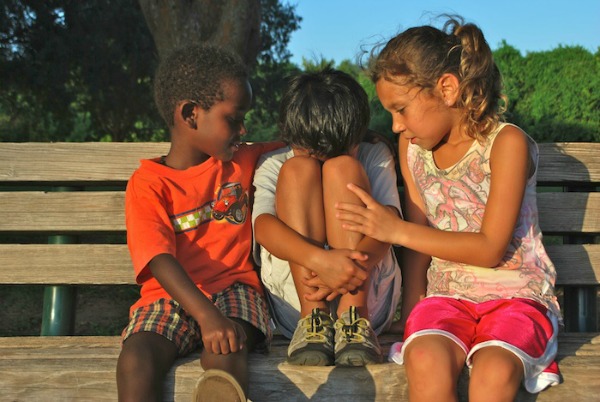
Children sharing ice-cream on stick near Sapa.
Why? How would the hard logic of evolution produce such outcomes? This is the subject of heated debate. One school of thought contends that altruism is a logical response to living in small groups of closely related people, and evolution has failed to catch up with the fact that we now live in large groups, mostly composed of strangers. Another argues that large groups containing high numbers of altruists will outcompete large groups which contain high numbers of selfish people. A third hypothesis insists that a tendency towards collaboration enhances your own survival, regardless of the group in which you might find yourself. Whatever the mechanism might be, the outcome should be a cause of celebration.
So why do we retain such a dim view of human nature? Partly, perhaps, for historical reasons. Philosophers from Hobbes to Rousseau, Malthus to Schopenhauer, whose understanding of human evolution was limited to the Book of Genesis, produced persuasive, influential and catastrophically mistaken accounts of “the state of nature” (our innate, ancestral characteristics). Their speculations on this subject should long ago have been parked on a high shelf marked “historical curiosities”. But somehow they still seem to exert a grip on our minds.
Another problem is that – almost by definition – many of those who dominate public life have a peculiar fixation on fame, money and power. Their extreme self-centredness places them in a small minority, but, because we see them everywhere, we assume that they are representative of humanity.
The media worships wealth and power, and sometimes launches furious attacks on people who behave altruistically. In the Daily Mail last month, Richard Littlejohn described Yvette Cooper’s decision to open her home to refugees as proof that “noisy emoting has replaced quiet intelligence” (quiet intelligence being one of his defining qualities). “It’s all about political opportunism and humanitarian posturing,” he theorised, before boasting that he doesn’t “give a damn” about the suffering of people fleeing Syria. I note with interest the platform given to people who speak and write as if they are psychopaths.
The consequences of an undue pessimism about human nature are momentous. As the Common Cause Foundation’s survey and interviews reveal, those who have the bleakest view of humanity are the least likely to vote. What’s the point, they reason, if everyone else votes only in their own selfish interests? Interestingly, and alarmingly for people of my political persuasion, it also discovered that that liberals tend to possess a dimmer view of other people than conservatives do. Do you want to grow the electorate? Do you want progressive politics to flourish? Then spread the word that other people are broadly well-intentioned.
Misanthropy grants a free pass to the grasping, power-mad minority who tend to dominate our political systems. If only we knew how unusual they are, we might be more inclined to shun them and seek better leaders. It contributes to the real danger we confront: not a general selfishness, but a general passivity. Billions of decent people tut and shake their heads as the world burns, immobilised by the conviction that no one else cares.
You are not alone. The world is with you, even if it has not found its voice.
Translated and edited from Sosyal Savas with additional edits from the Black Rose/Rosa Negra Social Media Team.
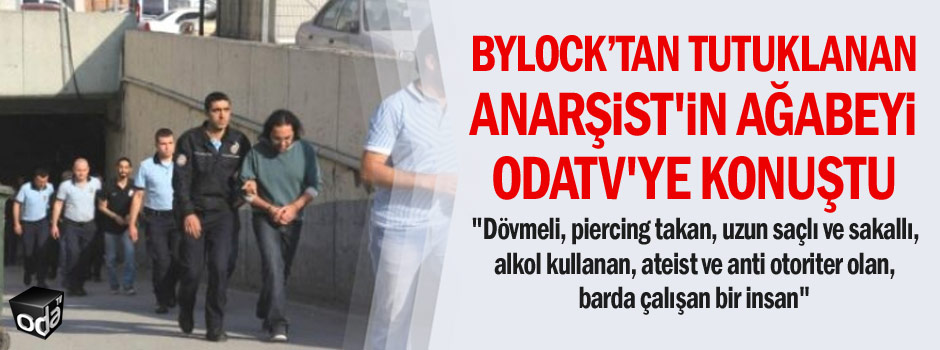
Anarchist activist İshak Tayak has been arrested and accused of being a member of the Islamic, pro-capitalist Gülen movement linked to the 2016 failed coup attempt. In the pre-dawn hours of October 2, special ops police raided his Istanbul home, where they beat him before taking him into custody. İshak, a Kurdish self-identified anarchist and atheist, was later charged with downloading a messaging app used by the movement called Bylock in 2014.
Charges denied, lack of evidence
Ishak denies the charges, as well as any ties with the Gülenists, and allegedly, the state has yet to present substantial evidence supporting its claims.
“I am an anarchist, an atheist, a person who defends the rights of nature, people, and animals,” Ishak said in a statement. Under the state of emergency, he says the rule of law has been suspended and any semblance of justice discarded: “I’m being tried as a Gülenist—despite the fact that I’m an anarchist and have no connections [to this or any organization].”
Istanbul Anti-Fraud Division branch members detained 15 people in the operation for ByLock users, including Ishak Tayak, who was in the group called “Anarchists”.The evening newspaper, the government said, alleged that Tayak had downloaded ByLock over his own line.
The Turkish state accuses the Gülenists, led by the US-based Muslim cleric Fetullah Gülen, of orchestrating a July 15, 2016 coup attempt and considers it a terrorist organization. In the months after the coup, the ruling Justice and Development Party (AKP) has aggressively attempted to link dissidents—left and right—to the Gülenists, an effort to both consolidate its power and justify heavy repression of the opposition. Over 50,000 people have been jailed in post-coup purges.Continue reading “Turkey holds anarchist İshak Tayak on false charges”
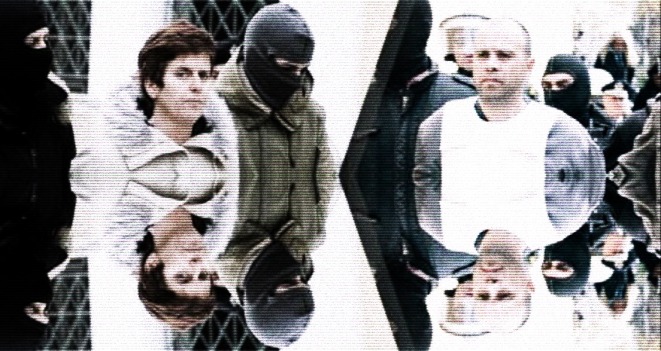
Just when comrades were preparing for their imminent deaths the Greek authorities have finally backed down on their evil campaign of victimisation and isolation.
A welcome anti-Christmas present for Pola, Nikos and their family and supporters, though they still face a while in jail… Nikos got Life + 129 years!
This Monday, December 18, after he was discharged from the hospital at Korydallos Prison, Nikos Maziotis was transferred to Unit 5 and is no longer under special detention / isolation regime. Therefore since our demands regarding our imprisonment have been met, Pola Roupa has terminated the hunger strike and will stay for a few days in the Korydallos Prison hospital to recuperate.
Our struggle does not end here. Article 11 and the fascist provisions of the new prison code in general are still ahead of us. We will not remain idle. The fight continues. The solidarity of comrades outside the walls was and is decisive. Strength to everyone.Continue reading “Victory! Nikos and Pola end Hunger Strike. Victory!”
Fuck Abuse, Kill Power: Against the Root Causes of Sexual Harassment and Assault
The past year has seen a wave of revelations about powerful people—nearly all men—perpetrating sexual violence against those beneath them. The #MeToo moment has provided a platform for countless courageous survivors.
Yet although some men have been made to face consequences for the harm they have done, we are far from being able to solve the problem of male sexual violence. Focusing on the wrongdoings of specific men tends to exceptionalize them, as if their actions took place in a vacuum.
This is consistent with the mechanisms of a criminal justice system focused on individual guilt and a reformist politics premised on the idea that the existing government and market economy would serve us perfectly if only the right people were in power.
But with the bad behavior of so many men coming to light, we have to consider the possibility that these are not exceptions at all—that these attacks are the inevitable, systemic result of this social order. Is there a way to treat the cause as well as the symptoms?
Trigger warning for descriptions of sexual violence.
Well, to no one’s surprised, the FCC led by Chairman Ajit Pai voted to abolish Net Neutrality which was put into place in 2015. The vote of 3-2 was predictably along party lines with the Republicans deciding that the internet doesn’t need to be accessible, affordable, and open to everyone.
But don’t panic! Several states have already filed suit to stop this insane decision that will allow internet service providers like Verizon and Comcast unlimited power to block websites, throttle services and censor online content.
Mr. Pai made an, um clever(?) video to illustrate the important things you’ll still be able to do, if at the end of the day the FCC’s can buy its way through. As many of you know I’m not tech savvy so I can’t upload a link to the video, but here’s 5 things he includes:
You can still Instagram your food. at a reasonable price
You’ll be able to purchase faster and binge watch your favorite shows.
You can take selfies with your pets and pay to upload them.
You can shop for Christmas presents all year round
AND, you can still save up to be a member of your favorite fandom!
via Black Rose Federation La situación política en Venezuela continúa en conflicto y el legado del Chavismo sigue siendo controvertido y debatido en la izquierda. Reeditamos esta declaración de la Federación Anarquista Uruguaya (FAU) con sus perspectivas sobre la situación actual.Fundado en 1956, la FAU fue uno de los movimientos anarquistas más fuertes de América Latina, sobrevivió al período de la dictadura y continúa activo en la actualidad.También recomendamos otras piezas traducidas sobre Venezuela, el inglés “The ‘Madurization’ of Chavismo” una declaración de los anarquistas caribeños y un análisis de anarquistas chilenos que condujeron investigaciones políticas en Venezuela:“Political Situation in Venezuela: Crisis, Trends, and the Challenge of Class Independence” El texto original en español aparece a continuación.
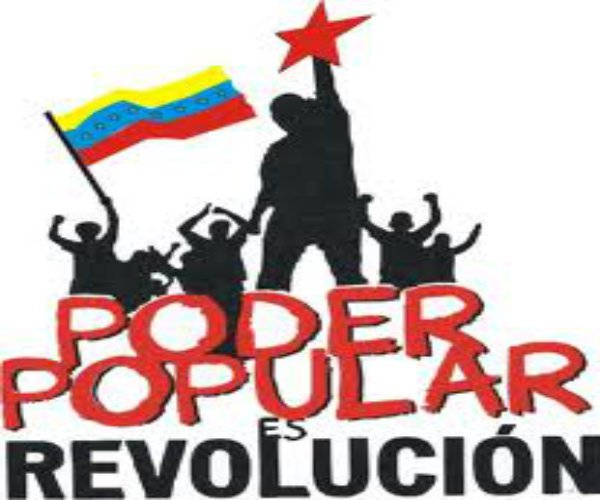
“El poder popular en Venezuela, impulsado inicialmente por el carismático Hugo Chávez, ha estado en una tensión constante … Desde arriba, los recursos se han reducido y han obstaculizado, en todas las maneras posibles, el desarrollo de las comunas y el poder popular”.
El Poder Popular en Venezuela: por Federación Anarquista Uruguaya
En 1989 se vivió en Venezuela una de las máximas revueltas sociales conocida como “El Caracazo”. Esta revuelta popular fue motivada por las medidas tomadas por el gobierno de Carlos Andrés Pérez, quien entregó la economía venezolana al Fondo Monetario Internacional e implementó una política de shock de neto corte neoliberal. Se profundizaba así la crisis económica que ya vivía el país. El saldo de esta inmensa movilización popular fue de 3 mil muertos. Continue reading “Análisis del Poder Popular en Venezuela : por la Federación Anarquista Uruguaya”




















 The Free