On sat 20th Aug a massive demo took place against the ongoing Amazon destruction for the Belo Monte dam. Also against the new Forest Law, now in the Senate, which ‘relaxes’ the already unenforced deforestation code. Brazil had been a constructive leader in Climate talks, which came to nothing due to the greedy demands of the West.
Milhares de ativistas protestam contra Usina de Belo Monte
“A represa de Belo Monte significa a última punhalada no coração da Amazônia”, declarou em Belém o presidente do Conselho Indigenista Missionário, Erwin Krautler, que é também bispo prelado do Xingu, região onde as obras inundarão 516 quilômetros quadrados de floresta e que, segundo os povos ribeirinhos, vai obrigar a remoção das famílias de cerca de 50.000 pessoas. Além de Belém, onde 2.000 pessoas se mobilizaram, e São Paulo, houve manifestações similares em Brasília, Rio de Janeiro, Fortaleza, João Pessoa, Recife, Salvador, Santarém, Florianópolis, Cuiabá, Manaus e Belo Horizonte.Enquanto você lê isso, centenas de escavadeiras agem ilegalmente na Amazônia, dando início a um dos mais avassaladores e irreversíveis crimes ambientais de nossa história, a construção da hidrelétrica de Belo Monte, que vai acabar com o Parque Nacional do Xingu. No mesmo instante, as emendas feitas no Código Florestal Brasileiro, propostas pelo deputado Aldo Rebelo (PC do B), já foram aprovadas pela Câmara e aguardam apenas a votação no Senado para permitirem aos grandes latifundiários do Agronegócio desmatarem à vontade nossas florestas, sob a desculpa da “necessidade de produção alimentícia”.
Arrested for planting tree on parliament lawn
Jovens são presos após manifestação contra Código Florestal em Brasília
Além de protestar contra o Código Florestal, os manifestantes querem manter o diálogo com a sociedade que, pare eles, está mal informada em relação ao projeto. “O novo Código Florestal nos faz ver que esse é um dos maiores escândalos governamentais desde a guerra do Iraque. Isso se não for mais. E a população precisa saber disso, uma vez que essa aprovação irá alterar suas vidas no futuro”, acrescenta Leandro.
The greedy corrupt Brazilian politicians are voting to give free rein to their fascist landlord colleagues and the McDonalds backed Ranching industry to destroy the Amazon Rainforest.
The politicians appeal to nationalist sentiment.. saying we have already destroyed our forests and they have every right.
But 79% of Brazilians are AGAINST the new laws going through.
foto. José and Maria. ‘They gunned them down and cut off their ears”
I blame McDonalds, leading the insane MEAT FRENZY of North American capitalism. A series of major reports including Greenpeace’s ‘Slaughtering The Amazon’ have shown the cheap beef industry to be behind the rapidly increasing destruction of the billion year old Amazon rainforest, which may be the starting gun for catastrophic climate change and global destruction.
The news of the killing of José Ribeiro and his wife came on the same day the Brazilian congress debated a controvers
the root of Amazon slaughter is Meat Frenzy
ial set of new laws called “Forest Code” which, according to environmentalists, would be harmful to the Amazon, reducing the amount of land preserved from clear cutting.
In a video interview posted on YouTube last November, Ribeiro looks off camera and says to the interviewer: “I have received death threats by businessmen who work with loggers, who don’t want the forest standing.”
José Cláudio Ribeiro da Silva campaigned to stop logging and deforestation in the Amazon rainforest
After selling the hardwood and obliterating the ecosystems the land quickly degrades but can support low quality cattle for some years. The trade is fuelled by the billion dollar advertising budget of McDonalds Corporation, and others. With suitable chemical taste additives ever increasing quantities are being sold to already obese North Americans, duped into seeing it as a happy party treat or a virility symbol.
Blaming the fascistic landlord class of Brazil is correct, for their infinite crimes against nature and humanity.
But in the case of José and Maria, due to the driving force of the beef industry, we can trace the culprit straight back to Ronald McDonald!
“Radioactive elements get into the testicles and ovaries, and these cause genetic disease like diabetes, cystic fibrosis, and mental retardation,” she told Al Jazeera. “There are 2,600 of these diseases that get into our genes and are passed from generation to generation, forever.” Dr Helen Caldicott (Nobel winner)
radiation crisis 'only beginning'
Caldicott feels the lack of a stronger response to safeguard the health of people in areas where radiation is found is “reprehensible”.
“Millions of people need to be evacuated from those high radiation zones, especially the children.”
Dr Yanagisawa is concerned about what she calls “late onset disorders” from radiation exposure resulting from the Fukushima disaster, as well as increasing cases of infertility and miscarriages.
“Incidence of cancer will undoubtedly increase,” she said. “In the case of children, thyroid cancer and leukemia can start to appear after several years. In the case of adults, the incidence of various types of cancer will increase over the course of several decades.”…..
..Junichi Sato, Greenpeace Japan Executive Director, said: “It is utterly outrageous to raise the exposure levels for children to twenty times the maximum limit for adults.” “The Japanese government cannot simply increase safety limits for the sake of political convenience or to give the impression of normality.”…
…When on August 2nd readings of 10,000 millisieverts (10 sieverts) of radioactivity per hour were detected at the plant, Japan’s science ministry said that level of dose is fatal to humans, and is enough radiation to kill a person within one to two weeks after the exposure.
10,000 millisieverts (mSv) is the equivalent of approximately 100,000 chest x-rays…..
“The situation at the Daiichi Nuclear facility in Fukushima has not yet been fully stabilised, and we can’t yet see an end in sight,” Yanagisawa said. “Because the nuclear material has not yet been encapsulated, radiation continues to stream into the environment.”
Gay and Lesbian birds are just as attached and faithful to each other as those paired with a member of the opposite sex.
lesbian albatrosses mate with any male and raise the chicks together
The insight comes from a study of zebra finches – highly vocal, colourful birds that sing to their mates, a performance thought to strengthen the pair’s bond.
Scientists found that same-sex pairs of finches sang to and preened each other just like heterosexual pairs.
Bonded birds, Dr Elie explained, perch side by side, nestled together. They also greet each other by “nuzzling” beaks.
There are many other examples of same-sex pairing in the avian world.
In monogamous gulls and albatrosses, it gives females the chance to breed without a male partner.
“Female partners copulate with a paired male then rear the young together,” Dr Elie explained.
Gay Emperors flirt with other males.
In captivity, there have been at least two cases of male penguins forming long-term bonds when there are females available.
Perhaps the most famous of these was two male chinstrap penguins in Manhattan’s Central Park Zoo, named Roy and Silo. They bonded and paid no attention to females in their enclosure for at least a year. They even built a nest together and incubated and hatched a fertilised egg donated to them by one of the keepers.
this in is response to your post about that fracking article that in the independent.
I did a little researching and here are some interesting things I found out about how it prob got published even though it is BOLLOX.
One, The Independent is own by the O’Reilly family.
Two, Anthony O’Reilly Jr owns a gas company, that is currently mainly focused on off shore drilling. It’s called Providence.
Three, Turns out that Providence are working partners with company the author of the article works for.
“Providence operates Barryroe (50%) with partners San Leon Energy (30%) and Lansdowne Oil & Gas (20%)”
an excerpt from http://www.reuters.com/article/2011/04/18/idUS39371+18-Apr-2011+HUG20110418
NO FRACKING IRELAND
we need to get this out in the open people dont know about this, if we dont act soon it will be 2 late dont let them drill for gas in ireland please save our country. you wont be able to drink or bath…
.
.Campaign for CO2-free fuel.. please help.
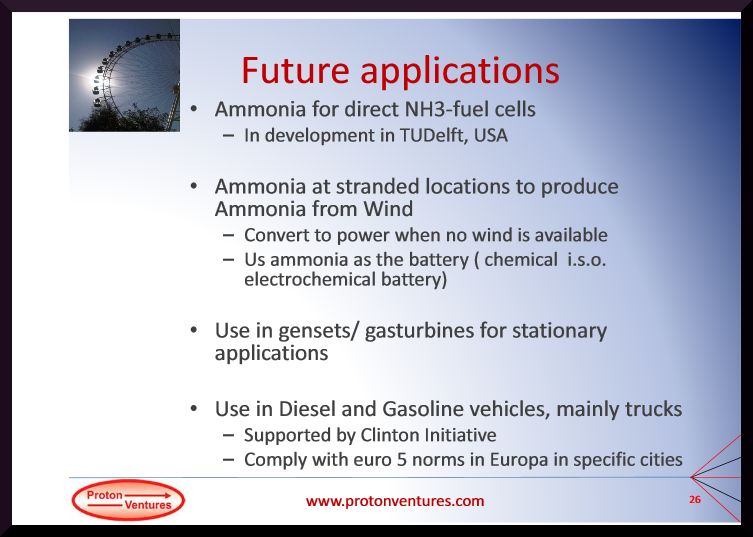
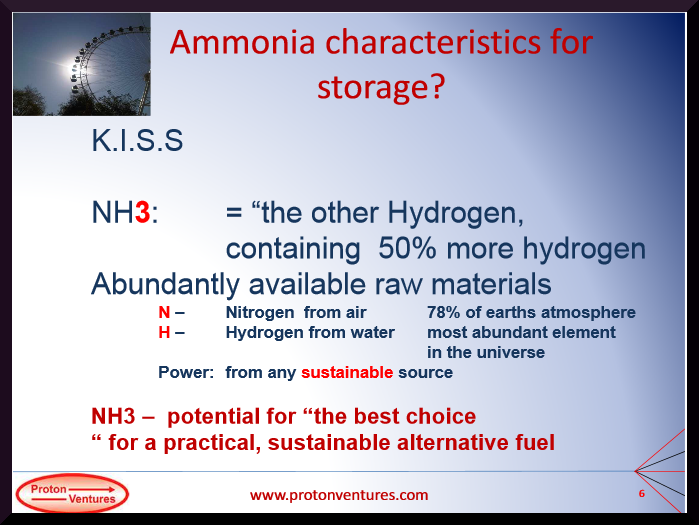
We live in a fragile skin of breathable gas in an immense vacuum. The imminent danger is of uncontrollable climate change which could make the whole planet uninhabitable, like all others in our Solar System. The only solution is to immediately change to an economy without CO2 releases.. This is perfectly possible. See other posts on NH3 fuel,.. cheaper, safer and CO2 -Free!https://thefreeonline.wordpress.com/category/ammonia-nh3-co2-free-fuel/
Sepahua, 22 de julio, 2011.- El lote 57 de Repsol YPF proyecta hacer sombra a las operaciones gasíferas de Pluspetrol en el Complejo Camisea. Uniendo mediante gasoductos los lotes 57,56 y 88 Repsol y Pluspetrol ampliarán en los próximos meses la frontera gasífera en las entrañas de la selva que separa los ríos Tambo y Urubamba.
A la perforación iniciada de varios pozos exploratorios, se le añaden la apertura de miles de kilómetros de líneas sísmicas y el tendido de varios gasoductos para conectar todos los pozos a la planta separadora de gas en Camisea.
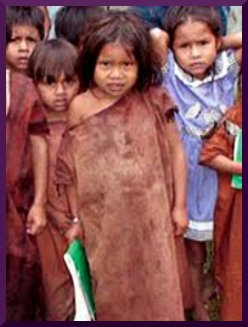
ashanika and machiguenga girls
El primer pozo exploratorio de Repsol en el lote 57, el Kinteroni I, ha dado resultados positivos, como se presencia en las llamas gigantes de una foto colgada en la radio de la Comunidad Nativa Nuevo Mundo. En esta comunidad machiguenga, Repsol ha construido una mini ciudad como campo base y ha tendido una trama de relaciones clientelares con sus habitantes.
Cuadricular la selva
Como señalan sus Estudio de Impacto Ambiental, Repsol pretende concluir en 2011 su ambicioso proyecto de exploración sísmica 3D en el interior de las Reservas Comunales Ashanika y Machiguenga, así como en la Zona de Amortiguamiento del Parque Nacional Otuquis.(1)
En total, nada menos que 2.360 Km2 de bosque amazónico será afectado por el tamizado de una matriz de líneas sísmicas que se cruzan perpendicularmente cada 240 metros. Una cuadrícula atroz para los ecosistemas. Pretender que la fauna no será impactada por este barrido sistemático de la floresta, con el denso tendido de caminos y zonas de descarga para helicópteros, pecaría de interés o ingenuidad.
Si el resultado de esta lustrosa campaña fuera negativa, Repsol informa – a modo de amenaza en un afiche colgado en la oficina comunal de Nuevo Mundo- que ejecutará una nueva campaña de prospección sísimica 2D, con la apertura de 892 kilómetros lineales de sendas sísmicas.
23 pozos en las cabeceras
A parte de la plataforma Kinteroni I, con 2 hectáreas de selva sepultadas bajo un manto de cemento y 3 bocas de pozo a punto de escupir gas, en 2011 Repsol pretende construir este año 2 pozos más: el Mashira GX y el Mapi LX y hasta 2022 serían un total de 23. Entre ellos, 10 pozos en la comunidad kakinte de Tsojora, 3 en Poyeni, uno en Nuevo Mundo y otro en un lugar inhóspito de la Reserva Comunal Machiguenga.
Ya es muy conocida la extraña obstinación que describen los pozos hidrocarburíferos para contaminar los recursos hídricos en ecosistemas tropicales. A modo de ejemplo, sólo empezar, Repsol ya tuvo un accidente “inesperado” por unas lluvias “inusuales”, que provocaron el derrumbe de lodos sobre una motobomba del pozo Kinteroni.
Bernabé Gómez, monitor machiguenga del Equipo de Monitoreo Medioambiental Comunitario de Nuevo Mundo, informó al equipo de Alerta Amazónica que este derrumbe, producido el 15 de diciembre de 2010, provocó un vertido de diesel a las aguas del arroyo Huitricaya.
A estas alturas del partido, cualquier nueva perforación en la selva genera gran desconfianza sobre cuánto tiempo las aguas de los arroyos de la zona seguirán siendo limpias y cristalinas. Porque aparte de los ríos tributarios Tambo y Urubamba, una docena de cursos fluviales menores serán afectados por la perforación de los 23 pozos.
Por los vertidos, o por el bombeo de agua necesario para la perforación de pozos a 2 kilómetros de profundidad, entre los ríos amenzados por la perforación de pozos en sus cabeceras, destacamos el río Cheni, Erite, Poyeni, Mapayo, Sepa, Sensa, Huitricaya y Mapaya.
Gasoductos que acortan el camino hacia el mar
Para facilitar la exportación del gas perforado en las comunidades kakintes y machiguengas, se construirá desde Kinteroni I, un tubo de 16 pulgadas y 14,5 km hasta la estación de Repsol en la Comunidad Nativa de Nuevo Mundo. Ahí se le sumará el flujo proveniente de Mipaya (pozo de Pluspetrol en el lote 56) para conectarlo a otro pozo, el Pagoneri A, con un ducto de 42 kilómetros.
Desde allá, se conducirá el gas a la planta de Malvinas (Camisea) por tres gasoductos, dos de Pluspetrol ya existentes, y un nuevo ducto de 22 kilómetros que construirá Repsol en los próximos meses. Para todo este proyecto de desarrollo Repsol ha proyectado 202 millones de dólares.(2)
Vulnerabilidad para el pueblo Kakinte
El pueblo Kakinte, de la familia etnolingüística Arawak, está conformado por aproximadamente mil personas, ubicadas en 6 comunidades alejadas, en el distrito de Río Tambo: Taini, Tsoroja, Quitepampani, San Luis de Corinto, Maseka y Mangariari.
pollution destroys source of life
El aislamiento geográfico, la falta de información oportuna e independiente, la presión territorial de otros pueblos y la falta de titulación de tres de sus comunidades han ocasionado una débil negociación con Repsol YPF, la empresa que convertirá sus territorios en un rentable negocio gasífero.
En el 2006 el pueblo kakinte solicitó una compensación por el ingreso de la empresa a sus territorios obteniendo un pago efectivo y donación de un teléfono satelital, un local comunal y algunas casas de cemento. Pero “ Lamentablemente, la compensación no ha servido para asuntos de fondo como el fortalecimiento de la identidad cultural de los kakinte, la educación bilingüe intercultural, ni para fortalecer la seguridad territorial de las comunidades, especialmente las no tituladas” informaba Servindi en 2010.(3)
La desinformación, mal información y las ofertas compensatorias a corto plazo, juegan a favor de Repsol YPF en su irreversible intervención de los territorios comunales de los pueblos ashanikas, kakintes y machiguengas. Mientras tanto, el desarrollo gasífero avanza como una infrenable apisonadora cultural.

 Enquanto você lê isso, centenas de escavadeiras agem ilegalmente na Amazônia, dando início a um dos mais avassaladores e irreversíveis crimes ambientais de nossa história, a construção da hidrelétrica de Belo Monte, que vai acabar com o Parque Nacional do Xingu. No mesmo instante, as emendas feitas no Código Florestal Brasileiro, propostas pelo deputado Aldo Rebelo (PC do B), já foram aprovadas pela Câmara e aguardam apenas a votação no Senado para permitirem aos grandes latifundiários do Agronegócio desmatarem à vontade nossas florestas, sob a desculpa da “necessidade de produção alimentícia”.








 The Free