Perú: Inambari generaría desastre ecológico

Perú: Inambari generaría desastre ecológico, indica experto

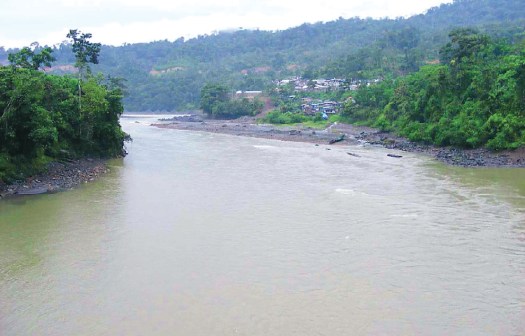
Servindi, 03 de febrero, 2010.- El ingeniero Luis Moreno Figueroa, experto en construcción de centrales hidroeléctricas, manifestó que el proyecto hidroeléctrico de Inambari afectará gravemente la diversidad ambiental.

La construcción de la represa, generará transformaciones en la temperatura, flora y fauna de la zona y la propia región.

El proyecto ha sido reiteradamente rechazado por la Federación Nativa del Río  Madre de Dios y afluentes (Fenamad) y en particular de los jefes de las comunidades de Boca Inambari.

Ellos denunciaron que la ejecución y puesta en funcionamiento de la hidroeléctrica “generará migraciones masivas forzadas de los centros poblados y comunidades indígenas aledañas al área de influencia directa del embalse”.

El megaproyecto producirá un impacto económico negativo en las actividades agrícolas e interrumpirá un tramo aproximado de 90 kilómetros de la Carretera Interoceánica, que unirá la costa de Perú en el Pacífico y la de Brasil en el Atlántico.

La organización indígena señalan la hidroeléctrica de Inambari provocará la deforestación y afectará directamente a las áreas dentro de la zona de amortiguamiento del Parque Nacional Bahuaja Sonene.

La construcción del embalse, de unas 41.000 hectáreas, demanda asimismo la tala una gran cantidad de bosques tropicales en las inmediaciones del Bahuaja Sonene, mientras que el dique de la hidroeléctrica implicará la modificación de su cauce

via ESCENA MUNDIAL,
Fukushima fallout nears Chernobyl levels –

Radioactive Japanese reactors

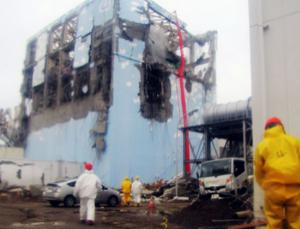
Japan’s damaged nuclear plant in Fukushima has been emitting radioactive iodine and caesium at levels approaching those seen in the aftermath of the Chernobyl accident in 1986. Austrian researchers have used a worldwide network of radiation detectors – designed to spot clandestine nuclear bomb tests – to show that iodine-131 is being released at daily levels 73 per cent of those seen after the 1986 disaster. The daily amount of caesium-137 released from Fukushima Daiichi is around 60 per cent of the amount released from Chernobyl………..

….Iodine is rapidly absorbed by the thyroid, and leaves only as it decays radioactively, with a half-life of eight days. Caesium is absorbed by muscles, where its half-life of 30 years means that it remains until it is excreted by the body. It takes between 10 and 100 days to excrete half of what has been consumed.

While in the body the isotopes’ radioactive emissions can do significant damage, mainly to DNA. Children who ingest iodine-131 can develop thyroid cancer 10 or more years later; adults seem relatively resistant. A study published in the US last week found that iodine-131 from Chernobyl is still causing new cases of thyroid cancer to appear at an undiminished rate in the most heavily affected regions of Ukraine, Belarus and Russia.

Caesium-137 lingers in the environment because of its long half-life. Researchers are divided over how much damage environmental exposure to low doses has done since Chernobyl. Some researchers think it could still cause thousands of new cases of cancer across Europe.

via Fukushima radioactive fallout nears Chernobyl levels – health – 24 March 2011 – New Scientist.

Jailed for trying to disarm NUKES

State nuclear terrorists

Sentencing: 6-15 months confinement, 1yr supervised release

Posted on March 28, 2011 by Disarm Now Plowshares

The Disarm Now Plowshares activists who entered U.S. Naval Base Kitsap-Bangor to symbolically disarm the nuclear weapons stored there were sentenced today at the Tacoma Federal Courthouse, receiving sentences of 6 months to 15 months confinement, plus one year supervised release. About two hundred fifty people gathered at the courthouse to support the Plowshares activists with their presence, song, and prayer. After the trial, they sang peace songs and processed out as a group, celebrating the beacon of hope the five activists have been for their community. Read more »

via Disarmnowplowshares’s Blog.

ECUADOR: Texaco’s shaky Rainforest –

Rosa Tanguila cleaning up oil residue near her rainforest community. / Credit:Gonzalo Ortiz/IPS

Trees on Shaky Ground in Texaco’s Rainforest

By Gonzalo Ortiz*

NUEVA LOJA, Ecuador, Mar 29, 2011 (Tierramérica) – When the trunks of the trees move with every step you take, you know you are in a swamp. This is what happens when you walk over the seemingly firm and vegetation-covered ground over what was once a pit used to dump oil sludge in the Ecuadorian Amazon rainforest.

The extent and impact of oil contamination on the environment and human health in northeastern Ecuador are much worse than anyone could imagine, as Tierramérica discovered during an extensive tour of the area.

via ECUADOR: Trees on Shaky Ground in Texaco’s Rainforest – IPS ipsnews.net.

Car that runs on nothing but water…FRAUD??

Car that runs on nothing but water unveiled in Japan. No gasoline, no battery recharging and no emissions.

NOTE..Later it came out this is a typical FAlSE STORY USED BY A COMPANY TO PUBLICIZE THEIR KIT WHICH DOES SAVE PETROL

LUEGO SALIÓ QUE ESTA REPOTAGE ES FALSO.. SOLO PUBLICIDAD PARA UN KIT DE USAR MENOS GASOLINA


Posted by PC Latest news, Special Report, World news Saturday, March 26th, 2011

Japanese company Genepax presents its eco-friendly car that runs on nothing but water. The car has an energy generator that extracts hydrogen from water that is poured into the car’s tank. The generator then releases electrons that produce electric power to run the car. The electric powered car can run on any type of water (you can even use tea and soda…etc). The car can run for an hour at about 50 miles per hour on just a liter of water; about 2 cans of soda worth. Genepax, the company that invented the technology, aims to collaborate with Japanese manufacturers to mass produce it.

Unlike other electric cars, the Genepax car does not require that batteries be recharged and has no emission.

via Car that runs on nothing but water unveiled in Japan. No gasoline, no battery recharging and no emissions. | PRESS Core – Evidentiary News, World News, Special Reports, Technology, Health, Videos, Polls.

Whaling Ailing

revenge at last

JAPAN
Whaling Policy in Choppy Waters
By Suvendrini Kakuchi

TOKYO, Feb 27, 2011 (IPS) – After years of stiff resistance, the Japanese government has announced a temporary halt to its controversial research whaling programme in the Antarctic Ocean, a decision that will finally stir the debate to promote sustainable fishing, say conservationists here.

“We welcome the decision to halt whaling this season as a step towards preserving whales which are an endangered species. The message is that whales have to be protected which is all the more valuable since it comes from a nation that is a leader in the consumption of seafood stocks,” Junichi Sato, expert on whaling at Greenpeace Japan told IPS.

Since 1982, the world has followed global moratorium against commercial whaling by the International Whaling Commission (IWC) but only Japan was allocated an annual quota for scientific whaling that is aimed at determining available stocks.

Greenpeace International spearheads a global campaign against Japanese whaling that has led to bitter clashes and lawsuits against each other.

Several fisheries experts express support for the unprecedented move by the Japanese government, pointing out it is a vital landmark in dealing with the growing consumption of fish in the world that has lead to alarming depletion of stocks.


10 years jail for climate protest

CLIMATE CHANGE
“Act of Conscience” Could Earn 10-Year Prison Term
By Cléo Fatoorehchi


NEW YORK, Mar 24, 2011 (IPS) – A college student who derailed a federal auction of oil and gas leases to protest drilling near national parks in the western U.S. state of Utah, as well as the larger issue of reliance on fossil fuels, has reignited debate over the legitimacy of civil disobedience in addressing profound global problems like climate change.

In December 2008, the twilight of the George W. Bush administration, Tim DeChristopher attended the auction, held by the Bureau of Land Management, and bid 1.8 million dollars on parcels he never intended to actually buy. BLM agents caught on to the ruse fairly quickly, and DeChristopher was detained and then charged with making a false statement to the government and violating the Federal Onshore Oil and Gas Leasing Reform………….