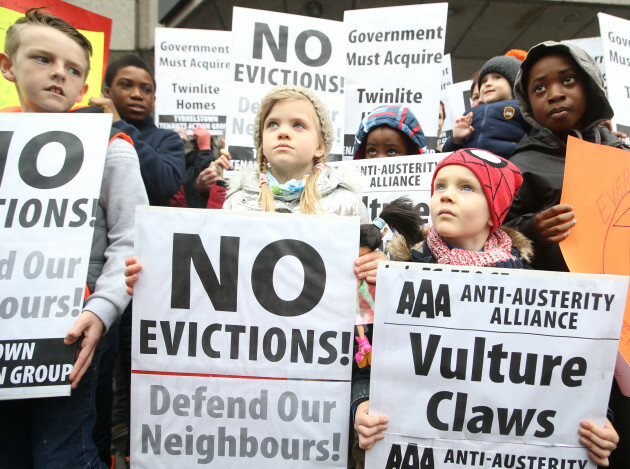
#France on the brink: “Either we topple the system or it will crush us!” Translated statement from French radicals
via Enough is Enough! translation Winter Oak by Lundi matin,

via Enough is Enough! translation Winter Oak by Lundi matin,


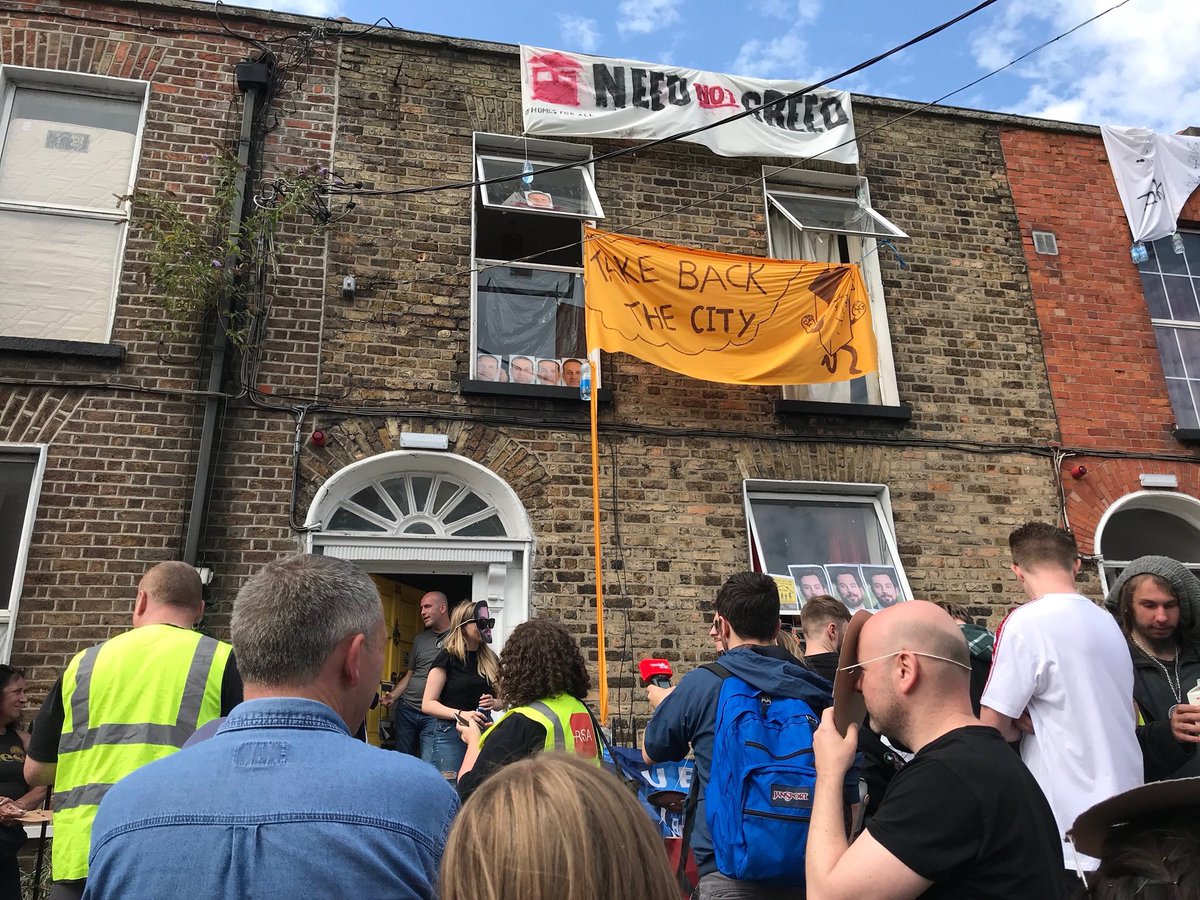 Crisis de la vivienda en 2018: la gente de Dublín dice “¡Recupera la ciudad” y ocupa dos casas como parte activa de esa idea! Sucediendo ahora mismo!
@D_C_H_A Southwark Notes
Dado que las firmas de capital privado son una de las mayores fuentes de demanda de propriedades en España, así como los principales compradores de activos inmobiliarios deteriorados de los bancos españoles y el banco malo de España, Sareb, es una amenaza bastante grande, y una del gobierno sin duda está tomando muy en serio.
Blackstone tiene más de 100,000 activos inmobiliarios en España que son controlados a través de docenas de compañías. Esos activos incluyen una enorme cartera de activos inmobiliarios deteriorados, incluidas las hipotecas en mora y los activos de propiedad inmobiliaria (REO).

La compañía no es solo el mayor administrador de propriedades privados en España; También es el mayor propietario de hoteles, luego de adquirir el fideicomiso de inversión en bienes inmobilarios(REIT) más grande del país, Hispania, por € 1,9 mil millones, a principios de este año.
Tras una serie de operaciones más pequeñas, la adquisición de Hispania consolidó la posición de Blackstone como el líder en uno de los mercados turísticos más grandes del mundo, con un stock total de 17,000 habitaciones, muy por delante de Meliá (casi 11,000), H10 (más de 10,000) y Hoteles Globales (algo más de 9.000).
Madrid del “cambio”: Una mujer se suicida arrojándose por el balcón cuando  iba a ser desahuciada Insurgente :: ¿Por qué se les llena la boca con la palabra cambio a los farsantes de Ahora Madrid y Podemos cuando en esencia no ha cambiado nada?
En el último año y medio, Blackstone ha desempeñado un papel destacado en algunas de las operaciones inmobiliarias más grandes de España. En 2017, pagó 5,1 mil millones de euros por los préstamos en mora que Banco Santander heredó de su adquisición de Banco Popular.
En los últimos meses, se han desembolsado otros 1.700 millones de euros para comprar las participaciones de los bancos españoles en TESTA, otro REIT gigante con una cartera de más de 10.000 propiedades de alquiler.
Blackstone también es propietaria de 1,800 unidades de vivienda social, que adquirió del Ayuntamiento de Madrid en un trato poco fiable negociado por el hijo del ex primer ministro español José María Aznar y la ex alcaldesa de Madrid Ana Botella. 
Blackstone pagó 202 millones de euros por los apartamentos en 2013; ahora se estima que tienen un valor de € 660 millones, ¡un 227% de rendimiento en solo cinco años!
Desde la compra de las propiedades, Blackstone ha incrementado las rentas de los apartamentos en un 49%. Los que no pueden pagar han sido desalojados.
La transformación de los principales grupos de capital privado como Blackstone en propietarios globales con más de tres billones de dólares en activos inmobiliarios, casi el doble de lo que tenían hace cinco años, se ha producido por varias razones.
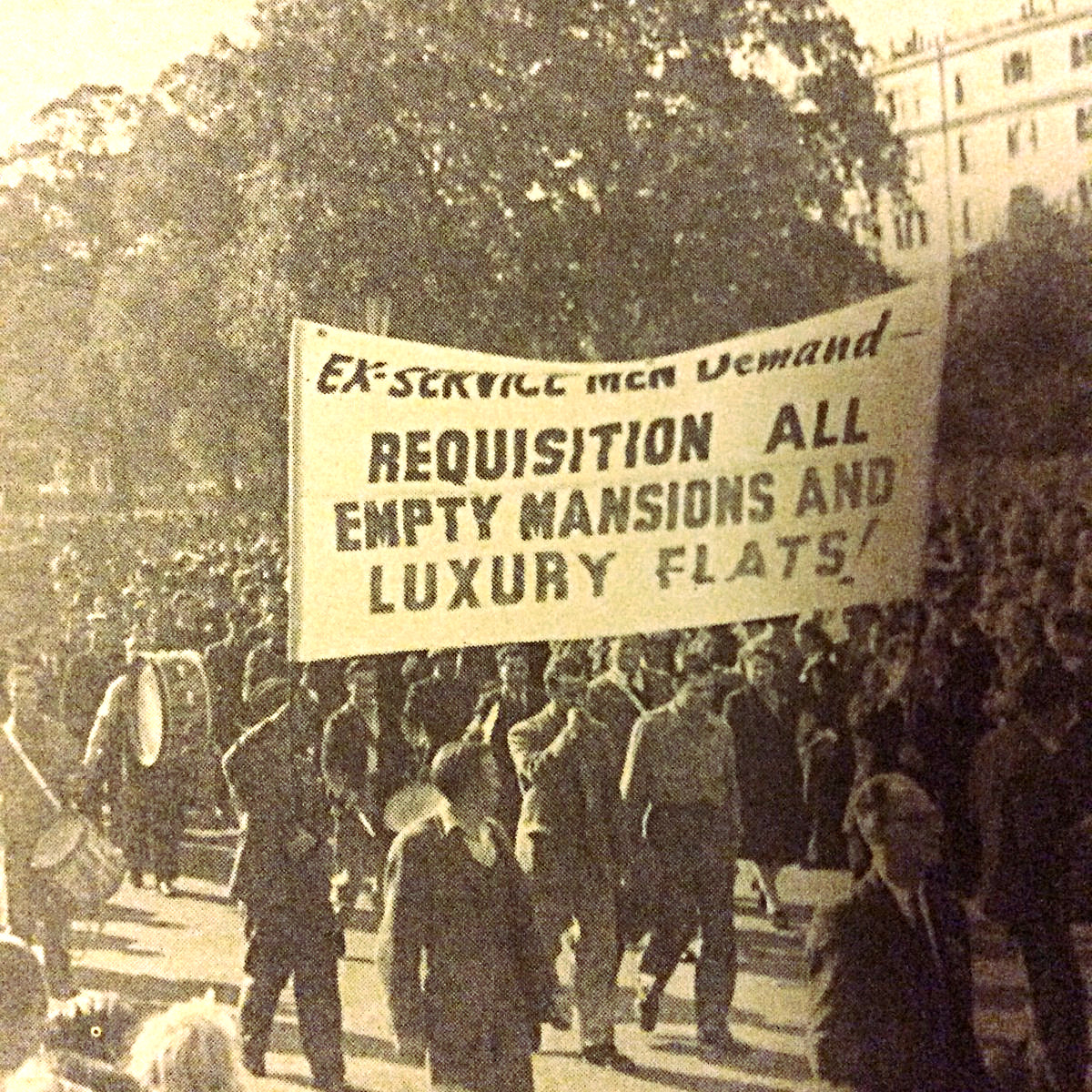 Crisis de la vivienda de 1946: miles de personas marchan en Londres y ocupan bloques de lujo, forzando el Gobierno a construir casas sociales baratos. Crisis de la vivienda 2018 – ¡La misma lucha sigue siendo bueno! 196 Retweets 239 Likes
Primero, después de la crisis financiera, fueron uno de los pocos grandes participantes en el mercado con suficientes fondos disponibles para invertir en casas embargadas y planes de propiedad fallidos, de los cuales había un exceso masivo en todo el mundo.
Los bancos centrales, los reguladores financieros y los gobiernos prestaron una gran ayuda al reducir el costo de los préstamos, especialmente para los fondos bien conectados de Wall Street, a profundidades hasta entonces inimaginables, así como al aprobar regulaciones que facilitaron la emisión de fondos respaldados por títulos basado en alquileres
Dado que las alquileres medias en España aumentaron en un 25% desde 2014, y en más del 50% en Barcelona y las Islas Baleares, esas inversiones han dado buenos resultados.
 Como advirtió en mayo la Fundación Española de Cajas de Ahorros (FUNCAS), los fondos de capital privado con grandes inversiones han empezado a preocuparse de que muchas familias españolas, que se ganan la vida con trabajos mal pagados, sin seguridad, sean incapaces de pagar las altas rentas de hoy.
Muchos de los que no pueden pagar ya han sido desalojados de los apartamentos que son propiedad del fondo.

El gobierno pretende (o al menos antes tenía la intención de) ayudar a estas personas al aumentar la duración mínima de los contratos de alquiler. Pero hacer eso chocaría de frente con los intereses del mayor propietario de Wall Street.
Como tal, las posibilidades que el gobierno de España, que ya ha descartado una serie de medidas populares, en realidad cumple su promesa, son infinitamente más pequeñas hoy que antes de la reunión del desayuno de la semana pasada.
original en inglés by Don Quijones
 A lot of money is at stake.
By Don Quijones, Spain, UK, & Mexico, editor at WOLF STREET.
Wall Street mega-landlord Blackstone is once again making its presence felt in Spain, which represents about one-fifth of its global property empire. During the Q&A session of a recent breakfast meeting organized by the American Chamber of Commerce, the senior advisor of the group’s Spanish subsidiary, Claudio Boada, confronted Spain’s Minister of Economy and Business, Nadia Calviño, on the government’s plans to reform Spain’s renting laws in an attempt to slow down the pace of rising rents.
Of particular concern to the private equity colossus is the government’s stated goal of extending the minimum duration of rental contracts from three to five years for private individuals and from three to seven years for businesses, in the hope of tempering the rate at which rents are rising in the country.
But it will also hamper the ability of private-equity landlords like Blackstone to turf out the existing tenants of newly acquired properties as quickly as possible in order to jack up rental prices for new ones.
“We think that the measures being discussed could end up increasing the price of rents price and reducing investment,” said Boada. Translation: if the government proceeds with its misguided plan to make life a little easier for the legions of struggling tenants, private equity landlords like Blackstone might be tempted to reduce its investment in Spanish real estate.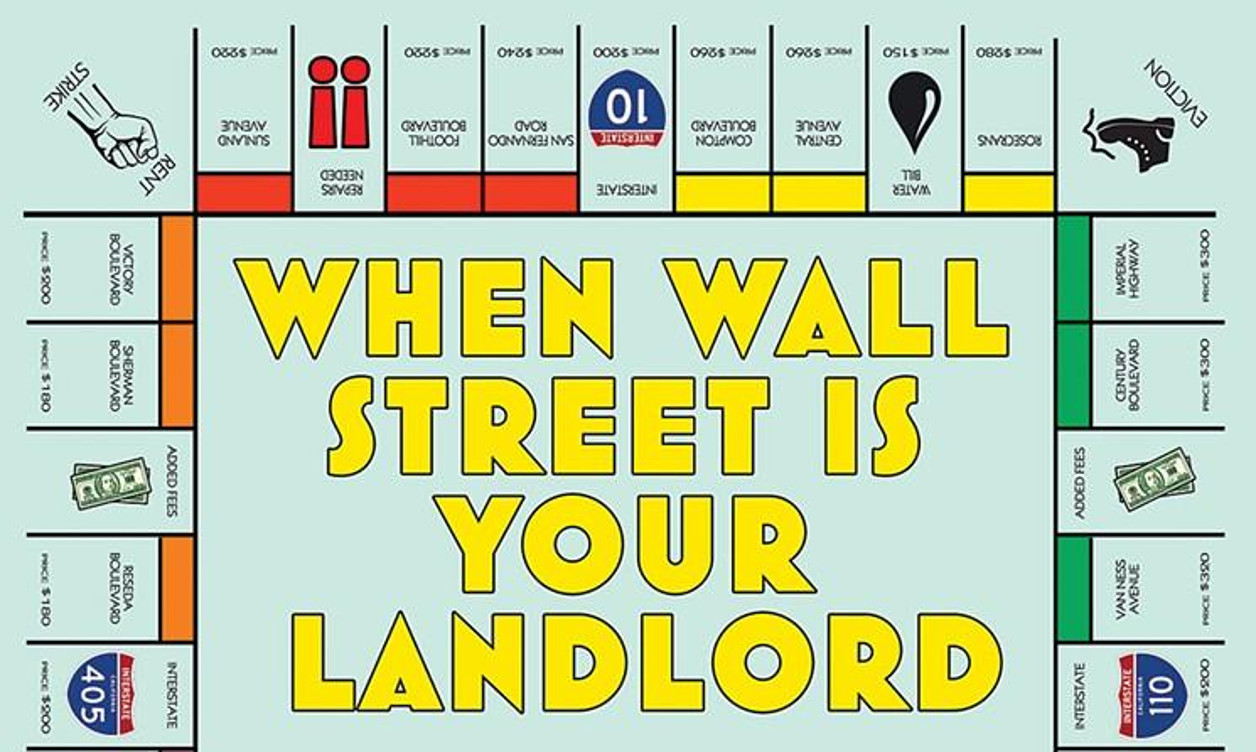
Given that private equity firms are one of the biggest sources of demand for real estate in Spain as well as the main buyers of impaired real estate assets from Spanish banks and Spain’s bad bank, Sareb, it’s a pretty big threat — and one the government will no doubt take very seriously.
Blackstone alone has over 100,000 real estate assets in Spain that are controlled via dozens of companies. Those assets include a huge portfolio of impaired real estate assets, including defaulted mortgages and real estate-owned assets (REOs).
The company is not only the biggest private real-estate manager in Spain; it is also the biggest hotel owner, after acquiring the country’s largest real estate investment trust (REIT), Hispania, for €1.9 billion, earlier this year.
Following a string of smaller operations, the acquisition of Hispania cemented Blackstone’s position as top dog in one of the world’s biggest tourist markets, with a total stock of 17,000 beds, far ahead of Meliá (almost 11,000), H10 (more than 10,000) and Hoteles Globales (just over 9,000).

In the last few months it has splashed out a further €1.7 billion to purchase Spanish banks’ holdings in TESTA, another giant REIT with a portfolio of more than 10,000 rental properties.
 Blackstone paid €202 million for the apartments in 2013; they are now estimated to be worth €660 million — a 227% return in just five year! Since its purchase of the properties, Blackstone has hiked rents on the flats by 49%. Those who can’t pay have been evicted.The transformation of top private equity groups like Blackstone into global landlords with over three trillion dollars of real estate assets — almost double what they had five years ago — has occurred for a number of reasons.First, after the financial crisis they were one of the few large market participants with enough funds on hand to invest in foreclosed homes and failed property schemes, of which there was a massive glut all over the world.
 Housing Crisis 1946 – Thousands march in London in support of squatted empty blocks in Bloomsbury, forcing Governmant to build cheap social housing. Housing Crisis 2018 – The same struggle is still good! 196 Retweets 239 Likes
Central banks, financial regulators, and governments lent a big helping hand by driving the cost of borrowing, especially for well-connected Wall Street funds, to heretofore unimaginable depths, as well as by passing regulations that made it easier for the funds to issue rent-backed securities.
With average rents in Spain soaring by 25% since 2014, and by over 50% in Barcelona and the Balearic Islands, those investments have paid off handsomely.
As the Spanish Savings Banks Foundation (FUNCAS) warned in May, heavily invested private equity funds have begun to fret that many Spanish families, scratching a living on poorly paid, zero-security jobs, are incapable of paying today’s high rents.
Many of those that can’t pay have already been evicted from the fund-owned apartments.
It is these people the government intends (or at least intended) to help by increasing the minimum duration of rental contracts. But doing that would clash head-on with the interests of Wall Street’s largest landlord.
As such, the chances of Spain’s government, which has already backslid on a number of popular measures, actually carrying through on its pledge are infinitely smaller today than they were before last week’s breakfast meeting.
“[…] Cuando llegaron a Patission y se encontraron en las afueras de la histórica puerta de la Politécnica, la que había sido atacada por los tanques en 1973, cortaron la avenida sin preguntarnos qué hacer y, a continuación, corearon el típico eslogan “Batsi, gourounya, dolofoni!” – “¡maderos, cerdos, asesinos!”. Al presenciar esta escena, me sentí extasiado. Comprendí en este momento que el avión de la insurrección había despegado. Era más grande que nosotros. No digo que nos hubiera superado, aunque muchos de sus participantes sí lo creen así. Quizás les había superado a ellos porque pensaban que jamás iba a pasar algo semejante. Lo que la insurrección consiguió es que se superaran las ideas pesimistas que pensaban que algo así jamás podía pasar” – Maderos, cerdos, asesinos. Crónica del Diciembre Griego (Editorial Klinamen, 2011)
Este mes se cumple el décimo aniversario de la Revuelta en Grecia de 2008, también conocida como el Diciembre Griego, un masivo conflicto social iniciado abiertamente el sábado 6 de diciembre de 2008 a raíz de la muerte, por el disparo de un policía, de un adolescente de 15 años llamado Alexandros (Alexis) Grigorópulos en las calles de Exárchia, un céntrico y degradado barrio de Atenas con una fortísima presencia de anarquistas. Continue reading “Diez años después de la Revuelta inspiradora en Grecia”
By Ola Synowiec November 2018.. “Which form should I use when I talk to you: feminine or masculine?” I asked Lukas Avendaño, who I had seen in trousers earlier in the day but now was wearing a traditional black skirt with colourful embroidered flowers called an enagua. We were speaking in Spanish, with its gendered nouns and pronouns. “I prefer you’d just call me sweetheart,” Avendaño giggled.
There’s men and women and there’s something in between, and that’s who I am
 Here, in the Istmo de Tehuantepec region in Mexico’s southern state of Oaxaca, there are three genders: female, male and muxes. This third classification has been acknowledged and celebrated since pre-Hispanic times, and it’s hard to imagine life without muxes here. But in this region where most people speak the indigenous Zapotec language, my question doesn’t make much sense. Continue reading “Celebrating 3rd Gender in Mexico .. el Tercer Género de Oaxaca”
from .. Acorninfo
available free online. Capitalism Is Killing the Earth: An Anarchist Guide to Ecology.
Is the human species finally waking up to the fact that industrial capitalism is murdering the planet and realising that we all have to take action to stop it?
The signs are currently looking good in England, where the Extinction Rebellion (XR) movement has appeared out of nowhere and mobilised thousands of people to block streets and engage in civil disobedience.
The first big day of action was on Saturday November 17, when some 6,000 people took to the streets of London.
They blocked five London bridges and planted trees on Parliament Square.  More than 80 people were arrested.
Said Gail Bradbrook of XR: “This is an act of mass civil disobedience. This is the start of an international rebellion protesting the lack of action on the ecological crisis”.
There were swarming road blocks across London in the run-up to Rebellion Day 2, announced for Saturday November 24, 10am to 5pm at Parliament Square.
The Rebellion has also started to take off elsewhere, such as Sweden, Denmark, the Netherlands and Ireland. Continue reading “Rebelling against Industrial Capitalism. The Acorn”
Jeremy Hammond is a member of the hacktivist network Anonymous and a gifted computer programer whose case has attracted the attention of activists, civil libertarians and those concerned about the rights of whistleblowers.

From Free Jeremy dot net
After a week of anxious waiting and worrying, we now have and  can share details about Jeremy’s current situation.
Jeremy is currently in solitary confinement and is at risk of being transferred to a higher security prison because of an incident that occurred sometime last week.
The incident occurred either Monday, November 19th, or Tuesday, November 20th. Jeremy was exiting his unit and either pushed or bumped a door. The door he was exiting through did not have a window or any way to see through to the other side.
Free Jeremy Hammond – A support site for jailed activist Jeremy …
There was an officer on the other side of the door, and, when the door opened, it allegedly bumped the officer. In response to being bumped with the door, the officer grabbed Jeremy, threw him up against the wall, and took him to the SHU (segregated housing unit), without placing Jeremy in handcuffs or calling for backup, as is prison protocol.
Once in SHU, he was written up for “assaulting a staff member” for the original act of bumping the officer with the door. Thankfully, Jeremy was not injured when he was thrown against the wall, but he has been in solitary for the past week while he awaits his disciplinary hearing. The hearing should be sometime this week.
This situation is extremely serious for several reasons. The first is that when he was brought to SHU, Jeremy was placed in true solitary confinement. Most times, when Jeremy is placed in SHU, his placement is two prisoners to a cell.
While time in SHU is never pleasant, true solitary confinement has been denounced by the UN Special Rapporteur on Torture Juan E. Méndez as “cruel, inhuman or degrading treatment” that may cause “severe mental pain or suffering”.
A Human Rights Watch report has described it as “emotionally, physically, and psychologically destructive.” The UN Special Rapporteur on torture also strongly recommended a complete prohibition on solitary confinement in excess of 15 days. As far as we know, Jeremy has been in solitary for seven days.
for other Anons, keep an eye on FreeAnons twitter and website
The second reason the situation is so serious is that if this infraction is upheld during his disciplinary hearing, Jeremy possibly faces a transfer to a higher security prison. Assaulting a staff member is a very severe charge, and would place Jeremy at a higher “offender level”.
 This is extremely worrying, as it means he would be tranferred to a medium security prison, where he would enjoy less freedoms and, even more disheartening, would be unable to finish his college classes or earn the degree he has worked so hard to complete.
Send Cards To Jeremy From Prison Books
A transfer with a record of “assaulting a staff member” at his previous prison would also make Jeremy a target for prison staff at any new prison he was sent to. Jeremy is also very close to family at his current prison and is able to enjoy frequent visits from friends. Being taken away from that would be a devastating blow to both Jeremy and the people close to him.

However, there is hope. If the disciplinary infraction is upheld during his hearing, Jeremy can request to stay at FCI Milan under something called “management variable”. This would mean he has the “points” that would normally place him in a medium security prison, but he would nevertheless be housed at a low security prison.
This would, ironically enough, be made possible because of the college classes he has worked so hard on and is now in danger of being transferred away from. We will not know if this is an available option until we know the results of his disciplinary hearing.
These are all the details that we know as of the time of this posting. Calls are being made to Jeremy’s case manager and possibly to the warden to see what, if anything, can be done to help the situation.
Please, at this time, we are asking that members of the general public do not call the prison. The situation is extremely delicate. However, you can write to Jeremy and we encourage everyone to do that! His address is:
 Jeremy Hammond, #18729-424
FCI Milan
P.O.Box 1000
Milan, MI 48160
Thank you again for all your support. I will update this post with new details as they emerge.
Love and rage,
Grace North
UPDATE, 28 November 2018: I tried to perform a quick welfare check on Jeremy by calling the prison today and speaking with his case manager. I wanted to know if he was still in solitary, if his disciplinary hearing had taken place yet, and, if so, what the results had been. As expected, they would not release any information to me, not even about his placement within the prison, saying, “This is not public information.” Again, I want to reiterate that this was the expected result of this phone call and is not cause for alarm. The bigger purpose of this phone call, other than to hopefully gain some information on Jeremy’s welfare, was to let prison officials know that Jeremy has people on the outside that are aware of his situation, and are monitoring it as closely we can. For now, please keep writing to him. It is the best thing we can do at this time.
Jeremy Hammond is a member of the hacktivist network Anonymous and a gifted computer programer whose case has attracted the attention of activists, civil libertarians and those concerned about the rights of whistleblowers. 
He is currently spending a decade in prison for allegedly disclosing information about the private intelligence firm Strategic Forecasting, Inc. (Stratfor), revealing that they had been spying on human rights defenders at the behest of corporations and governments. WikiLeaks published these files in partnership with 29 media organisations worldwide as the Global Intelligence Files.
After being threatened with 40 years to life in prison for his brave actions and suffering numerous injustices at the hands of the legal system, Jeremy accepted a non-cooperating plea deal to one count of violating the arcane and draconian Computer Fraud and Abuse Act.
Despite lodging nearly 265 letters of support calling for leniency, Jeremy was sentenced to the maximum allowed under his plea agreement and is currently serving his ten-year sentence at a medium-security federal prison in Manchester, Kentucky.
Since his arrest in March of 2012, Jeremy has been frequently cut off from his friends and family, and punished with extensive stays in solitary confinement – treatment normally reserved for the most egregious offences. Jeremy did nothing for personal gain and everything in hope of making the world a better place. Scheduled for release 22 February 2020, Jeremy needs our support now more than ever.
from … anarchistnews.org
English translation . llegiu en català  #ManiOkupa .Squat Demo December 1 Demonstration for Occupation
On Saturday, December 1, we take to the streets in defense of Occupation. In the face of repression and the wave of evictions we do not retreat, on the contrary, we take a step forward.
Saturday December 1 .. All on the streets! No eviction without response.
Spread the word and Act!
The occupation of abandoned sites for self-management of our  lives has been a reality for more than two decades in Barcelona.
This was our response to the need for social spaces and the lack of accessible housing in the cities. In the last year, and like other times, we are experiencing a wave of repression of our projects: ccupied Social Centers such as La Clandestina, REA, Ateneu la Pua … and homes such as Ca La Trava, Kubo, Kantonada, Montmany 3 … have been evicted.

Continue reading “#ManiOkupa December 1 .. Why We Squat .. Demo for Occupation ..Barcelona”