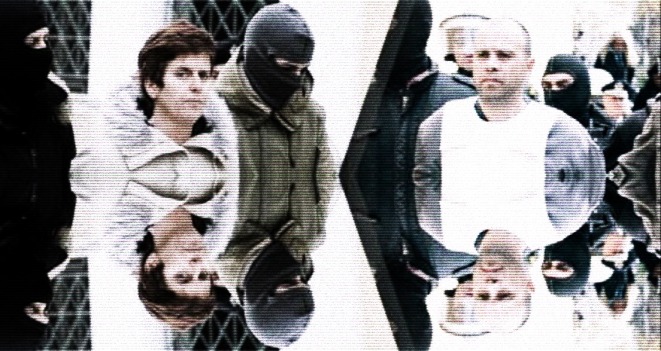
Just when comrades were preparing for their imminent deaths the Greek authorities have finally backed down on their evil campaign of victimisation and isolation.
A welcome anti-Christmas present for Pola, Nikos and their family and supporters, though they still face a while in jail… Nikos got Life + 129 years!
This Monday, December 18, after he was discharged from the hospital at Korydallos Prison, Nikos Maziotis was transferred to Unit 5 and is no longer under special detention / isolation regime. Therefore since our demands regarding our imprisonment have been met, Pola Roupa has terminated the hunger strike and will stay for a few days in the Korydallos Prison hospital to recuperate.
Our struggle does not end here. Article 11 and the fascist provisions of the new prison code in general are still ahead of us. We will not remain idle. The fight continues. The solidarity of comrades outside the walls was and is decisive. Strength to everyone.Continue reading “Victory! Nikos and Pola end Hunger Strike. Victory!”
Fuck Abuse, Kill Power: Against the Root Causes of Sexual Harassment and Assault
The past year has seen a wave of revelations about powerful people—nearly all men—perpetrating sexual violence against those beneath them. The #MeToo moment has provided a platform for countless courageous survivors.
Yet although some men have been made to face consequences for the harm they have done, we are far from being able to solve the problem of male sexual violence. Focusing on the wrongdoings of specific men tends to exceptionalize them, as if their actions took place in a vacuum.
This is consistent with the mechanisms of a criminal justice system focused on individual guilt and a reformist politics premised on the idea that the existing government and market economy would serve us perfectly if only the right people were in power.
But with the bad behavior of so many men coming to light, we have to consider the possibility that these are not exceptions at all—that these attacks are the inevitable, systemic result of this social order. Is there a way to treat the cause as well as the symptoms?
Trigger warning for descriptions of sexual violence.
What is African Feminism? Many feminists from around the world have contested the idea of whether modern conceptions of feminism are African or un-African. Indeed, feminism has existed in Africa since the times of Queen Nzinga of what is now Mozambique and Yaa Asantewaa of Ghana.
These women have inspired contemporary African feminists, who have contributed significantly to feminism in various ways—whether it be through art, music, writing, policy. They have been committed to bringing the voices of African women into the spaces that they work within, and they are indeed change-makers—not only on the African continent, but also throughout the African Diaspora.
As Women’s History Month comes to a close, we must take the time to celebrate the African Feminists you should know.
1. Theo Sowa – CEO of African Women’s Development Fund
Theo Sowa is Chief Executive Officer of the African Women’s Development Fund. She has previously worked as an independent advisor for a wide range of international and social development issues. Her work has covered advocacy, service delivery, evaluation, facilitation, policy, and organizational development with a range of international and intergovernmental organizations and grant-making foundations.
Professor Abena Busia is the current Chair of the Department of Women’s and Gender Studies at Rutgers University in New Jersey. She is also co-director and co-editor of the groundbreaking Women Writing Africa Project, a multi-volume anthology published by the Feminist Press at the City University of New York. As Professor Busia points out, “History is located in multiple places,” and the anthology is designed to recognize the complex cultural legacy and “cultural production” of African women. Busia has helped edit two volumes of the anthology—Women Writing Africa: West Africa and the Sahel (2005) and Women Writing Africa: Northern Africa (2009). Continue reading “18 African Feminists We Love and Celebrate”
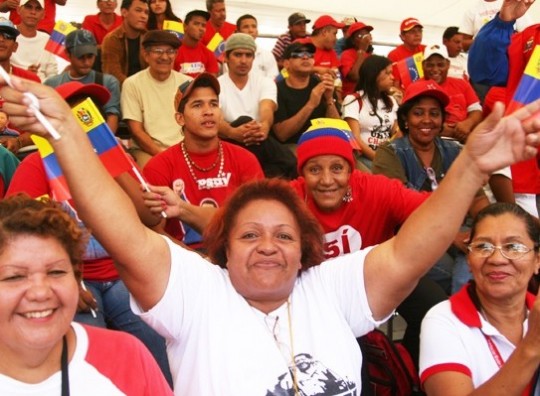
via Black Rose Federation La situación política en Venezuela continúa en conflicto y el legado del Chavismo sigue siendo controvertido y debatido en la izquierda. Reeditamos esta declaración de la Federación Anarquista Uruguaya (FAU) con sus perspectivas sobre la situación actual.Fundado en 1956, la FAU fue uno de los movimientos anarquistas más fuertes de América Latina, sobrevivió al período de la dictadura y continúa activo en la actualidad.También recomendamos otras piezas traducidas sobre Venezuela, el inglés “The ‘Madurization’ of Chavismo” una declaración de los anarquistas caribeños y un análisis de anarquistas chilenos que condujeron investigaciones políticas en Venezuela:“Political Situation in Venezuela: Crisis, Trends, and the Challenge of Class Independence” El texto original en español aparece a continuación.
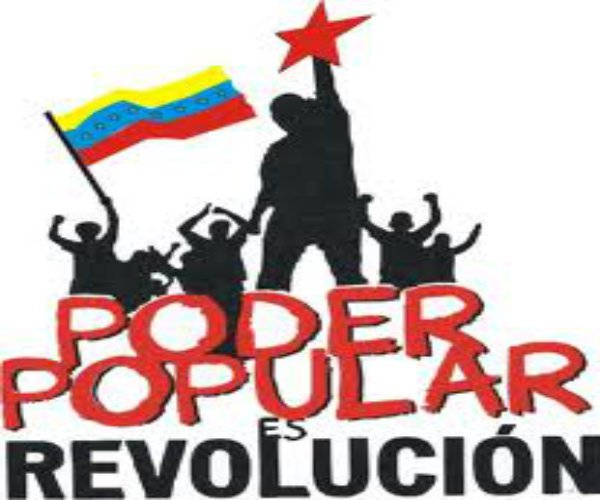
“El poder popular en Venezuela, impulsado inicialmente por el carismático Hugo Chávez, ha estado en una tensión constante … Desde arriba, los recursos se han reducido y han obstaculizado, en todas las maneras posibles, el desarrollo de las comunas y el poder popular”.
El Poder Popular en Venezuela: por Federación Anarquista Uruguaya
En 1989 se vivió en Venezuela una de las máximas revueltas sociales conocida como “El Caracazo”. Esta revuelta popular fue motivada por las medidas tomadas por el gobierno de Carlos Andrés Pérez, quien entregó la economía venezolana al Fondo Monetario Internacional e implementó una política de shock de neto corte neoliberal. Se profundizaba así la crisis económica que ya vivía el país. El saldo de esta inmensa movilización popular fue de 3 mil muertos. Continue reading “Análisis del Poder Popular en Venezuela : por la Federación Anarquista Uruguaya”
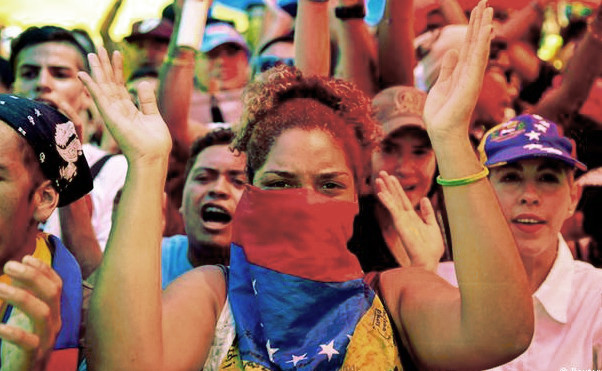
The political situation in Venezuela continues to be embattled and the legacy of Chavismo is one that remains contested and debated on the left. We republish this translated statement by the Federación Anarquista Uruguaya (FAU) with their perspectives on the current situation. Founded in 1956 the FAU was one of the strongest anarchist movements in Latin America, survived the period of dictatorship and continues to be active today. We also recommend other translated pieces on Venezuela, “The ‘Madurization’ of Chavismo” a statement by Caribbean anarchists and an analysis by Chilean anarchists who conducted political research in Venezuela, “Political Situation in Venezuela: Crisis, Trends, and the Challenge of Class Independence.” The original text in Spanish appears below.
“The Popular Power in Venezuela, initially pushed by charismatic Hugo Chavez, has been in a constant tension … From above, resources have been cut, and they have hindered, in every possible way, the development of Communes and the Popular Power.”
On Popular Power in Venezuela: A Statement by Uruguayan Anarchists
In 1989 Venezuela lived one of the biggest social uprisings known as “El Caracazo.” The motivation of this popular revolt was the measures taken by the government of Carlos Andrés Pérez, who gave over the Venezuelan economy to the International Monetary Fund and implemented a shock policy of explicit neo-liberal nature. Thus, the country’s existing economical crisis was deepened and the balance of this huge popular protest was 3,000 dead.
The appearance in the political arena of nationalist military figure Hugo Chavez, first through a failed coup, then developing a prominent election campaign and winning these elections [in 1999], brought together and channeled all of the popular enthusiasm which had been momentarily silenced with gunshots. Continue reading “Analysis of Ongoing Popular Power in Venezuela: by Uruguayan Anarchists”
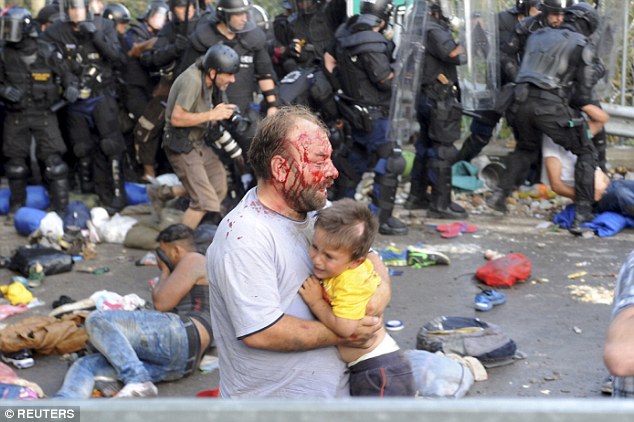
by Tom Coburg A video preview of a new Levellers single reminds us all of the perils faced by millions of refugees. And of our responsibility to assist them. It also coincides with news that Australia is reportedly attempting to permanently separate the families of refugees, held illegally.
The single, “The Shame”, includes the lyrics:
Did you sleep well in bed, safe, warm and cosy. Do you hope someone finds a solution overnight?… Ah, you’d like to help, but sadly you haven’t the time.
An example of Australian racism from Nauru
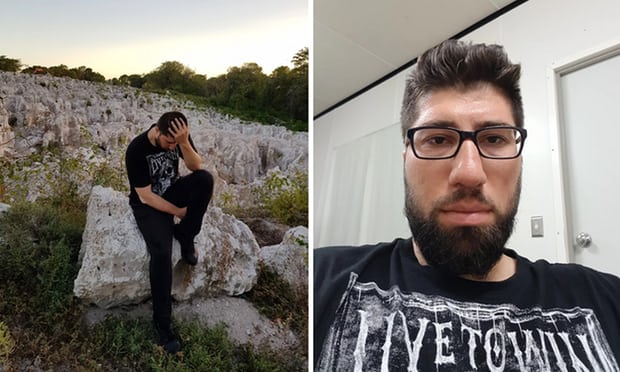
Computer engineer Arash Shirmohamadi is one of several refugees who, reportedly, are subject to this cruel practice by Australia. In 2013, after fleeing persecution in Iran because of his Baha’i faith, he was forced by Australia to go to the tiny Pacific island of Nauru. Since then he has attempted suicide, and suffers seizures and paralysis.





![A new Levellers single perfectly sums up the plight of millions of forgotten refugees [VIDEOS]](https://www.thecanary.co/wp-content/uploads/2017/12/levellers-2-770x470.jpg)