
‘I look at the factors that keep us trapped in an eternal present, committing the same mistakes over and over again‘.
from thefreeonline on 27th July 2024 by Peter Gelderloos via Anarchist Federation via Anarchist News .. ( on Telegram: t.me/thefreeonline )
8378 views From substack… Surviving Leviathan with Peter Gelderloos
Over the last two to three decades, anarchist movements the world over have achieved major gains.
When both the Left and the Right decided in the 20th century it was a priority for them to brutally eliminate any cohesive anti-State movement and practice, they slaughtered hundreds of thousands of anarchists from Mexico and the Philippines to Russia, Ukraine, Argentina, Germany, the United States, Korea, Bulgaria, Yugoslavia, Morocco, Spain, Uruguay, Cuba… torturing, deporting, or imprisoning countless others.

After that, anarchists were largely focused on survival—the survival of our ideas and history, survival through prison and exile—or on finding a balance between solidarity, critical participation, and criticism in relation to movements dominated by authoritarian parties.
But at a certain point—depending on where you look in 1991, 1996, 1999, 2008, 2011—anarchists increasingly began to take the initiative and open up new spaces of struggle or rejuvenate old ones.
Anarchism was adopted by many traditionally stateless Indigenous movements as an explicit way to name and reject how the Left had historically treated them like cannon fodder, it was the radical position against assimilation both in feminist and in queer and trans spaces, and it was chosen by many veterans and new participants in the Black liberation movement as another way forward, to analyze their experiences, their targets, and errors of the earlier generation.
Anarchism poses the questions that sit at the heart of abolition and of transformative justice, which in their best form are simultaneously goals and practices that have grown up alongside a resurgent anarchism.
And anarchism provided both the method and a good deal of the analysis that motivated land defense and other ecological movements, a rekindled global anticapitalism, new iterations of neighborhood and housing struggles, as well towards efforts community health, harm reduction, and mutual aid.
Anarchism and anarchists were essential to the anti-racist, anti-police struggles that heated up and took over entire cities, entire countries for days, weeks, or even months at a time, and these were struggles that began before the Great Recession, contrary to the historiography being plastered over our shared past by the materialists of the day, who are threatened by the fact of how little they have contributed to revolutionary movements in generations…
And yet, so many of these movements came up against hard limits and are no longer dynamic or even visible.
Maybe the limit was a level of totalitarian repression they could not counter. In other countries it was a refusal to learn, to subdue egos, to engage in solidaristic analysis of our mistakes—criticism as a practice of love and abundance—that caused movements to stagnate and be led astray by a reformist Left, or distracted by the demoralizing return of authoritarian ideologies (ideologies that could boast resurgent book sales, but not any ability to revitalize lower class struggles or contribute useful methods).
In some places it was already in 2013, 2016, or maybe not until 2020, 2021, but there came a moment where you could look around and not see anyone still holding their head up, or you could just feel that something had been lost and that those who were still carrying on were stuck in a holding pattern, telling themselves lies about what they were doing, ignoring the evidence of their defeat.

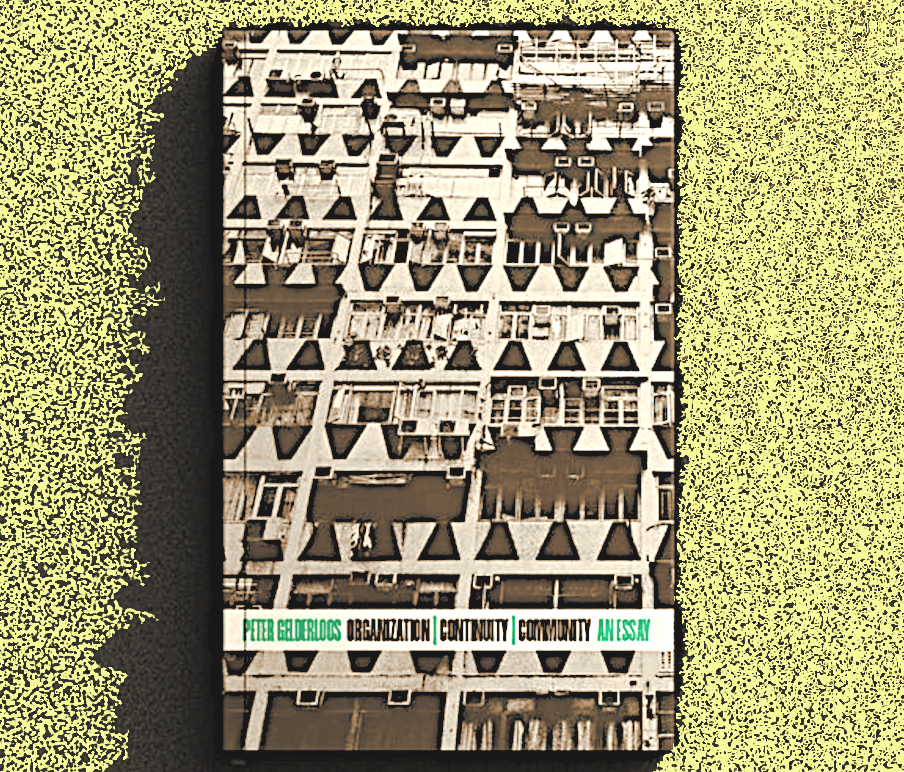
It was in that place that I wrote Organization, Continuity, Community, originally in Catalan, on the basis of my experience with what had happened in movements there (an arc that was incendiary, inspiring, and then soul-crushing), while also in dialogue with friends and comrades around the world.
We have to learn from our defeats and mistakes, and that requires examining them.
That’s why I encourage all of you to revisit the experiences of the last couple decades, to learn the stories of the sorts of things that happened and how they happened if you’re new to movements for freedom and survival.
And if this book can be a useful tool for guiding that exploration and honing an analysis — start a reading group and make the conversation collective.
In Organization, I try to analyze different organizational forms as tools, which means neutrally but not relativistically.
So many anarchists have limited themselves by fetishizing one type of organization or another, which takes the better part of strategy off the table.
Continue reading “‘Organization, Continuity, Community’- How we can WIN – Peter Gelderloos”