Sérgio Vale / Acre News Agency/ Marcos Pędłowski
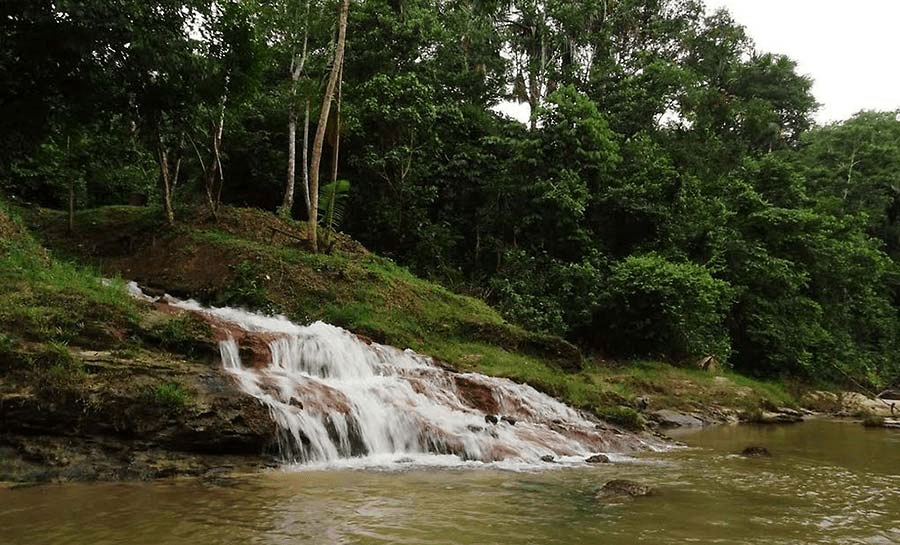
The project to build a highway in the Serra do Divisor National Park, in the Southwest of Acre, represents a threat to the biodiversity and quality of life of the indigenous population.
This is what a study by researchers from the National Institute for Research in the Amazon (INPA), the Federal University of Acre (UFAC) and the University of Richmond indicates, published in the journal “Environmental Conservation”.

Considered the place with the greatest biodiversity in the Amazon, the Serra do Divisor National Park crosses five Brazilian cities, among them Cruzeiro do Sul, which shares an international border with Peru.
To understand how the region has been explored, the researchers analyzed the dynamics of land use change through satellite images for 30 years, between 1988 and 2018.
The results reveal that the control of the Park as a Conservation Unit (UC) has been effective, as in this period the site lost only 1% of its forest cover, compared to 10% in the surroundings.
However, the road project of the South American Council of Infrastructure and Planning (COSIPLAN), of the Union of South American Nations (UNASUR), which intends to commercially connect Acre to the Peruvian city of Ucayali and to the ports of the neighboring country, would cut the National Parks in both countries.

In addition to crossing indigenous lands and drug-trafficking zones in Peru, the Pucallpa-Cruzeiro do Sul highway can increase deforestation in more inland areas of the Serra and encourage the construction of other secondary roads. According to researcher Sonaira Silva, this route will also bring other environmental damage.
“The economic benefit that the Government justifies for the construction of this highway is questionable, since there is the Southern Interoceanic Route (IOS) in eastern Acre, which has linked Rio Branco to the Pacific ports in Peru since the end of 2000. This new way can bring real estate speculation to the region, create centers for illegal hunting of animals, increase the social vulnerability of the local population and facilitate drug trafficking in the Amazon”, comments the UFAC professor.

Another point raised in the study is the reclassification of Serra do Divisor from a Conservation Unit (UC) to an Environmental Protection Area (APA), which would allow the extraction of natural resources. The bill 6024/2019 intends to collaborate with the advancement of the BR-364 stretch to reach Peru, as well as commercially explore the region.
Continue reading “Highway that will link Brazil to Peru threatens the most biodiverse area of the Amazon – Eng / Port”