ANARCOFEMINISMO Thursday, March 3, 2022 translation thefreeonline

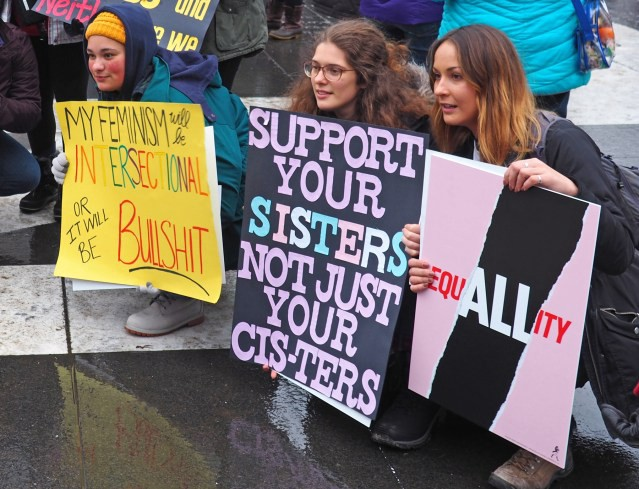
The differences between women (class, race, sexual orientation, etc.) have opened a sufficiently important gap in the unitary and homogeneous subject of «Woman». In this waterway, “the trans” has opened a schism in feminism that seems to predict a wound that is difficult to suture.
Anarchist feminism can provide a genealogy and a current position differentiated from the rest of feminisms.
What calls me, my job being to scan the past, to get into a subject as slippery and conflictive within current feminism as this is?
It does not seem like a very good idea to start a text with a question, despite this it is the only way I have come up with to express my doubts about what has led me to get entangled in the whirlwind of turns, revolts and eddies of «what is trans».
The icing on the whirlwind in which I intend to navigate, with the danger of tumbling, slipping and falling, is that at this time, and in this country (Spanish State), anarchist feminism does not exist as a social movement.
Even when there are scattered groups and collectives, anarcho-feminism does not exist as a movement constituted by networks of people, groups and collectives of affinity that communicate and coordinate to carry out actions, reflections, debates and joint projects.
Therefore, I do not speak on behalf of anyone, except my own, my vision does not have totalizing pretensions, I am aware that within the anarcho-feminist political culture there are different positions regarding the issue at hand.
The aggravating circumstance of this adventure, let’s put on the labels, is that I am a white and “cis” woman.
Despite all these inconveniences, I am encouraged by the fact that trans women like Julia Serano and Elizabeth Duval (in their books: Whipping Girl and After the trans) take a stand against the fact that only people who they have experienced it. Duval says that if only trans people could speak on the subject, that would force them to make that the only speech expected of them.
I am not going to speak in this text of the Preliminary Draft of the so-called “Trans Law” prepared by the Spanish Ministry of Equality of Irene Montero. I do not want to argue about the transformative capacity of the laws that many people trust in, I simply trust more in the cultural and social changes in the issue at hand.
And finally, what I least want is to be part of the polarized and aggressive debate that has taken root in Spanish feminism and that has caused a great schism in this movement.
I leave this scenario with joy and choose to inhabit the conflict, yes, but leaving the screens that take everything to the extreme by way of offenses and insults and putting the body with the confidence to find ways, in the widest scope of “the libertarian”, that make possible a debate in which anyone can participate, not just minorities and not just people who are experts on the subject.
About “the trans”: identities
Choosing identities to start thinking about “what is trans” has seemed obligatory to me since there is a duty, more or less peremptory, to identify ourselves with our birth sex, to which the appropriate gender corresponds.
That correspondence is the “normal”, what does not fit into that framework that translates into a rigid binarism is pathologized, punished and excluded.
Before entering the subject, I think it is necessary to clarify that I use the term “trans” in this text, aware of the distinction that has been made between “transsexuals” and “transgender” as a distinction between “true and false trans people” (those who have surgery and who don’t).
For the last few years, as Julia Serano points out, “transgender” has been used as an umbrella term to describe people who challenge social expectations and assumptions about masculinity and femininity.
This includes trans, intersex, and non-binary people, as well as those whose gender expression differs from their anatomical or perceived sex. Since the 1990s, the prefix “trans” has been used, especially in social movements.

TERF Wars: Why Transphobia Has no Place in Feminism.
This definition already places us in the great diversity of “what is trans” since, as Elizabeth Duval points out, the term encompasses, in a kind of impossible mission, blocks as different from each other and with priorities as differentiated as trans women, trans men and non-binary people.
All of this without going into the internal differences of each of these categories if one attends to class, racial, generational and other factors. It should also not be forgotten that most of the demonstrations about “what is trans” have not been in their hands but in those of transfeminist groups, heirs of queer theory.
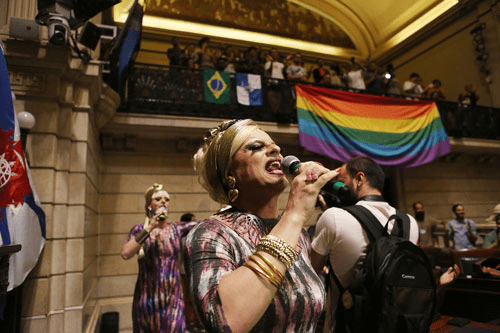
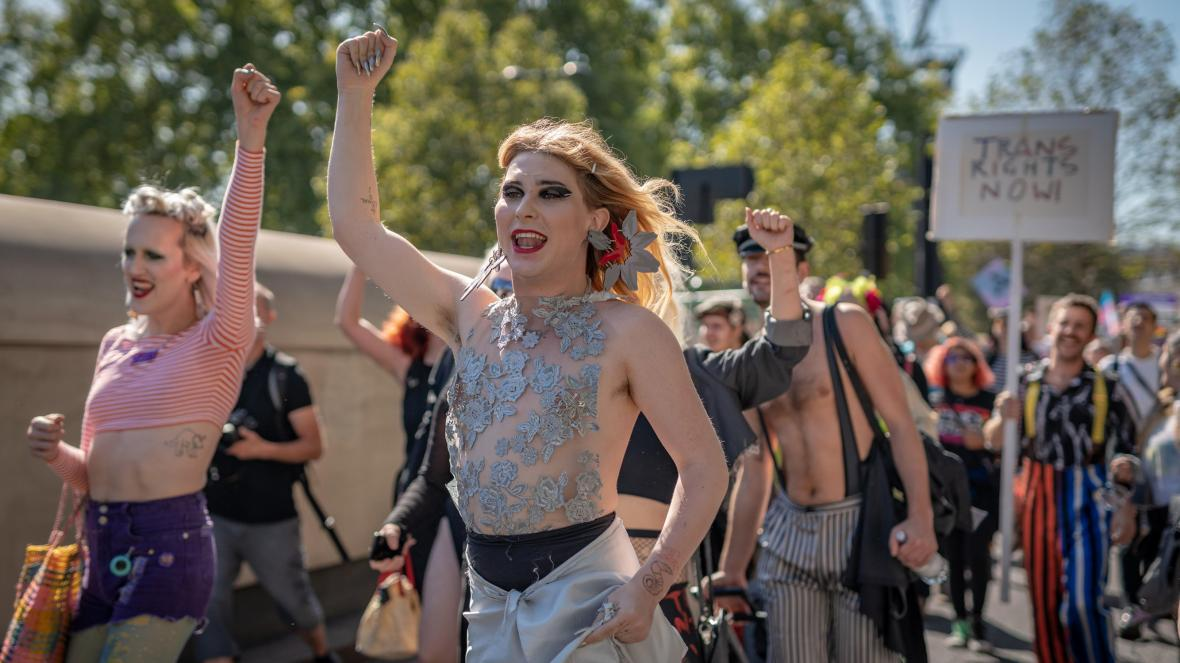
Sara and Nina, two Brazilian drag queens, perform during a protest by the LGBT community at the Rio de Janeiro City Hall. Mario Tama/Getty Images.
Another umbrella term is queer, which aims to encompass the set of sexual dissidence and is synonymous with the inclusivity of so-called peripheral sexualities (trans, buns, queers, drag kings and queens, etc.).
Another reason why I have chosen to talk about identities is because it can be a meeting point, not exempt from conflicts, between anarchist feminism and «what is trans». Anarchism raises the idea that people have plural and fragmentary identities that do not reduce them to a single condition or identity.

Gender debate sparks bitter divide among trans …
This way of looking at identities fits in with the anarchist affirmation of the multiple, of the unlimited diversity of beings and of their ability to build a world without hierarchies, without domination, without subordination.
The question we can ask ourselves is simple: Can’t you be a person outside of the rigid and hierarchical binary model? Between the two umbrellas: that of “what is queer” and that of “what is trans”, feminist anarchism can move with some comfort in what they share: that identities are a political, historical, psychic or linguistic construct.
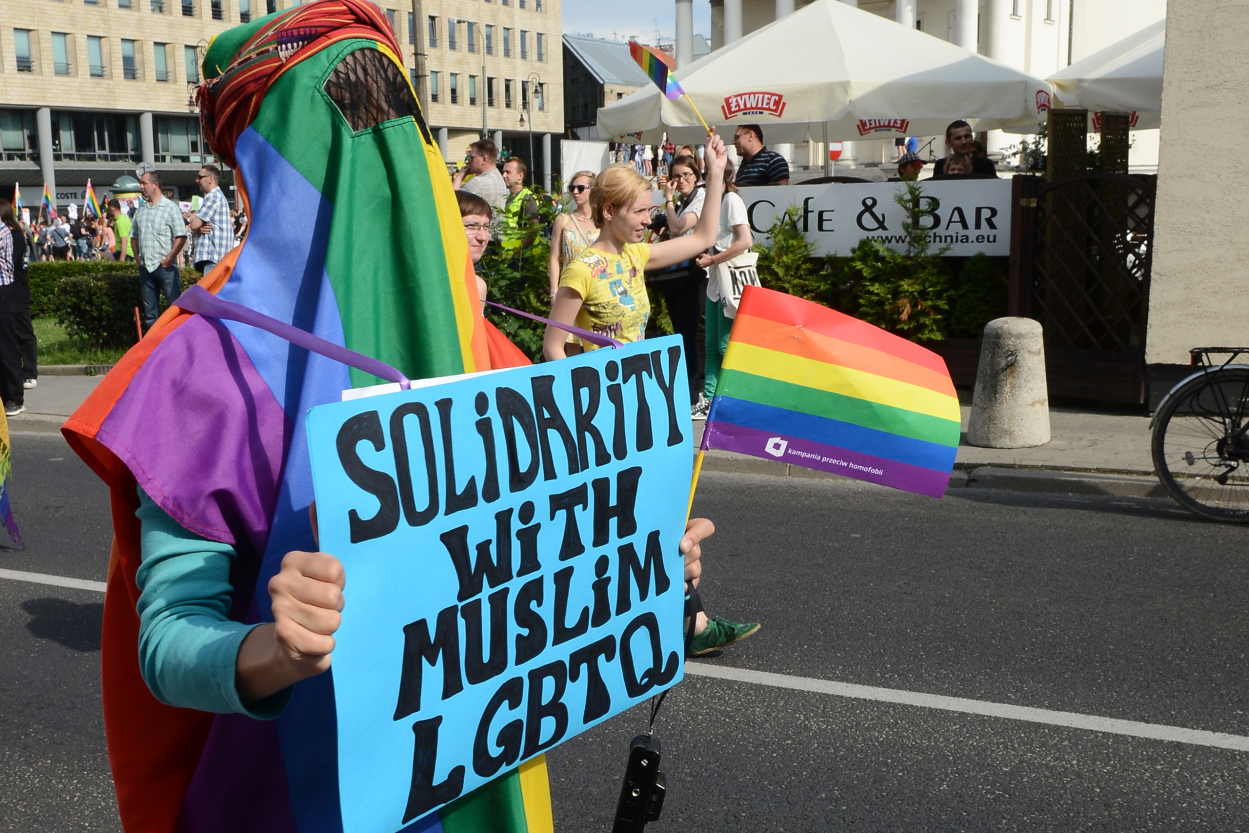
American Muslims Supporting Gay Marriage Speak Up
These arise in certain contexts and change over time, they do not remain. Identity normalizes, regularizes, disciplines, forces, in short, to bow to the rigid scheme of the two sexes, the two genders, normalized desire and heterosexuality.
Anarchism, including that associated with feminism, focuses its attention on any identity that is an instrument of domination. Sexuality has always been a topic of interest for anarchism observed from different points of view.
The anarchist feminism of Mujeres Libres (1936-1939) started from the biological sex that it never questioned and even fell into the essentialism of motherhood as a social function assigned to women.
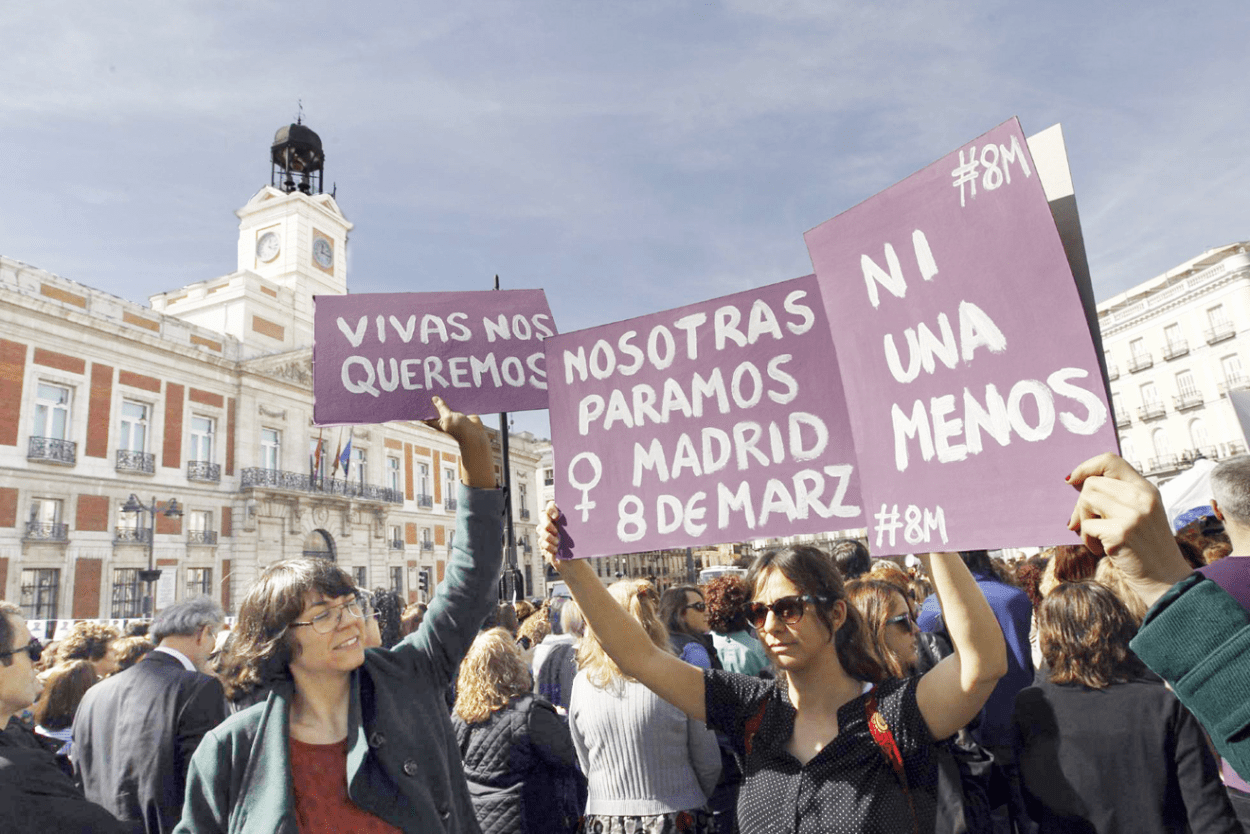
The biology/socialization debate around gender has ignited today to the point of exploding in feminist confluence spaces such as the 8 M Assemblies. It would be convenient to overcome simplistic and sterile debates and reach compromises if possible.
The fact that there are sectors of feminism (also anarchist or trans sectors) that affirm the existence of biological sexual characteristics does not mean that they do not question the ordering of these body characteristics into two unique categories (man/woman) or that they suppose a disparity of essential genre.
There is a risk that promoting a post-identity movement will end up building a new identity, as is the case of «queer». Paul B. Preciado is fully confident that this will not be the case, ignoring the capacity of capitalism and its state apparatuses to absorb any dissident position, and that “what is queer” will be capable of maintaining a critical position attentive to the processes of exclusion and of marginalization that generates all identity fiction.

That is the reason why the subject of queer theory rejects all sexual classification and seeks to destroy gay, lesbian, trans, transvestite and heterosexual identities. Sex, therefore, becomes something eligible, independent of biological sex, the true sexual identity of the individual is found in the “gender sense”, something completely subjective.
Various sectors of feminism, among whom I include myself, take into consideration the idea that social gender is not produced or spread according to how we individually act our gender, but rather resides in the perceptions and interpretations of others.
Even from trans sectors it is affirmed (Serano would be its best-known spokesperson) that there are in fact natural and intrinsic gender inclinations.
Even when within the anarcho-feminist positions we find queer positions, the text «Queer explained for anarchists, anti-authoritarians and other radical dissidents» https://anarkobiblioteka3.files.wordpress.com/2016/0/queer_explicado_para_anarquistas_antiautoritarias_y_demc3a1s_disidentes_radicales_-_varis.pdf , is there to demonstrate it, there are positions that disagree with these approaches.

Those of us who disagree understand that identity is transformed, it is flexible, so that depending on the power relationship that is sustained at any given moment with the world, the mechanisms of identity (relational or individualized, as Almudena Hernando explains in The fantasy of individuality..La fantasía de la individualidad). ).
Therefore, it would be difficult to understand the identity of a specific person without taking into account their particular position with respect to the axes of power and domination that define society.
There are, therefore, regularities in the construction of personal identity, which distances us from postmodern positions that believe in the absolute particularity of each subject.
Can the human being live without identities, should we tend to annul them completely? I am not in favor of said annulment because we live in them for now and they also allow us to politicize the struggle of women.
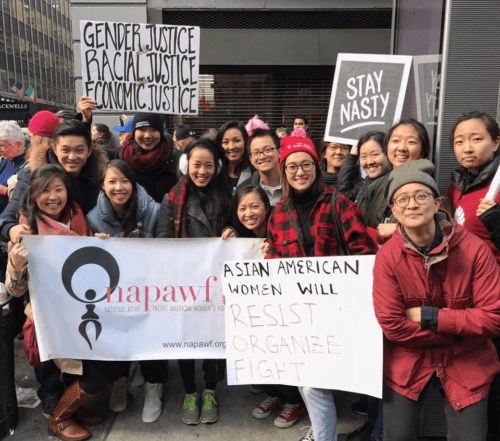
In short, I do not share the radical rejection of the category «women» that continues to be operative within feminism(s).
There is a lot of consensus, yes, in questioning sexual and gender identities as fixed elements that reinforce binarism, exclusion and that regulate desires, sexual practices and, broadening the focus, social relations in general.
Around the subject of feminism or «a feminism without women» Judith Butler says in Allied Bodies and Political Struggle, that women are the ones who suffer disproportionately from poverty and illiteracy, “two reasons why I will not be a ‘post-feminist’ until the day these scourges are completely overcome” .
I could not agree more with Butler that today the vulnerability of women globally postpones the shocking slogan of “feminism without women.” That same vulnerability, not victimhood, should be able to forge alliances between feminisms (certainly not all).
These approaches lead us to the controversial issue of the political subject of feminism. And with the theme comes the big question:
What is it to be a woman?
As anarchists we abhor the vocation of exclusion, segregation or relegation of people or groups, so we cannot hesitate to side with those who suffer, as is the case of trans people.
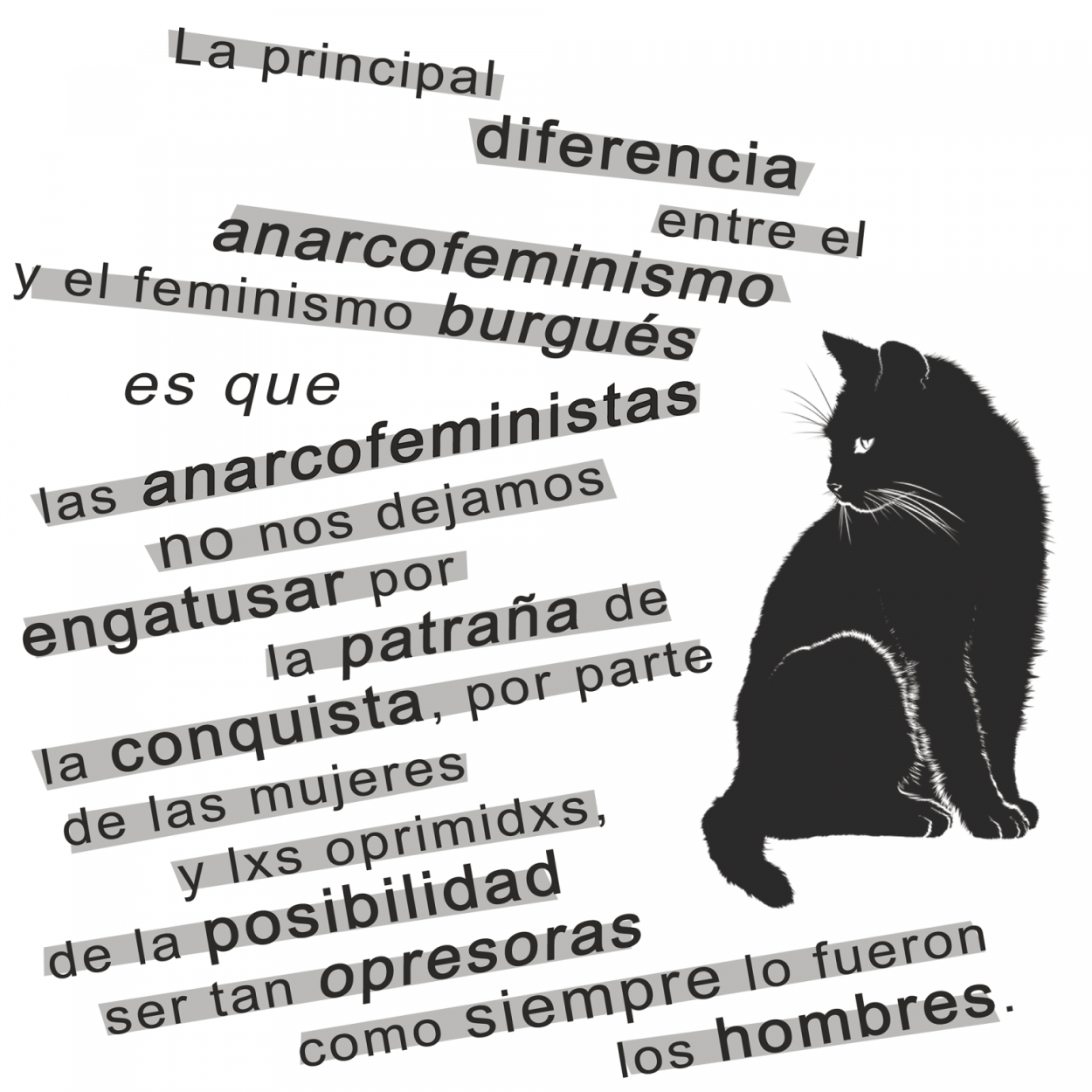
Mujeres Libres (Free Women) took a small big step when it stated in 1936 that «Woman» was not an identity common to all women, since social class introduced an abysmal diversity and, therefore, it was necessary to name that diversity and make it visible (this was the reason why they never assumed the “feminist” identity they considered bourgeois).
This approach fits very well with the denomination of «proletariat of feminism» that was used many years later by Virginie Despentes.

The question “What is it to be a woman?” we should leave it open to all those people who are perceived and feel as such and focus as feminists on the questioning of power and domination. It seems important, therefore, to make it clear that we must include people attacked based on their gender, as is the case with trans people, assimilating less essentialist ways of the subject of feminism.
Continue reading “An Anarcha-Feminist Talking about “THE TRANS” Eng/Esp”