
Wave of Violent Protests, Rioting, Bombings Hits China; Expect More Riots When China’s Credit Bubble Pops, Exposing 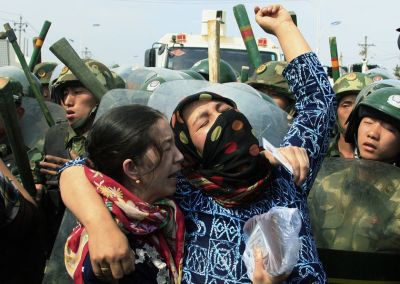 Mountains of Fraud Protests are not uncommon in China. However, most protests have been in rural areas where farmers have had their land stolen by bureaucrats and property developers.
The last few weeks have been different. Several large urban areas have seen protests against corruption. A wave of violent unrest in urban areas of China over the past three weeks is testing the Communist Party’s efforts to maintain control over an increasingly complex and fractious society, forcing it to repeatedly deploy its massive security forces to contain public anger over economic and political grievances.
In the latest disturbance, armed police were struggling to restore order in a manufacturing town in southern China Monday after deploying tear gas and armored vehicles against hundreds of migrant workers who overturned police cars, smashed windows and torched government buildings there the night before. The protests, which began Friday night in Zengcheng, in the southern province of Guangdong, followed serious rioting in another city in central China last week, plus bomb attacks on government facilities in two other cities in the past three weeks, and ethnic unrest in the northern region of Inner Mongolia last month.
Antigovernment protests have become increasingly common in China in recent years, according to the government’s own figures, but they have been mainly confined to rural areas, often where farmers have been thrown off their land by property developers and local officials. The latest unrest, by contrast, involves violent protests from individuals and large crowds in China’s cities, where public anger is growing over issues including corruption and police abuses.
Protests in China have been occurring at an increasing rate. This is in spite of the fact the Chinese economy has been growing at 10% a year for a decade. What happens when China’s growth slows to 4%?




 …….Strauss-Kahn is a metaphor for the present neoliberal system. It sucks the blood of countries in crisis, such as Iceland, Ireland, Greece, Portugal, and now Spain, as was previously done with Brazil and the countries of Latin America and of Asia. To save the banks and enable repayment of debts, it devastated societies, forced workers out of their jobs, privatized public goods, cut salaries, delayed retirement ages, mandated longer work hours. All because of capital. The enforcer of these world policies is, among others, the IMF, of which Strauss-Kahn was the central figure. What he did to Nafissatou Diallo is a metaphor for what he was doing to the countries in financial difficulties. He deserves jail not just for the sexual violence against the hotel maid, but even more, for the economic rape of the people, that he committed from the IMF. Español El lector o la lectora pensará que es una tragedia que el Director-gerente del FMI, Strauss-Kahn, diera alas a su vicio, la obsesiva búsqueda de sexo perverso, corriendo desnudo detrás de una camarera negra en la suite 2806 del hotel Sofitel de Nueva York, hasta sujetarla y forzarla a practicar sexo, con detalles que la Fiscalía de Nueva York describe minuciosamente y que, por decencia, no voy a decir. Para él no era una tragedia, sino una víctima más entre otras que ha hecho en este mundo. Se vistió y se fue directo al aeropuerto. Lo cómico fue que olvidó el móvil en la suite y así pudo ser detenido por la policía cuando estaba dentro del avión.
  The Free