One of the major authoritarian measures adopted at the beginning of this decade in the name of countering coronavirus was “vaccine passports.”
These certifications, on paper or in electronic form, that a person had received the government specified minimum number of experimental coronavirus “vaccine” shots were required by select governments across the world for individuals to carry and present at checkpoints in order to go about their activities.
In America, the New York government jumped in early on mandating vaccine passports. Vaccine passports were also implemented by other governments around the world, including in parts of Europe.
Today, most Europeans are over the coronavirus panic. They are enjoying the exercise of freedom unrestrained by coronavirus crackdowns.
Some European politicians, bureaucrats, and their “private sector” partners, however, are jonesing for a return to the crackdown days. The coronavirus crackdowns were in many ways a high point of power for government and of profits for connected companies. Compulsive meddlers and profiteers want that back, and permanent.
Thus, it should be no surprise that a group of five European nations — Belgium, Germany, Greece, Latvia, and Portugal — are working with the European Union on pilot testing a new European Vaccination Card.
The card that will be tested in physical and electronic form and will contain individuals’ vaccination records for a variety of shots is intended to be implemented this decade. Michael Nevradakis provides the details in a Tuesday Children’s Health Defense article.
Interestingly, Nevradakis notes in his article that the European Union’s development of the European Vaccination Card dates back to 2018.
Much like the September 11, 2001 attacks in America allowed the United States government to implement as the USA PATRIOT Act a wish list of authoritarian legislation that had been sitting on a shelf, the creating of a crisis out of coronavirus allowed for an early testing of vaccine passports.
Now, the process continues toward imposing vaccine passports on a permanent basis.
Transitioning from Vaccine Passports to Everything Passports – by Adam Dic
The prospect of vaccine passports is frightening if the vaccine passports serve to restrict people’s activities only because they have not taken mandated shots. That is an extreme violation of free choice. It is also, as was shown with the coronavirus shots that turned out to be both dangerous and ineffective instead of the incessantly propagandized “safe and effective,” a major health threat.
But, vaccine passports, as I wrote an August of 2021 article, can be expected to transform into “everything passports.” Once vaccine passports are put in place for a limited purpose, the temptation will be to start using them to restrict people’s activities based upon innumerable other criteria.
Americans should pay attention to what is happening in Europe in regard to vaccine passports. There are certainly politicians, bureaucrats, and connected companies in America similarly itching to implement such a scheme. They will be looking to European efforts for direction.
Original title: Update about the the special “state of exception” for the anarchist Nikos Maziotis, convicted comrade of Revolutionary Struggle
Greetings comrades
We would like to send you some news about the imprisonment of anarchist comrade Nikos Maziotis -who is in Domokos prison for his actions in Revolutionary Struggle- and the special “state of exception” for him.
first a summary:
The Lamia Misdemeanors Court Council recently rejected the comrade’s request for conditional release. This is the sixth time his request has been rejected (five rejections by the first-instance council and one by an appellate court where he appealed only once). Three of the six requests Nikos Maziotis has submitted for his release were rejected by a council presided over by the same judge. And in all three instances, his request was accompanied by three consecutive positive prosecutorial recommendations
With the recent conditional release of the Nazi Michaloliakos, the above was proven once again. According to journalistic, legal, and judicial circles, this decision was signed by Christina Papagianni as president of the Lamia Misdemeanors Court Council. Thus, with the decision No. 121/30.4.2024, the specific one was released, while his first release request was accompanied by a negative prosecutorial recommendation. From the very beginning, there was not only political cover but also a concerted and coordinated effort by state (and judicial) authorities to keep the name of the council president who released the Nazi. This attempted cover-up did not succeed. The president’s name was immediately revealed through leaks from journalistic (and not only) offices. And despite the fact that the Nazi is now back in prison (after an appeal was filed against his release by an appellate prosecutor), the selectively biased stance of far-right elements within the “justice system” who release Nazis, yet are the same ones like this particular judge who keeps comrade Nikos Maziotis imprisoned, can no longer remain hidden.
We do not forget our imprisoned comrades all over the world until the freedom from the cells of democracy We defend comrade Nikos Maziotis and comrade Pola Roupa for their actions and political choices as anarchists and as convicted members of Revolutionary Struggle. We call on the world of struggle to mobilize and show solidarity for the:
IMMEDIATE RELEASE OF COMRADE NIKOS MAZIOTIS, who remains imprisoned in the cells of democracy for the actions of Revolutionary Struggle. FINAL RELEASE OF COMRADE POLA ROUPA FROM STATE CAPTIVITY
Their justice in the years of democracy: the “exception regime” and the imprisonment of Nikos Maziotis and Pola Roupa
by Solidarity Assembly for the condemned members of Revolutionary Struggle Pola Roupa & Nikos Maziotis
The militants of revolutionary organizations who are imprisoned face a special “state of exception” during all stages of state and criminal repression —from their arrest, trials and long-term imprisonment in the cells of democracy, to the moment of their release. This “state of exception” primarily affects the millitants who, through their actions, sought to overthrow the existing state-capitalist world. Despite the increasingly harsh judicial and repressive environment, the imprisoned comrades consciously stand with dignity and consistency, defending their political actions.
The arrested 17 yr old killer is British- His name is Axel Rudakubana, he is NOT A MUSLIM and so NOT an excuse for Rabid Macho Racism!
Fck the EDL. Fck the EDL. You're watching 100's of antifascists taking control of the streets of Bolton right now. This is how we do it comrades. The only good fascism is dead fascism. pic.twitter.com/ECcQCUSmDy
He’s British born. Axel is a Scandinavian name, Rudakubana is from one parent whose father was from Rwanda
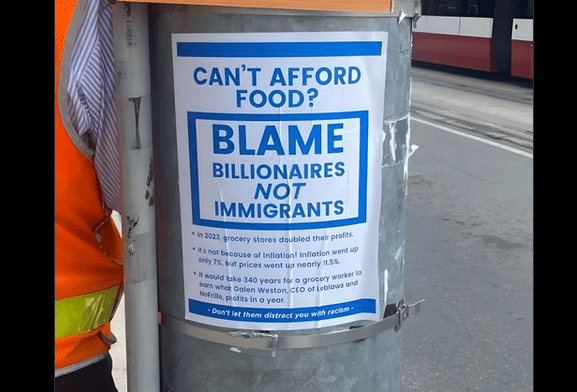
‘We don’t need a racist excuse to riot – let’s blame the billionaires and elite and not get tricked b y power freaks into hurting our neighbours – that’s the oldest trick in the book, used for centuries across Europe to keep the ruthless rich in power-
Bristol Antifascists running the bootlickers out of Castle Park right now. Solidarity comrades. In Bristol we kick fascists off our streets. pic.twitter.com/eqqzzGtGlc
“Anyway- do these nutters advocate beating and burning out all members of any country because just one of them is a lunatic killer?”
In Manchester, fighting broke out between left- and right-wing protesters, with the right-wing side hurling fences and other debris at police officers attempting to separate the groups
On Saturday night the protests became real rioting as young people joined in for their own reasons.
A mob of “native patriots” lynched a lone black man in Manchester earlier today. Cowards. pic.twitter.com/QHNfMB2BtZ
Early on Saturday in Manchester, reports Martin Empson, some 300 anti-fascists gathered to ensure that a far right demonstration was not able to assemble at its chosen meeting point.
An impressive number of trade unions sent delegations and banners, including four Unison banners and the regional banner from the PCS.
Police and protesters also clashed in Liverpool, with two officers hospitalized after being it with a brick and other projectiles.
First off: while manipulated mobs attack our neighbours yelling anti Muslim slogans on the pretext of the Southport Murders…
In Wales the nazis failed to recruit their mob. Their tiny demo was greeted by 400 anti-racists . The crowd represented trade unions, Palestine activists and many others. :
“The energy and youth of the Palestine movement mixed with the established anti-racist movement to produce a great event. It showed sympathy for the families of the bereaved and disgust at the far right’s attempt to take advantage of that loss.” The Right promised to be back on Sunday and again anti-racists will confront them“
A lone black man was attacked in Bristol today. An Asian man jumped into defend him before police stepped in. pic.twitter.com/Pm0cHwCPXD
Rumors spread online after the murders falsely suggested that a Muslim migrant was responsible. According to British media reports, Rudakubana was born in Cardiff to Rwandan parents and was named as he will be 18 this week
The UK’s politicians are seeing the result of years of racist incitement – by them. After more than a decade of inflammatory nonsense from Parliamentarians – ranging from Theresa May’s infamous “go home” adverts to Rishi Sunak’s “Stop the Boats” slogan, is it any wonder that a new generation of right-wing racist thugs has sprung […]
Netanyahu got a Standing Ovation and a Blank Weapons Check from The US Congress – He ran home ordered the murder of Hamas’ leader to prov0ke an Iran war, and the bombing of Gaza schools to burn dozens of little kids alive.. – Then the US pleads: Oh please please don’t bomb the poor Israelis’
Iran has rejected American and Arab efforts to tone down its response to the Israeli assassination of Hamas Political Bureau chief Ismail Haniyeh in Tehran, The Wall Street Journal reported on Sunday.
On July 31, the IRGC announced the martyrdom of Haniyeh, who was on a visit to Tehran to attend the inauguration ceremony of Iran’s new President Masoud Pezeshkian
The WSJ cited people familiar with the talks as saying that Tehran informed Arab diplomats on Saturday that it is unconcerned if its response to the Israeli assassination leads to the outbreak of war.
According to the sources, the United States requested Europe and other allied governments to convey a message to Iran urging it to avoid escalation, warning that any major strike could provoke a response.
Washington also hinted that efforts by Iran’s new President Masoud Pezeshkian to enhance engagement with the West would stand a better chance if Tehran demonstrated restraint.
As part of its message to Iran, the US also claimed that it was urging “Israel” to de-escalate as well.
The Wall Street Journal pointed out that “Iran has refused to provide detailed warnings that would help mitigate the impact of any strike.”
Earlier, Al Mayadeen‘s correspondent in Tehran cited an informed Iranian source as saying that Iran considers Haniyeh’s assassination to be one of its red lines that was crossed, “regardless of the details of the operation,” indicating that it will handle the response accordingly.
In this picture released by the Iranian Defense Ministry on Thursday, May 25, 2023, a Khorramshahr-4 missile is launched at an undisclosed location, in Iran. (Iranian Defense Ministry via AP)
That is why “Iran will respond in a way that crosses the red lines set by the Israeli occupation,” the informed source affirmed.
They also pointed out that “Iran will not yield to pressures and messages of de-escalation because any abandonment of retaliation will open the door to more Israeli aggressions.”
Iran vows stronger response than ‘Operation True Promise’: Exclusive
Kazem Gharibabadi, the Deputy Chief for International Affairs of the Iranian Judiciary, warned in an interview for Al Mayadeen that the Israeli occupation would face severe repercussions for its actions, such that “it would not dare to commit further acts of terrorism or violate Iran’s sovereignty.”
He emphasized that the response to Haniyeh’s assassination would be “more decisive than Operation True Promise,” referring to Iran’s April 13 retaliation to the Israeli aggression that targeted the Iranian consulate in the Syrian capital Damascus on April 1.
Gharibabadi described the Israeli action as “an act of terrorism that defies international resolutions,” arguing that it reveals not the strength but the impotence of the Israeli entity.
He asserted that the killing of innocent civilians, including women and children in Gaza, demonstrates the defeat of the Israeli entity.
In the same vein, the Speaker of the Iranian Parliament, Mohammad Bagher Ghalibaf, affirmed Sunday that his country “has not and will not leave any attack on its sovereignty unanswered,” stressing that the Israeli occupation and the United States “will regret their actions and will be forced to change their calculations.”
The fact is that the arrested 17 yr old killer is British- His name is Axel Rudakubana, and he is NOT A MUSLIM
Fck the EDL. Fck the EDL. You're watching 100's of antifascists taking control of the streets of Bolton right now. This is how we do it comrades. The only good fascism is dead fascism. pic.twitter.com/ECcQCUSmDy
He’s British born. Axel is a Scandinavian name, Rudakubana is from one parent whose father was from Rwanda
Bristol Antifascists running the bootlickers out of Castle Park right now. Solidarity comrades. In Bristol we kick fascists off our streets. pic.twitter.com/eqqzzGtGlc
Anyway- do these nazi nutters advocate beating and burning out all members of any country because just one of them is a lunatic killer.
We don’t need a racist excuse to riot – let’s blame the billionaires and elite and not get tricked b y power freaks into hurting our neighbours – that’s the oldest trick in the book, used for centuries across Europe to keep the ruthless rich in power-
In Manchester, fighting broke out between left- and right-wing protesters, with the right-wing side hurling fences and other debris at police officers attempting to separate the groups
On Saturday night the protests became real rioting as young people joined in for their own reasons.
A mob of “native patriots” lynched a lone black man in Manchester earlier today. Cowards. pic.twitter.com/QHNfMB2BtZ
Early on Saturday in Manchester, reports Martin Empson, some 300 anti-fascists gathered to ensure that a far right demonstration was not able to assemble at its chosen meeting point.
An impressive number of trade unions sent delegations and banners, including four Unison banners and the regional banner from the PCS.
Police and protesters also clashed in Liverpool, with two officers hospitalized after being it with a brick and other projectiles.
First off: while manipulated mobs attack our neighbours yelling anti Muslim slogans on the pretext of the Southport Murders…
In Wales the nazis failed to recruit their mob. Their tiny demo was greeted by 400 anti-racists . The crowd represented trade unions, Palestine activists and many others. :
“The energy and youth of the Palestine movement mixed with the established anti-racist movement to produce a great event. It showed sympathy for the families of the bereaved and disgust at the far right’s attempt to take advantage of that loss.” The Right promised to be back on Sunday and again anti-racists will confront them
A lone black man was attacked in Bristol today. An Asian man jumped into defend him before police stepped in. pic.twitter.com/Pm0cHwCPXD
Rumors spread online after the murders falsely suggested that a Muslim migrant was responsible. According to British media reports, Rudakubana was born in Cardiff to Rwandan parents and was named as he will be 18 this week