
Palestinian women have been forced to demonstrate remarkable resilience while navigating the harsh realities of Israel’s genocidal war for themselves and their families.
What It’s Like for Palestinian Women Living Through the Gaza Genocide
blog of the post capitalist transition.. Read or download the novel here + latest relevant posts

Palestinian women have been forced to demonstrate remarkable resilience while navigating the harsh realities of Israel’s genocidal war for themselves and their families.
What It’s Like for Palestinian Women Living Through the Gaza Genocide

A campaign poster by President Nicolas Maduro in Caracas, Venezuela, on Saturday, July 27, 2024 | (AP) A study by The Washington Post shows the impact of US sanctions on Venezuela and other nations, highlighting their failure to achieve their objectives. Reposted from Al Mayadeen English Source: The Washington Post Sanctions imposed by the United […]
US sanctions on Venezuela caused crises 3x worse than Great Depression / by Al Mayadeen
Such violence accounted for 20 percent of all reported crime in England and Wales from 2022 to 2023, report says..
from thefreeonline On 27 Jul 202423 by Al Jazeera – (on Telegram:t.me/thefreeonline )

More than 3,000 violent crimes against women and girls take place each day in England and Wales [File: Hannah McKay/Reuters] shared with thanks
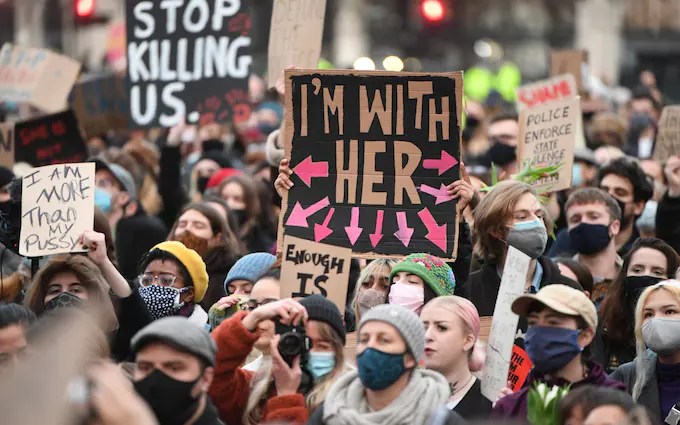
“Women and girls in the United Kingdom are suffering “epidemic” levels of violent crime, police warn, with a new report documenting more than 1 million such offences within a year.
“The report, released on Tuesday by the UK’s National Police Chiefs’ Council and the College of Policing, found that violence against women and girls made up about 20 percent of all reported crime in England and Wales from 2022 to 2023.
It said one in every six murders in England and Wales during the period was related to domestic abuse.

Stop Hate UK introduce new Hate Crime Reporting App – OneVision
Based on the data, at least one in every 12 women will be a victim each year of gender-based violent crimes, including rape, stalking, harassment and online sexual abuse, according to the report.
The number is likely to be higher due to unreported crimes, Deputy Chief Constable Maggie Blyth said.
“Femicide, rape, growing misogyny and hate crimes are often linked to toxic masculinity and growing fascism in declining western capitalist States. Regimes that are dependent on neo-colonial financial looting and dedicated only to enriching a small elite. More and More Police is clearly NOT working. – What has sometimes worked is a massive violent community response. To force a change in depraved predator mindsets we need radical social revolutions – With devastating direct action, workplace, health, anti-billionaire campaigns and riots.”
“Blyth said the data were “staggering” and growing in scale and complexity every year with violent crimes targeting girls and women increasing 37 percent from 2018 to 2022.
Child sexual abuse and exploitation jumped by 435 percent from 2013 to 2022, the report estimated – from incidents climbing from just over 20,000 to nearly 107,000.

“Violence against women and girls is a national emergency,” Blyth said in a statement. “We need to move forward as a society to make change and no longer accept violence against women and girls as inevitable.”
Britain’s government last year classified violence against women and girls as a national threat to public safety, and police forces were told to prioritise their response to the issue in the same way as they do “terrorism” and organised crime.
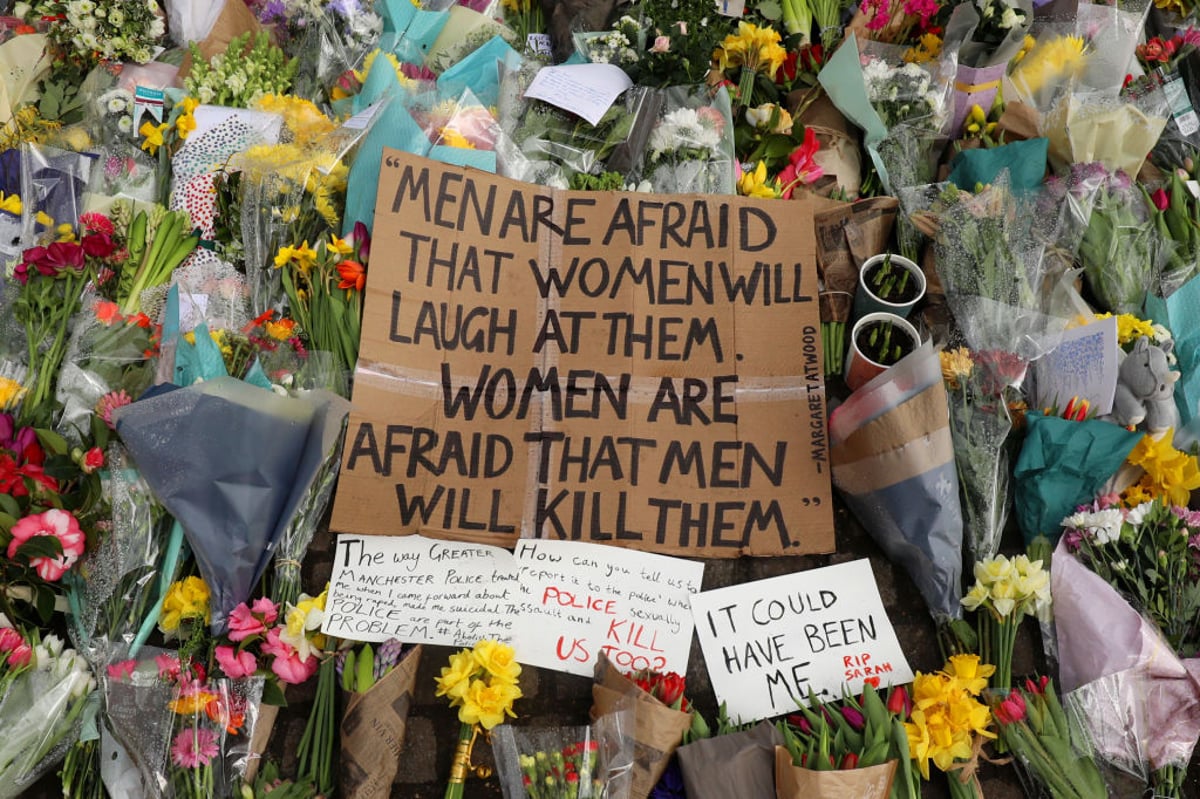
“The police report claimed ‘thousands’ of police officers were newly trained to investigate rape and other sexual offences in the past year.
But the scale of the violence is so enormous that law enforcement alone cannot address it, the report said. One in 20 people are estimated to be perpetrators of violence against women and girls per year, with the actual number thought to be significantly higher.

The report cited early data showing a 25 percent increase in the number of arrests from 2019 to 2022.
But Blyth said this response was not enough and called for more government support to tackle a criminal justice system that is “overwhelmed and under-performing for victims”.
“Our focus will always be to bring the men behind these pervasive crimes to justice,” she said. “By enhancing the way we use data and intelligence, we will improve our ability to identify, intercept and arrest those causing the most harm in communities.”
Source: News Agencies
from thefreeonline on July 28 2024 by infolibertaire.net/ – ( on Telegram: /t.me/thefreeonline)
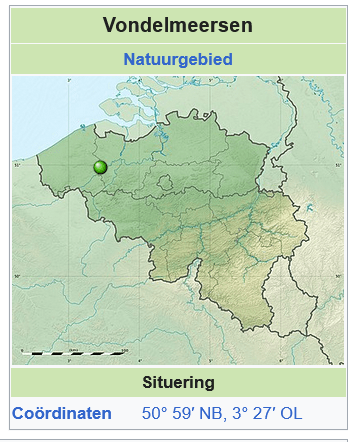
Since June 20, the summer solstice, the Wondelgemse Meersen have been occupied and declared an autonomous zone!
This nature reserve, 14ha large, is the last continuous piece of wilderness of what was once a vast wetlands area in the north of Ghent.

If it were up to transport company De Lijn and politicians such as Zuhal Demir (N-VA) and Lydia Peeters (Open Vld), the Wondelmeersen would be destroyed to make way for a so-called “green” depot for buses and trams.
But a “green” depot you don’t build at the expense of the last tiny valuable space of green nature.

The neighborhood has long been in opposition to this and founded the action committee “Bloemekenswijkbos”.
Also, a group of biology students discovered more more than 40 protected animal species found on site including the wall lizard, alpine newt, small newt, fox, stone marten and kingfisher.

Until now, both local residents and the protected species living there have been ignored.
With this occupation, we join the struggle of the local residents. An autonomous zone will be created that will be responsible for the protection of this nature reserve. We crawl into the trees and stay there until the Wondelmeersen are saved.

We are not against a new public transport depot per se, but we are against the destruction of valuable nature. While De Lijn pretends that there are no other options there are at least 6 alternative sites…
Destroying valuable urban nature irrevocably and concreting it is not an option!

So time for direct action! When politics fail, we have to do it ourselves!
No compromise in defense of mother earth!
Wondelmeersen Occupied
Parallelweg, 9000 Gent, Belgium
wondelmeersen [at] riseup [dot] net
https://squ.at/r/afyp
https://wondelmeersen.noblogs.org/
Some squats in Belgium https://radar.squat.net/en/groups/country/BE/squated/squat
Groups (social center, collective, squat) in Belgium https://radar.squat.net/en/groups/country/BE
Events in Belgium https://radar.squat.net/en/events/country/BE
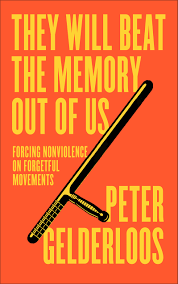
‘I look at the factors that keep us trapped in an eternal present, committing the same mistakes over and over again‘.
from thefreeonline on 27th July 2024 by Peter Gelderloos via Anarchist Federation via Anarchist News .. ( on Telegram: t.me/thefreeonline )

8378 views From substack… Surviving Leviathan with Peter Gelderloos
Over the last two to three decades, anarchist movements the world over have achieved major gains.
When both the Left and the Right decided in the 20th century it was a priority for them to brutally eliminate any cohesive anti-State movement and practice, they slaughtered hundreds of thousands of anarchists from Mexico and the Philippines to Russia, Ukraine, Argentina, Germany, the United States, Korea, Bulgaria, Yugoslavia, Morocco, Spain, Uruguay, Cuba… torturing, deporting, or imprisoning countless others.

After that, anarchists were largely focused on survival—the survival of our ideas and history, survival through prison and exile—or on finding a balance between solidarity, critical participation, and criticism in relation to movements dominated by authoritarian parties.
But at a certain point—depending on where you look in 1991, 1996, 1999, 2008, 2011—anarchists increasingly began to take the initiative and open up new spaces of struggle or rejuvenate old ones.
Anarchism was adopted by many traditionally stateless Indigenous movements as an explicit way to name and reject how the Left had historically treated them like cannon fodder, it was the radical position against assimilation both in feminist and in queer and trans spaces, and it was chosen by many veterans and new participants in the Black liberation movement as another way forward, to analyze their experiences, their targets, and errors of the earlier generation.
Anarchism poses the questions that sit at the heart of abolition and of transformative justice, which in their best form are simultaneously goals and practices that have grown up alongside a resurgent anarchism.
And anarchism provided both the method and a good deal of the analysis that motivated land defense and other ecological movements, a rekindled global anticapitalism, new iterations of neighborhood and housing struggles, as well towards efforts community health, harm reduction, and mutual aid.
Anarchism and anarchists were essential to the anti-racist, anti-police struggles that heated up and took over entire cities, entire countries for days, weeks, or even months at a time, and these were struggles that began before the Great Recession, contrary to the historiography being plastered over our shared past by the materialists of the day, who are threatened by the fact of how little they have contributed to revolutionary movements in generations…
And yet, so many of these movements came up against hard limits and are no longer dynamic or even visible.
Maybe the limit was a level of totalitarian repression they could not counter. In other countries it was a refusal to learn, to subdue egos, to engage in solidaristic analysis of our mistakes—criticism as a practice of love and abundance—that caused movements to stagnate and be led astray by a reformist Left, or distracted by the demoralizing return of authoritarian ideologies (ideologies that could boast resurgent book sales, but not any ability to revitalize lower class struggles or contribute useful methods).
In some places it was already in 2013, 2016, or maybe not until 2020, 2021, but there came a moment where you could look around and not see anyone still holding their head up, or you could just feel that something had been lost and that those who were still carrying on were stuck in a holding pattern, telling themselves lies about what they were doing, ignoring the evidence of their defeat.

It was in that place that I wrote Organization, Continuity, Community, originally in Catalan, on the basis of my experience with what had happened in movements there (an arc that was incendiary, inspiring, and then soul-crushing), while also in dialogue with friends and comrades around the world.
We have to learn from our defeats and mistakes, and that requires examining them.
That’s why I encourage all of you to revisit the experiences of the last couple decades, to learn the stories of the sorts of things that happened and how they happened if you’re new to movements for freedom and survival.
And if this book can be a useful tool for guiding that exploration and honing an analysis — start a reading group and make the conversation collective.
In Organization, I try to analyze different organizational forms as tools, which means neutrally but not relativistically.
So many anarchists have limited themselves by fetishizing one type of organization or another, which takes the better part of strategy off the table.
Continue reading “‘Organization, Continuity, Community’- How we can WIN – Peter Gelderloos”Leonard Peltier is a Native American political prisoner who was convicted for the deaths of two FBI agents in 1975. He was denied a fair trial by the FBI’s withholding of evidence, coercion of witnesses, and manipulation of ballistics. www.freeleonard.org › case
from thefreeonline on 28th July 2024 by FreeLeonardPeltierNow. via Stuart Bramhall (on Telegram: t.me/thefreeonline)

Native American Activist Leonard Peltier Pleads from Prison Amid …
[Source: en.wikipedia.org] By Jeremy Kuzmarov On July 2, Leonard Peltier (Turtle Mountain Ojibwe), a leader of the American Indian Movement (AIM) in the 1970s, was denied parole by the U.S. Parole Commission, ensuring that he will most likely die in federal prison.

Suffering from serious health issues as he nears 80, Peltier is serving two consecutive life sentences for killing FBI agents, Jack R. Coler and Ronald A. Williams, on the Pine Ridge Indian Reservation in South Dakota in June 1975.


Imprisoned for nearly 50 years, Peltier has maintained his innocence and there are grounds to believe him.[1]
The federal government, for example, withheld a ballistics report at Peltier’s trial indicating the fatal bullets did not come from his weapon, according to court documents Peltier filed on appeal.
One prosecution witness, Michael Anderson, testified during cross-examination that he was threatened by an FBI agent, and said that he agreed to testify in exchange for criminal charges against him in another case being dropped.

More than 30 Arrested in Washington, D.C. at Leonard Peltier …
Another witness, Myrtle Poor Bear, said that she had been coerced into signing a false affidavit implicating Peltier and that her life had been threatened. “They had the law in their hands, and could do anything,” she said of the FBI.
A member of the Turtle Mountain band of Chippewa Indians from North Dakota, Peltier had been a leader of AIM, which staged an occupation of the Pine Ridge Reservation in the early 1970s in an effort to reclaim land that had been taken during the 19th century Indian Wars.

The Life Of Leonard Peltier – Powwow Times
Pine Ridge was strategically located at the site of the 1890 Wounded Knee Massacre, where the U.S. Army’s 7th Cavalry regiment killed about 300 Lakota Sioux civilians in revenge for the killing of General George Armstrong Custer at the Battle of the Little Bighorn.
Continue reading “American Indian Movement Leader Will Likely Die in Prison After Being Denied Parole”Israeli attacks have likely killed ‘up to 200,000 people’, mainly kids and women, and even more will die as depraved Genocide continues.
from thefreeonline on 27th July 2024 by @evakbartlett (on Telegram: t.me/thefreeonline).



The United States is Broken
Netanyahu received a warm welcome with standing ovations as he entered the congress chamber. Despite some Democrats expressing intentions to boycott the speech due to Israel’s actions in Gaza, and protests occurring outside the Capitol from both American activists and Israeli democracy supporters.
Earlier this month, the Lancet published an article estimating that the total number of Palestinian civilian deaths caused directly and indirectly by Israeli attacks since October 2023 could be nearly five times higher than the official death toll, and could reach “up to 186 000 or even more.”
It noted that “this would translate to 7.9% of the total population in the Gaza Strip.”
According to the piece, the latest available count of Palestinians killed – 37,396 – is far too low, based on the fact that it is still unknown how many more lie under the rubble, how many are missing but not accounted for among the dead, and how many will perish due to starvation, dehydration, or diseases.
“Even if the conflict ends immediately, there will continue to be many indirect deaths in the coming months and years from causes such as reproductive, communicable, and non-communicable diseases,” it noted.

However, even this Lancet estimate of nearly 200,000 dead might be only half the actual number of Palestinians killed, according to some counts.
Continue reading “Hundreds of 1000’s of Gazans being killed as shameless bribed Congress applauds Israeli Hitler”
