Papua land is never empty,

it is a source of livelihood for many

As vociferously anti-colonial as Indonesia has been, it is nothing but colonial in its attitude toward Papua. Institutional racism, mistreatment of ethnic and religious minorities, media blackouts, internet shutdowns and policies that have long neglected the needs and interest of the local community have fueled a long-running insurgency that Jakarta has been unable to quell.

Papua’s ‘Empty Lands’: A Dangerous Myth Displacing Indigenous Peoples

In #WestPapua, on illegally colonised and disputed land taken by violence from Melanesian Indigenous peoples last century by Indonesian forces, authorities label indigenous lands as “empty”. This is done in order to justify large-scale agricultural projects, displacing tribes like the #Malind and Khimaima peoples. These lands are vital sources of food and medicine, supporting traditional ways of life for several millennia. Communities and indigenous rights advocates call for halting exploitative #palmoil and #mining projects and honouring #LandRights #HumanRights #IndigenousRights #BoycottPalmOil


#News: In #WestPapua, “empty lands” are NOT empty—they sustain countless #indigenous #Malind and #Khimaima people for millennia. Large-scale #palmoil projects destroy livelihoods. Support #HumanRights #IndigenousRights and #BoycottPalmOil https://wp.me/pcFhgU-a5N

Jakarta Post| 9 January 2025

by Franky Samperante

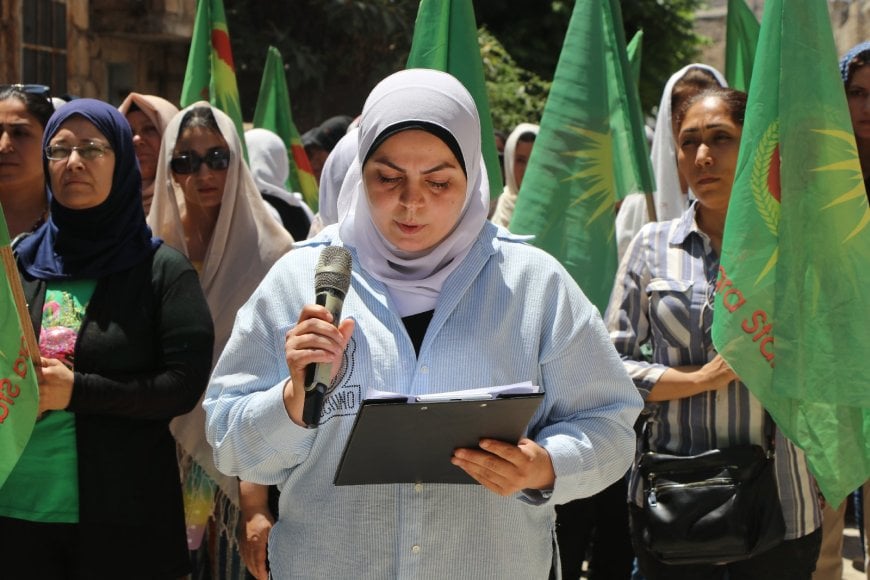
Representatives of Indigenous People from Merauke protested against the massive food estate project that affecting their territory in Jakarta, December 2024. Photo: Pusaka


The narrative of “empty land/unproductive forest” or “no forest/no trees” is often used by authorities to negate and delegitimize the existence of indigenous communities and the surrounding natural environment. Most recently, it was used by Hashim Djojohadikusumo, President Prabowo Subianto ’s younger brother, when addressing executives of the Indonesian Chamber of Commerce and Industry (Kadin) in December. 

This narrative is painful for the people of Merauke in Papua, a site of the government’s food estate project. It reflects an attempt to roll out the red carpet for private corporations to develop monoculture plantations and massive food and energy industrial complexes, often obliterating the interests of indigenous peoples and local residents in the process with the state’s backing.

Planned deforestation threatens Indigenous land, intact forest landscapes in West Papua… 05 June 2024 Benar News New report Licence to Clear – Greenpeace International shows systematic violations of permitting regulations as plantations were pushed into forest areas. Since 2000, forest estate land released for plantations in Papua Province has totalled almost a million hectares.

The status of national strategic project (PSN) was given unilaterally to these developments by former president Joko “Jokowi” Widodo in 2024. Yet, the idea of monetizing parts of Papua was first proposed in 2010, when president Susilo Bambang Yudhoyono established the Merauke Integrated Food and Energy Estate, which later failed. 

Living with the local people engenders empathy for their daily fear of state authority creating a situation in which they do not belong, yet are too afraid to be involved. It is a process of ecological expropriation and extirpation of the lives of both indigenous and local communities in and around forest areas. The end results are the expansion of extractive industries, the seizing of power and control over resources that reap profits for a handful of people and do nothing for the interests of farmers or indigenous Papuans. 

Expropriation is an action by government to take over the assets of individuals or organizations, in part or in whole, with or without compensation. Extirpation, on the other hand, is a unilateral act to eliminate or destroy something completely.

Press release: Stop food estate plans in Papua 18 November 2024Benar News….. Ten civil society organizations (CSOs) members of Civil Society Coalition Against Food Estate in Papua strongly reject President Jokowi’s plan to develop a food estate with an area of ​​2,052,551 ha.

At the time of writing, the land of Merauke’s villagers has been pegged as a new colony. Thousands of hectares of land, both forests and lowland swamps are being destroyed and drained, and then replaced with new industrial commodities. 

Indonesians have experienced many failures in implementing the idea of so-called food estates since the Soeharto era, but the Prabowo administration does not seem to have learned anything. What past attempts have left behind are abandoned land and forests controlled by corporations, as well as complex and unresolved land and social conflicts. 

One can pose many questions about the real motives when the food estate narrative can no longer mask the ugly reality. Where do the logs harvested from forests go? Who oversees their transport? What is the status of land rights? How was the land seized? What is the purpose of having a bold military presence in Merauke, where local Papuan resistance has diminished over the past two decades at least? 

We need to consider the following facts. 

The land in Merauke regency for the food estate project spanning more than 2 million ha that Hashim referred to is not empty land. It is customary land that belongs to the Malind, Maklew, Yei and Khimaima indigenous tribes, which have neither been recognized nor received their tenure rights from the state. More than 40,000 indigenous people, or around 80 percent of Merauke’s indigenous population, will be affected by the food estate project. 

These tribes rely on the forest as their main source of livelihood. They go into the forest every day to harvest sago as their main food staple, hunt animals and harvest vegetables, even to look for medicinal plants. Now they are not free to enter and leave the forest due to hunting prohibition markers and security patrols. 

The involvement of indigenous peoples in the project is minimal, represented only by a few formal institutions and certain individuals. Local administrations, at both the provincial and district/city levels, cooperate in implementing the project that was decided by the national government and ignores the rights of indigenous peoples. Local opposition to the project continues through demonstrations in Merauke and Jakarta. 

Revealed: Government officials say permits for mega-plantation in Papua were falsified… Indonesian government have alleged that permits underpinning a multi-billion dollar plantation project in Papua were falsified. The land is being opened up by investors whose identity is hidden behind anonymously owned companies, as part of a plan to develop an oil palm plantation almost twice the size of London in the remote region. …29/10/2020

The Pusaka Bentala Rakyat foundation reviewed the development of the Merauke food estate and observed that the establishment of rice fields, sugarcane plantations and bioethanol production facilities converts and uses large forest areas by ignoring provisions on environmental and technical requirements, including strategic environmental studies. 

A study by the Center of Economic and Law Studies (CELIOS) found that Indonesia could potentially double its emissions by simply running the mega food estate project in Merauke, undermining the country’s aim to achieve net-zero emissions. Meanwhile, Forest Watch Indonesia (FWI) revealed that in the past year, forest damage in South Papua increased more than twofold to 190,000 ha, or almost three times the size of Jakarta.

Regardless of the local people’s opposition, the project continues to move forward. The deployment of five battalions comprising 3,455 military personnel in South Papua is an indication of how much the government wants the project to go ahead. The involvement of the Indonesian Military (TNI) has the potential to threaten and eliminate the right to life of the Papuan people and worsen human rights violations, violence and arbitrariness, violating the Constitution, laws and regulations. 

Merauke is part of the Trans-Fly Savanna and Grasslands ecoregion, an area rich in endemic freshwater biota that is located on the south coast of the island of New Guinea. It is the largest seasonal wetland area on New Guinea. South Papua has various ecosystems, including seasonal forests, swamplands and marine conservation areas. the World Wide Fund For Nature (WWF) describes this landscape as “the natural gem of Asia-Pacific”. 

Indonesia’s massive sugar-bioethanol project in South Papua causes locals to fear exploitation Indonesia is going ahead with a project to convert millions of acres in Papua into a gigantic sugarcane plantation to produce bioethanol. But Indigenous communities and environmentalists worry that the project in South Papua’s Merauke regency will lead to land grabs, ecological damage, and the destruction of traditional livelihoods.

Swamps and savannas dominate most of the plains of Merauke, which has a type of soil deemed less fertile for growing food crops. 

Musamus University has studied the suitability of the land in Merauke for rice or agroclimate and found that no area fulfills the high suitability criteria. However, more than 50 percent of the region, primarily the western and southern parts of Merauke regency, meets the medium suitability criteria. This means that the region’s capacity for intensive food crop production is still in question. 

The writer is the executive director of the Pusaka Bentala Rakyat foundation, an NGO focusing on environmental justice and indigenous people’s rights.

********************

READ HERE (free) on ISSUU 196 page report https://www.greenpeace.org/aotearoa/publication/licence-to-clear/

George Monbiot – Ayn Rand: A Manifesto for Psychopaths / Paul Krugman explains why Ayn Rand’s libertarianism is absolutely deadly

George Monbiot – Ayn Rand: A Manifesto for Psychopaths Her psychopathic ideas made billionaires feel like victims and turned millions of followers into their doormats. I wonder how many would continue to worship at the shrine of Ayn Rand if they knew that towards the end of her life she signed on for both Medicare […]

George Monbiot – Ayn Rand: A Manifesto for Psychopaths / Paul Krugman explains why Ayn Rand’s libertarianism is absolutely deadly

Wildfires will begin: An interview with Toby Shone

The former political prisoner talks about his anarchism, the 325 project and resisting the physical and mental jails that surround us all. ~ Interviewed by Elizabeth Vasileva ~ You recently spoke about the importance of solidarity and connections, between prisoners and with their supporters on the outside. Can you give us any examples of this […]

Wildfires will begin: An interview with Toby Shone

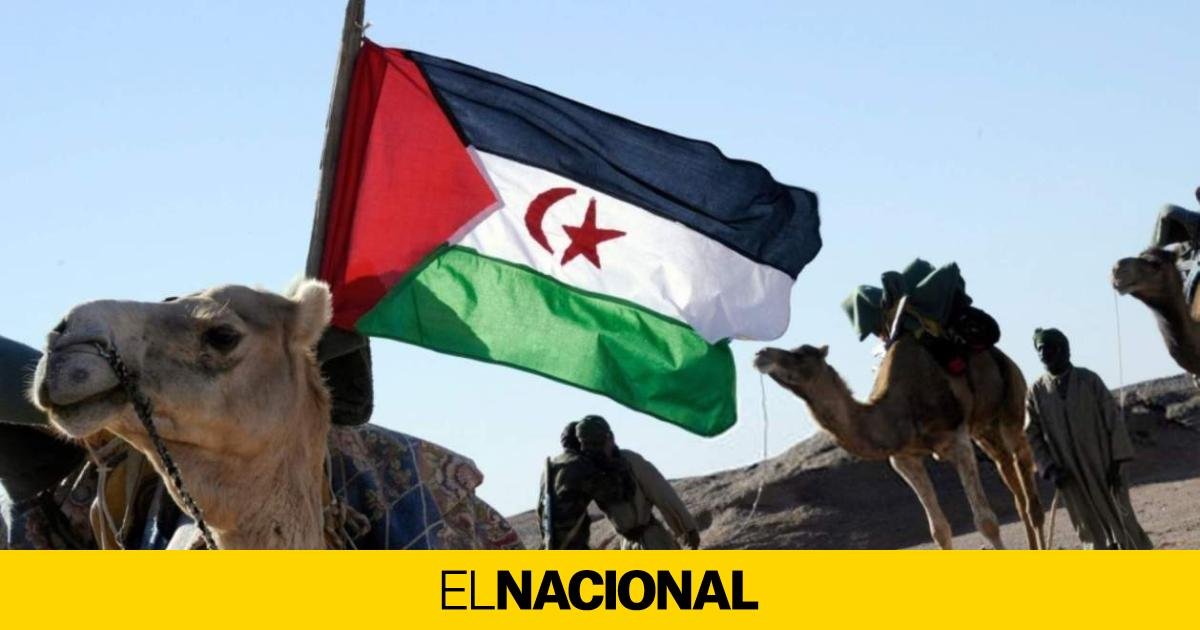
Marruecos impide el desembarco de la marcha por los presos saharauis tras someterlos a vigilancia desde territorio español

La delegación encabezada por Claude Mangin es retenida en el ferry rumbo a Tánger sin explicación oficial foto: La marcha internacional ‘Camino por la Libertad’, que arrancó el pasado 30 de marzo en París, ha convocado una concentración en Algeciras (Cádiz) antes de embarcarse hacia Marruecos. | Efe Francisco Carrión@fcarrionmolina No hubo desembarco. La “Marcha por la…

Marruecos impide el desembarco de la marcha por los presos saharauis tras someterlos a vigilancia desde territorio español

Sorry If This Is Antisemitic But I Think It’s Wrong To Burn Children Alive

Caitlin Johnstone at Caitlinjohnst May 28, 2025 via thefreeonline at https://wp.me/pIJl9-H2P see Telegram t.me/thefreeonline/3252

Listen to a reading of this article (reading by Tim Foley).

Now that it’s been made clear that Israel’s goal in Gaza is the complete ethnic cleansing of all Palestinians, Israel apologists have been shifting from bleating about hostages and Hamas to arguing that ethnic cleansing is actually fine and good. Which makes sense; that’s really the only argument they can make at this point.

Never forget that the US Congress gave Netanyahu dozens of standing ovations during a single speech while he was in the middle of perpetrating history’s first live-streamed genocide. This is who they are. It will always be who they are.

Israel has done more to promote hatred toward Jews in the last year and a half than Stormfront has in its entire existence. No white supremacist propaganda will ever be as effective at spreading hatred against Jews as openly mass murdering children under a Star of David flag.

Support for Israel used to be the overwhelmingly dominant opinion in the western world. Luckily that’s changing, but the fact that this was the case until Israel exposed itself shows you really can’t just go along with majority opinion on any issue. You need to think for yourself.

Ignore what the crowd says. Ignore people who scream at you for disagreeing with their position. Look at the raw facts as free from your own cognitive biases as you are able, and have the courage to stand on your own if necessary.

Gaza is such an easy moral issue to get right that there’s no way anyone who gets it wrong isn’t a shitty person in other areas of their life as well. I feel sorry for anyone who has interpersonal relationships with Israel supporters, because they’d suck to be around.

World Food Programme director Cindy McCain is saying that she’s seen no evidence of Hamas stealing aid entering Gaza. Israel’s one and only argument for continuing to block aid to Gaza is being publicly debunked by a member of one of the most pro-Israel families in US politics.

The US has reportedly delivered some 90,000 tons of weapons to Israel since October 2023.

I mostly focus on the Gaza genocide these days, but sometimes figures like this make me zoom out a few clicks and think about how bat shit insane our civilization is as a whole. Just think how much good we could do in the world if we weren’t pouring resources into evil shit like this.

Murdoch-owned publication The Australian came after me the other day for tweeting “Two Israeli embassy staff getting shot in Washington DC is less newsworthy than tens of thousands of Palestinians being killed in Israel’s genocidal land grab. It is less important. It deserves less attention. It is not the main story. Israel’s genocide in Gaza is the main story.”

They called me a “journalist” in scare quotes, which I guess is supposed to be an insult, but coming from the Murdoch press it can only be seen as a compliment.

According to the official western narrative, Americans becoming violently radicalized by a US-backed genocide is a bigger issue than the US-backed genocide.

According to the official narrative, university protests against a transparent ethnic cleansing operation are a greater concern than the transparent ethnic cleansing operation.

According to the official narrative, western Zionist Jews feeling emotionally upset about opposition to a modern-day holocaust is a more urgent problem than a modern-day holocaust.

All of our institutions are backwards and evil. Our media. Our politics. Our education system. Our manufacturers of mainstream culture. This should be clear to everyone by now.

Everything we were taught to fear about the countries that the western empire hates is true of the western empire.

Every dark future we were warned about in dystopian fiction is true of the dystopia we are living in presently.

We live in a nightmare of a civilization, under an empire that is fueled by human blood. The closer you examine it, the uglier it gets.

This cannot be allowed to continue. It must not be allowed to continue.

The empire must fall.

________________

Caitlin’s Newsletter is a reader-supported publication. To receive new posts and support my work, consider becoming a free or paid subscriber.

My work is entirely reader-supported, so if you enjoyed this piece here are some options where you can toss some money into my tip jar if you want to. Click here for links for my mailing list, social media, books, merch, and audio/video versions of each article. All my work is free to bootleg and use in any way, shape or form; republish it, translate it, use it on merchandise; whatever you want. All works co-authored with my husband Tim Foley.

Bitcoin donations: 1Ac7PCQXoQoLA9Sh8fhAgiU3PHA2EX5Zm2

‘Shocking AI “hallucinations” stem from info input of Evil Google, Global Elite and ‘post truth’ Trumpism..’

By Dr. Mathew Maavak, who researches systems science, global risks, strategic foresight, governance and AI on 25/5/25 via thefreeonline at https://wp.me/pIJl9-H1D see Telegram t.me/thefreeonline/3243

AI hallucinations: a budding sentience or a global embarrassment?

In a farcical yet telling blunder, multiple major newspapers, including the Chicago Sun-Times and Philadelphia Inquirer, recently published a summer-reading list riddled with nonexistent books that were hallucinated” by ChatGPT, with many of them falsely attributed to real authors.

The syndicated article, distributed by Hearst’s King Features, peddled fabricated titles based on woke themes, exposing both the media’s overreliance on cheap AI content and the incurable rot of legacy journalism.

çThat this travesty slipped past editors at moribund outlets (the Sun-Times had just axed 20% of its staff) underscores a darker truth: when desperation and unprofessionalism meets unvetted algorithms, the frayed line between legacy media and nonsense simply vanishes.

How to spot generative AI ‘hallucinations’

The trend seems ominous. AI is now overwhelmed by a smorgasbord of fake news, fake data, fake science and unmitigated mendacity that is churning established logic, facts and common sense into a putrid slush of cognitive rot. But what exactly is AI hallucination?

AI is a perfect storm threatening humanity Opinion Artificial intelligence may bring about the end of the world as we know it – but not in the way most would expect May 8, 2025 14:53

AI hallucination occurs when a generative AI model (like ChatGPT, DeepSeek, Gemini, or DALL·E) produces false, nonsensical, or fabricated information with high confidence. Unlike human errors, these mistakes stem from how AI models generate responses by predicting plausible patterns rather than synthesizing established facts.

Why does AI ‘hallucinate’?

There are several reasons why AI generates wholly incorrect information. It has nothing to do with the ongoing fearmongering over AI attaining sentience or even acquiring a soul.

Continue reading “‘Shocking AI “hallucinations” stem from info input of Evil Google, Global Elite and ‘post truth’ Trumpism..’”

UN CONGRESO DE AGROECOLOGÍA DE LOS PUEBLOS (POR LOS PUEBLOS Y PARA LOS PUEBLOS)

Los días 5, 6 y 7 de junio próximo, la Universidad Nacional de Luján (sede central) abrirá sus puertas para recibir a lxs asistentes al 1º Congreso de Agroecología de los Pueblos, impulsado por el Encuentro de Pueblos Fumigados por la Agroecología y el Buen Vivir de la Provincia de Buenos Aires (EPFBA).

por Alberto Lezin at comunicación popular el 22/05/2025 via agenciadenoticiascap via thefreeonline a https://wp.me/pIJl9-GZT Telegram t.me/thefreeonline/3232?single

Cientos de personas se congregarán allí para intercambiar saberes, experiencias, sensaciones y propuestas en relación con prácticas productivas armónicas con el ambiente y para fortalecer las nunca bien ponderadas redes sociocomunitarias que la Agroecología entrelaza.

Esta iniciativa colectiva, pensada por productores, consumidores, investigadores, docentes, profesionales, integrantes de Pueblos Originarios, Organizaciones Sociales y otras personas que sufren directa o indirectamente las consecuencias del agronegocio, propone visibilizar y debatir sobre una multiplicidad de cuestiones que atraviesan a quienes encaran la tarea de aportar, desde la práctica y la teoría, a una verdadera transformación de la matriz productiva vigente basada en el extractivismo.

Ocho ejes temáticos enmarcarán las exposiciones de lxs participantes, quienes a través de Posters, Mesas de Trabajo, Presentaciones de Libros e intervenciones Artísticas, abordarán problemáticas y construirán soluciones relacionadas con:

¿TRANSICIÓN HACIA LA AGROECOLOGÍA O A LA COEXISTENCIA CON EL AGRONEGOCIO?

Calidad de los alimentos agroecológicos: sabores, aromas, texturas. Variedades de cultivos. Abundancia. La solidaridad y el compartir. Prácticas y formas de consumo de alimentos agroecológicos.

Transformaciones de vidas individuales y colectivas a partir de la agroecología. Hablemos de agronegocios y extractivismos.

MANOS EN LA TIERRA. EXPERIENCIAS Y POSIBILIDADES

¿Qué implica producir de manera agroecológica? ¿Cómo diseñar una producción de ese tipo? Sanar un suelo degradado y el uso de sustratos y enmiendas: coberturas, cascarillas, chipeado de poda, bokashi, compost y lombricompost, purines y caldos. Uso sustentable del agua: colecta, almacenamiento y distribución. ¿Es posible la producción agroecológica extensiva en este marco? Producción agroecológica de animales, mixta, silvopastoril.

Continue reading “UN CONGRESO DE AGROECOLOGÍA DE LOS PUEBLOS (POR LOS PUEBLOS Y PARA LOS PUEBLOS)”