Dogs trained to attack poachers in South Africa (Photo: Twitter @business) Originally published in Black Republic Media ; Reprinted in Black Agenda Report on June 21, 2023 “This episode of Black Republic Media is the second in a series entitled, Murder Inc: The White Settler Republic as Homicidal Maniac. In this episode, Violence is Their Religion: How […]
By Chris Hedges / Original to ScheerPost Julian Assange’s legal options have nearly run out. He could be extradited to the U.S. this week. Should he be convicted in the U.S., any reporting on the inner workings of power will become a crime. High Court Judge Jonathan Swift — who previously worked for a variety […]
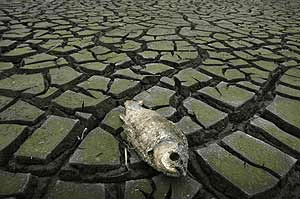
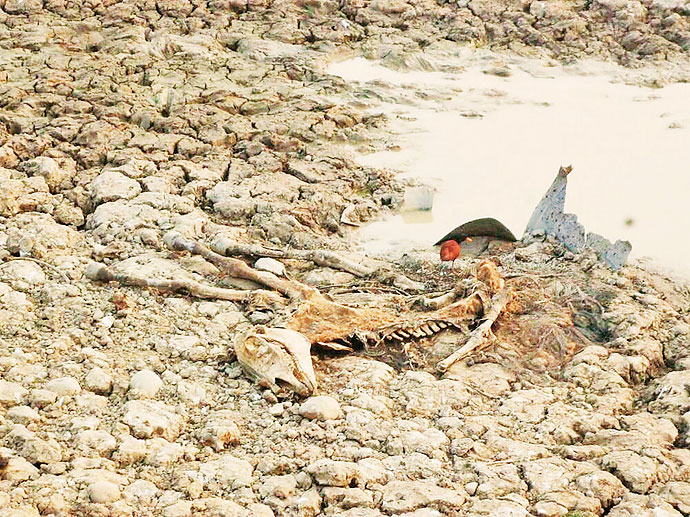
Muchas especies ven reducidas sus poblaciones por la escasez de agua y alimento, sobre todo, insectos, peces y anfibios.
Las aves de humedales sufren especialmente el deterioro de sus hábitats y, al migrar, trasladan la presión a otros ecosistemas.
Las aves son migrantes climáticas por antonomasia. Algunos peces, como la sarda, se adaptaron para vivir en ríos que menguan en el verano. Pero mientras la sequía prolongada ya se extiende por el 35% de la península, la escasez de lluvias golpea de forma silenciosa en la vida silvestre.
“Tiene efecto, sobre todo, en las especies que dependen directamente del agua, como los insectos, los peces y otras especies acuáticas, pero también en los anfibios, que necesitan agua para desarrollar la fase larvaria.
Si no hay agua en las charcas y zonas húmedas, este año directamente no van a criar”, explica a RTVE.es Rafael Seiz, coordinador del Programa de Agua de WWF España, que menciona también el impacto en las especies terrestres.
En años como este, los ciervos y corzos ven cómo el agua para beber y los pastos para comer escasean.
Con todo, algunos animales están mejor adaptados que otros. “En la cornisa cantábrica, donde el clima atlántico es más característico, las especies resisten peor los periodos de falta de recursos, con lo cual puede haber episodios puntuales en los que algunos ejemplares no consigan sobrevivir”, ejemplifica.
El estado de los ecosistemas antes de llegar la emergencia puede, en cualquier caso, marcar la diferencia.
Seis de cada diez aves amenazadas sufren más las sequías
Las aves sufren especialmente los años secos y esto manifiesta en diferentes planos: “Hay uno más inmediato, que es la necesidad de agua para beber o, incluso, para cosas que a lo mejor son menos intuitivas, como la falta de barro para que las golondrinas y aviones puedan hacer sus nidos”.
El experto que habla es Mario Giménez, delegado de SEO Birdlife en Valencia, quien enlaza con los comentarios de WWF. “Menos insectos y menos producción de semillas es, en definitiva, menos comida y eso viene a significar que las aves estén en peor estado físico.
Ponen menos huevos, sacan adelante menos pollos y esto afecta al tamaño de las poblaciones”, enumera.
Pero Giménez destaca los problemas que surgen para las aves por el cambio en sus hábitats.
La sequía es un ciclo habitual dentro del clima mediterráneo, pero estas últimas vienen montadas sobre un proceso de cambio climático que ya está influyendo en los patrones de algunas especies migratorias: bandadas que paran cada vez más al norte porque en el sur encuentran demasiado calor y poco alimento o porque los ríos ya no se hielan todo el año como antes, otras que directamente han dejado de migrar.
“Las cigüeñas son un ejemplo clásico de especie que ya no cruza el estrecho, muchas veces se quedan en España”, apunta el experto.
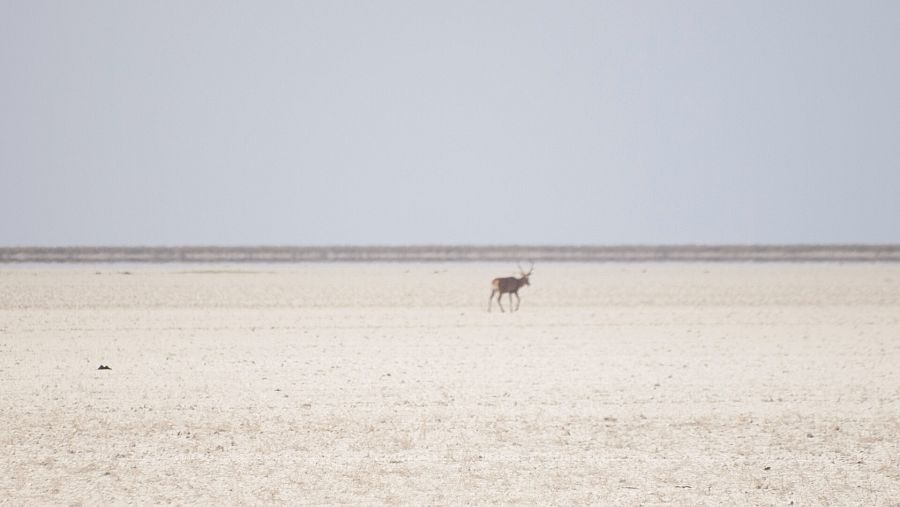
Un ciervo solitario camina por el humedal seco del Parque Nacional de Doñana. CARLOS CIUDAD / GETTY
En lo que respecta solo a las sequías, el impacto es más evidente para dos grupos de aves, las ligadas a ecosistemas agrícolas y a los humedales. Con la mala cosecha de secano este año, las primeras han quedado muy expuestas: “Como no tienen sitio donde hacer nidos, porque no han salido los cereales por la sequía, se tienen que ir a sitios peores, donde seguramente tendrán más depredación, tendrán que poner los nidos en el suelo y volvemos al inicio: habrá menos pollos”, afirma Giménez, de Seo BirdLife, sobre especies como el aguilucho cenizo.
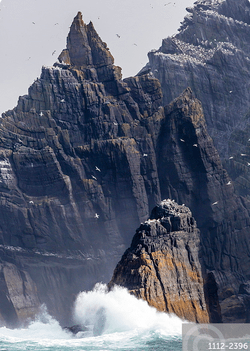
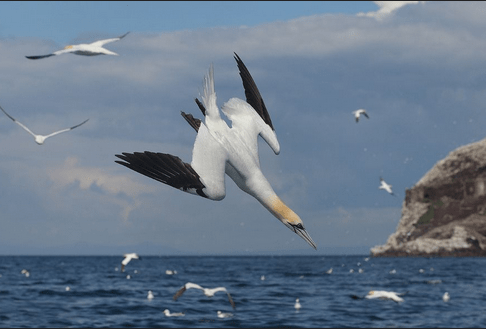
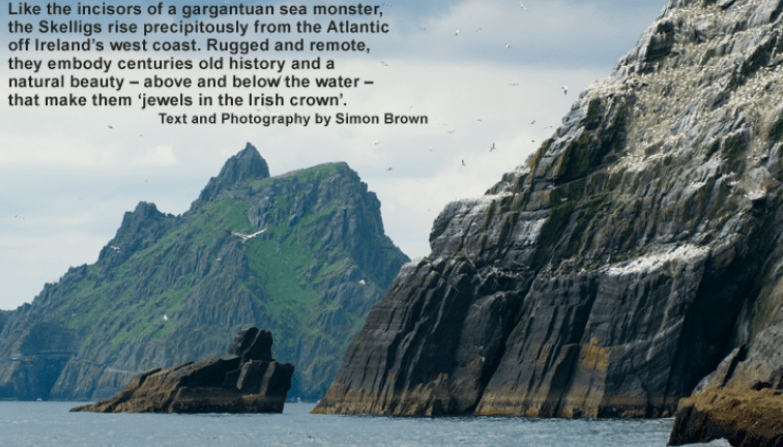
Ireland is home to a newly designated ‘Hope Spot’ off the Greater Skellig Coast in an area noted to have high conservation value for biodiversity.
Led by oceanographer and author Dr. Sylvia Earl, Mission Blue now has listed 148 Hope Spots globally. Through designations of special places for conservation it seeks to inspire public awareness and support for a worldwide network of Marine Protected Areas (MPAs).
Hope Spots are scientifically identified as critical to the health of the ocean and designated by the global marine conservation movement Mission Blue. The Greater Skellig Coast stretches from Kenmare Bay in Co Kerry to Loop Head in Co Clare and covers an area of roughly 7,000km2 of Irish coastal waters.
“This Hope Spot is being announced at a crucial time for Ireland because in 2023, new national Marine Protected Area legislation will be introduced for the first time. 81% of Irish people believe that we need to protect, conserve and restore the ocean. This legislation will help achieve this very desirable protection”, said Dr. Sylvia Earle, Founder of Mission Blue.
The Greater Skellig Coast is one of 16 ‘Areas of Interest’ identified for possible Marine Protected Area designation by Fair Seas, a coalition of environmental non-governmental organisations and networks in Ireland, with the support of Sea Synergy, a marine awareness and activity centre based in Kerry.
“The Hope Spot designation confirms what we already knew in Co Kerry and Co Clare, that the ocean is critically important. It’s my wish that this designation will help inspire people to take a closer look at what the ocean offers and that we will see more Hope Spots and action to live in harmony with Ireland’s ocean”, said Lucy Hunt, Founder of Sea Synergy.
“This global recognition is even more critical now as we finalise our own national MPA legislation in Ireland. We have one chance to do this right and we owe it to the next generation to do this well,” said Aoife O’ Mahony, Campaign Manager for Fair Seas.
Fair Seas has been campaigning for Ireland to protect at least 30% of Irish waters as Marine Protected Areas by 2030, in line with a worldwide 30×30 initiative calling for governments to protect 30% of Earth’s land and ocean by 2030.
The General Scheme of Ireland’s new Marine Protected Area (MPA) legislation was published in December 2022 and will head next to committee pre-legislative scrutiny in the Oireachtas.
This week, 350.org and partners are participating in a moderated conversation around intersectional justice alongside the Summit for a New Global Financial Pact in Paris. Jun 21, 2023 from 8pm- English here/ Français ici.
Climate: from the North to the South, a global struggle
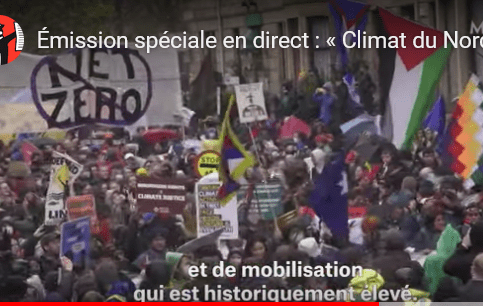
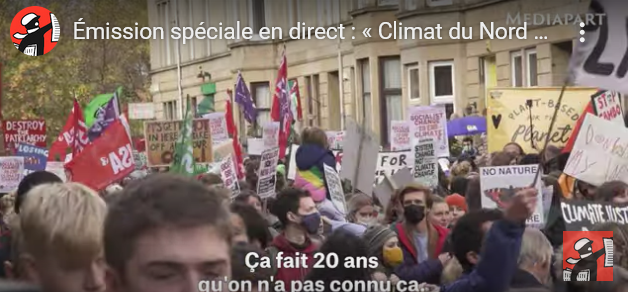
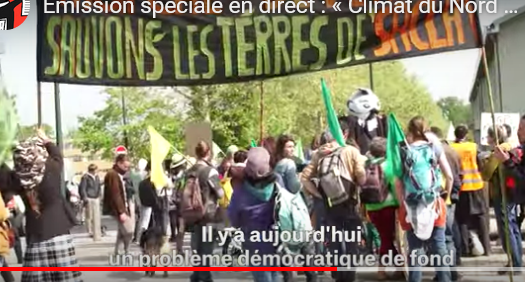
For the last 6 months, millions of people have taken to the streets in France, following the lead of trade unions, protesting against the pension reform.
Alongside these unions, many other collectives and groups supported the strikes, participated in blockades, actions and processions. Climate justice groups in particular have emphasized that the fight against pension reform shares significant parallels with the fight against climate change.
A live discussion co-hosted by Mediapart, Attac and 350.org, on the evening before the Pact Summit, with special guests from across the global climate movement.…English/ French..
waiting.. Scheduled for Jun 21, 2023 from 8pm
The French stream will be available here and the English stream will be available here.
A united front has thus been built, strengthening existing alliances between trade unions and the climate justice movement.
On the eve of the opening of the Summit for a New Global Financial Pact in Paris, it is crucial to state loud and clear that the destruction of all forms of social protection and solidarity organized by the state obeys the same logic as the destruction of ecosystems, the collapse of biodiversity and, of course, climate change.
Climate justice can only emerge from broad alliances: when climate activists, employees fighting for their jobs, frontline communities directly affected by climate impacts, pensioners defending their right to stop working, and others, are organizing together.
We would therefore like to invite you to participate in a public discussion to show our solidarity with the trade union organizations behind the struggle against pension reform and to build links between the climate justice movement and other struggles.
Retrouvez notre émission spéciale « #Climat: du nord au sud, un monde en batailles » mercredi 21 juin en direct sur Mediapart en partenariat avec ATTAC et 350.org, avec des figures mondiales de la lutte pour le climat.
The goal of this event is to present our vision of a future free of the fossil fuel industry and neoliberalism’s hegemony. If world leaders decided to tax the rich and socialize the profits of major polluters like Total, Exxon, and BP, what could we achieve?
The conversation will be streamed online, both in French and in English, and be loosely moderated. There will be live (simultaneous) translation (English-French).
The French stream will be available here and the English stream will be available here.
Part 1: End of the world, end of the month: how to build alliances?
With:
Greta Thunberg, Fridays for Future
Vanessa Nakate, Rise Up Climate movement
Sophie Binet, General Secretary, Confédération Générale du Travail – CGT
Clémence Dubois, Associate Director, Global Campaigns, 350.org
Benoit Teste, General Secretary, Fédération Syndicale Unitaire –– FSU
Part 2: Reinventing North-South solidarity around climate change
With:
Diana Nabiruma, Africa Institute for Energy Governance
Simon Duteil, Co-délégué général du syndicat Solidaires
Youlie Yamamoto, porte-parole ATTAC
Disha Ravie, Fridays for Future, Most Affected People and Areas (MAPA)
Luisa Neubauer, Fridays for Future, Germany
Benoit Teste, General Secretary, Fédération Syndicale Unitaire –– FSU
Clémence Dubois, Associate Director, Global Campaigns, 350.org



 The Free