from thefreeonline on 12th Jan 2023 at libertame ILLustraTIONS AddEd by Paul Goodman
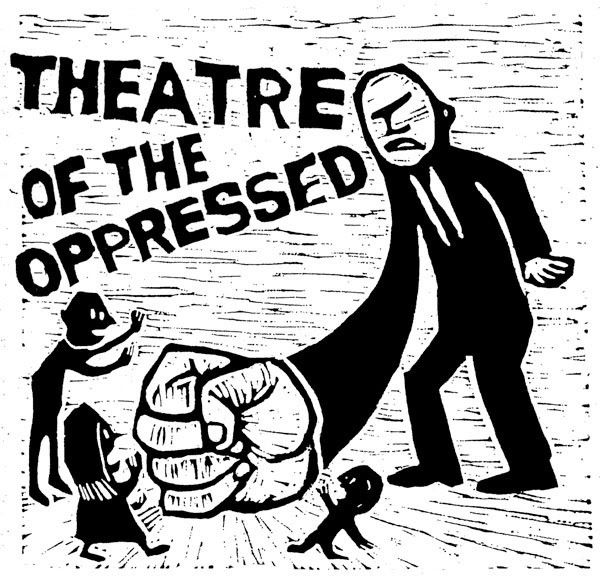
Some unconventional ideas for a sane and revolutionary approach to education…. Excerpt from Compulsory Education by Paul Goodman

There are thinkable alternatives. Throughout this little book, as the occasion arises, I will offer alternative proposals that I, as an individual, have heard of or thought of.
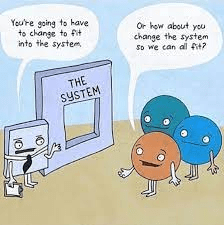
Here are half a dozen directly relevant to the topic we’ve been discussing, the system as mandatory cheating.
In principle, when a law begins to do more harm than good, the
best policy is to mitigate it or try to do without it.



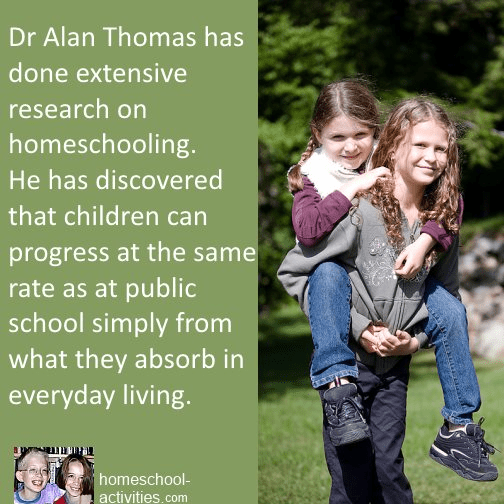


- Not having school at all for some classes. These children must be selected from tolerable, though not necessarily educated, homes. They must be neighbors and numerous enough to form a partnership for each other, so that they don’t just feel different.” Will they learn the rudiments anyway? This experiment cannot harm children academically, since there is strong evidence that normal children will make up for the first seven years of school work with four to seven months of good teaching.
- Bypassing the school building for some classes; provide teachers and use the city itself as a school: its streets, cafeterias, shops, cinemas, museums, parks and factories. Whenever possible, it makes more sense to teach using the actual subject than to
- bring an abstraction of the subject into the school
- building as ‘curriculum’. Such a class should probably not exceed ten children for a single pedagogue. The idea – it is the model of Athenian education – is not unlike the work of youth gangs, but not applied to criminals and not playing with the ideology of gangs.
- Along the same lines, but both outside and inside the school building, use the appropriate adults in the unlicensed community—the pharmacist, the grocer, the mechanic—as the appropriate educators of youth in the adult world. In this way, we can try to overcome the separation of young people from the adult world, so characteristic of modern urban life, and diminish the omnivorous authority of school professionals.
It would certainly be a useful and encouraging experience for adults. - Make class attendance non-compulsory, à la Summerhill by A. S. Neill. If the teachers are good, the absence would tend to be eliminated; if they are bad, let them know. Compulsory law is helpful in alienating children from parents, but it should not result in entrapment for children. A good modification of this suggestion is the rule used by Frank Brown in Florida: allow children to be away for a week or a month to pursue any worthwhile enterprise or visit some new environment.
- Decentralize an urban school (or not build a large new building) into small units, twenty to fifty, in storefronts or available clubs. These small schools, equipped with jukeboxes and a pinball machine, could combine play, socialization, discussion, and formal teaching. For special events, the small units can meet in a common auditorium or gymnasium, to give the feeling of a larger community.
Consequently, I think it would be worthwhile to take a look at the Little Red Schoolhouse in modern urban conditions, and see how it works: that is, to combine all the ages in a small room for twenty-five or thirty, rather than sort by age. - Use a prorated share of the school money to send kids to economically marginal farms for a couple of months out of the year, maybe six kids from mixed backgrounds to one farmer. The only requirement is that the farmer feed them and not hit them; better, of course, if they participate in agricultural tasks. In this way, the farmer will have cash available, as part of the generally desirable program to correct the ratio between the country and the city, which approaches 70% and 30%. (Currently, less than 8% of families are rural.) It is possible that some of the children in the cities will adapt to the other way of life and that we can generate a new type of rural culture.
I often suggest these and similar proposals in teachers’ colleges, and they look at me strangely: do I really intend to reduce the state subsidy for each day of class? But most of the time the goal is that such proposals entail intolerable administrative difficulties.
Continue reading “Compulsory Education (1962) – Paul Goodman – January 8, 2023 – set me free”