The mainly ethnic Russian people of Donbass voted overwhelmingly first for independence, and suffered 8 years of brutal military siege, before voting to join Russia, in the hope of gaining protection. Now Western leaders are united in a hysterical crusade to destroy them.
The media still blankets a massive propaganda campaign to hide NATO greed and military profiteering. But in reality we are all pushed to the edge of Nuclear War to save and boost the US capitalist military/industrial complex, now bereft of its 20 year boondoggle in Afghanistan.
Ukrainian army kills 20 civilians in five days of deliberate shelling of Donbass towns
For several days, the Ukrainian army has yet again been shelling residential areas of Donbass towns with Grad and Himars multiple rocket launchers and NATO 155mm artillery, killing and injuring many civilians.
Since 1 December 2022, the Ukrainian army has been shelling residential areas of Donbass cities on a daily basis, especially against the cities of Donetsk, Gorlovka (DPR – Donetsk People’s Republic) and Alchevsk (LPR – Lugansk People’s Republic).
Grad multiple rocket launchers and NATO standard 155 mm artillery are mainly used against the DPR city of Donetsk, including the city centre.
In the late morning and evening of 1 December 2022, the Ukrainian army shelled the centre of Donetsk with multiple Grad rocket launchers (22 rockets in total), killing an employee of the Ministry of Emergency Situations and killing one civilian and wounding seven others. Several apartment buildings and the Ramada Hotel were also hit.
On 2 December 2022, the Ukrainian army continued to bombard the centre of Donetsk with Grad and NATO 155 mm artillery, killing five civilians and wounding 14 others. The fire is aimed at shopping streets, where there are no positions, no military bases and no weapons. Worse still, one of the shots was fired at around 5 p.m., just as many employees were leaving work to go home. Clearly, the aim of the Ukrainian soldiers was to cause a maximum number of victims among civilians.
On 3 December 2022, the Ukrainian army continued to fire on various districts of Donetsk, and added a HARM missile to its usual munitions, against the Kirovsky district. Except that it is not clear what motivated the firing of an anti-radar missile there, since this is also a residential area, where there is obviously no military radar. A total of 4 civilians were injured that day.
U.S. school kids, hospital patients, and prison inmates share food poisoning, while food liquidators boast they turn “trash into treasure.”
[This article is the second part of a series on human rights abuse by the U.S. Federal Bureau of Prisons (BOP) and the Miami Federal Detention Center (Miami FDC).Part Onewas on its deadly lack of health care services.Part Two is about its torturous and corrupt food service industry.In violation of international human rights, the U.S. prison system fails to provide inmates with “wholesome and adequate food,” as specified in theUnited Nations’ Human Rights and Prisons:APocketbook of International Human Rights Standards for Prison Officials.—CAM Editors]
Operating in the shadows is easy in the United States secondary food market, as few question what happens to food that exceeds its expiration date in leading supermarket chains across the nation.Well, truth be told, expired food gets…
A Turkish court has sentenced a journalist to three years in prison on conviction of disseminating terrorist propaganda in her social media posts, the pro-Kurdish Mezopotamya news agency reported on Thursday.
The sentence was handed down by the Diyarbakır 4th High Criminal Court to Beritan Canözer, a reporter for JinNews, due to tweets she posted on her own account in 2014-2015 and on another account named “Beritan Sarya” in 2020 because of four comments and one like on social media.
The court has sentenced Beritan Canözer to one year, 10 months and 15 days in prison for her social media posts and to one year and three months in prison for the social media posts that were shared on a social media account “beritansarya” which her lawyer denied was hers.. Total over 3 years.
The court did not suspend the sentence due to the fact that Canözer was previously convicted on the same charges.
Canözer’s lawyer, Resul Temur, is expected to appeal the decision, according to a report by the Media and Law Studies Association (MLSA), a non-profit organization working in the fields of free speech, journalism, internet freedoms and the right to information.
Wikipedia> Diyarbakır, pop 1,791,373, has been a main focal point of the conflict between the Turkish state and various Kurdish separatist groups, and is seen by many Kurds as the de facto capital of Kurdistan.[3][4] The city was intended to become the capital of an independent Kurdistan following the Treaty of Sèvres, but this was disregarded following subsequent political developments.[5][6][7]
In Diyarbakir 12 persons were arrested for selling Kurdish music cassettes. The owners of shops with Kurdish names – HEVAL (comrade) or WELAT (homeland) – were threatened and ordered to change the signs within the hour. One tailor who refused to comply was thrown into prison for two days and his sign was altered….etc
Erdogan ordered bombing and shelling of Kurdish majority cities inside Turkey on 2o16 after the growth of Kurdish parties due to the unilateral PKK truce threatened the political balance of power. The west looked the other way as EU candidate Turkey bombed European cities with NATO weapons, blaming “terrorists”.
We received and publish Anna Beniamino’s statement read during the appeal hearing for the recalculation of sentences in the Scripta Manent trial (Turin, Dec. 5, 2022).
” This is a political trial, one that has been tense from the beginning to the administration of exemplary punishment, a trial of our identities as anarchists rather than the facts, a trial of those who do not abjure their ideas.
A massacre without massacre attributed without evidence is the culmination of a growing effort by counterterrorism and prosecutors to exorcise the specter of action anarchism.
In the same vein is the imposition of the 41 bis regime on Alfredo Cospito, guilty of maintaining relations with the anarchist movement from prison. The all-out hunger strike that the comrade has been carrying out since Oct. 20 is the last resort against isolation and sensory, physical, and mental deprivation, against a political gag. A gag that has prevented him from even reading the reasons for the strike itself.
The 41 bis is the extreme degree of fury of the differentiated regimes: prisons where continued isolation and overcrowding of the common sections are the two faces of a system aimed at nullifying the individual.
Prisons where massacres, the real ones, have occurred and are occurring: in the repression of the 2020 uprisings, in the trickle of suicides, in the treatment of the poorest and most fragile among prisoners as «residual material» of the prevailing techno-capitalist society.
If anything happens to Alfredo Cospito any individual with critical thinking will understand who the principals and executors of his physical annihilation are, having failed to carry out the political and ideal one.
I am aware that I am hostage to a system that hides behind the fetish of «security» and «terrorism» its political, economic, social, and environmental collapse.
Opposing this is necessary. You can destroy people’s lives, you will not succeed in extinguishing anti-authoritarian thinking and practices. You will not succeed in breaking the revolutionary tension, you will not succeed in extinguishing anarchy.
Anna was arrested on September 6, 2016 as part of Operation Scripta Manent, and sentenced to 17 years. On appeal, her sentence was reduced to 16 years and 6 months. An Open Letter by Anna on Operation Scripta Manent: SCRIPTA MANENT The prosecution in Turin have decided to put an entire anarchist tendency on trial: anti-organisation Anarchism……
***********
Breaking isolation against 41 bis and life sentence
Musk’s brainchild, Neuralink, was founded in 2016 and is seeking to find ways of instant interaction between the human brain and artificial intelligence (AI).
Elon Musk’s medical-device firm Neuralink has been caught in the crosshairs of the Inspector General for the US Department of Agriculture (USDA) over complaints about a hasty animal-testing process. What’s Musk’s brain implant project about and what is its real goal?
Currently, the firm is developing two pieces of equipment. One, as small as a coin, would be embedded in a human skull with tiny wires – comprising 1,024 electrodes – fanning out into their brain. Each wire is said to be about 20 times thinner than a human hair.
The device is supposed to monitor and record brain activity, and then transmit this data wirelessly via Bluetooth-like radio waves to computers. Two years ago, Neuralink held a live demo showing off the chip’s ability to read the brain activity of a pig and transmit the data.
The other one is an eight-foot-tall robot that would surgically insert a Neuralink AI brain chip while avoiding damage to the brain or blood vessels. Musk promised that the process would take hours and leave only a small scar.
“Our goal is to record from and stimulate spikes in neurons in a way that is orders of magnitude more than anything that has been done to date and safe and good enough that it is not like a major operation,” the billionaire said in his 2019 presentation, explaining that the procedure could be compared to that of laser eye surgery.
Meanwhile, critics say that Neuralink has not done anything particularly innovative: neuroscientists and bioengineers have been working on this for decades.
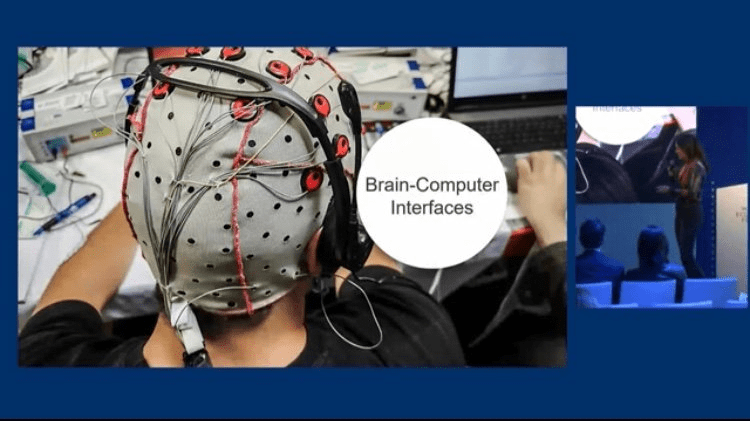
For instance, in 2019, a team of researchers from Carnegie Mellon University in collaboration with the University of Minnesota used a noninvasive brain-computer interface (BCI) to develop the first-ever successful mind-controlled robotic arm.
The goal was to create a technology that would allow paralyzed patients to control their robotic limbs using their own “thoughts.”
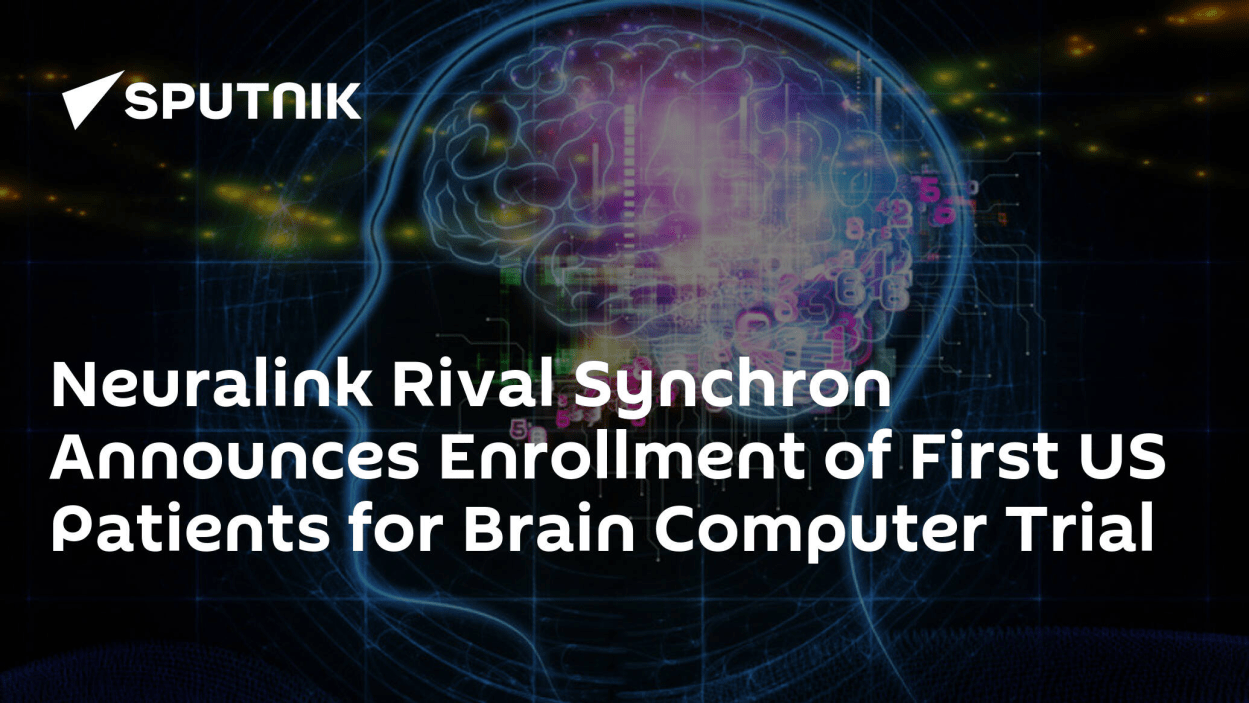
In May 2022, Neuralink competitor Synchron Inc. enrolled the first patient in its US clinical trial of its own BCI called Stentrode. The device is intended to help people suffering from paralysis control digital devices hands-free. Over five million people are affected by the condition in the US alone, according to researchers at the Centers for Disease Control.
AI: Challenges and Ethical Issues
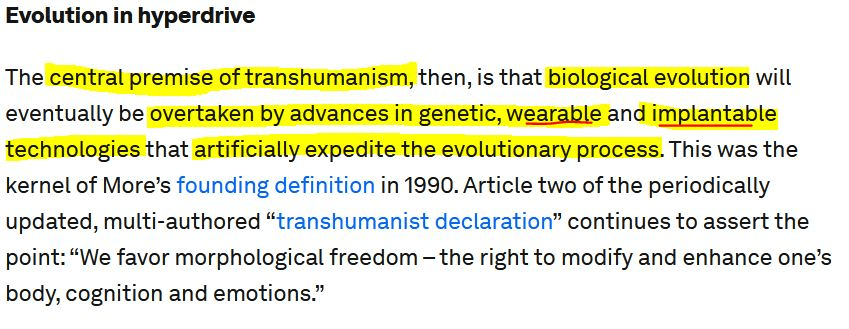
However, Musk is determined to go further than that. The Tesla and Twitter CEO wants to expand people’s cognitive abilities: for example, to enable superhuman vision or telepathy, and eventually change the world.
The businessman warned that with AI’s present rate of advancement, humans will soon lag far behind, machines triggering a vast variety of ethical and societal issues. The World Economic Forum (WEF) outlined at least nine of them, *but is itself controlled by billionaire money aiming to monetize and control the planet
The first is unemployment: automation of jobs employing physical work could soon be followed by AI taking the burden of cognitive labor on its shoulders, too. Inequality is the second issue: How would people distribute the wealth created by machines? There is a fear that individuals who have ownership in AI-driven companies will make all the money.
Third, it’s unclear how machines will affect humans’ behavior and interaction. WEF observers note that machines can already trigger the reward centers in the human brain, warning against “tech addiction.” Those who still believe that it’s not that serious should look at click-bait headlines optimized with A/B testing (also known as split testing) to capture our attention. First humans programmed computers, now supercomputers could program us.
Fourth, “artificial stupidity”: no matter how “smart” AI is, it’s not guaranteed it won’t make stupid mistakes. One should mitigate risks associated with AI’s “glitches” when it comes to labor, security, and efficiency. Fifth, AI systems can be “biased and judgmental,” because they are created and programmed by humans.
Sixth, needless to say, AI systems do not have a built-in conscience and therefore could act “maliciously” and cause damage in case they are hacked or originally used as weapons. Seventh, some researchers still believe in the possibility of a Terminator-style rebellion of machines, and consider future advanced AI system as a “genie in a bottle.”
Remarkably, renowned physicist Stephen Hawking also worried about the emergence of artificial intelligence, calling it the “worst event in the history of our civilization” in November 2017. “[W]e cannot know if we will be infinitely helped by AI, or ignored by it and side-lined, or conceivably destroyed by it,” Hawking said at the Web Summit technology conference in Lisbon, Portugal. He insisted that creators of AI should “employ best practice and effective management” to avoid this potential reality.
The eighth issue – and this is what Musk is especially concerned about – is the question as to how people would stay in control of AI systems which one day could become much smarter than humans.
The ninth issue that concerns the international community is… “robot rights.” Indeed, even in the 20th century American writer Isaac Asimov described robots with emotions, feelings, and even ambitions. If one day people begin to consider advanced AI machines as subjects that can perceive, feel, and act, then the question of legal status will immediately arise.
Should humans really keep up with machines and even merge with them one day? Musk believes that we ought to: as AI threatens to become widespread, humans could soon find themselves useless, the billionaire argues.
“Over time I think we will probably see a closer merger of biological intelligence and digital intelligence,” Musk told the World Government Summit in Dubai in February 2017. “It’s mostly about the bandwidth, the speed of the connection between your brain and the digital version of yourself, particularly output.”
To illustrate his point, Musk noted that computers can communicate at “a trillion bits per second,” while humans, who mostly communicate through typing, can do just 10 bits per second. According to the businessman, a symbiosis between human and machine intelligence could solve both the control problem and the usefulness problem.
To that end, he proposed developing a “neural lace” that connects the brain directly to computers. As a result, the empowered human brain would be able to tap into artificial intelligence instantly through digital devices or directly to the cloud, where massive computing power is available.
However, some scientists warn that “merging” a human brain with artificial intelligence could bring more harm than good. Moreover, it would be a “suicide for the human mind” if so called transhumanists go so far as to replace parts of the brain with AI components.
Furthermore, after radical enhancement, the individual who remains may not even be the same person. His/her behavior could change dramatically. What if the “upgraded” person loses his/her “self”?
On the other hand, who would guarantee that a human connected through a “neural lace” to the “cloud” would not be “hacked” or “zombified” one day? “Bio-conservatives” argue that Musk’s neurotechnology project could erase the frontier between natural and artificial, human and machine, living and no-living.
Other members of the scientific community suggest that the merged combination of a human and a machine could give rise to a higher form of AI-powered intelligence. Building of hybrid collaborative systems could end up in creating new types of robots, designed to look and behave like humans. Is this potential scenario fascinating or frightening?
Is the Musk-championed human-machine “symbiosis” worth the risk?
Elon Musk’s medical-device firm Neuralink has been caught in the crosshairs of the Inspector General for the US Department of Agriculture (USDA) over complaints about a hasty animal-testing process. What’s Musk’s brain implant project about and what is its real goal?
Musk’s brainchild, Neuralink, was founded in 2016 and is seeking to find ways of instant interaction between the human brain and artificial intelligence (AI).
Currently, the firm is developing two pieces of equipment. One, as small as a coin, would be embedded in a human skull with tiny wires – comprising 1,024 electrodes – fanning out into their brain. Each wire is said to be about 20 times thinner than a human hair.
The device is supposed to monitor and record brain activity, and then transmit this data wirelessly via Bluetooth-like radio waves to computers. Two years ago, Neuralink held a live demo showing off the chip’s ability to read the brain activity of a pig and transmit the data.
The other one is an eight-foot-tall robot that would surgically insert a Neuralink AI brain chip while avoiding damage to the brain or blood vessels. Musk promised that the process would take hours and leave only a small scar.
“Our goal is to record from and stimulate spikes in neurons in a way that is orders of magnitude more than anything that has been done to date and safe and good enough that it is not like a major operation,” the billionaire said in his 2019 presentation, explaining that the procedure could be compared to that of laser eye surgery.
Meanwhile, critics say that Neuralink has not done anything particularly innovative: neuroscientists and bioengineers have been working on this for decades.



















 The Free