A historical look at how anarchists in the 1990s mobilized against attacks on reproductive freedom and autonomy by taking direct action and building autonomous infrastructure.
Anarcha-feminist traditions of grassroots struggle and autonomous abortion infrastructure offer alternative strategies. As the anarcha-feminist Liz Highleyman put it in 1992, “the day when abortion is again made illegal may come sooner than we like to think. We must be ready to take our bodies and our lives into our own hands.”
By Spencer Beswick As the Supreme Court prepares to reverse Roe v. Wade under a Democratic president, house, and senate, it is clear that action at the ballot box is insufficient to protect abortion. Reproductive rights were not won by electoral means, and that is not how we will defend them.
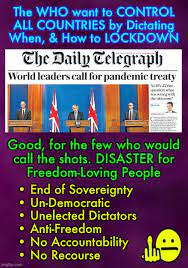
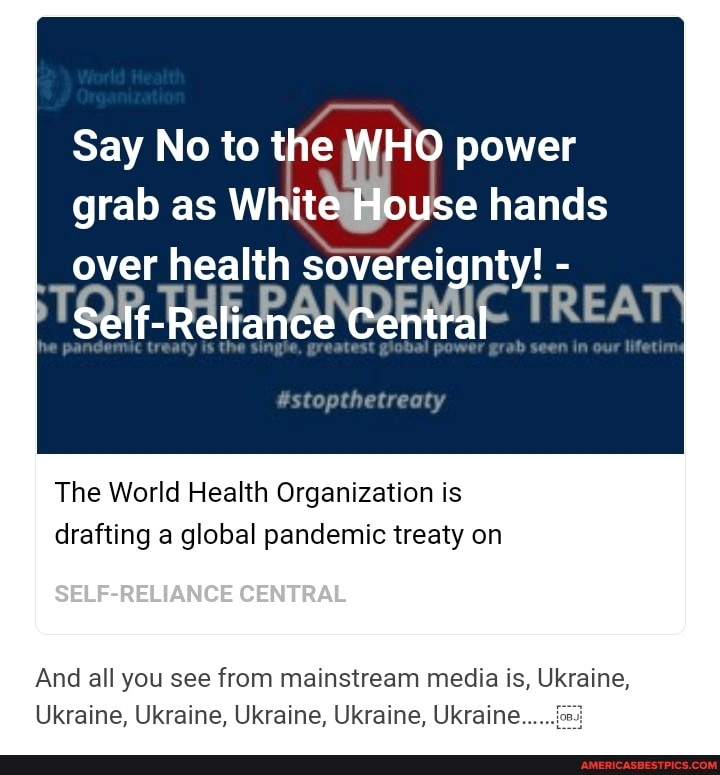
Members of the World Health Organization (WHO) are days away from voting on an international pandemic treaty and amendments to the International Health Regulations (2005) which would give the unelected WHO greater control of national emergency healthcare decisions and new powers to push vaccine passports, global surveillance, and “global coordinated actions” that address “misinformation” whenever it declares a “health emergency.”
From May 22 to May 28, representatives of the WHO’s 194 member states (which represent 98% of all the countries in the world) will attend a World Health Assembly meeting in Geneva and vote on this treaty and the proposed amendments to the International Health Regulations (IHR). If passed, both the treaty and amendments to the IHR will be legally binding under international law.
The international pandemic treaty
The World Health Assembly (WHA), the decision-making body of the WHO, established an intergovernmental negotiating body (INB) to draft and negotiate a “global accord on pandemic prevention, preparedness and response” in December 2021. The WHA aims to have this treaty adopted under Article 19 of the WHO Constitution which gives the WHA the power to impose legally binding conventions or agreements on WHO member states if two-thirds of the WHA vote in favor of them.
While the WHO framed this as an international pandemic treaty, the latest draft of the treaty has since evolved to cover all “health emergencies.” Unlike the term “pandemic,” which is limited in scope and refers to the worldwide spread of infectious disease, the WHO’s definition of a “public health emergency of international concern” (PHEIC) is much broader and applies to all types of disease, regardless of whether they’re infectious:
“A PHEIC is defined in the IHR (2005) as, ‘an extraordinary event which is determined to constitute a public health risk to other States through the international spread of disease and to potentially require a coordinated international response.’”
The draft treaty places the “WHO at the centre” and solidifies the WHO as “the directing and coordinating authority on international health” and gives it sweeping, legally binding powers to force member states to adopt many of the censorship and surveillance tools that were imposed during the COVID-19 pandemic.
Some of the key areas of the draft treaty include:
International vaccine passports and contact tracing: Member states will be required to “support the development of standards for producing a digital version of the International Certificate of Vaccination and Prophylaxis” (the WHO’s official vaccine passport). The WHO will also “develop norms and standards” for “digital technology applications relevant to international travel” such as contact tracing apps and digital health forms.
Global surveillance: The WHO will conduct “coordinated global surveillance of public health threats” and member states will be required to build out their surveillance systems and work with “the WHO’s global systems for surveillance.” Non-state actors (which could include Big Tech companies) will also be required to work with governments, the WHO, and other international partners to leverage their “considerable data” to “create the strongest possible early warning and response systems.”
Addressing “misinformation,” “disinformation,” and “too much information:” The draft treaty pushes “national and global coordinated actions to address the misinformation, disinformation, and stigmatization, that undermine public health.” Member states will also be required to strengthen their approaches to “infodemic management” (a term coined by the WHO that refers to “too much information including false or misleading information in digital and physical environments during a disease outbreak.”) Additionally, non-state actors will be required to actors to work with governments to fight disinformation.
Funding: WHO members are set to collectively pay the WHO over $950 million in dues for 2022-2023 and already paid over $270 million in voluntary contributions for 2020-2021. And this draft treaty proposes that G7 countries (Canada, France, Germany, Italy, Japan, the UK, and the US) also pay $11 billion for the “Access to COVID-19 Tools Accelerator (ACT-A).” Additionally, it intends to create an”International Pandemic Financing Facility” that will extract long-term (10-15 year) contributions of $5-10 billion per year.
We obtained a copy of the draft treaty for you here.
If this draft treaty is approved at the May 22 to May 28 WHA meeting, the INB will hold a second meeting on August 1 to discuss progress on the draft. A progress report will then be delivered at the 76th WHA meeting in May 2023. The final treaty will then be presented for adoption at the 77th WHA meeting in May 2024.
Proposed amendments to the International Health Regulations (2005)
On January 18, the Biden administration quietly sent the WHO its extensive proposed amendments to the IHR. The details of these proposed amendments were only made public on April 12, almost three months after they were sent.
Under the current IHR, 196 countries are legally required under international law to build the capability to detect and report potential public health emergencies worldwide and respond promptly to a public health emergency of international concern (PHEIC) whenever it’s declared by the WHO.
These proposed amendments from the Biden administration give the WHO and its Director-General, Dr. Tedros Adhanom Ghebreyesus, sweeping new powers to declare public health emergencies, even over the objection of member states, and implement global surveillance measures that require the mass collection of genetic sequence data.
Some of the key amendments that are being pushed by the Biden administration include:
Increased WHO powers to declare “potential” emergencies: Currently, the WHO can only declare a PHEIC when there’s an actual “public health risk to other States through the international spread of disease.” These proposed amendments allow it to declare a PHEIC when there’s a “potential or actual” PHEIC. This means there doesn’t have to be evidence of the international spread of disease, just the potential for it.
Increased WHO powers to declare health emergencies: Currently, the WHO has to follow the PHEIC criteria when declaring a public health emergency and health emergencies can only be declared by the Director-General. But under these proposed amendments, the WHO Director-General can issue an “intermediate public health alert” to any country in response to events that don’t meet the criteria of a PHEIC and a WHO “regional director” can declare a “public health emergency of regional concern” (PHERC).
Global surveillance and data sharing: The Biden administration’s proposed amendments empower the WHO to develop new “early warning criteria” for monitoring “national, regional, or global risk posed by an event of unknown causes or sources.” Additionally, these proposed amendments expand the scope of data sharing under the IHR and require members to hand over genetic sequence data to the WHO whenever they have an event that “may constitute a public health emergency of international concern.”
We obtained a copy of the proposed amendments to the IHR for you here.
If these amendments are approved at the May 22 to May 28 WHA meeting, nations have six months to reject them. After six months, they’ll enter into force and any rejection or reservation “shall have no effect.”
The WHO’s history of supporting surveillance and acting as an arbiter of truth
Not only could this treaty and the proposed amendments to the IHR empower the unelected WHO to push surveillance, vaccine passports, and global programs that target what it deems to be misinformation but this international health agency already gave the world a taste of how it exercises these powers during the COVID-19 pandemic. As COVID-19 spread, the WHO rigorously supported surveillance tech and was increasingly used as an arbiter of truth on Big Tech platforms, even though it got many things wrong.
Despite having significant influence over how these platforms determine which posts to brand as misinformation, the WHO has got many things about COVID wrong and amplified misleading statements. For example, in an infamous January 14, 2020 tweet, the WHO stated that “preliminary investigations conducted by the Chinese authorities have found no clear evidence of human-to-human transmission” of the coronavirus.
The way the WHO gains its powers gives citizens almost no recourse. Instead of the response to national emergencies in democratic nations being the sole purview of elected officials who can vote on proposed measures that apply to their citizens and be held accountable at the ballot box by those citizens, WHO members vote on legally binding international treaties and agreements on their behalf via the WHA. If two-thirds of the WHA vote to adopt a treaty or agreement, it becomes legally binding under international law.
This global governance system has the support of both parties in most democratic countries. For example, during the 2022 Australian federal election campaign, both of the leadingcandidates expressed full support for the WHO’s expanded powers.
And the WHO Director-General has used the COVID-19 pandemic to push countries to further embrace the WHO’s global governance system by blasting countries that made their own decisions and claiming that their “‘me-first’ approaches… stymie the global solidarity needed to deal with a global threat.”
Countries that support the WHO’s expanded powers
Many countries have expressed support for the international pandemic treaty or the proposed amendments to the IHR.
The US supports both its proposed IHR amendments and the international pandemic treaty.
The treaty also has the support of the UK, Canada, Australia, New Zealand, and the European Council (EC) (which represents 27 European Union (EU) member states). According to the EC, 110 countries supported the decision to launch negotiations on the treaty. If these 110 countries vote in favor of the treaty, it would give the WHA close to the two-thirds of the majority it needs to pass the treaty.
Opposition to the WHO’s expanded powers
While there’s significant member state support for these expanded WHO powers, local politicians, citizens, and rights groups are opposing this power grab.
Several UK Members of Parliament (MPs), including the Conservative MPs Craig Mackinlay and Steve Baker, have also called for the government to provide clarity on the treaty.
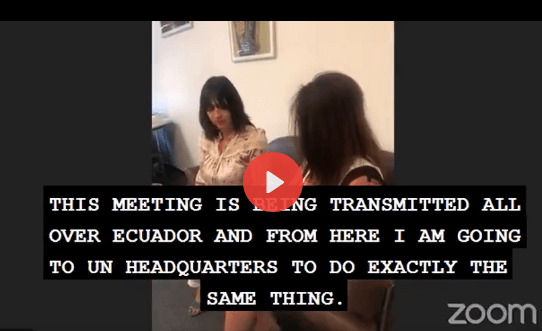
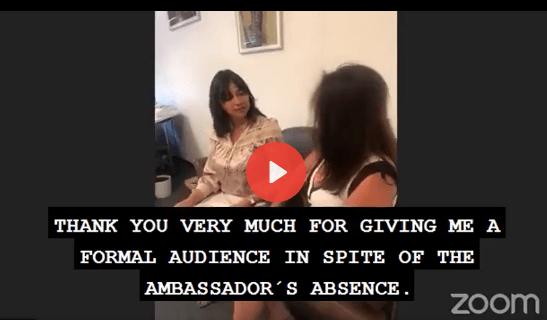
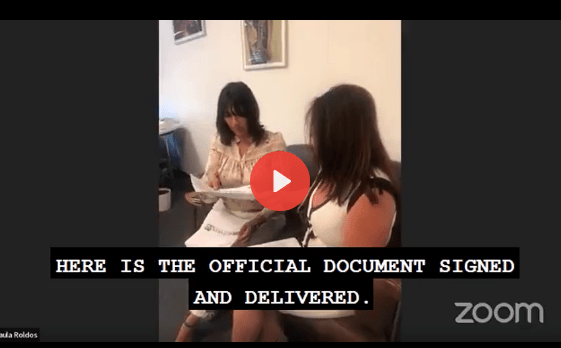
May 21st, 2022. Ecuador delivers, in person, a sovereign manifesto to WHO headquarters in Geneva.
In it they have let it be known that under NO CIRCUMSTANCES will the Ecuadorian people tolerate the sovereignty of their homeland being put at risk to ANYONE.
Even before the US backed coup in 2014 Ukraine was one of the most corrupt countries in the world. Under the new regime, backed by the IMF, World Bank and the EU things went from shocking to disastrous, with billionaires and politicians openly laundering their criminal gains.
While the poor suffered and the angry nazis thrived and massacred ethnic Donbass Russians, the local and western elite treated the country as a chaotic capitalist casino.
Now we have Martial Law, all opposition banned or jailed, Russian bombing of the military and infrastructure, and at the same time gigantic imports of guns, rockets, artillery, tanks, ammunition, .. as well as civilian aid.
George F reflects on historic tensions between squatters and the use of “property guardianship” to deny access to abandoned buildings by landlords who are now ramping up rents –creating a full-blown confrontation over slum-style exploitation of people desperate for living space.
Squatters famously hate property guardianships, viewing them as the shills of owners and landlords, trading away the rights of tenants for cheaper rent and denying self-housers of valuable buildings that could otherwise be occupied.
The concept was originally developed to combat squatting in the Netherlands, where it is known as ‘anti-kraak’, and the ‘live-in protection’ signs that declare the presence of what some people view as sell-outs and class traitors are often the subject to vandalism.
Update: Following publication of this article Freedom was contacted by ‘Live-In Guardians’ which demanded that we make it clear the firm is not Dot Dot Dot. We thought it was clear from context that the lead picture, showing a company sign graffitid with the word ‘Scabs’ is there to illustrate squatters’ dislike of the industry, but are happy to clarify that Live-in Guardians is not in fact an entirely differently named company, and has raised its prices by a mere 6%.
Yet, even if squatters are critical of the choices of guardians, they are united with them in their struggle against the common enemy – landlords and their agents, and indeed the concept of rent itself. That is why we call here for solidarity as the licensees of one particularly disgraceful guardianship company are organising a boycott in association with the London Renter’s Union after being informed that their payments will increase by up to 113%, from around £375 to £800 a month.
Katharine Hibbert, former Times housing journalist and founder of ‘social enterprise’ property guardianship dotdotdot, used to be a squatter and worked in the Advisory Service for Squatters for a year to gather research and information for her book, and apparently her business plan, before spectacularly cashing in by branding her own flavour of exploitative Rachmanism as “ethical.”
She once posed the question, “but what would happen if one day you just jacked it all in, to survive on next to nothing?” Now it seems she wishes to recreate that experience for all the dotdotdot guardians by liberating them of all their money.
I get knocked down, but I get up again You are never gonna keep me down I get knocked down, but I get up again You are never gonna keep me down I get knocked down, but I get up again You are never gonna keep me down I get knocked down, but I get up again You are never gonna keep me down
He drinks a Whiskey drink, he drinks a Vodka drink He drinks a Lager drink, he drinks a Cider drink He sings the songs that remind him of the good times He sings the songs that remind him of the best times (Oh Danny Boy, Danny Boy, Danny Boy)
I get knocked down, but I get up again You are never gonna keep me down I get knocked down, but I get up again You are never gonna keep me down I get knocked down, but I get up again You are never gonna keep me down I get…
Dunstan Bruce is perhaps most famous for his lead vocals and listing of libations in the Chumbawamba pop hit, Tubthumping.
But there is so much more to him and that band than that one song. For the hour we touch on some of the band’s 30 year history, their relation as a collective, anarchist band to social justice movements around the world and how they used their fame and money to give back, Dunstan’s recently finished documentary “I Get Knocked Down: The Untold Story of Chumbawamba” and his accompanying one man show “Am I Invisible Yet?”, aging and the battle for relevance, staying involved in politics and more.
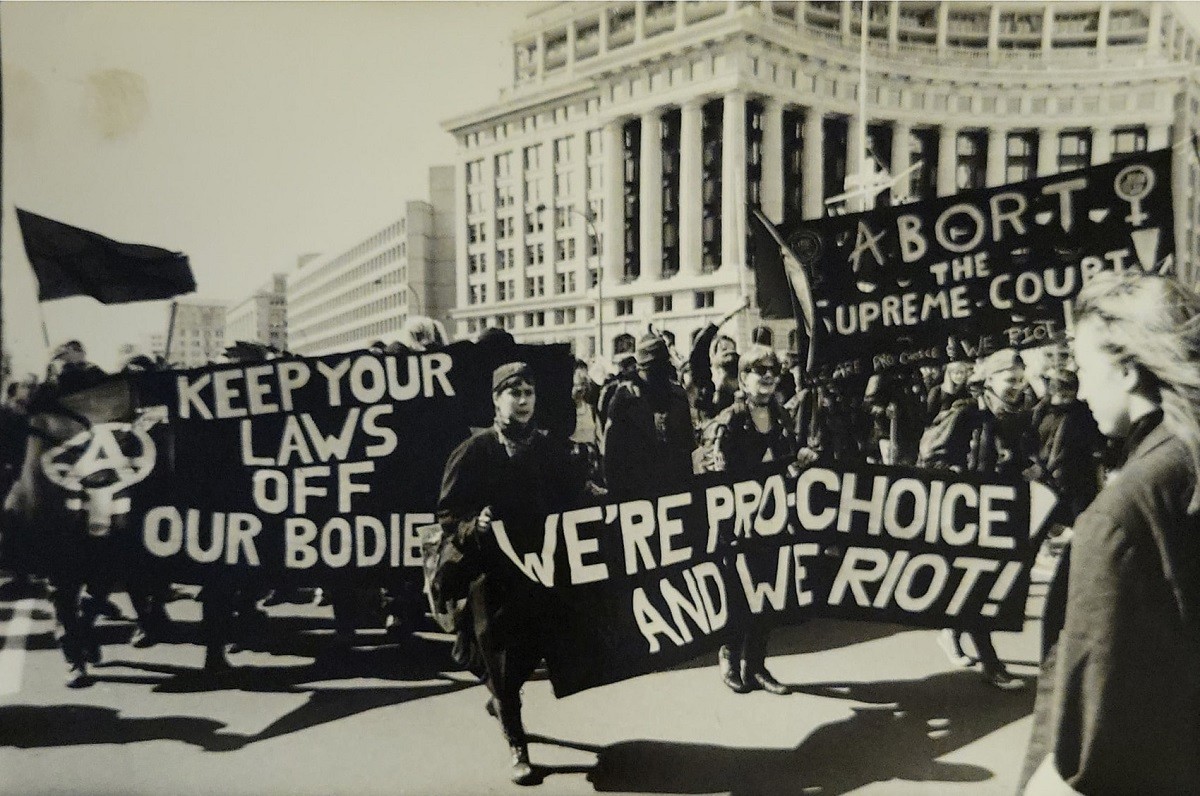 A historical look at how anarchists in the 1990s mobilized against attacks on reproductive freedom and autonomy by taking direct action and building autonomous infrastructure.