In opposition to PL191, a government bill in Congress that would allow mining and extractive industries on their reservations, 8,000 people representing more than 200 Indigenous nations from many regions of the country are gathered in Brasília for the Free Land Camp mobilization and 10 days of action in support of the Indigenous rights guaranteed in the Constitution.
The Free Land Camp (ATL) will take place from April 4-14, 2022, in Brasília.
Sônia Guajajara
Lawmakers in the lower house of Congress allied to the government are pushing through Bill 191 by using the argument that it is urgently needed to extract potash for fertilizer for Brazil’s grain crops that previously depended on imports from Ukraine, now disrupted by the war. However, Brazil’s potash reserves are located outside of Indigenous territories and the Bolsonaro government’s real intention is to allow gold mining and other extractive industries in Indigenous lands.
NATO is going to beef up its military forces on the eastern flank as part of a fundamental reset of the alliance, NATO Secretary-General Jens Stoltenberg said in an interview with The Telegraph, APA reports citing Sputnik.
NATO is preparing plans for full-scale deployment of troops on its eastern borders in response to Russia’s growing military activity.
***
According to The Telegraph, NATO military commanders are developing options for the reset, and the alliance’s military presence in countries like Estonia, Latvia, Lithuania, and Poland is expected to be transformed into a “major force”….
Stoltenberg noted that about 40,000 troops are already stationed on the eastern flank of the alliance, which is about ten times more than a few months ago. The head of the alliance said that their number will increase.
Belarus. On April 6, the Ministry of the Interior reported that security forces used live ammunition to arrest “saboteurs” along a rail track in late March.
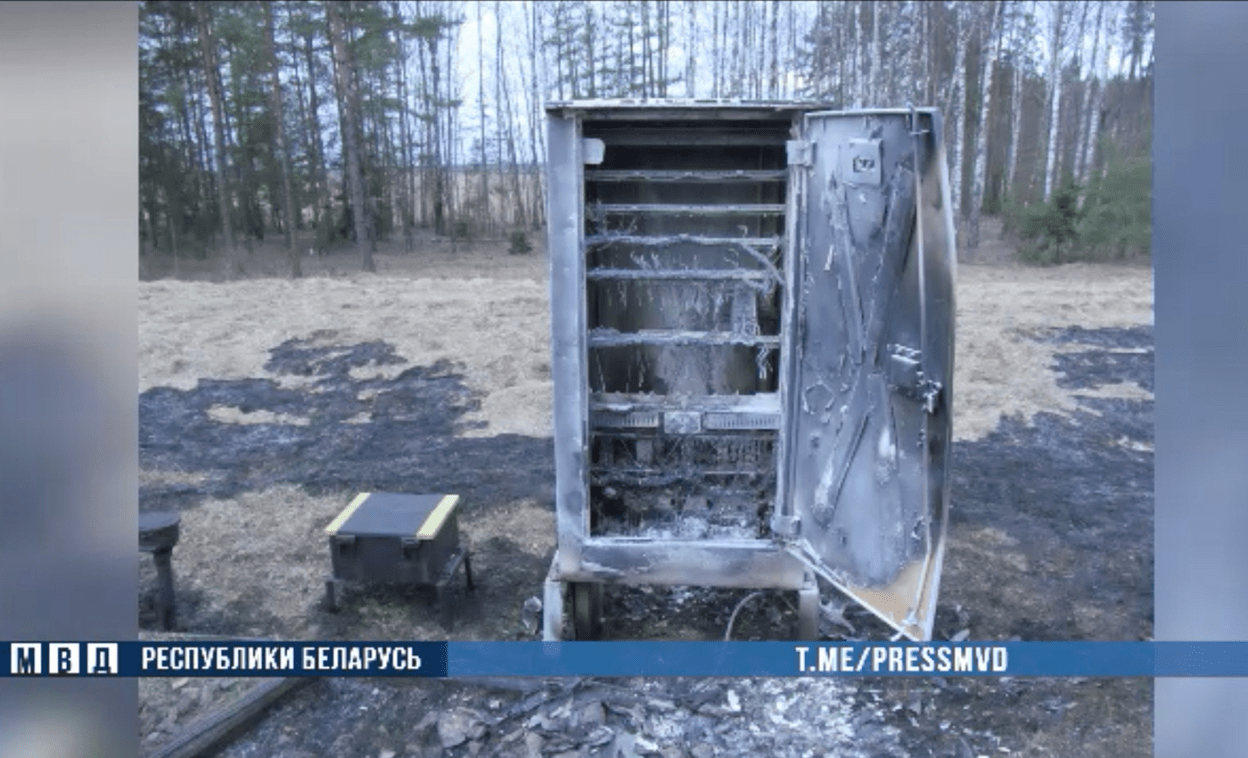
Three of them allegedly acted together and set fire to two relay cabinets near Osipovichi. Video footage shows that one of them, with bandaged knees, has difficulty answering questions of the police forces, the second has blood on his face, and the third is really scared.
Deputy Interior Minister Gennady Kazakevich now confirmed the shooting of the suspects during alleged acts of sabotage on the railroad track.
At the press conference he spoke of two seriously injured – a resident of Bobruysk, who was allegedly involved in the destruction of relay cabinets, and a resident from the Minsk district, whose car was parked near the tracks and who was snitched on by “citizens who are not indifferent”.
Image above: Arrival of military equipment from Russia at the Brest-Yuzhny railway depot in January.
Originally published by Media Zona. Translated by Riot Turtle with support of translation tools. We apologize for any possible minor mistakes.
On March 25, the telegram channel of the Community of Belarusian Railway Workers wrote that two relay cabinets of the Signal, Centralization and Blocking system (SCB) between the train stations Barysau and Novosady had gone up in flames the night before.
On March 28, the Railway Workers’ Channel reported another incident with SCBs – they were out of service after an arson attack between the train stations of Sovietski and Vereitski in Osipovichi district. April 2: A staff member of “SB.
Belarus Today” correspondent Yury Terekh reports that “a few groups who decided to embellish their free time in the evening with a simple terrorist act [on the train tracks] have already encountered security forces.”
Normally we SCOFF at high tech Capitalist Scams claiming to Save the Planet. This one looks FOR REAL and ready to go- but Big-Oil-Mafia may fight tooth and nail to stop it.
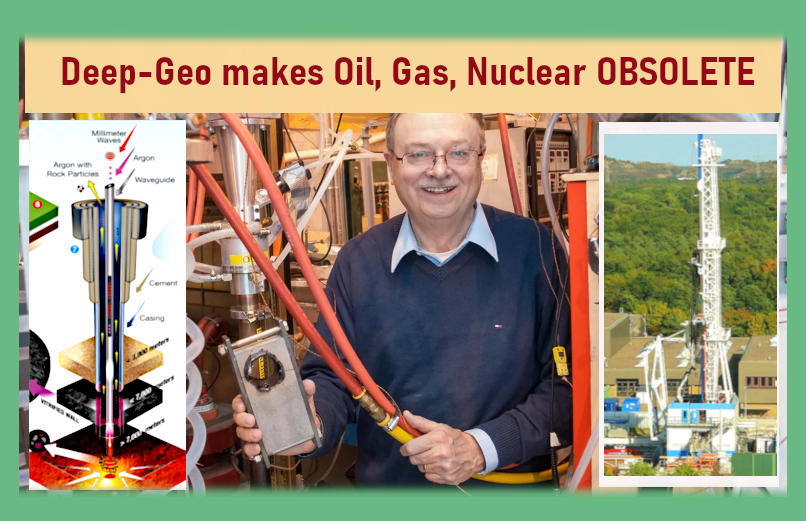
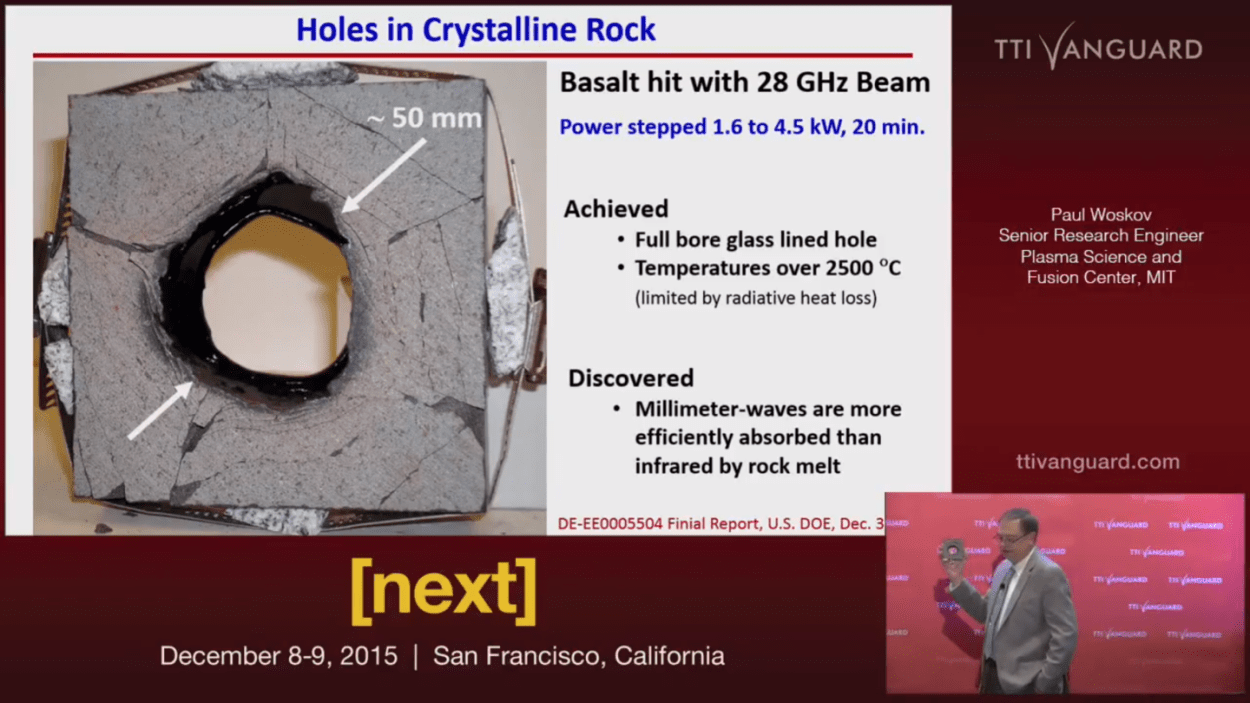
Feel the Heat: Paul Woskov of MIT holds water-cooling lines leading to a test chamber, and a sample of rock with a hole made by a beam from a gyrotron. Photo: Paul Rivenberg/MIT
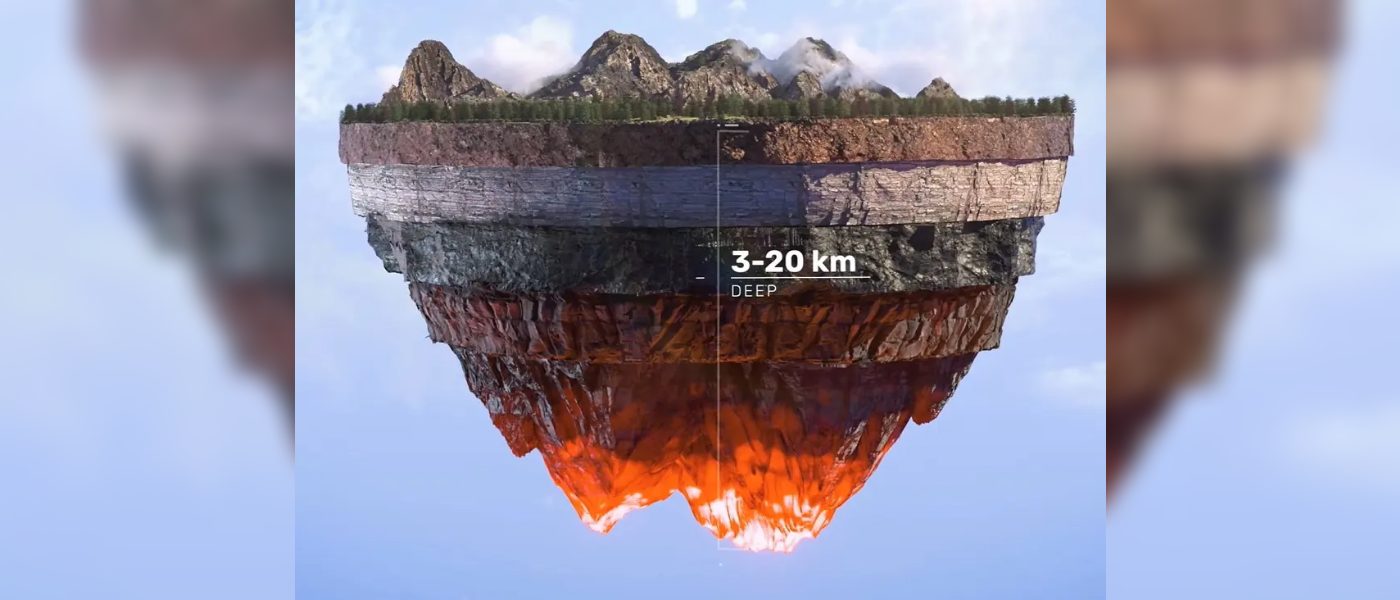
In just 2 years the first Deep-Geo wells will be drilled. With new millimeter technology rocks can be vaporized in a self sealing borehole up to 20kms deep.
It’s not toxic, reaches only the hot rocks well before magma, and doesn’t fracture or poison ground water like fracking. And it uses already existing gyrotron technology developed in the USSR.
And you can do it almost anywhere..
That is- right next to redundant coal, oil and gas power stations, supplying the super heated steam to power their turbines, without oil, gas coal, nuclear, dangerous transport or Oil Wars…
Unlimited Electricity 100% both CO2 and methane free!
(unless we include CO2 released in the manufacture of the drilling equipment)
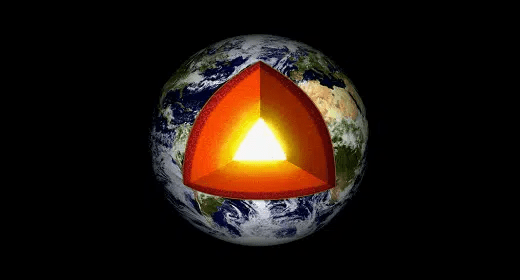
We live on a piece that fell off the sun. Just 20kms down the rocks are at 500 C. All we needed to do is drill down, pump in water and use superheated steam for free electricity lasting millions of years. But we didn’t know how to do it.
The promise:
If Deep-Geo goes viral worldwide it could really slow down and mitigate the Climate Catastrophe, tipping the oil and gas industry into a death spiral, with all its ramifications.
Problems:
Deep-Geo won’t end Capitalist Ecocide that’s rapidly destroying our Biosphere.
It is not fully demonstrated yet.
It’s happening in the US where the oil/gas and military lobby will try to stop it.
The challenge for Activists against Climate Meltdown is to evaluate the reality of the Deep-Geo promise and, if it really works as promised, to support and demand it, while continuing to campaign against ongoing Capitalist ecocide.
******
The Perfect Energy Source Is Already Here – Endless Geothermal Is Poised for Release From Deep in the Earth
The base of the new drilling method was discovered ‘accidentally’ by Paul Woskov and his team and developed for 10 years at the MIT Plasma Science and Fusion Center before various companies began trials.
As physicists work in the nuclear fusion sector, they inadvertently invented a tool that could allow geothermal plants to deliver limitless clean energy by harnessing the power of the Earth.
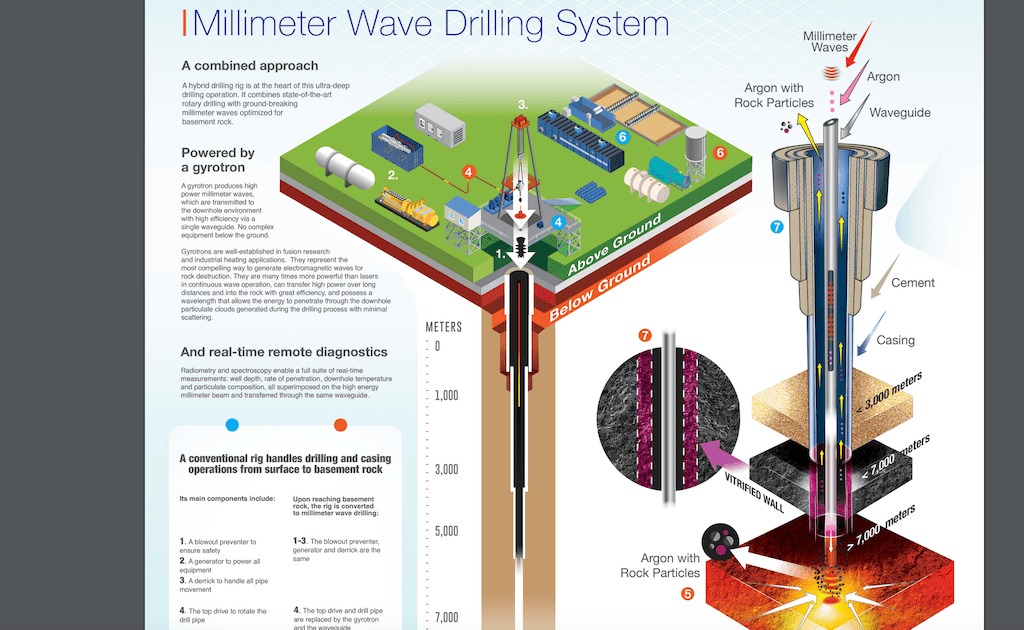
That tool is a large millimeter-wave laser drill that will allow engineers to bore down more than 12.4 miles (20 km) into the Earth’s crust to harness the heat from the planet’s core.
This laser drilling technology is being pioneered by a spin-off company called Quaise from MIT .
The bottom line is that this idea is not science fiction, and Quaise has the money to put several full-scale demonstration machines into action by 2024, and hopes to have a 100- megawatt supercritical geothermal plant in operation by 2026.
At 12.4 miles into the Earth’s crust, temperatures soar to 500°C, a sector-redefining level compared to traditional drill bit borehole temperatures of around 200°C.
At this stage and depth, water under the ground becomes “supercritical,” a state of matter where it’s neither a gas nor a liquid.
“A power plant that uses supercritical water as the working fluid can extract up to 10 times more useful energy from each drop when compared to non-supercritical plants,” a spokesperson from Quaise told New Atlas. “Aiming for supercritical conditions is key to attaining power densities consistent with fossil fuels.”
It’s perhaps ironic that humans would seek to harness the energy of the sun and stars in a nuclear fusion reactor when there is 20 billion times more heat under our feet than the entire world’s energy consumption.
Merely 0.03% of global energy is delivered from geothermal despite this richness.
A virtually limitless supply of energy exists in the form of this supercritical fluid snaking its way through the crust and mantle of the planet, and just 0.01% of it would provide far more wattage than the world uses.
In order to reach it though, we need better drilling technology, and Quaise is taking advantage of the work put into a 1970s piece of technology called a gyrotron.
When needing to heat water into a plasma scientists need to generate between 90-150 million degrees Celsius of heat. This has been done by both lasers and super magnets.
The gyrotron is one of those lasers, and it generates electromagnetic waves in the millimeter-wave spectrum, shorter than microwaves and longer than infrared or visible light.
Designed, invented, and tested in the USSR in the 1970’s,the device is excellent at rapidly heating up a plasma without substantial energy usage.
So, accessing already existing energy with already existing technology, Quaise has proved itself remarkably efficient. They’ve raised $63 million in funding and they’re looking to cut out fossil fuels in a real way before the end of the decade.
Their next planned step may be the greatest recycling trick in the industry.
As coal-fired power plants continue to be shuttered around the world, their giant, already established infrastructure for converting steam into electricity, large electricity distribution equipment, and talented workforce could simply be taken over by Quaise, who could merely replace the coal-fired components with those meant for harnessing supercritical water.
Pure futurism
“There are somewhere upwards of 8,500 coal-fired power plants around the world, totaling over 2,000 gigawatts of capacity, and they’ll all have to find something else to do by 2050,” writes Loz Blain at New Atlas.
Blain argues this is more revolutionary than nuclear fusion, and the beauty of the design, if it works, is that the technology originally made for fusion reactors could end up putting them out of a job.
At 12-15 miles below the Earth’s surface, it doesn’t matter where the drill or ex-coal plant is located, the heat will be pretty much the same.
In fact, the world would be set for a paradigm shift.
Since unlimited clean energy could be obtained within most nations, it would untether them from geo-political concerns about oil-rich countries like the US and their human rights abuses.
On land and sea, birds and wildlife would be untouched by any massive polluting oil spills that would become a thing of the past.
*********
The challenge for activists against Climate Meltdown is to evaluate the reality of the Deep-Geo promise and if it really works to support and demand it, while continuing to campaign against Capitalist ecocide.
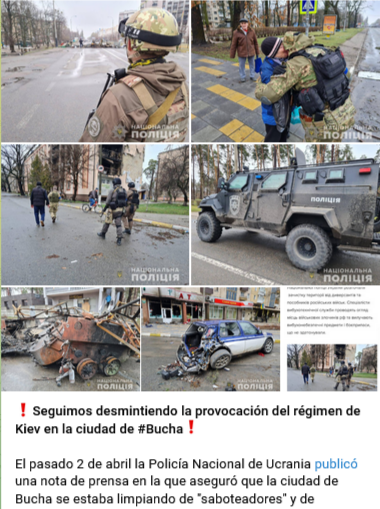
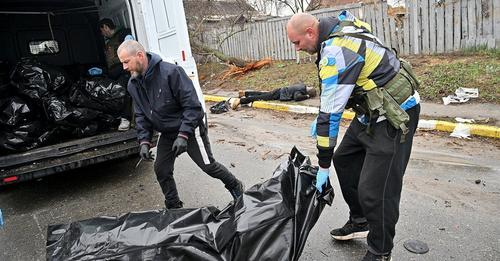
The city of Bucha, in Ukraine, has recently come to the attention of the US and EU corporate media, for the purpose of criminalizing Russia for the supposed assassination of 300 civilians.
However, proof has now emergedthat it was not the Russians and that it must have been done by elements of the notorious nazi Azov Batallion and/or the Territorial Defense of the Ukrainian military
After the Ukronazi regime of Volodimir Zelensky published images depicting corpses in Bucha, supposedly killed by the Russian military, in the middle of the street and in mass graves, calls have been issued for Russia to be tried internationally for war crimes.
The bodies were rapidly stuffed into rubbish bags and 280 dumped in a mass grave by the Ukrainian military. None had rigor mortis or the green or red skin apparent after 24…
Grnrchst is an anarchist and prolific Wikipedia editor who has contributed to a number of the site’s articles on anarchism. In part one of the interview (which you can read here), Grnrchst shared their thoughts on Wikipedia’s principles and organisational structure, and speculates on where they might align with anarchist concepts and values. In part two, Grnrchst shares how the articles they contributed to for Wikipedia helped shaped their perspective on anarchism and global resistance.
Among the entries you’ve written, which one are you particularly proud of?
This may sound cheesy but it’s the one that hasn’t been written yet. Writing Wikipedia articles isn’t like writing a book or an essay for a journal, where there is some level of completeness to the final draft that ends up being published.
Wikipedia is a living and breathing encyclopaedia, meaning it’s never really done, but is constantly evolving, expanding and improving based on the additions of a collective. So while I’m proud of many of my entries, I’m far more proud when others help build them beyond the foundations I laid.
Of course, I appreciate that this may not be a particularly satisfying answer, so I’ll give a couple specific examples. These are works-in-progress that I am hoping will soon meet the criteria for being rated as ‘good’ articles. Maybe they could even be ‘featured articles’ some day.
Right now I am working on articles about the history of the Ukrainian anarchist movement, such as that of the Revolutionary Insurgent Army of Ukraine, the Makhnovschina, and Nestor Makhno himself. This is a project that I am pumping a lot of hours of research and writing into and it is still far from done, but I’m very proud of what I have accomplished so far, and I am looking forward to making them even better.
Despite an apparent shift in the mainstream narrative to the crisis in Ukraine, the Irish State’s Covid-19 propaganda war rages on. Popular TV shows, like RTE’s diet & fitness series Operation Transformation, are to be found on the frontline of this battle for hearts and minds.








![Sabotage in rail road network: Arrests [Belarus] - featured image](https://i0.wp.com/enoughisenough14.org/wp-content/uploads/2022/04/russianarmybelarus.jpeg?quality=80&ssl=1&strip=info&w=1600)