Spain is now a first Target for Nuclear Annihilation as the Base of the 4 most advanced Ballistic Missile Destroyers in the US
Spain will send the Blas de Lezo frigate to the Black Sea , while the Meteoro minehunter left two days ago, a shipment that arrives amid boiling tension with Russia manufactured by US agression after losing its Afghan moneyspinner.
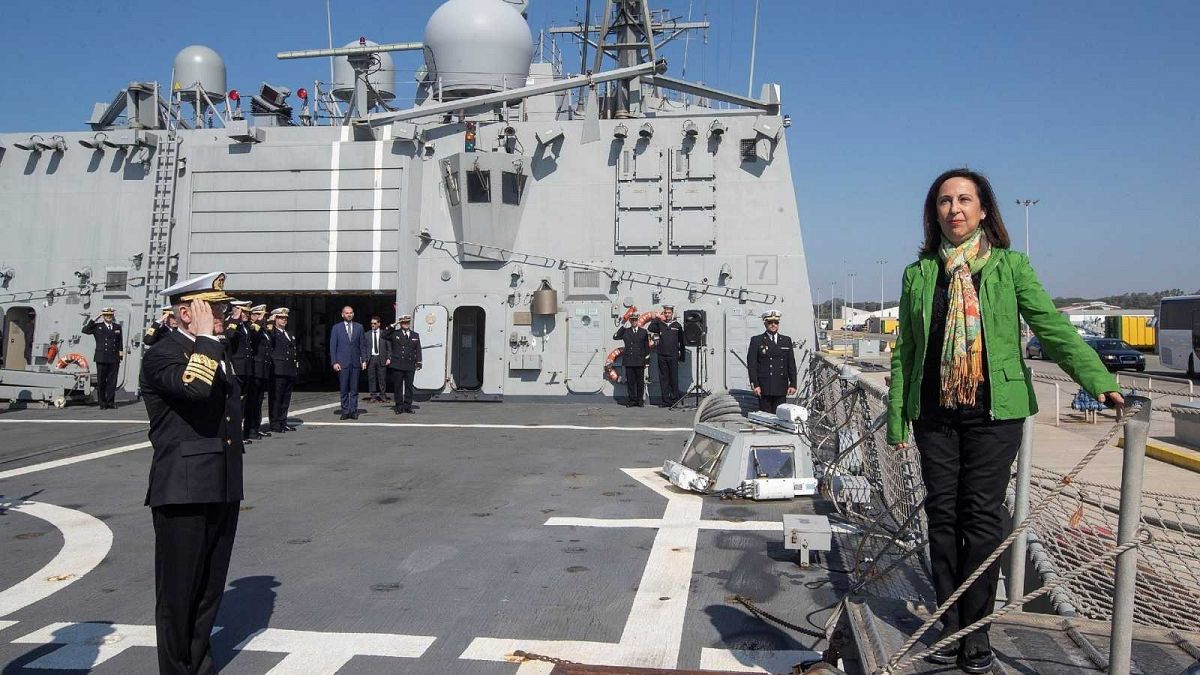
Robles, in statements to the media referred to the anti Russia campaign and openly backed the US and NATO (apart from Germany) in arming the Ukrainian nazi regime on Russia’s border which is attacking the Donbass enclave of Russian speakers and citizens. Robles endorsed ”any state’s right to join NATO”. Ukraine is a few minutes from Moscow by nuclear missile.
“Everyone knows Russia doesn’t want to invade Ukraine. The lunatic US game is to provoke a war by any means necessary, using its NATO proxies as cannon fodder”.
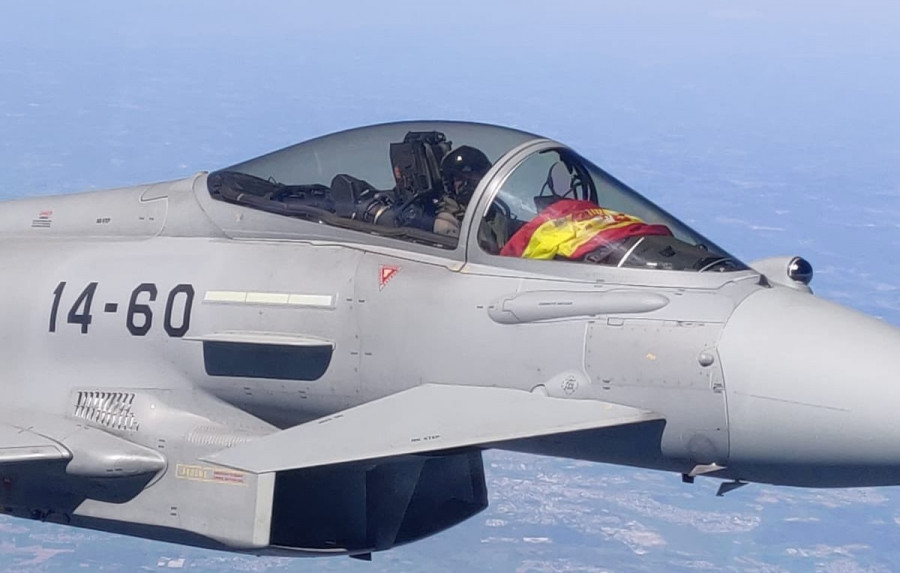
Spanish Eurofighters patrolling Russia’s Black Sea border
The ruling US Arms industry and contractors are crying out for a new war, after losing the great ‘trillion dollar banquet’ of the 20 year Afghan occupation.
Hundreds more NATO War Games are imminent on Russia’s borders. The US has invited 60 nations to new ‘Exercises’ near Russia’s Black Sea beaches. The Nato nations are militarizing, with their proud ‘macho moron’ generals forced to order the latest US weapons at mind boggling expense. Cowed by Covid, there is little public outcry until now.

KIev is filling up with more weapons and ‘special forces’ than it can handle , more Nato troops are landing in states next to Russia, and new Nuclear missiles are soon to be rolled out.
But this is the ‘kicker’.. Ukraine is now controlled by the west Ukrainian nazis, gearing up with their new weapon gifts to attack the Russian minority in the Donbass enclave, which for centuries was part of Russia.

The last time the European nazis attacked Russia they lost over 27 MILLION Soviet citizens in repulsing them. For the last 30 years NATO has crept closer and closer, until they are militarizing Ukraine, and all bordering states, just a few minutes by nuclear missile from Moscow.
The analogy could be if Texas and California had left a declining USA (like Ukraine left the disbanding USSR) and were courted and joined a Russian Military Pact (like Nato did to Eastern Europe) . And if they were supplied via Russia with missiles and weapons to attack a small group of US rebels holding out in North Texas (like the Russians in Donbass) while calling all the Russian backed states in the region to a military crusade to stop the ‘evil US agressor’ invading Texas.
The analogy is not accurate of course, but it gives an idea of the Russian point of view.
This is ‘Putin’s Red Line’. Nazis shall not pass. Desperate for a capitalist war the US hopes to force Russia to intervene, either way they sell multi billions in armaments, but could just as easily destroy the planet.
Spain is now a first Target for Nuclear Annihilation as the Base of the 4 most advanced Ballistic Missile Destroyers in the US
In the event of the likely war caused by a NATO attack on Ukraine, the Black Sea or Latvia, Russia will have to destroy, in a matter of minutes, first Spain as a base for the advanced US anti ballistic missiles that threaten its original nuclear arsenal.
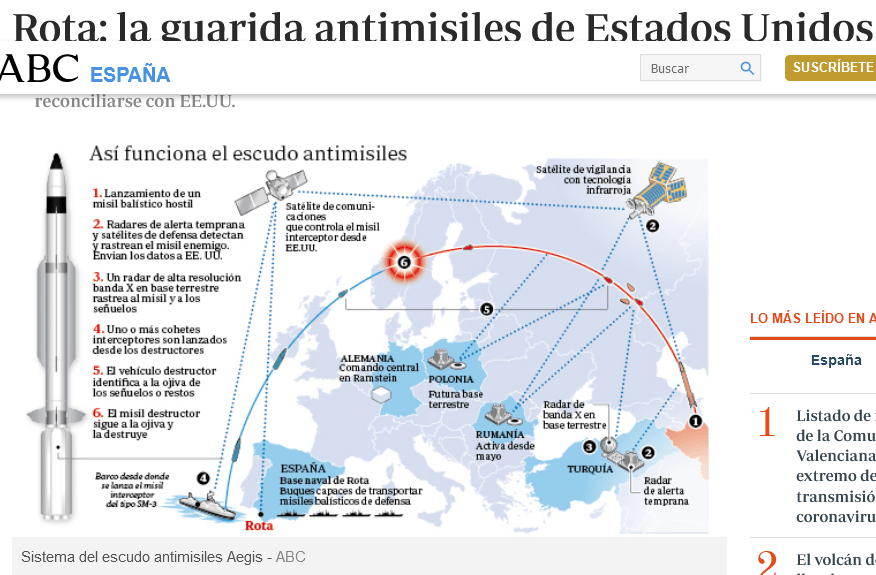
Since February 2014, the naval base in Rota (Cádiz) has housed four US destroyers as part of the NATO anti-missile shield. And now, the “USS Arleigh Burke” is deployed at the Cadiz base, which is the most technologically advanced destroyer of ballistic missiles that the US Naval Forces has deployed in Europe.