Seascape: the state of our oceans
Race to the bottom: the disastrous, blindfolded rush to mine the deep sea
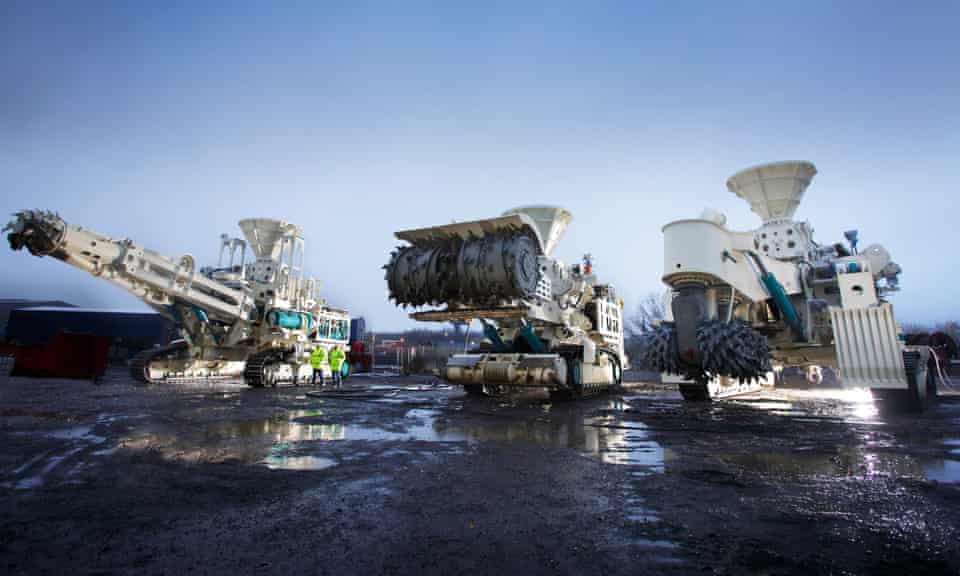
Cutting machines developed for deep-sea mining. Mining today is often from mega-pits so big they can be seen from space, but they are governed by laws drawn up 150 years ago in the era of picks and shovels. Photograph: Nautilus Minerals
One of the largest mining operations ever seen on Earth aims to despoil an ocean we are only barely beginning to understand.
- More in this series
- ‘False choice’ – is deep sea mining required for an electric vehicle revolution?
- Covid tests and superbug killers: how the deep sea is key to fighting pandemics
- ‘Shark calling’: indigenous Papua New Guineans say seabed mining threatens ancient custom
- The incredible, otherworldly deepsea creatures under threat from mining – in picturesby Jonathan Watts, global environment editorSeascape: the state of our oceans is supported by
A short bureaucratic note from a brutally degraded microstate in the South Pacific to a little-known institution in the Caribbean is about to change the world. Few people are aware of its potential consequences, but the impacts are certain to be far-reaching. The only question is whether that change will be to the detriment of the global environment or the benefit of international governance.
In late June, the island republic of Nauru informed the International Seabed Authority (ISA) based in Kingston, Jamaica of its intention to start mining the seabed in two years’ time via a subsidiary of a Canadian firm, The Metals Company (TMC, until recently known as DeepGreen). Innocuous as it sounds, this note was a starting gun for a resource race on the planet’s last vast frontier: the abyssal plains that stretch between continental shelves deep below the oceans.
Continue reading “Race to the bottom: the disastrous, blindfolded rush to mine the deep sea”