

from Kaosenlared, by Nicolás Esperante, translation thefreeonline, illustrations added
Argentina. Seed collectivization: life and abundance in the hands of the communities
# #FortaleciendolaAgroecología
| Despite having come with the impulse of the neoliberal governments -which thirty years ago settled in the region-, the industrial model implemented in the agroforestry zone of northeastern Argentina ran into a fundamental resistance factor: the Organic Agriculture Network of Missions. (la Red de Agricultura Orgánica de Misiones.)

A group of farmers, associations and NGOs that understand that production and sustainability are not contradictory terms. We review the history of RAOM and its activism in favor of agroecology in the province and in the region, through the testimony of Gerardo Segovia *.

The province of Misiones, located in the Mesopotamian region, received the impact of the 1990s with the same fate as the rest of the Southern Cone: the monoculture model and its consequent technological package arrived to install the practices that neoliberalism imposed as a plan of looting natural resources in the region.
In the province -one of the smallest in the country, but with enormous water resources and unique biodiversity-, the proposal focused on strengthening a forestry-industrial, tourism and energy plan based on large dams, and on the forestry model of monocultures, planting large areas of pine.
Faced with this growing scenario, in May 1993 the first Organic Agriculture Conference was organized at the Eldorado Agrotechnical School. In those four days of workshops and debates, says Gerardo, “the need arose to create a network that communicates, that articulates the number of farmers who were dispersed in the province and who were developing what historically they knew how to do, which was working with crops that are compatible with the forest and with natural cycles, and that fought for an agroecological development model ”.
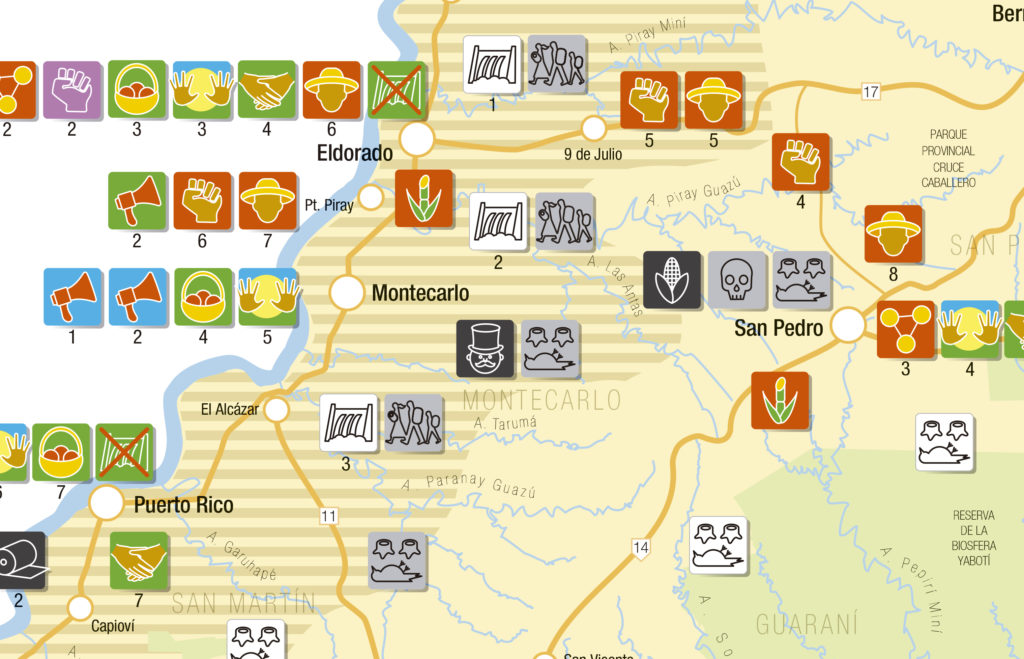
Misiones.. Argentina
Continue reading “Seeds Collective plants Life and Abundance in Communities Eng/Esp”