Demonstrators hurled firebombs in a march towards the US Embassy compound in Athens on Wednesday in protest over the death of George Floyd in Minneapolis.
Molotov cocktails erupted into flames on the street aimed towards the heavily-guarded embassy in central Athens. The police’s teargas couldn’t stop the onslaught.
Over 3000 demonstrators filled the streets of Athens holding banners and placards reading “Black lives matter” and “I can’t breathe”.
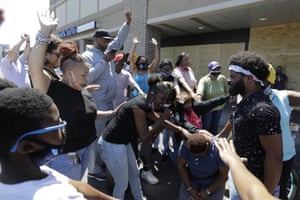
Protesters gather during a ‘Black Lives Matter’ demonstration against the death in Minneapolis police custody of African-American man George Floyd, in front of the U.S. Embassy in Copenhagen, Denmark May 31, 2020.
For the last week, cities across the US have erupted in uprisings against the police after George Floyd, a black man, was murdered in the streets by police officers. Across 50 states, people have been hurling projectiles at police, burning cop cars, and in a few cities, firing at police with guns in hit and run attacks.
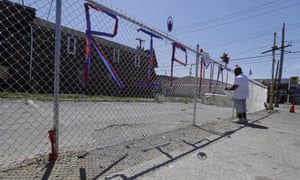
A group prays near the intersection where David McAtee was killed in Louisville, Kentucky, on 2 June. Photograph: Darron Cummings/AP
In the moments before he was shot dead by law enforcement this week, David McAtee – otherwise known as YaYa or “the barbecue man” – was doing what he always did: cooking up meat for the crowds gathered at the intersection of Broadway and 26th in Louisville, Kentucky’s predominantly black West End.
People were sitting around at the Dino’s gas station and food mart across the street listening to music and having a good time. At his barbecue stand, McAtee was busy shuffling between the grills made out of oil drums that he cooked on and the kitchen. He had hoped to open a bricks-and-mortar restaurant one day.
None of them had the faintest idea that McAtee’s name would soon join the long list of those chanted by protesters across the US calling for an end to police violence against people of color.
“It was just a normal day. People just having fun. Not nobody was about trouble,” McAtee’s nephew, Marvin McAtee, told the Guardian as he stood next to the bullet-pocked wall beside the kitchen entrance. “Nothing that serious for the marshals to come over for us.”
Dwayne Simmons makes a memorial to David McAtee near the intersection of 26th and Broadway in Louisville, Kentucky, on 2 June. Photograph: Darron Cummings/AP
It was just after midnight on 1 June when at least two trucks of national guard troops and a number of Louisville metro police department (LMPD) officers arrived at the intersection with the goal of breaking up the crowd that was gathered there in violation of curfew. Protesters downtown had already been dispersed earlier with teargas, pepper balls and baton rounds. Now they were trying to put the city to bed.
Video of the protests in Oakland over last few days. Also see articles on Minneapolis and the crisis of US capitalism, and other related articles including a solidarity letter from the Somali Public Trade Union.
In this video, we provide an update on the Julian Assange case and recap the main points from the June 1st administrative hearing. Assange, who was too ill to attend the hearing, faces the second half of his substantive extradition hearings in September. Judge Baraitser failed to secure a venue for the September hearings and […]
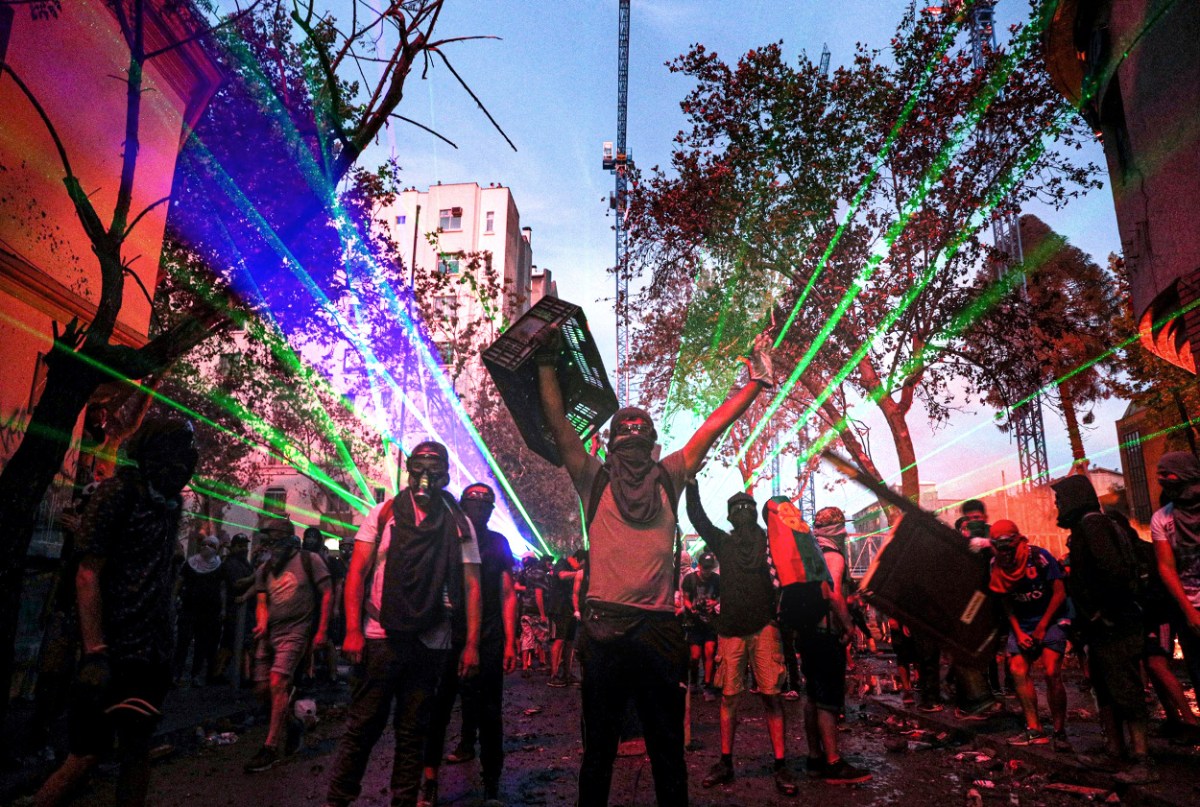
Below, we present a letter from anarchist participants in la primera línea, the “first line” of the powerful social movements that broke out in Chile in late 2019.
Expressing solidarity with the demonstrators responding to the murders of George Floyd, Breonna Taylor, and countless other Black people, they relate their experiences in the uprising in Chile and discuss the challenges facing movements for social change today.
At the end, they include an English translation of a guide from Chile for dealing with tear gas and other threats during demonstrations.
A wall memorializing demonstrators murdered by the Chilean state in the course of the 2019 protests.
Latin America looks at the United States as the imperial power. Our dictators were installed by the support of US governments. US companies monopolize our economy and collude to raise prices and decrease wages. Meanwhile, Wall Street finances the extractive industries that are poisoning our water, soil, and bodies.
Most Chileans only know the US from movies and television—skyscrapers and wealth. On October 18, Chile despertó, [woke up] as Santiago’s metro was shut down, one out of every six of the country’s Walmarts were looted, and protests erupted against an entire political class—both the right and the left—that are merely the middlemen between the population and the wealthiest ones who manage the country’s position in the global economy.
Since the widespread revolt against the police after the killing of George Floyd, the Chilean news has no choice but to show the true character of US poverty, racial inequality, and popular rage. Chilean meme pages created during the October revolt now turn their eyes to the energy and passion in the streets across the US. The view from the south—in the words of the fruit vendor next to my house—is that estados unidos despertó, the United States woke up.
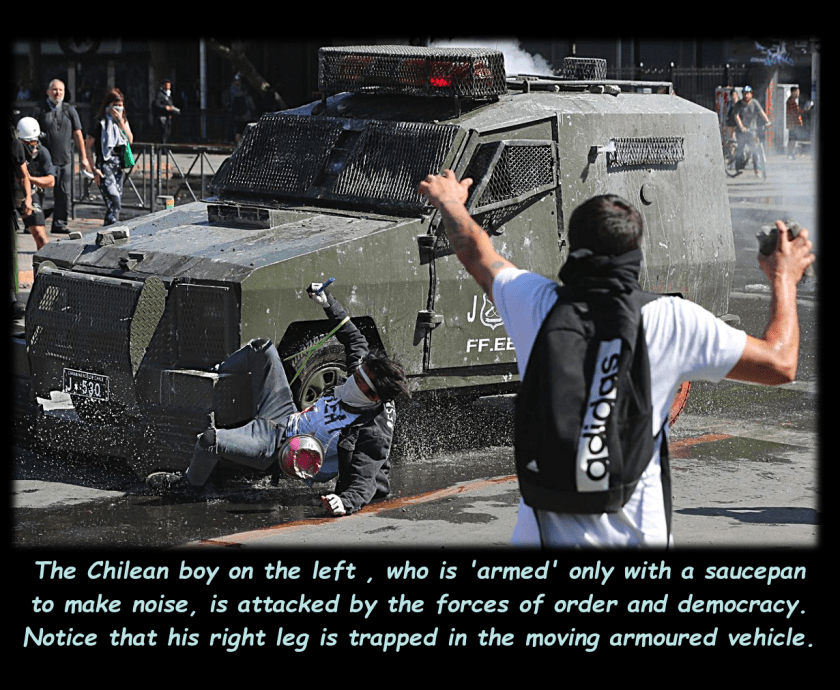
We are a group of friends, writing to all of you in the US about our experience of what such a revolt can look like as it stretches on for months. When the governments declare state of emergency and call on the military and citizens alike in an attempt to force a return to normalcy.
They attempt to portray a world of clear divisions—between peaceful protestors and criminal delinquents, between normalcy and crisis, between human rights and national security, between good cops and bad apples. We would like to offer our reflections from the past few months in Chile to suggest that these divisions are far from clear and that the struggle for dignity rests on ignoring them all together.
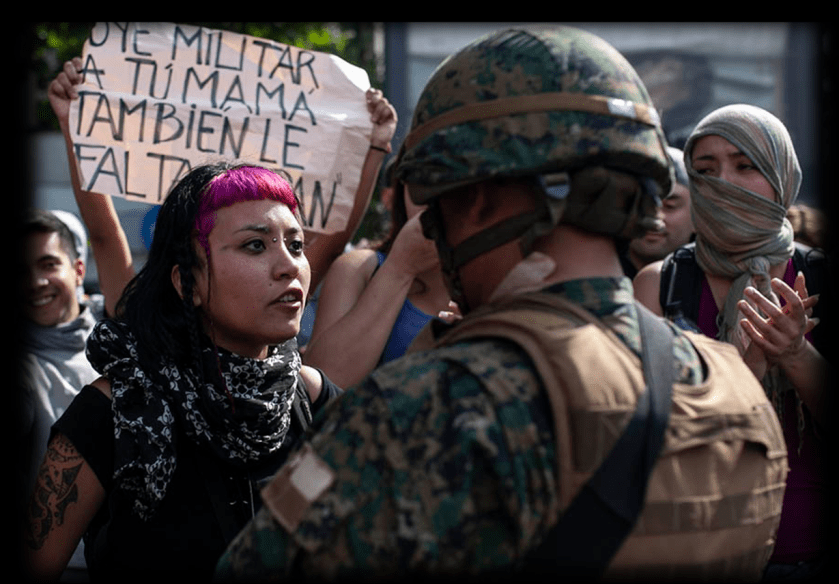
The first night of citywide rioting was followed by a week of peaceful protests cohabiting the same streets as flaming barricades, looted stores and bands of masked youth throwing rocks and Molotov cocktails at the police. In response to widespread unrest, the government declared a state of emergency and called in the military to patrol the streets.
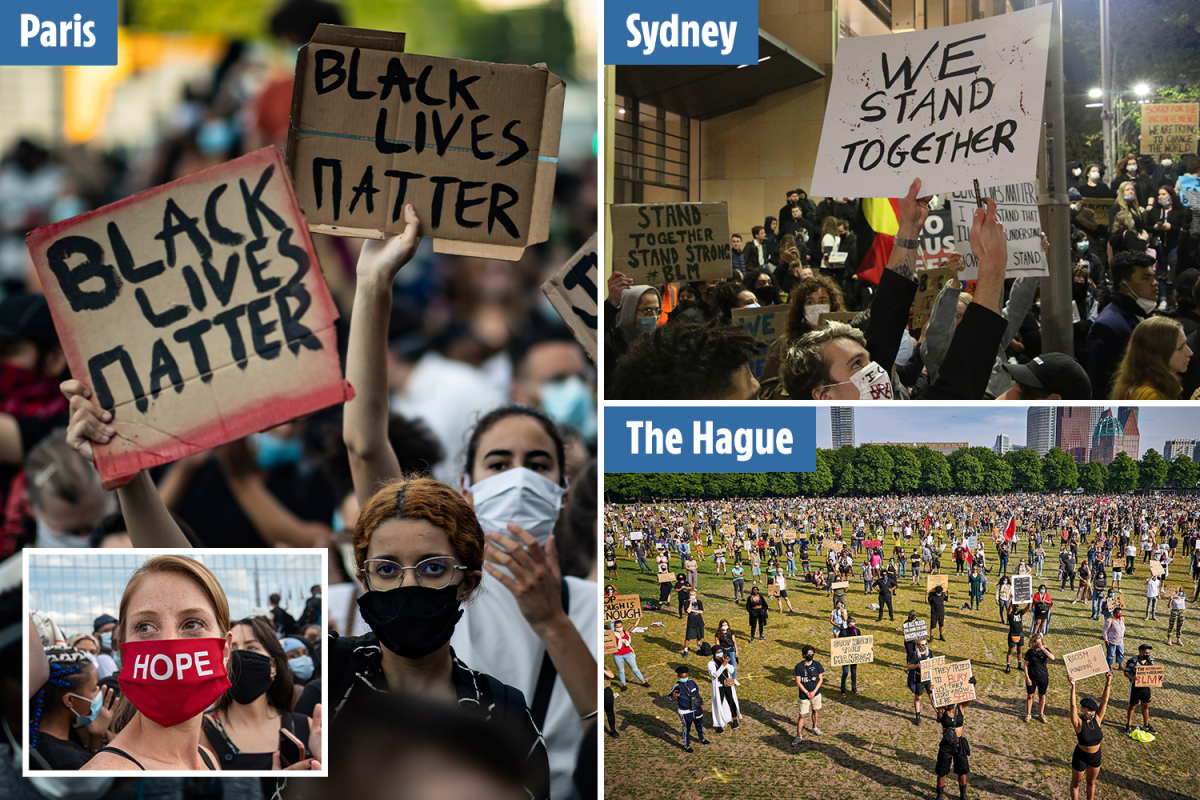

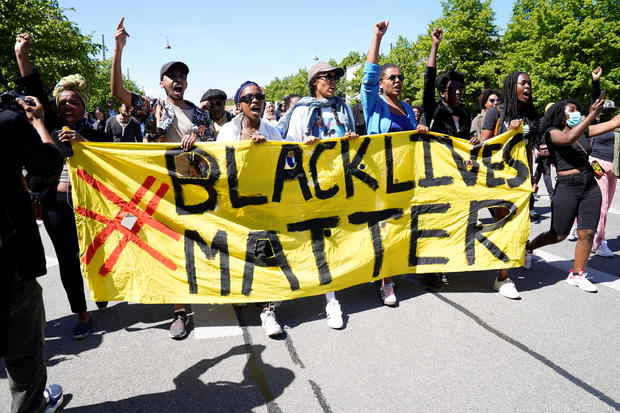 Protesters gather during a ‘Black Lives Matter’ demonstration against the death in Minneapolis police custody of African-American man George Floyd, in front of the U.S. Embassy in Copenhagen, Denmark May 31, 2020.