IF YOU TORTURE THE DATA LONG ENOUGH, IT WILL CONFESS TO ANYTHING–Ronald Coase
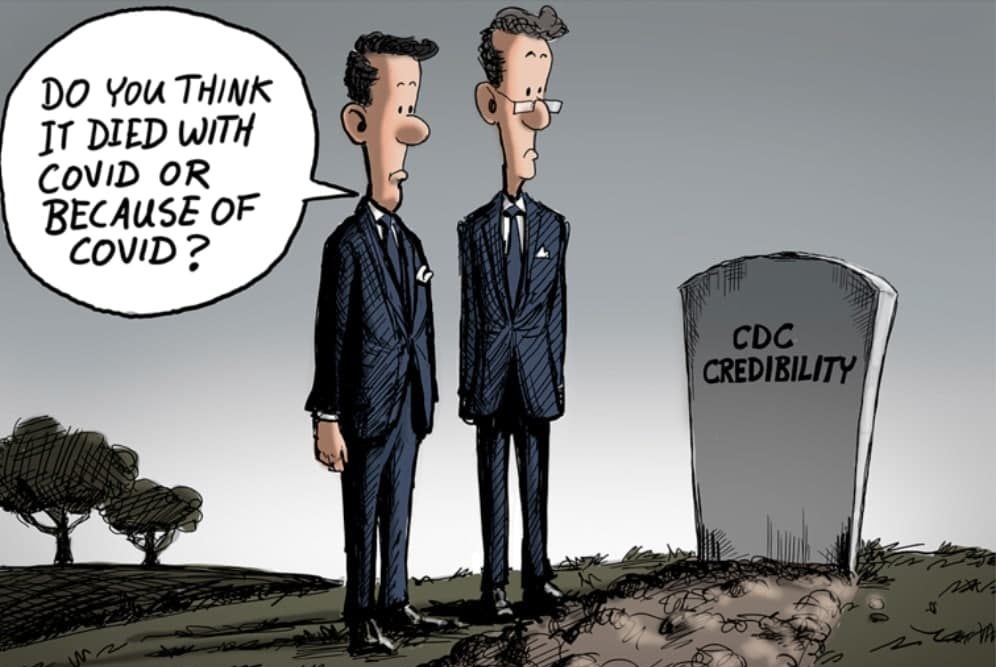
This story is about a particularly vile piece of disinformation CDC issued today to push vaccines on the most vulnerable, tiniest humans who can’t say no.
As I have noted periodically for twenty years, and it was
roundly confirmed 4 weeks ago in the NY Times, CDC spins and cherry-picks the data it presents to the public, hiding most of what it has. Then it blames its ‘outdated’ IT systems for the problems, if it gets caught. As the NYT noted,
The C.D.C. has received more than $1 billion to modernize its systems, which may help pick up the pace, Ms. Nordlund [CDC’s spokesperson] said. “We’re working on that,” she said.
Dr. Vinay Prasad discussed several ways CDC generated bogus conclusions in an article titled, “How the CDC Abandoned Science” in the magazine Tablet last month.
CDC is not a public health agency. It is a public propaganda agency that collects a massive amount of data. CDC marshals its huge data library to create presentations that support the current administration’s public health policies.
CDC also has state of the art PR staff, as well as TV studios, and produces videos, radio spots and an enormous number of press releases that are distributed to the media. CDC hosts many journalists at its Atlantia headquarters. Free junkets successfully cultivate US health reporters.
A 2007 Senate oversight report on the CDC noted the agency spent $106 million on the Thomas R. Harkin Global Communications (and Visitor) Center, and summarized its 115 page report with the following: “A review of how an agency tasked with fighting and preventing disease has spent hundreds of millions of tax dollars for failed prevention efforts, international junkets, and lavish facilities, but cannot demonstrate it is controlling disease.”
If reporters want to speak directly to a CDC scientist, they must go through the public affairs office. CDC controls the flow of information out with an iron hand.
CDC may pay for getting its messages out. As we learned last year, it paid Facebook for messaging, while Facebook donated $millions in advertising back to CDC. (Google is not letting me find the link, unfortunately.) Last March, Mark Zuckerberg stated,
We’ve already connected over 2 billion people to authoritative COVID-19 information, and today as access to COVID-19 vaccines expands, we’re going even further and aiming to help bring 50 million people one step closer to getting vaccinated.
While CDC collects data from a much larger sample size, it often, as in the case I am about to discuss, only presents part of its dataset, and/or (as in this case) CDC chooses a specific, limited timeframe from which to select its data.
The story that CDC is crafting today is that tiny children, under the age of 5, have been recently hospitalized at extremely high rates due to COVID, and therefore need to be vaccinated as soon as the vaccine is authorized for them.
In 2021, Spain imported 43% of the gas it needs from Algeria and 9% of the gas it consumes annually from Russia
Algiers, March 20, 2022 (SPS) Algeria said it was surprised following the declarations of the highest Spanish authorities constituting a “sudden reversal” of position concerning the Western Sahara file, said Saturday a press release from the Ministry of Foreign Affairs and the National Community abroad.
“Very surprised by the declarations of the highest Spanish authorities relating to the Western Sahara file, the Algerian authorities were surprised by this sudden reversal of position of the former administering power of Western Sahara, underlines the press release. (SPS)
Spain’s change of position on the Sahara worsens relations with Algeria, the Iberian country’s main natural gas ‘tap’
This Friday it was learned that the Government of Spain has changed its position in relation to Western Sahara and considers the Moroccan proposal for autonomy as the “most realistic basis” to resolve said territorial conflict.
The current situation shows that fossil fuels and the impacts of climate change exacerbate conflicts.
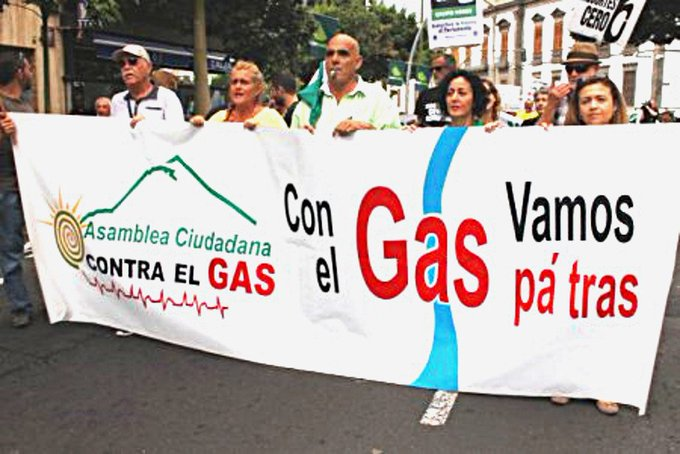
The "Gas Is Not a Solution" network, of which Ecologists in Action are a part, would like to express our solidarity with the entire population affected by the war in Ukraine and by all the ongoing conflicts.
We want the war conflict to end as soon as possible and we urge all parties to respect international humanitarian law that protects civilians from attacks. Therefore, we demand an immediate ceasefire.
We are aware that people around the world are suffering enormously from the impacts of climate change, the COVID-19 pandemic and ongoing wars.
The recent IPCC report paints a frightening picture of the impacts that are already being felt across the globe, and are much heavier in the global South.
We do not want another armed conflict to bring more instability and loss of life. We need unity and the ability to face the challenges that await us.
The current situation shows that fossil fuels and the impacts of climate change exacerbate conflicts, making the most vulnerable people suffer even more.
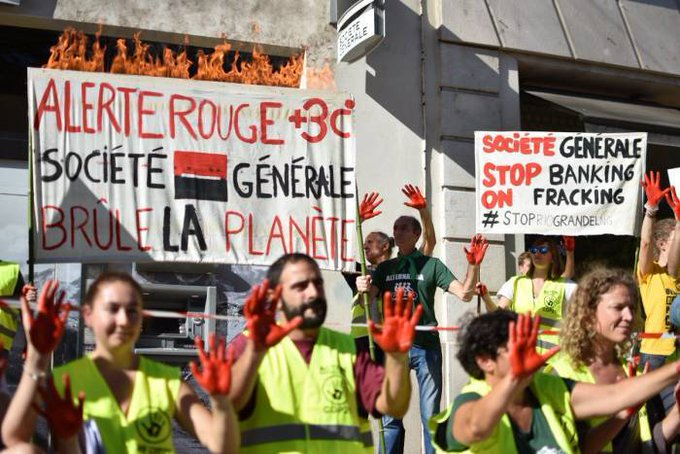
For this reason, further investment in fossil fuels and related infrastructure will increase drilling, fracking, and associated emissions, and will only serve to worsen the impacts on the planet and people’s health.
This war has made even clearer the great dependence of Europe and the Spanish State on fossil fuels, especially fossil gas. It has also shed light on the importance of our public finances and how important it is to be aware of in whose hands they end up and what they support.
The gas companies have benefited enormously from the crisis in energy prices and intend to get more out of the war.
We need a progressive elimination of fossil fuels, in the Spanish State, in Europe and throughout the world. To do this, we must promote a rapid and fair energy transition that moves us away from coal, oil, gas and nuclear, to lead us to the democratization of energy, energy savings and renewable energies.
çThis is the only viable path to rapidly reduce dependence on fossil fuels, while contributing fairly to reaching the Paris Agreement target of limiting temperature rise to 1.5°C.
However, the necessary measures are not being taken either in the Spanish State or in the European Union (EU). This war must be a turning point for the energy transition, for this it is necessary to:
  *Increase climate ambition and ensure energy security. The EU and Member States must ensure the integrity and ambition of the "Fit for 55" climate and energy legislative package and other tools, such as Integrated Energy and Climate Plans (INECPs).
    *Remove gas and nuclear from the green taxonomy. The current conflict shows that these energies do not meet the goal of Do No Significant Harm (DNSH) or make a substantial contribution to climate goals, but are the source of highly dangerous geopolitical conflicts and military targets. .
   *Achieve a 100% renewable energy system by 2040. The EU and its members must urgently accelerate measures to significantly reduce energy demand and promote renewable energy. To do this, fossil gas must be out of homes by 2035 at the latest.
   *Avoid the expansion of fossil fuel infrastructure and other false solutions. The short-term measures adopted by the Spanish State and the EU to deal with the energy crisis must not jeopardize the path already traveled in terms of climate action, avoiding by all means the expansion of fossil fuel infrastructures and other false solutions that are being considered these days. One of them is the commissioning of the El Musel regasification plant. In addition to being illegal, it is totally unnecessary due to the existing storage and regasification capacity. Or the resurgence of the MidCat gas pipeline project, which is not a solution in any of the energy horizons if we want to comply with the European Green Agreement. On the other hand, hydrogen cannot become a false alibi that strengthens the role of fossil gas in the energy mix.
    *Promote the just transition to protect the vulnerable population from volatile energy prices. Access to clean energy should be guaranteed through an effective social tariff, while promoting the massive change of gas boilers for heating systems with renewable thermal emissions and investment in energy efficiency in buildings.
    *Unlink the price of electricity from gas. Demand reduction measures together with electrification are the best alternative to fossil gas. However, today it is fossil gas that ends up setting prices, even though only a small part of electricity is produced from gas (17% in 2021). This perverse system promotes the impoverishment of the population in favor of the profits of the large energy companies, in addition, it distorts the price signals, making it difficult to bet on electrification.
    *Prohibit advertising that promotes the use of any fossil fuel as a transition fuel to renewable energy. The promotion of fossil fuels/energy as transitory would suppose a resistance to the change to renewable energies and, therefore, a brake on the commitment to a sustainable future.

   *We need to build a more resilient, peaceful and secure future, in which climate action and the commitment of the population lead us to consume less energy and that the energy consumed is sustainable, renewable, affordable and conflict-free. A society with renewable energy accessible to all people will not only help tackle the climate crisis, but will also guarantee energy security, being the best insurance against future energy price rises and a way to protect the most vulnerable people.

*As we call for peace, we try to keep up our work on climate action in these difficult times. There is no time to lose.
Escapar del gas para construir un mundo pacífico y resiliente
La situación actual pone de manifiesto que los combustibles fósiles y los impactos del cambio climático exacerban los conflictos.
La red Gas No Es Solución, de la que formamos parte Ecologistas en Acción, queremos expresar nuestra solidaridad con toda la población afectada por la guerra de Ucrania y por todos los conflictos en activo.
Deseamos que el conflicto bélico acabe lo antes posible e instamos a todas las partes a respetar el derecho internacional humanitario que protege a la ciudadanía civil de los ataques. Por ello, demandamos un alto al fuego inmediato.
Somos conscientes de que en todo el mundo las personas sufren enormemente por los impactos del cambio climático, la pandemia de la COVID–19 y por las guerras en curso. El reciente informe del IPCC arroja una imagen aterradora de los impactos que ya se están sintiendo en todo el planeta, y que resultan mucho más duros en el Sur global. No queremos que otro conflicto armado traiga más inestabilidad y pérdida de vidas. Necesitamos unidad y capacidad para afrontar los retos que nos esperan.
La situación actual pone de manifiesto que los combustibles fósiles y los impactos del cambio climático exacerban los conflictos, haciendo sufrir aún más a las personas más vulnerables. Por esta razón, una mayor inversión en combustibles fósiles e infraestructuras relacionadas aumentará las perforaciones, el fracking, las emisiones asociadas y solo servirá para empeorar los impactos en el planeta y la salud de las personas.
Esta guerra ha dejado aún más claro la gran dependencia europea y del Estado español de los combustibles fósiles, en especial del gas fósil. También ha arrojado luz sobre la importancia de nuestras finanzas públicas y lo relevante que es ser conscientes de en qué manos acaban y qué apoyan. Las compañías gasistas se han beneficiado enormemente de la crisis de los precios de la energía y pretenden sacar más provecho de la guerra.
Necesitamos una eliminación progresiva de los combustibles fósiles, en el Estado español, en Europa y en todo el mundo. Para ello, debemos impulsar una transición energética rápida y justa que nos aleje del carbón, el petróleo, el gas y la nuclear, para conducirnos a la democratización de la energía, al ahorro energético y a las energías renovables. Este es el único camino viable para reducir rápidamente la dependencia de los combustibles fósiles, contribuyendo al mismo tiempo de forma justa a alcanzar el objetivo del Acuerdo de París de limitar el aumento de la temperatura a 1,5 °C.
Sin embargo, no se están tomando las medidas necesarias ni en el Estado español ni en la Unión Europea (UE). Esta guerra debe de ser un punto de inflexión para la transición energética, para ello se debe:
Aumentar la ambición climática y garantizar la seguridad energética. La UE y los Estados Miembros deben asegurar la integridad y ambición del paquete legislativo sobre clima y energía «Fit for 55» y otras herramientas, como los Planes Integrados de Energía y Clima (PNIEC).
Sacar al gas y la nuclear de la taxonomía verde. El conflicto actual pone de manifiesto que estas energías no cumplen con el objetivo de No Causar Daño Significativo (DNSH por sus siglas en inglés) ni producen una contribución sustancial a los objetivos climáticos, sino que son el origen de conflictos geopolíticos y objetivos militares altamente peligrosos.
Lograr un sistema energético 100 % renovable antes de 2040. La UE y sus miembros deben acelerar urgentemente las medidas para reducir significativamente la demanda de energía y promoción de energías renovables. Para ello, el gas fósil debe quedar fuera de los hogares como tarde en 2035.
Evitar la expansión de infraestructuras de combustibles fósiles y otras falsas soluciones. Las medidas a corto plazo adoptadas por el Estado español y la UE para hacer frente a la crisis energética no deben poner en peligro el camino ya recorrido en materia de acción climática, evitando por todos los medios la expansión de las infraestructuras de combustibles fósiles y otras falsas soluciones que se están planteando estos días. Una de ellas es la puesta en marcha de la regasificadora de El Musel. Además de ilegal, es totalmente innecesaria por la capacidad de almacenamiento y regasificación ya existentes. O el resurgimiento del proyecto del gasoducto MidCat, que no resulta una solución en ninguno de los horizontes energéticos si queremos cumplir con el Acuerdo Verde Europeo. Por otro lado, el hidrógeno no puede convertirse en una falsa coartada que fortalezca el papel del gas fósil en el mix energético.
Impulsar la transición justa para proteger a la población vulnerable de los precios volátiles de la energía. El acceso a la energía limpia debería garantizarse mediante una tarifa social efectiva, fomentando al mismo tiempo el cambio masivo de calderas de gas por sistemas térmicos renovables y la inversión en eficiencia energética en los edificios.
Desvincular el precio de la luz del gas. Las medidas de reducción de la demanda junto con la electrificación son la mejor alternativa al gas fósil. Sin embargo, actualmente es el gas fósil quién acaba marcando los precios, aun cuando sólo una pequeña parte de la electricidad se produce a partir de gas (17 % en 2021). Este sistema perverso fomenta el empobrecimiento de la población en favor de las ganancias de las grandes compañías energéticas, además, distorsiona las señales de precio, dificultando la apuesta por la electrificación.
bustible de transición a las energías renovables. La promoción de los combustibles/energía fósil como transitorios supondría una resistencia al cambio a las energías renovables y, por tanto, un freno en la apuesta por un futuro sostenible.
Necesitamos construir un futuro más resistente, pacífico y seguro, en el que la acción climática y el compromiso de la población nos lleve a consumir menos energía y que la consumida sea sostenible, renovable, asequible y libre de conflictos. Una sociedad con energía renovable accesible para todas las personas no solo ayudará a afrontar la crisis climática, sino que también garantizará la seguridad energética, siendo el mejor seguro contra futuras subidas de precios de la energía y una forma de proteger a las personas más vulnerables.Mientras hacemos un llamamiento a la paz, tratamos de mantener nuestro trabajo sobre la acción climática en estos tiempos difíciles. No hay tiempo que perder.
World Health Organisation wants a Pandemic Treaty – meaning it will take complete control of you. It receives substantial funding from private interests that use their contributions to influence and profit from WHO decisions and mandates.”
BORIS JOHNSON’S journey through Brexit to 10 Downing Street was fuelled by the winning mantra Take Back Control but as the nation is unmasked, so too is that familiar phrase.
On the one hand the Government wants to Take More Control– over us, the UK people. Three bills, on Policing, Online Safety and Human Rights, all carry the potential for stricter authoritarian control over how we behave, speak or even think.
On the other, it could be about to Give Away Control – to the World Health Organisation (WHO) in a move that would remove powers of critical decision-making and, ironically, Sovereignty.
The WHO wants to introduce a global ‘Pandemic Treaty,’ which would bind its 194 member nations into a worldwide protocol for dealing with disease outbreaks such as Covid-19.
This story is about a particularly vile piece of disinformation CDC issued today to push vaccines on the most vulnerable, those humans who are too tiny to say no.
As I have noted periodically for twenty years, and it was roundly confirmed 4 weeks ago in the NY […]
In October, Dr. Pierre Kory, a world renowned pulmonary and critical care Covid expert, warned, “The suppression of early treatment in this country is one of the most historically calamitous actions, and history will not be kind here.”
Sadly, Dr. Kory was right and explains, “If you look at us now, […]
The carriers continue the indefinite strike called by the Platform for the Defense of the National and International Road Freight Transport Sector, which claims to represent medium-sized and small companies that account for 85% of the sector.
Fuels persist at record highs despite the oil truce. Truckers claim they are ruined and prefer to stay home and lose less money.
Effects have reached consumers, with a lack of supplies, especially of fresh products from Andalusia. The Minister of Transport, Raquel Sánchez, has warned that she will not sit down to negotiate “with a group of radicals”
In France the united Truckers stroke ended before it began, with the Govt. announcing tax cuts and distributing compensation to the drivers.
CCOO and UGT, the majority Trade Unions, condemn the strike and accuse strikers of attacks on the section of wage earners in large freight transport companies, who the self employed see as scabs.
The unions have condemned the attacks suffered by the section of wage earners in road freight transport and have demanded responsibility from the Government in the search for a solution.
The extreme right party VOX, allied with the far right PP, have hijacked support of the strikers.
In response the ex Socialists, PSOE and Podemos parties in power have refused negotiations and sent 23,500 militarized and National police to ” ensure peace” and escort convoys of ‘ strikebreakers’ .
The minority and anarchist unions seem to have little presence in the sector, and it seems an opportunity has been missed, as strikes take place in other sectors, eg a 5 day schools strike in Catalonia.
Gasoline and diesel maintain their upward trend and have again exceeded their historical highs after soaring in the last week by 9.9% and 15%.
The strike has had huge repercussions, especially in Andalusia, with other sectors, taxis, fisher people, farmers, miners, etc joining in boycotts and blockades.
However by Friday 18th the strike was acknowledfed to be ‘peaceful’ though support seemed lessened, amid media opposition or ignoring. Some areas issued hive fined of up to 30,000 euros, arrests however have been few arrests, less than 30 in 5 days.
One trucker was shot by a police agent on the 1st day, they claimed it was an ” accident” in a ” scuffle”. The driver is now out of hospital.
Below you can read details of some reported in incidents on Friday 28th March.
The indefinite strike of self-employed carriers and small and medium-sized companies threatens to become entrenched and is causing shortages.
The Platform for the Defense of the National and International Road Freight Transport Sector, convener of the protest, has reiterated that it will not call it off until the minister of the branch, Raquel Sánchez, receives them, who refuses to do so, considering it an organization minority within the sector.
More than 2.5 million kilos of bananas blocked by strikes.
Finally it seems negotiations may begin on Monday 21st.





 from
from 


 The Free