Why would so many countries big and small, rich and poor, in different parts of the world, some with congested cities, some sparsely populated, cold weather or hot weather, tropical or desert, high altitude or low altitude, small islands or landlocked — why would they ALL see increases in COVID-19 deaths after mass vaccination?
I asked Ed Dowd if I could have space in his book, “‘Cause Unknown’: The Epidemic of Sudden Deaths in 2021 and 2022,” for an article about what we saw around the world as mass vaccination commenced.
In light of Dowd’s stunning analysis, it is particularly instructive to look at data for those countries that did not have high numbers of COVID-19 deaths prior to mass vaccination, because they afford the simplest comparison:
They had very low rates of death attributed to COVID-19.
Then they commenced mass vaccination.
Then they experienced huge increases in deaths attributed to COVID-19.
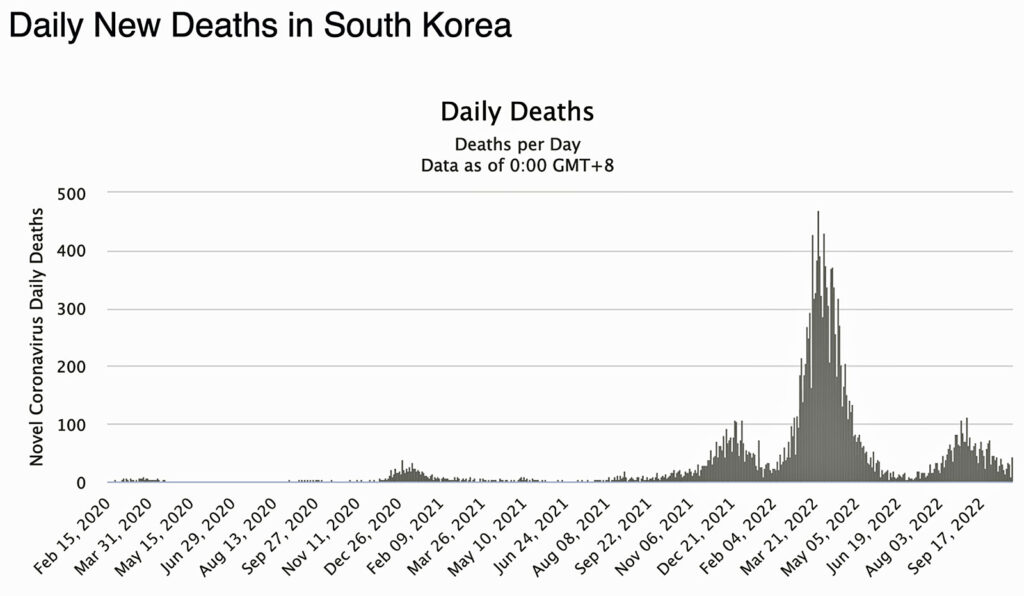
South Korea gives us a fast example among many: Prior to the country’s wide rollout of mRNA vaccines, Korea had almost no COVID-19 deaths. You see that nearly all their COVID-19 deaths occurred after mass vaccination.
Due to frequent supply problems, South Korea’s mass vaccination program really took off after the third quarter of 2021 when they borrowed hundreds of thousands of Pfizer doses from Israel. Their COVID-19 deaths soon followed. That wasn’t supposed to happen.
In November 2021, President Moon began a massive campaign to push boosters: “The vaccination can be completed only after receiving the third jab.”
His citizens complied, reaching more than 90% of adults fully vaccinated — the chart shows the COVID-19 deaths that followed.
The same pattern repeats all over the world, and since seeing is believing, I’ll pause here and resume in more detail after some quick sample charts …
Some unconventional ideas for a sane and revolutionary approach to education…. Excerpt from Compulsory Education by Paul Goodman
There are thinkable alternatives. Throughout this little book, as the occasion arises, I will offer alternative proposals that I, as an individual, have heard of or thought of.
Here are half a dozen directly relevant to the topic we’ve been discussing, the system as mandatory cheating.
In principle, when a law begins to do more harm than good, the
best policy is to mitigate it or try to do without it.
Not having school at all for some classes. These children must be selected from tolerable, though not necessarily educated, homes. They must be neighbors and numerous enough to form a partnership for each other, so that they don’t just feel different.” Will they learn the rudiments anyway? This experiment cannot harm children academically, since there is strong evidence that normal children will make up for the first seven years of school work with four to seven months of good teaching.
Bypassing the school building for some classes; provide teachers and use the city itself as a school: its streets, cafeterias, shops, cinemas, museums, parks and factories. Whenever possible, it makes more sense to teach using the actual subject than to
bring an abstraction of the subject into the school
building as ‘curriculum’. Such a class should probably not exceed ten children for a single pedagogue. The idea – it is the model of Athenian education – is not unlike the work of youth gangs, but not applied to criminals and not playing with the ideology of gangs.
Along the same lines, but both outside and inside the school building, use the appropriate adults in the unlicensed community—the pharmacist, the grocer, the mechanic—as the appropriate educators of youth in the adult world. In this way, we can try to overcome the separation of young people from the adult world, so characteristic of modern urban life, and diminish the omnivorous authority of school professionals. It would certainly be a useful and encouraging experience for adults.
Make class attendance non-compulsory, à la Summerhill by A. S. Neill. If the teachers are good, the absence would tend to be eliminated; if they are bad, let them know. Compulsory law is helpful in alienating children from parents, but it should not result in entrapment for children. A good modification of this suggestion is the rule used by Frank Brown in Florida: allow children to be away for a week or a month to pursue any worthwhile enterprise or visit some new environment.
Decentralize an urban school (or not build a large new building) into small units, twenty to fifty, in storefronts or available clubs. These small schools, equipped with jukeboxes and a pinball machine, could combine play, socialization, discussion, and formal teaching. For special events, the small units can meet in a common auditorium or gymnasium, to give the feeling of a larger community. Consequently, I think it would be worthwhile to take a look at the Little Red Schoolhouse in modern urban conditions, and see how it works: that is, to combine all the ages in a small room for twenty-five or thirty, rather than sort by age.
Use a prorated share of the school money to send kids to economically marginal farms for a couple of months out of the year, maybe six kids from mixed backgrounds to one farmer. The only requirement is that the farmer feed them and not hit them; better, of course, if they participate in agricultural tasks. In this way, the farmer will have cash available, as part of the generally desirable program to correct the ratio between the country and the city, which approaches 70% and 30%. (Currently, less than 8% of families are rural.) It is possible that some of the children in the cities will adapt to the other way of life and that we can generate a new type of rural culture.
I often suggest these and similar proposals in teachers’ colleges, and they look at me strangely: do I really intend to reduce the state subsidy for each day of class? But most of the time the goal is that such proposals entail intolerable administrative difficulties.
18/05/22 PF confirmed in this quarter-feira (18) that the area near the Ka’aeté village was invaded by the Federal Police //PF confirmou nesta quarta-feira (18) que área perto da aldeia Ka’aeté foi invadida Polícia Federal//
 by Alexandre Muller, special for Correio da Cidadania
 12/22/2022
Photo: Personal Archive/Alexandre Muller
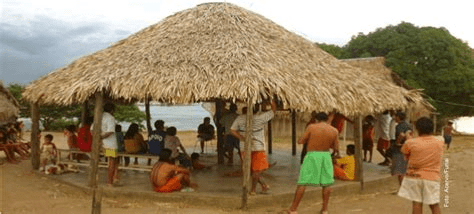
We are in the Apyterewa village, mother village of the Indigenous Land of the same name, located on the banks of the Xingu River, in southwest Pará.
In a context of invasion of territory, the annual assembly of the Parakanã people of the Apyterewa Indigenous Land took place between the 27th and 29th of November.
The event, which was held sometimes in Portuguese, sometimes in Parakanã, a Tupi-Guarani language, was attended by, in addition to the Parakanã people and their leaders, representatives of the Federal Public Ministry, NGOs, public bodies and the association that represents them.
Apyterewa
This event was especially important because the TI Apyterewa set a record for deforestation and invasions in 2021 and the Parakanã people expect a new wave of mobilization with the change of government.
Aerial phopto of illegal Cattle farm in indigenous resrve..Cattle have invaded the deforested jungle to supply voracious western meat consumption.
“The struggle for our free land is current, but it is also millenary. This land is our mother, from which we take our food, make our handicrafts and weave our hammocks. We have to be a priority for the next government because we are people of recent contact, Lula owes that to us”, exclaimed during the assembly Winatoa Parakanã, the first woman elected president of the Tato’a association, which represents the Parakanã people and communities of the Indigenous Land (IT) Apyterewa.
Throughout the assembly, the president-elect, Lula, was mentioned a lot by the participants who showed great expectations about his mandate. Winatoa recalled that Lula, who ran a very clear campaign in relation to the defense of indigenous territories and the protection of the environment, was also elected thanks to their votes and that it was he who in 2007 ratified the Apyterewa TI.
Área desmatada na região amazônica do estado do Pará
In addition, Parakanã leaders recalled that during COP27, Lula promised a “non-stop” war against deforestation, the creation of the Ministry of Indigenous Peoples and disintrusion, that is, the removal and punishment of invaders from Indigenous Lands. Lula will need a lot of support from the indigenous peoples to face the challenges that lie ahead, as they are essential in the fight for the forest.
Representing less than 5% of the world’s population, indigenous peoples protect 80% of global biodiversity and, if it depends on the Parakanã people, they will continue to mobilize to protect their territory and the Amazon rainforest. This agenda is even more important in a context of climate crisis and close proximity to the ‘point of no return’, a state of irreversible imbalance capable of transforming the Amazon into a savannah in just a few decades.
Defend Lützerath! Now occupied by Resisters as Police prepare. Defend ZADrheinland!
Late News Update.11 Jan.. German coal mine standoff escalates as police attack
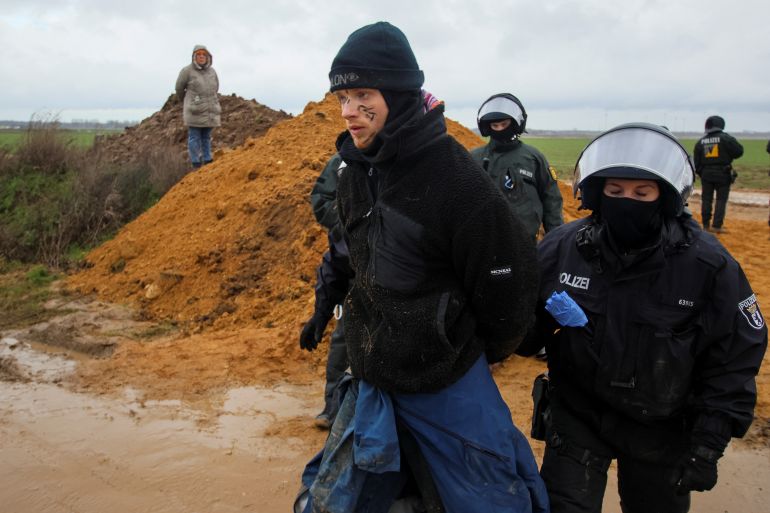
Environmentalists say bulldozing the village to expand the Garzweiler mine would result in huge amounts of greenhouse gas emissions [Wolfgang Rattay/Reuters]
On Wednesday morning, officers in riot gear moved into Luetzerath, where hundreds of activists have been holed up trying to stop the expansion of the nearby Garzweiler coal mine run by energy firm RWE. The protesters formed human chains, made a makeshift barricade out of old containers, and chanted “We are here, we are loud, because you are stealing our future”. Some protesters threw beer bottles at the police. Al Jazeera’s Step Vaessen, reporting from Luetzerath, said protesters were “holding firm”.
Lützerath. Germany. After the long struggle to save the Hambacher forest, the focus of many activists changed to Lützerath, a small village which is to be demolished for a brown coal open pit mine: Grazweiler.
Many villages and major parts of the Hambacher forest (only the last minor part was saved in 2018) were already destoyed by RWE‘s open pit mines.
Lützerath is completely occupied by brave resisters, but the interior minister of the German state North Rhine-Westphalia, Herbert Reul, announced that a huge police force will evict Lützerath in January. Defend Lützerath! Defend ZADrheinland! Enough 14. Originally published by Lützerath Lebt.
Big alliance demo on January 14th, 2023 Together with our allies, we call for the 14.01. everyone to come to Lützerath and protest against the eviction and for climate justice! The demonstration is registered and there will be shuttle buses from the train stations in Erkelenz and Hochneukirch. More on that soon! alle-doerfer-wandern.de/demo
Click on the Menu in the videoplayer got automated english subtitles. Video by Unser Aller Wald / #ZADrheinland
Defend Lützerath
Lützerath is a village in the Rhineland region that is to be destroyed for the profits of a major international corporation, RWE. 650 million tons of brown coal are to be burned still. This would massively fuel the climate catastrophe!
Right here we stand up for climate justice, we rebel against a neocolonial, destructive system that destroys the foundations of life worldwide.
Come to ZADRheinland and defend Lützerath with us!
Come to Luetzerath for the planned dates and stay here for the next few months.
Order Mobimaterial via mobi@luetzerathlebt.info and spread the message
From now on you can also get the mobilisation material via the boxes belowfor self or home printing. Feel free to distribute it in your favourite cafés, autonomous centres, universities, working place, among your friends and wherever else you might feel like.
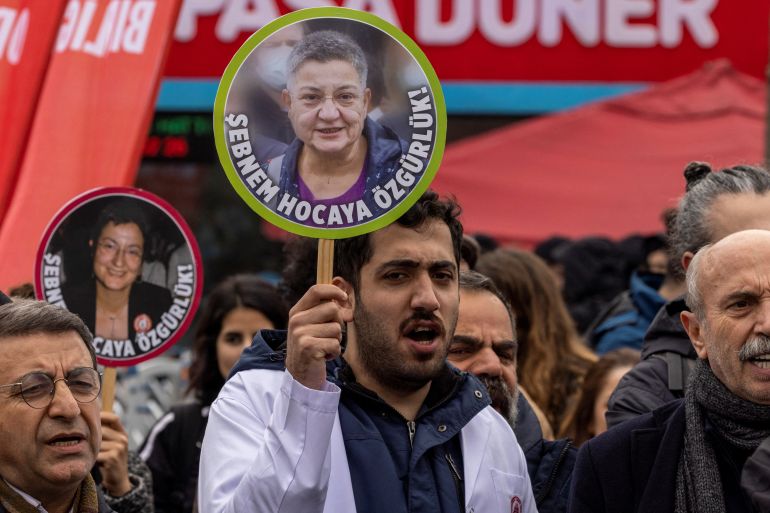
Supporters of Dr Sebnem Korur Financi protest in front of the Istanbul courthouse where she was convicted and sentenced on January 11, 2023 [Umit Bektas/Reuters]
A controlled Turkish court has convicted the president of the Turkish Medical Association of disseminating “terror organisation propaganda” following a trial that human rights groups have denounced as an attempt to silence government critics.
The court in Istanbul on Wednesday sentenced Sebnem Korur Fincanci to nearly three years in prison but also ordered her released from pre-trial detention while she appeals the verdict.
Fincanci, 63, was arrested in October and charged with engaging in propaganda on behalf of the banned Kurdistan Workers’ Party (PKK). The arrest followed a media interview in which she called for an independent investigation into allegations that the Turkish military used chemical weapons against Kurdish fighters in northern Iraq.
The PKK alleged that 17 of its fighters had died last year in Turkish chemical weapons attacks in the mountains of northern Iraq.
Fincanci is the latest activist to be convicted under Turkey’s broad “anti-terrorism” laws. The forensic expert has spent much of her career documenting torture and ill-treatment and has served as president of the Human Rights Foundation of Turkey.
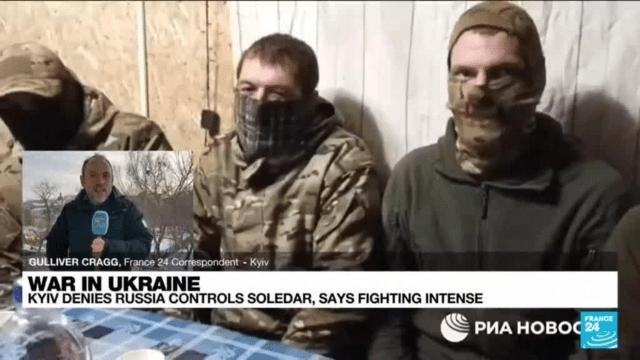
In the morning report of the Ukrainian General Staff on January 10, Soledar was not even mentioned.
The western media on Jan 11th still refused to believe official Russian claims and videos and interviews on Telegram channels showing that the key town and salt mines had finally fallen.
Soledar and surroundings are important to Russia because they are situated in the area of Donbass seized back by Ukraine from the ethnic Russian 2014 uprising after the Maidan Coup. The heavily fortified area was used by the Ukrainian ultra right to shell and bomb nearby rebel civilian areas for 8 years and until the present day, killing and maiming thousands.
On 9th January, everyone still alive was waiting for the decision of the Ukrainian military to withdraw troops and save lives of hundreds of servicemen.
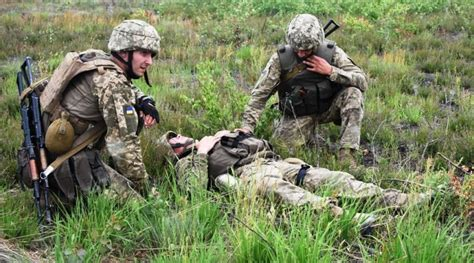
CNN published an interview with one of Ukrainian servicemen then fighting in Soledar. He confirmed that the situation was critical and the number of Ukrainian losses was so high that no one counted the dead.
The anonymous soldier claimed that he was sure that Ukrainian authorities would give up the fight for Soledar. ‘Why die if we leave it today or tomorrow anyway?’ he said.
However, the Ukrainian military command decided to follow its traditional tactics and use servicemen as cannon fodder. On January 9, the official representative of the Eastern Grouping of the Armed Forces of Ukraine claimed that Ukrainian units would not retreat
As a result, there was no organized withdrawal. Some Ukrainian units did manage to escape and fled from the city. Others were left in the cauldron. Hundreds of Ukrainian servicemen who had been forceably drafted lost their lives.
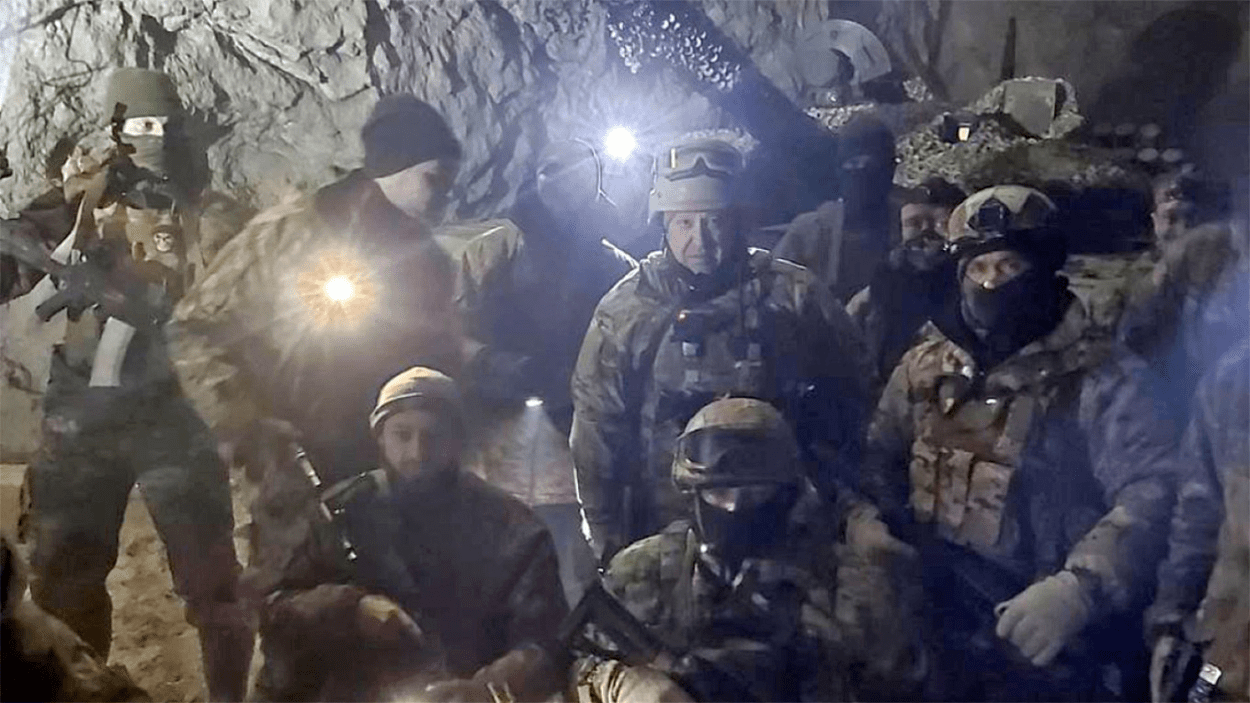
The Wagner units reached the western outskirts of the city from the northern and southern directions. The Ukrainian garrison found itself in a cauldron in the center. Wagner fighters launched the mop up operation to destroy the remnants of enemy troops on the streets.
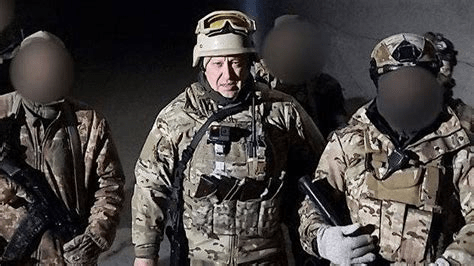
This was officially confirmed by the head of Wagner PMC on the evening of January 10. He stressed that only Wagner fighters took part in the offensive.
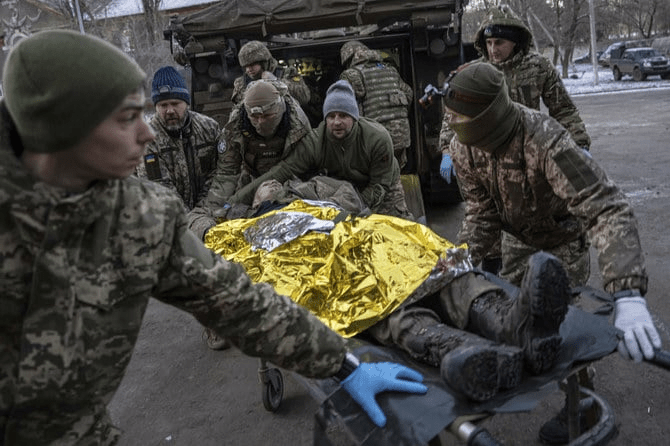
Ukrainian soldiers surrounded in Soledar have either surrendered or been killed, Wagner Group founder Yevgeny Prigozhin said on Wednesday.“The entire town is littered with the bodies of Ukrainian servicemen,” he said.“There can be no word of any humanitarian corridor,” he said, noting that all civilians have already been evacuated from the town
Russian forces took control of the central quarters of the city, including the buildings of the local administration and the city council. Footage also confirmed that the salt mines used as hideouts by Ukrainian servicemen came under Russian control.
On the outskirts, Russian forces continued to develop their offensive westwards towards the Sol railway station. The loss of Blagodatny will be the final point of defeat of the Ukrainian grouping in the Soledar area.
The capture by Russian troops of one of the most important defense nodes of the Ukrainian grouping in the Donbas was completely ignored by Kiev officials. In the morning report of the Ukrainian General Staff on January 10, Soledar was not even mentioned.
Ukrainian propagandists are already preparing the public, declaring that military positions in Soledar are ‘not strategically important’, and loss of the city would change nothing.
After Russian victory in Soledar, Ukrainian defense in Bakhmut is doomed. But more serious is the shocking death toll of reinforcements funneled for weeks into an area being blitzed constantly by Russian artillery.
The US and allies are desperately providing ever more powerful and sophisticated war weapons to the Ukrainian army which is being slowly reduced to demoralised and ill treated ‘cannon fodder’.
Freedom continues its regular prison column with an update from Jan Goodey who is currently serving a six-month sentence for blocking the M25 with Just Stop Oil. Seems to me I’m banged up for stating the bleeding obvious. The Financial Times article entitled «UK needs ‘war effort’ to cut energy bills and carbon emissions, say […]
























 The Free