ECUADOR: Texaco’s shaky Rainforest –

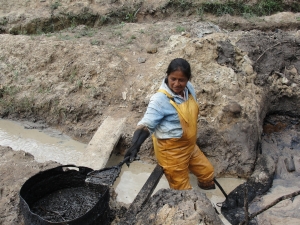
Rosa Tanguila cleaning up oil residue near her rainforest community. / Credit:Gonzalo Ortiz/IPS

Trees on Shaky Ground in Texaco’s Rainforest

By Gonzalo Ortiz*

NUEVA LOJA, Ecuador, Mar 29, 2011 (Tierramérica) – When the trunks of the trees move with every step you take, you know you are in a swamp. This is what happens when you walk over the seemingly firm and vegetation-covered ground over what was once a pit used to dump oil sludge in the Ecuadorian Amazon rainforest.

The extent and impact of oil contamination on the environment and human health in northeastern Ecuador are much worse than anyone could imagine, as Tierramérica discovered during an extensive tour of the area.

via ECUADOR: Trees on Shaky Ground in Texaco’s Rainforest – IPS ipsnews.net.

Car that runs on nothing but water…FRAUD??

Car that runs on nothing but water unveiled in Japan. No gasoline, no battery recharging and no emissions.

NOTE..Later it came out this is a typical FAlSE STORY USED BY A COMPANY TO PUBLICIZE THEIR KIT WHICH DOES SAVE PETROL

LUEGO SALIÓ QUE ESTA REPOTAGE ES FALSO.. SOLO PUBLICIDAD PARA UN KIT DE USAR MENOS GASOLINA


Posted by PC Latest news, Special Report, World news Saturday, March 26th, 2011

Japanese company Genepax presents its eco-friendly car that runs on nothing but water. The car has an energy generator that extracts hydrogen from water that is poured into the car’s tank. The generator then releases electrons that produce electric power to run the car. The electric powered car can run on any type of water (you can even use tea and soda…etc). The car can run for an hour at about 50 miles per hour on just a liter of water; about 2 cans of soda worth. Genepax, the company that invented the technology, aims to collaborate with Japanese manufacturers to mass produce it.

Unlike other electric cars, the Genepax car does not require that batteries be recharged and has no emission.

via Car that runs on nothing but water unveiled in Japan. No gasoline, no battery recharging and no emissions. | PRESS Core – Evidentiary News, World News, Special Reports, Technology, Health, Videos, Polls.

Whaling Ailing

revenge at last

JAPAN
Whaling Policy in Choppy Waters
By Suvendrini Kakuchi

TOKYO, Feb 27, 2011 (IPS) – After years of stiff resistance, the Japanese government has announced a temporary halt to its controversial research whaling programme in the Antarctic Ocean, a decision that will finally stir the debate to promote sustainable fishing, say conservationists here.

“We welcome the decision to halt whaling this season as a step towards preserving whales which are an endangered species. The message is that whales have to be protected which is all the more valuable since it comes from a nation that is a leader in the consumption of seafood stocks,” Junichi Sato, expert on whaling at Greenpeace Japan told IPS.

Since 1982, the world has followed global moratorium against commercial whaling by the International Whaling Commission (IWC) but only Japan was allocated an annual quota for scientific whaling that is aimed at determining available stocks.

Greenpeace International spearheads a global campaign against Japanese whaling that has led to bitter clashes and lawsuits against each other.

Several fisheries experts express support for the unprecedented move by the Japanese government, pointing out it is a vital landmark in dealing with the growing consumption of fish in the world that has lead to alarming depletion of stocks.


Wind Turbines Survive Earthquake

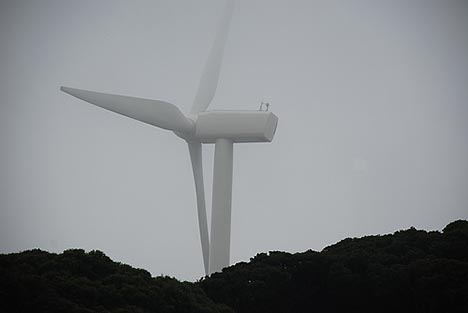
It’d be very difficult to exaggerate the scale of damage caused by the Japanese trifecta disaster of earthquake-tsunami-nuclear power plant crisis, but in the middle of it all there’s one small bright spot: Japan’s wind turbines have survived it all unscathed, with operators being asked to step up operations where possible to help with electricity shortfalls.

via Japan’s Wind Turbines Survive 1,000 Year Earthquake Unscathed : TreeHugger.

Oil Still Leaking from Deepwater Horizon

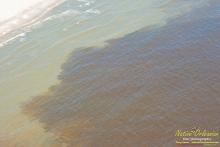
Credit: Courtesy of Huffington Post (Jerry Moran/Stuart Smith oilspillaction.com)

While the media is busy assuring their audiences that we still need nuclear energy despite catastrophic accidents potential, environmentalists would like you to remember we still have issues in the Gulf of Mexico from another one of our short-sighted energy policies.

The Coast Guard is investigating reports of a potentially large oil slick in the Gulf of Mexico not far from the Deepwater Horizon site. According to a knowledgeable source, the slick was sighted by a helicopter pilot on Friday and is about 100 miles long. A fishing boat captain said he went through the slick yesterday and it was strong enough to make his eyes burn.

via Oil Still Leaking New Deepwater Horizon Drill Site | Crooks and Liars.

Japan ; Worse Than Chernobyl

UXBRIDGE, Canada, Mar 17, 2011 (IPS) – A global nuclear disaster potentially worse than Chernobyl may be under way in Japan as hundreds of tonnes of highly radioactive spent nuclear fuel are open to the sky, and may be on fire and emitting radioactive particles into the atmosphere.

Many countries have advised their citizens in Japan to leave the country.

“This is uncharted territory. There is a 50-percent chance they could lose all six reactors and their storage pools,” said Jan Beyea, a nuclear physicist with a New Jersey consulting firm called Consulting in the Public Interest.

“I’m surprised the situation hasn’t gotten worse faster… But without a breakthrough it’s only a matter of days before spent fuels will melt down,” said Ed Lyman, a physicist at the Union of Concerned Scientists and an expert on nuclear plant design.

Japan’s Fukushima Daiichi plant was damaged by a powerful earthquake and tsunami on Mar. 11. It has an estimated 1,700 tonnes of used or spent but still dangerous nuclear fuel in storage pools next to its six nuclear reactors, according to Kevin Kamps, a radioactive waste specialist at Beyond Nuclear, a U.S. anti-nuclear environmental group.

The storage pools holding 30 to 35 years worth of spent fuel at reactors No. 3 and No. 4 have lost containment and most if not all of their coolant water. They may be on fire, venting radioactive particles into the atmosphere, Kamps told IPS.

via Japan Nuke Disaster Could Be Worse Than Chernobyl – IPS ipsnews.net.

– Japan halts whale hunt after chase


BBC News – Japan halts whale hunt after chase by protesters.