Jacamar Frentiazuloso/Bluish-fronted Jacamar/Galbula cyanescensEsp/Eng

https://birdscolombia.com/2022/03/08/jacamar-frentiazuloso-bluish-fronted-jacamar-galbula-cyanescens/

leer en español abajo.. read in English below

\Nombre en español: Jacamar Frentiazuloso

Nombre en inglés: Bluish-fronted Jacamar

Nombre científico: Galbula cyanescens

Familia: Galbulidae

SONG

Foto: Steve Sanchez

****************

English

​Bluish-fronted jacamar

The bluish-fronted jacamar (Galbula cyanescens) is a species of bird in the family Galbulidae. It is found in Bolivia, Brazil, and Peru.

Foto: Joao Quental

Taxonomy and systematics

The bluish-fronted jacamar is monotypic. It and the rufous-tailed (Galbula ruficauda), white-chinned (G. tombacea), coppery-chested (G. pastazae), and green-tailed jacamars (G. glabula) are considered to form a superspecies.

Description

The bluish-fronted jacamar is 20 to 23 cm (7.9 to 9.1 in) long and weighs 22 to 26 g (0.78 to 0.92 oz). The male’s crown, including the forehead («front») is metallic green to bluish and the upper parts are metallic green with a bluish gloss. The chin and upper throat are blackish, the lower throat and chest green, and the rest of the underparts rufous. The female differs only in that the lower breast and belly are ochraceous.

Distribution and habitat

The bluish-fronted jacamar is found east of the Andes and south of the Amazon River, in eastern Peru, in western Brazil as far east as the Madeira River, and south into Bolivia’s La Paz Department. It inhabits humid primary forest, gallery forest, and secondary forest up to 1,000 m (3,300 ft) elevation. It is typically found in mid-stage succession vegetation along the forest edges and especially along watercourses and lakesides.

Foto: Francisco Piedrahita

Behavior

Feeding

The bluish-fronted jacamar’s diet has not been described in detail but is believed to be many kinds of flying insects. It perches on exposed branches or in scrub and sallies from there to capture its prey. It sometimes joins mixed-species foraging flocks.

Breeding

The bluish-fronted jacamar’s breeding phenology has not been documented.

Foto: Antonio Upegui

Vocalization

The bluish-fronted jacamar’s song is rendered as «kip kip-kip-kipkikikrkrkrrr-kree-kree-kree-kip-kip-kikikrrrrreeuw».

Status

The IUCN has assessed the bluish-fronted jacamar as being of Least Concern. It appears to be common throughout its range and occurs in several protected areas.

Fuentes: Wikipedia/eBird/xeno-canto

Foto: Steve Sanchez

**********************

español

Descripción

El jacamará coroniazul mide entre de 20-23 cm de longitud.​ Su pico es largo, recto y puntiagudo y de color negro. La mayor parte de su cuerpo es de color verde brillante, con iridiscencias azules en la frente y el píleo. Su vientre y parte inferior de su larga cola son de color rojizo, menos intenso en las hembras. Es muy parecido al jacamará barbiblanco y además algunos individuos de las poblaciones del sur tienen la barbilla blanca, pero se diferencian por no tener la parte superior de la cabeza de color oscuro.​

Distribución y hábitat

Se encuentra en Bolivia, Brasil y Perú. Sus hábitats naturales son las riberas de los ríos y los claros de la selva húmeda tropical de regiones bajas, hasta los 1400 metros de altitud.

Fuentes: Wikipedia/eBird/xeno-canto

Changing a System that Exploits Nature and Women, for a Sustainable Future

By Mariela Jara Reprint | https://www.ipsnews.net/ | |En español

This article is part of IPS coverage of International Women’s Day, Mar. 8, whose theme this year is “Gender Equality Today for a Sustainable Tomorrow”.

Peruvian farmer Hilda Roca, 37, stands in her agro-ecological garden in Cusipata, a town located at more than 3,300 meters above sea level in the highlands of Cuzco, where she grows vegetables for her family and sells the surplus with the support of her adolescent daughter and son. CREDIT: Mariela Jara/IPS

Peruvian farmer Hilda Roca, 37, stands in her agro-ecological garden in Cusipata, a town located at more than 3,300 meters above sea level in the highlands of Cuzco, where she grows vegetables for her family and sells the surplus with the support of her adolescent daughter and son. CREDIT: Mariela Jara/IPS

LIMA, Mar 7 2022 (IPS) – “Pachamama (Mother Earth) is upset with all the damage we are doing to her,” says Hilda Roca, an indigenous Peruvian farmer from Cusipata, in the Andes highlands of the department of Cuzco, referring to climate change and the havoc it is wreaking on her life and her environment.

From her town, more than 3,300 meters above sea level, she told IPS that if women were in power equally with men, measures in favor of nature that would alleviate the climate chaos would have been approved long ago. “But we need to fight sexism so that we are not discriminated against and so our rights are respected,” said the Quechua-speaking farmer..

The link between climate change and gender is the focus of the United Nations’ celebration of this year’s International Women’s Day, Mar. 8, under the theme “Gender equality today for a sustainable tomorrow”.

The aim is to “make visible how the climate crisis is a problem that is closely related to inequality, and in particular to gender inequality, which is expressed in an unequal distribution of power, resources, wealth, work and time between women and men,” Ana Güezmes, director of the Gender Affairs Division of the Economic Commission for Latin America and the Caribbean (ECLAC), told IPS.

Latin America is highly vulnerable to the climate crisis despite the fact that it emits less than 10 percent of the greenhouse gases that are warming the planet.

In addition, climate injustice has a female face in the region: lower-income population groups, where the proportion of women is higher, are more exposed to climate effects due to their limited access to opportunities, despite the fact that they are less responsible for emissions.

The extreme poverty rate in the region increased from 13.1 percent to 13.8 percent of the population – from 81 to 86 million people – between 2020 and 2021, according to data released by ECLAC in January. Women between 25 and 59 years of age are the most affected compared to their male counterparts. This situation is worse among indigenous and rural populations, who depend on nature for their livelihoods.

Continue reading “Changing a System that Exploits Nature and Women, for a Sustainable Future”

Fighting for LGBTQ+ rights in China

Qiuyan Chen sued the Chinese ministry of education over homophobic textbooks. She writes about her battle for LGBTQ+ rights in China and the UK

February 25, 2022 · 6 min read

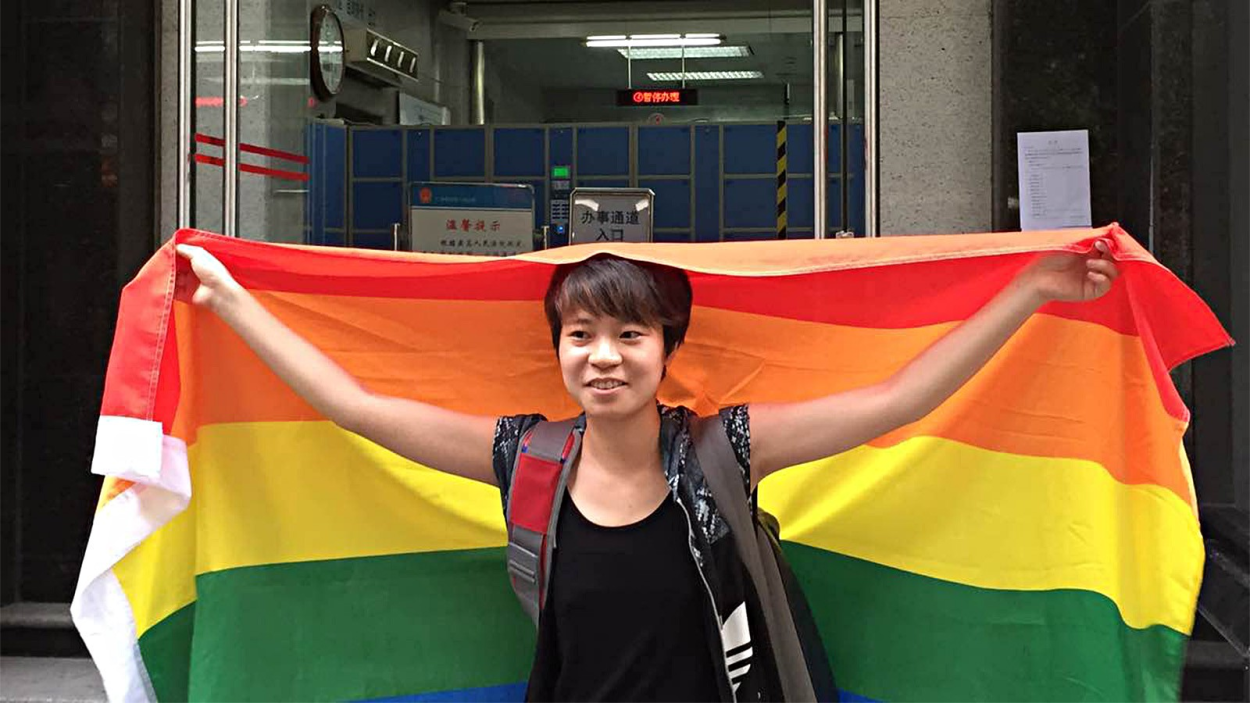
Qiuyan Chen outside the Intermediate People’s Court in Beijing in 2015. Photo credit: Qiuyan Chen

On 16 July 2021, 18 LGBTQ+ public accounts run by the members of ‘underground’ student rainbow societies were shut down by WeChat. These accounts now only appear on the app as ‘unnamed’. When supporters voiced their anger about the closure on social media, their posts were swiftly deleted and some of their accounts were also shut down.

The closure of LGBTQ+ led social media accounts marks another turn in the long-term suppression of grassroots LGBTQ+ groups by public authorities in China. It is a concerning time for queer activists. How can we possibly promote LGBTQ+ rights in this context? How can we forge a space for ourselves in a society dominated by cisgenderism and heterosexuality?

Censorship on campus

I enrolled for undergraduate study at Sun Yat-sen University which, in 2006, set up the first rainbow society in mainland China. The university offered a public elective course on ‘social culture and gender diversity’, it had a ‘vagina monologues’ group, and so on. Despite the fact that these courses and groups were banned from campus by the university, those stories like seeds, were planted in my heart already.

In 2014, as a fresher, I discovered that the textbooks used in school described homosexuality as a form of mental illness.

Although homosexuality has been removed from the list of mental illness in 2001, there were still plenty of stigmatised depictions of homosexuality and bisexuality in psychology, mental health, and medical textbooks published in mainland China.

The descriptions in these books typically stated that ‘homosexuality represents a sexual orientation disorder’, ‘being bisexual means being homosexual while being heterosexual at different occasions’ and ‘being gay degrades social morality.’

I decided to push for the correction of these homophobic texts. After failed attempts at engaging with editors, publishers and librarians, I chose to purse change through the courts. I sued the Chinese education ministry three times between 2015 and 2017, and tried to sue individual publishers on a number of occasions.

Continue reading “Fighting for LGBTQ+ rights in China”

Series of activities on International Women’s Day in Euphrates region

 The cities of Manbij and Kobani witnessed a series of activities within the framework of the activities organized by women’s institutions on the 8th of March, International Women’s Day.

https://www.hawarnews.com WOMAN 2022-03-01  Manbij

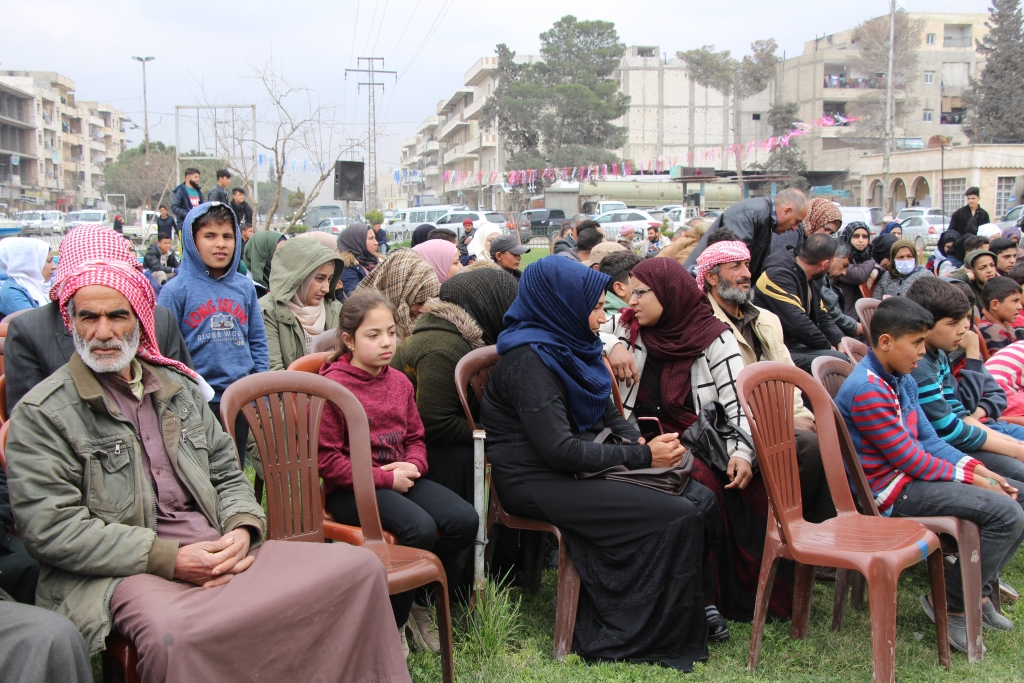
The Young Women’s Union organized, today, at the beginning of March, in the city of Manbij, a free women’s tent, under the slogan “Let’s unite to take revenge and defeat the occupation”, in the Sabaa Bahrat roundabout, west of the city.

 The event began by a minute, and then the administrator of the Young Women’s Union welcomed Sedana Hannoush to attend and congratulated all women on the International Women’s Day.

 It was followed by a speech on behalf of the Military Women’s Council delivered by Fatima Muhammad, who said, “On behalf of the Manbij Military Council, we extend our warmest congratulations and bless all women in the world, on the advent of International Women’s Day at the beginning of spring, and we wish a good year”

 Then the co-chair of the Circassian Association, Taleen Najm Al-Din, delivered a speech on behalf of civil society organizations, in which she said, “In the spirit of women’s struggle for peace and freedom, we welcome the International Women’s Day, and congratulate all women who represent the hope of humanity for their efforts.”

 The administrator of the Relations Office of the Syrian Women’s Council, Rola Othman, also delivered a speech in which she said, “In my name and in the name of the Syrian Women’s Council, I congratulate and congratulate the approaching (International Women’s Day), which falls on the eighth of March, which is celebrated by the whole world. Women are the loud voice in society.  striving for equality between men and women.

 Then, a member of the Training Committee at the Zenobia Women’s Gathering Office, Heba Al-Ahmad, congratulated all the women of north and east Syria and the women of the whole world on this day, the eighth of March. The woman, despite all the difficulties is still strong and resistant.

 The event also included a cycling race for girls.

 Kobani

 In the context, the Golden Crescent Movement in the Kobani canton made a statement to the public opinion in which it congratulated the International Women’s Day, which falls on March 8 of this month, and the statement pledged to follow in the footsteps of the martyrs of women’s freedom and highlight their resistance and heroism through art.

Continue reading “Series of activities on International Women’s Day in Euphrates region”

Afro-Latin American women look to overcome history of marginalization

Roxana Vanessa's avatarStigmatis

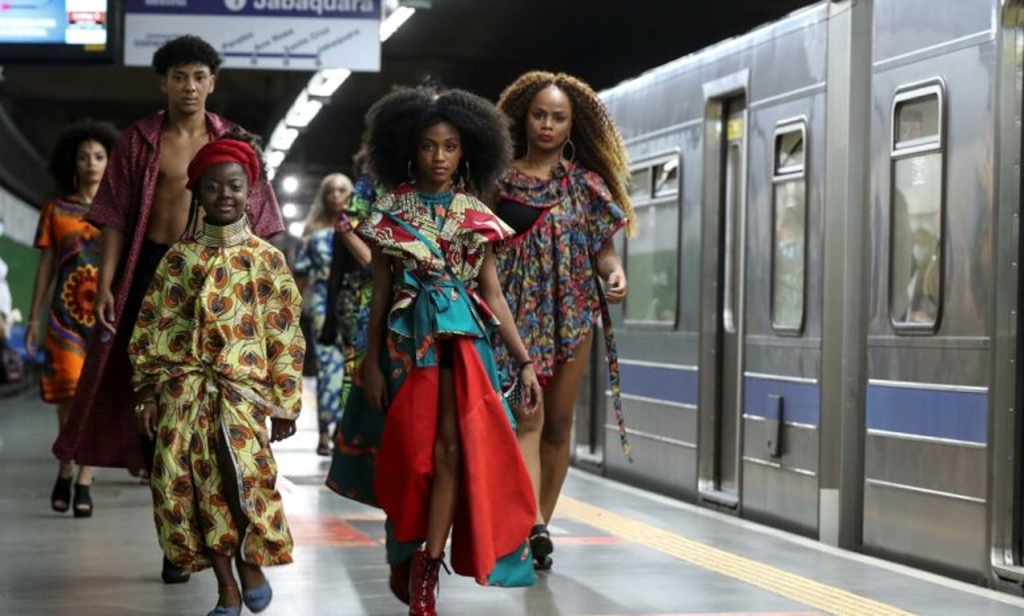
A 19 November 2021 file photo of Afro-Brazilian models during a fashion event at a train station in downtown Sao Paulo, Brazil. EFE/Sebastiao Moreira


Sao Paulo | Mar 7 2022

Though largely ignored in the history books, deprived of their full identity and held back by stereotypes, Latin American women of African descent are unbowed by challenges rooted in times of slavery and gradually carving out more prominent roles for themselves in their respective countries.

That has been the story of Costa Rican Vice President Epsy Campbell Barr and Colombian human rights activist and presidential candidate Francia Elena Marquez, although despite their success and that of other female Afro-Latin Americans the work of societal transformation is far from complete.

“The fact I broke down a barrier doesn’t mean it’s a collective victory. I’m excited about my achievements and that of so many others, but we need to keep our focus…

View original post 537 more words

Revenge of the Putin-Nazis!

Admin's avatarConsent Factory, Inc.

And they’re back! It’s like one of those 1960s Hammer Film Productions horror-movie series with Peter Cushing and Christopher Lee … Return of the Putin-Nazis!Revenge of the Putin-Nazis!Return of the Revenge of the Bride of the Putin-Nazis! And this time they are not horsing around with stealing elections from Hillary Clinton with anti-masturbation Facebook ads. They are going straight for “Democracy’s” jugular!

Yes, that’s right, folks, Vladimir Putin, leader of the Putin-Nazis and official “Evil Dictator of the Day,” has launched a Kamikazi attack on the United Forces of Goodness (and Freedom) to provoke us into losing our temper and waging a global thermonuclear war that will wipe out the entire human species and most other forms of life on earth!

I’m referring, of course, to Putin’s inexplicable and totally unprovoked invasion of Ukraine, a totally peaceful, Nazi-free country which was just sitting there minding its non-Nazi business…

View original post 1,859 more words

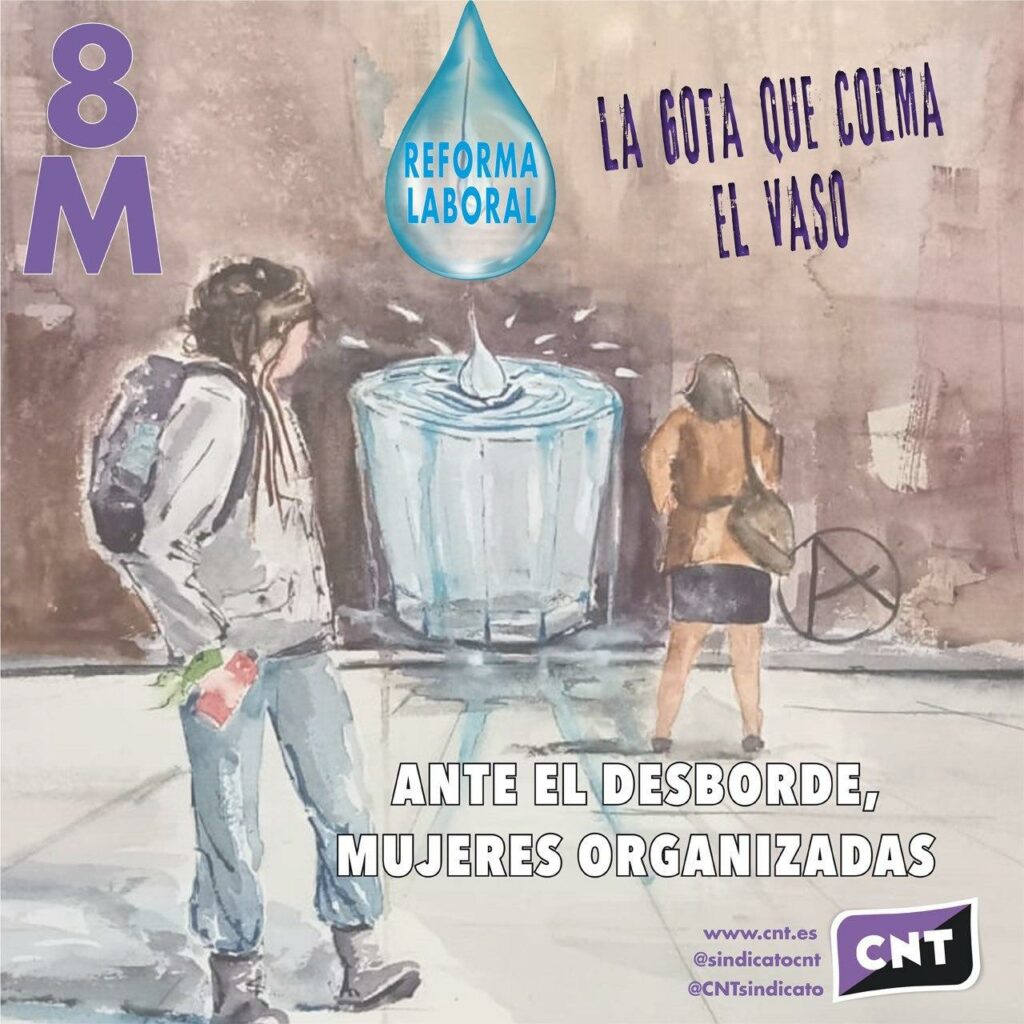
[CNT] Working women are overwhelmed. And we are fed up

4 March, 2022 in CNT, Feminism: Leer en Español (Spanish)

Tired of fully and without resources bearing the responsibility of care.  Fed up with the sexual division of labor that feminizes sectors, making them more precarious and invisible (cleaning, food, socio-health, education, etc.), despite being essential to the workings of this system.

It’s already been 2 years of managing the Covid-19 pandemic, and in this time it has been shown over and over again that each crisis hits women hard.

The drop that overflowed the cup…The last straw

This image has an empty alt attribute; its file name is cnt-8-M-1024x1024.jpg

We are overwhelmed and fed up because we still do not see any change that ends the salary gap, because the precariousness and lack of hiring of women continues to worsen.  It is a fact that women take more unpaid leave to take care of care and that we are the ones who, in extreme cases, decide not to join the labor market to care for the people who depend on us. 

ly full days, etc.The majority of resident migrant women are unemployed or do not have a regular employment contract, and many are in an irregular administrative situation.  We must put an end to the labor exploitation to which these women are subjected, who do not report for fear of being expelled, and demand that the Government regularize them.

The Special Scheme for Domestic Employees is slavery, without the right to unemployment benefit, without access to the law of labor risks.  The dismissal is without notice or compensation, not to mention the impossibility of requesting leave or permission for fear of dismissal.  

There is also no right of readmission, as is the case in other sectors.We cannot forget the mistreatment and abuse suffered by female employees in some workplaces.What to say about the robbery of our pensions.  

Stop union repression! Thousands rally in Gijon against the latest attack on workers’ rights

The achievement that the “most progressive government in history” sells us, together with the union ministries, is nothing more than the scam of the revaluation of pensions and one more step in the privatization of the public pension system.

Continue reading “[CNT] Working women are overwhelmed. And we are fed up”