”People get together with a buzz of good-will to put their energy into cultural and practical things – brain-storming and building festivals for a wider public, putting on regular social events, bands, workshops, or maintaining and improving the infra-structure of ADM community: the mission to cover the roof with solar panels, to improve the roads and tracks, to lay down water pipes, make an internet network, grow a garden, collect scraps for the pigs, sow wildflower seeds… The whole is greater than the sum of its parts”.
The ADM is the biggest cultural freehaven in the Netherlands. Our community consists of around 125 people from all ages, nationalities and walks of life.We transformed a disused, derelict shipyard from the Amsterdam Drydock Company into a thriving Living Experiment, sharing our space, visions and creations. We produce our own projects such as Green ADM, festivals, concerts, workshops and arts.
International academics: “An attack against the peaceful citizens of Efrîn is a flagrant act of aggression against a region and a peaceful and democratically governed population” Saturday, January 20, 2018
We, the undersigned academics and human rights activists, demand that the leaders of Russia, Iran and the United States ensure that Turkey does not break the sovereignty of the Syrian borders and that the people of Efrîn in Syria can live in peace.
In Efrîn, the mostly Kurdish population, is one of the most stable and secure regions in Syria. With very little international help, Efrîn has hosted so many Syrian refugees in the last five years that its population has doubled to 400,000. Efrîn is now surrounded by enemies: jihadist groups backed by Turkey, al-Qaeda and Turkey itself.
Turkish President Recep Tayyip Erdogan has threatened to attack the YPG Kurds or the Popular Protection Units, with which the United States has allied themselves against IS.
Turkey accuses YPG of being “terrorists” despite the long history of YPG of creating democratic local government councils in each of the peoples that have freed from IS and its repeated statements that are not interested in Turkey and that they want to function only as the defense of the Syrian Kurds and other ethnic groups living in the Democratic Federation of Northern Syria (DFNS), also known as “Rojava”, which includes Efrîn.Continue reading “Chomsky and Human Rights Activists defend Efrîn (Afrin) from Terrorist Turkey”
Our article in INFOSHOP from a few weeks ago entitled, “Stick It To The Manarchy” generated a lot of response and enthusiasm. We have a response to the criticism, clarifying a few points along with our analysis of the dialogue..click .HERE. Our criticism of manarchy and its implications is our way of contributing to the dialogue. Competitive, aggressive, elitist, and exclusive behavior is contrary to our understanding of anarchist ideals and practice. “Manarchy” is the term we use to describe this behavior because it exemplifies traditional male gender roles.[1]A 2013 global study on homicide by theUnited Nations Office on Drugs and Crimefound that males accounted for about 96 percent of all homicide perpetrators worldwide.
the original post.
Stick it to the Manarchy
By The Rock Bloc Collective
Manarchy: Aggressive, competitive behavior within the Anarchist movement that is frighteningly reminiscent of historically oppressive male gender roles. Such behavior includes acting macho, holier than thou and elitist. Manarchy often results in exclusivity.
We feel obliged to share our discomfort with manarchy as it presents itself in the Anarchist movement. We are excited and inspired by the development and practice of Anarchist ideals, and we must remain critical of our movement in an effort to maximize our effectiveness. Anarchism and direct action are powerful forces, yet we are still susceptible to taking on some of the oppressive cultural practices of the very system we are challenging.
We are two women and two men, all white and coming from economically privileged backgrounds. We are Anarchists. We support direct action and the Black Bloc as a tactic for empowerment. In this article we focus on what has been coined “manarchy.” We intend to explain and criticize manarchist behavior by running through a series of experiences that we have had at mass actions, conferences, and in our day-to-day organizing.Most insidious is the dogmatism of ‘no compromise’ that is often accompanied with a macho spirit that assumes a ‘tougher than thou’ attitude toward dominant culture as well as allies in the movement. Continue reading “The ‘Manarchy’ debate: Fighting ingrained Sexism.”
Turkish invasion against Efrîn already with 7 dead and 17 injured on Saturday, January 20, 2018 The Turkish terrorist operation began yesterday January 19 with a low profile. Twenty vehicles transported Idlib Islamists to Kilis across Turkish territory.
In Efrîn it has been raining for days, in spite of this, from Azaz and Al Bab 2 columns of Turkish mercenaries attacked the region of Shehba, located between Manbij and Efrîn. The first ran into the defensive lines of Jaish al Thuwar (JaT, Army of the Revolutionaries). The towns of Hezwan and Ziwan were victims of the attacks of the Erdogan hordes. The mercenaries, however, retired defeated by Jaish in the Thuwar, with support from Jabhat al-Akrad, with 4 dead and 5 wounded. Allied forces pursued and attackedTurkish positions in Mare and El Bab.
A second Turkish column attacked the villages of Şexaqi and Tiwes, north-east of Bab. Erdogan’s mercenaries withdrew with two dead and 12 injured.
The artillery attacks on Efrîn continue (and air attacks begin)The Turkish terrorist bombs fell on the civil zones of Rajo, Sherawa, Bilbile and Shiye, in the Kurdish corner, and Herbel, Um El-Hosh and Tel Rifa’at, in the north of Aleppo.
International academics: “An attack against the peaceful citizens of Efrîn is a flagrant act of aggression against a region and a peaceful and democratically governed population” to Saturday, January 20, 2018
We, the undersigned academics and human rights activists, demand that the leaders of Russia, Iran and the United States ensure that Turkey does not break the sovereignty of the Syrian borders and that the people of Efrîn in Syria can live in peace.
In Efrîn, the mostly Kurdish population, is one of the most stable and secure regions in Syria. With very little international help, Efrîn has hosted so many Syrian refugees in the last five years that its population has doubled to 400,000. Efrîn is now surrounded by enemies: jihadist groups backed by Turkey, al-Qaeda and Turkey itself. Continue reading “updated..Turkish Terrorist Erdogan orders Bombing of Afrin in new Outrage”
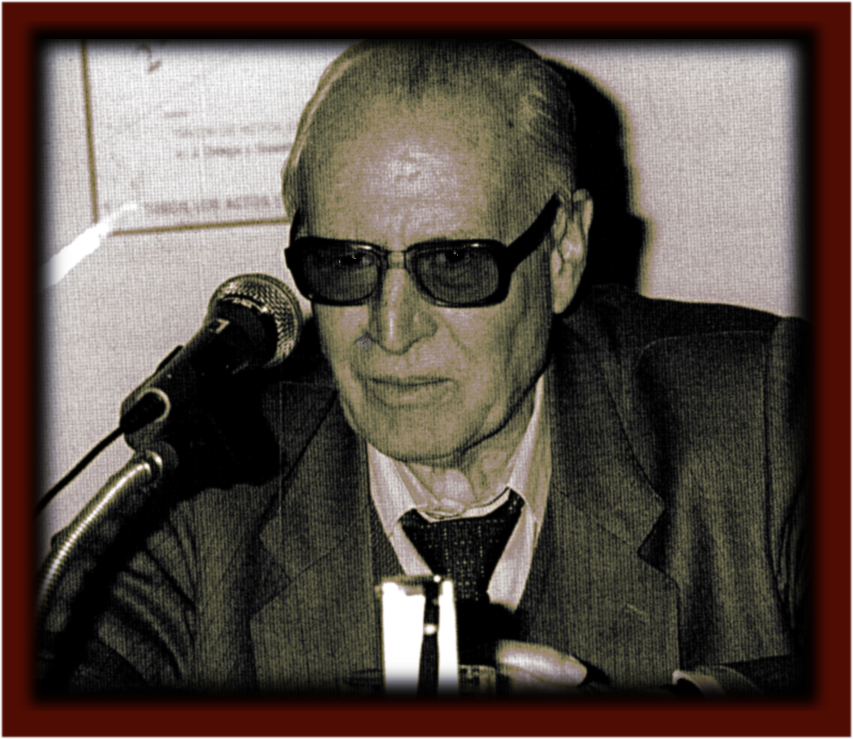
by Pablo Heraklio The anarchist militant and libertarian economist Abraham Guillén Sanz wasn born on March 9, 1913 in Corduente (Guadalajara, Spain), in a peasant family,
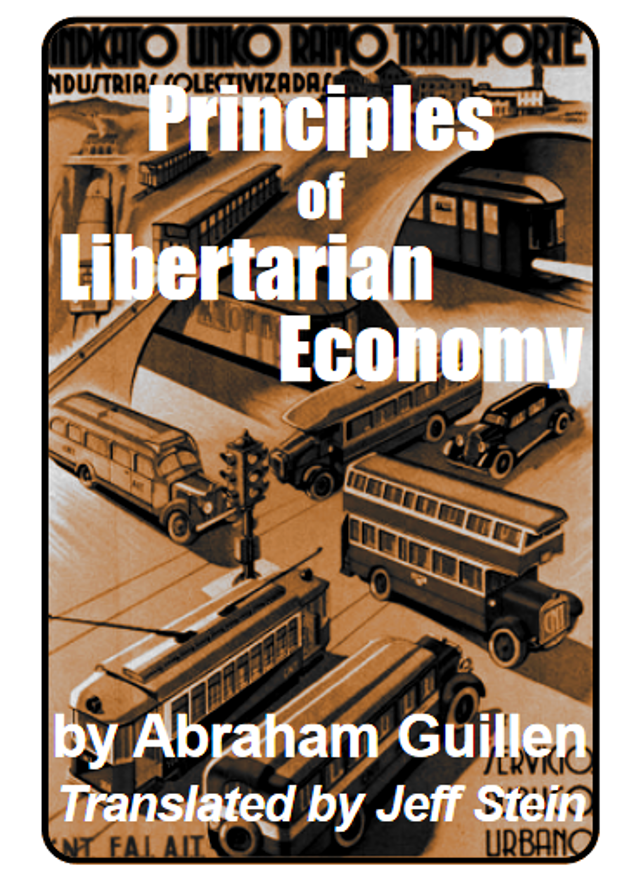
PDF book about the economics of the Spanish libertarian collectives 1936-1939.. An improved attempt at describing the possibilities of how production and distribution might be organised on libertarian communist linesfrom an anarcho-syndicalist perspective has been made by SolFed here: http://www.solfed.org.uk/solfed/the-economics-of-freedom
As a young man he did agricultural work and worked extracting resin. Then he studied in Madrid on a scholarship from the republican authorities. Affiliated with the Young Libertarian Youth, he was also a member of the National Confederation of Labor (CNT) and the Iberian Anarchist Federation (FAI).
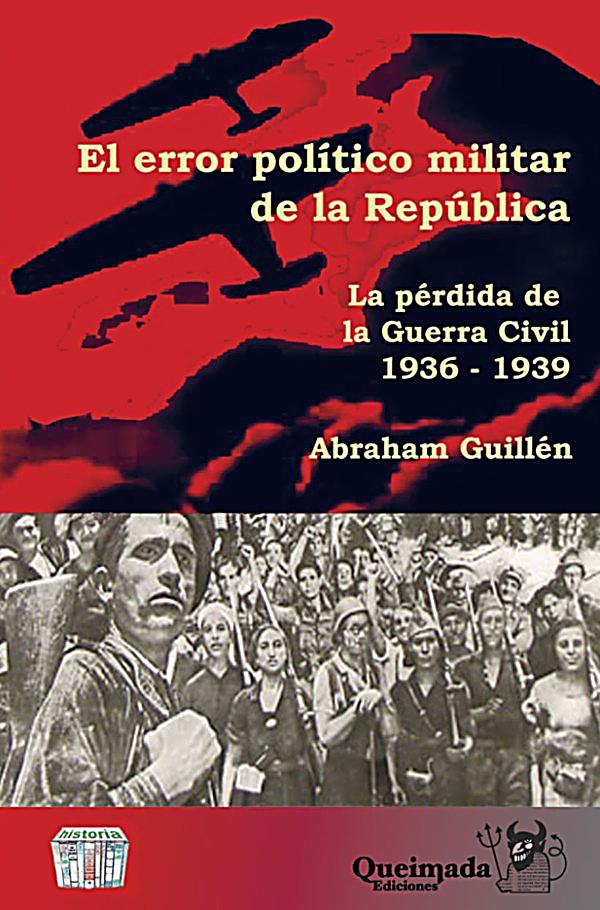
During the first months of the Revolution and Civil War he was director of Juventud Libre (Free Youth), published by the Peninsular Committee of the Libertarian Youth. He was also editor of Castilla Libre and CNT. He went to the front lines and from 1938 he was political commissar in the XIV Division and the IV Army Corps, commanded by Cipriano Mera. He was also a leader of the Nosotros Group and a spokesman for FAI, the Iberian Federation of Libertarian Youth (FIJL) and the Iron Column in Valencia.
The end of the war found him in Alicante, where he was arrested in the port. He was convicted by a Francoist War court which asked for the death penalty. Later it was commuted to the penalty of 20 years...
He was transferred to the penitentiary colony of Añover de Tajo, from where he escaped in 1942.
Then he was part of the National Committee of the clandestine CNT until his arrest in 1943.
Locked in the jail of Carabanchel, he escaped again on New Year’s Eve that same year and, helped by a clan of libertarian gypsies, he went to France in 1944.
In French exile he was editor of the underground publication of the Solidaridad Obrera newspaper wirth Laureano Cerrada and later became involved in the activities of the pro-Communist Supreme Junta of the Spanish National Union (UNE), for which he was expelled from the CNT on February 1 of 1946. He was rehabilitated with the arrival of Germinal Esgleas with the exiled cpmrades.
In 1948 he emigrated to Argentina and spent time in Uruguay and Cuba. During Peronism he edited ‘Economy and Finance’. In Buenos Aires he graduated in Economics and became Professor of Political Economy and Director of Economic Research in the Faculty of Law and Social Sciences of Buenos Aires.
In Argentina he collaborated in several newspapers, such as El Laboralista y Democracia, in Montevideo de Accion, and in Lima de La Prensa. He was also an economic advisor to the University of Labor of Uruguay and internationalist expert of the International Labor Organization (ILO) in self-management economy and cooperative development in Peru.
note: ‘Libertarian’ in this translation just means anarchist in the Spanish sense of collective revolution, not in the rightwing US sense..
In 1961 he was imprisoned for a few months accused of being a member of the Uturuncos, active guerrillas in northwestern Argentina during 1960 and 1961; As a result of this, he requested political asylum in Uruguay in 1962 and, shortly after, he got in touch with the revolutionary elements of this country. During these years he was closely investigated by the Latin American and North American intelligence services.
When Franco died, he returned to the Peninsula and in recent years stood out as a lecturer and essay writer in the libertarian press (Anarkia, Year Zero, Bicycle, Cenit, CNT, Espoir, Icaria, Ideas-Orto, Libertarian History, Letter A , Nahia, El Olivo del Oho, Workers Solidarity, Land and Freedom, Working Life, etc.).Abraham Guillén, 1989
His name – he also used pseudonyms (Jaime de las Heras, Fernando Molina, Arapey, etc. – became popular as an expert in urban guerrilla techniques, in multinationals, in self-management and in issues related to the war in Spain and the degeneration of communism.
For many, he was the creator of the urban guerrilla and its practical American configurations (tupamaros, uturuncos, etc.); some have described him as anarcomarxista and guevarista.
Abraham Guillén Sanz died on August 1, 1993 in Madrid (Spain). Professor Donald C. Hodges gave an important part of the personal file of Abraham Guillén in the George A. Smathers Libraries of the University of Florida (Gainesville, Florida, USA).
Source – PACO HEALTH: ABRAHAN GUILLEN SANZ – ECONOMIST, ANARCHIST AND CREATOR OF THE URBAN GUERRILLERA 25.10.2017
original en castellano
martes, 2 de enero de 2018
Abraham Guillén Sanz – economista, anarquista y creador de la guerrilla urbana
Abraham Guillén Sanz – economista, anarquista y creador de la guerrilla urbana
El 9 de marzo de 1913 – según algunos el 13 de marzo – nace en Corduente (Guadalajara, Castilla, España), en una familia campesina, el militante anarquista y economista libertario Abraham Guillén Sanz.
De joven hizo tareas agrícolas y trabajó extrayendo resina. Luego estudió en Madrid becado por las autoridades republicanas. Afiliado a las Juventudes Libertarias de bien jovencito, fue también miembro de la Confederación Nacional del Trabajo (CNT) y de la Federación Anarquista Ibérica (FAI).
Durante los primeros meses de la Guerra Civil fue director de Juventud Libre, editada por el Comité Peninsular de las Juventudes Libertarias. También fue redactor de Castilla Libre y de CNT. Marchó al frente y a partir de 1938 fue comisario político en la XIV División y del IV Cuerpo del Ejército, comandado por Cipriano Mera.
También dirigió Nosotros, portavoz de FAI, de la Federación Ibérica de Juventudes Libertarias (FIJL) y de la Columna de Hierro en Valencia.
El final de la guerra lo sorprendió en Alicante, donde fue detenido en el puerto. Condenado por un tribunal de guerra franquista, que le pidió la pena de muerte. Posteriormente fue conmutada durante el proceso por la pena de 20 años.
Fue trasladado a la colonia penitenciaria de Añover de Tajo, de donde pudo evadirse en 1942.
Luego formó parte del Comité Nacional de la CNT clandestina hasta su detención en 1943.
Encerrado en la cárcel de Carabanchel, pudo huir la noche de Fin de Año de ese mismo año y, ayudado por un clan de gitanos libertarios, pasó a Francia en 1944.
En el exilio francés dirigió en la sombra Solidaridad Obrera en la época de Laureano Cerrada y más tarde se implicó en las actividades de la procomunista Junta Suprema de la Unión Nacional Española (UNE), por lo que fue expulsado de la CNT el 1 de febrero de 1946. Fue rehabilitado con la llegada de Germinal Esgleas a la dirección del exilio.
En 1948 emigra a la Argentina y pasó un tiempo en Uruguay y Cuba. Durante el peronismo editó Economía y finanzas. En Buenos Aires se licenció en Económicas y fue profesor de Economía Política y director de Investigación Económica de la Facultad de Derecho y Ciencias Sociales de Buenos Aires.
En Argentina colaboró en diversos periódicos, como El Laboralista y Democracia, en Montevideo de Acción, y en Lima de La Prensa. También fue asesor económico de la Universidad del Trabajo de Uruguay y experto internacionalista de la Organización Internacional del Trabajo (OIT) en economía autogestionaria y desarrollo cooperativo en Perú.
En 1961 fue encarcelado durante unos meses acusado de ser miembro de los uturuncos, guerrilla activa en el noroeste de la Argentina durante 1960 y 1961; raíz de este hecho pidió asilo político en Uruguay en 1962 y, poco después, se puso en contacto con los elementos revolucionarios de este país. Durante estos años fue investigado de cerca por los servicios de inteligencia latinoamericanos y norteamericanos.
Al morir Franco, regresó a la Península y en los últimos años destacó como conferenciante y escritor de ensayos en la prensa libertaria (Anarkia, Año Zero, Bicicleta, Cenit, CNT, Espoir, Icaria, Ideas-Orto, Historia Libertaria, La Letra A, Nahia, El Olivo del Búho, Solidaridad Obrera, Tierra y Libertad, Vida Obrera, etc.).
Su nombre – también usó seudónimos (Jaime de las Heras, Fernando Molina, Arapey, etc. – se popularizó como experto en técnicas de guerrilla urbana, en multinacionales, en autogestión y en temas relacionados con la guerra España y la degeneración del comunismo.
Para muchos, fue el creador de la guerrilla urbana y de sus plasmaciones prácticas americanas (tupamaros, uturuncos, etc.); algunos lo han calificado de anarcomarxista y guevarista.
Abraham Guillén Sanz murió el 1 de agosto de 1993 en Madrid (España ). El profesor Donald C. Hodges dio una importante parte del archivo personal de Abraham Guillén en la George A. Smathers Libraries de la Universidad de Florida (Gainesville, Florida, EE.UU.).
Bibliografía Es autor de una cincuentena de libros sobre economía, política, filosofía, estrategia, historia, etc., entre los que podemos destacar:
El destino de Hispanoamérica (1952)
Monopolios y latifundios contra la economía argentina (1956)
Radiografía del plan Prebisch (1956)
La oligarquía en la crisis de la economía argentina (1956)
La agonía del imperialismo (1957), Historia de la revolución española (1961)
El imperialismo del dólar (1962)
25 años de economía franquista (1964)
Estrategia de la guerrilla urbana (1965)
Teoría de la violencia (1965)
La Segunda revolución española (1965)
Uruguay: país en crisis (1966)
Dialéctica de la política (1967)
El dilema económico de América Latina (1967)
Checoslovaquia 1968 (1968, con otros)
Pesca industrial y desarrollo económico (1968)
Desafío al Pentágono (1969)
La rebelión del tercer mundo (1969)
Democracia directa (1970)
Socialismo de autogestión. Del utopía a la realidad (1971)
La década crítica de América Latina (1972)
La caída del dólar (1972)
La colonización financiera del FMI (1973)
La élite del poder en España (1973)
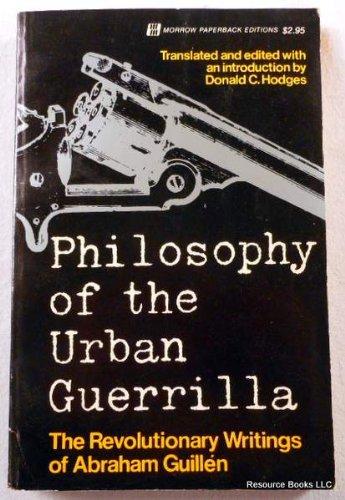
Philosophy of the urban guerrilla (1973)
Poder y crisis del dólar (1973)
El cooperativismo Peruano (1975)
La larga crisis de América Latina (1975)
Explosión demográfica, latifundios y revoluciones en América Latina (1975)
El «Gap» tecnológico entre las dos Américas (1975 )
Las inversiones Extranjeras en América Latina (1975)
La propiedad social, modelo peruana de autogestión (Lima 1976)
LTT-IBM en España (1977)
Revalorización de la guerrilla urbana (1977, con Hodges), Guerrilla Y (1978 , con otros)
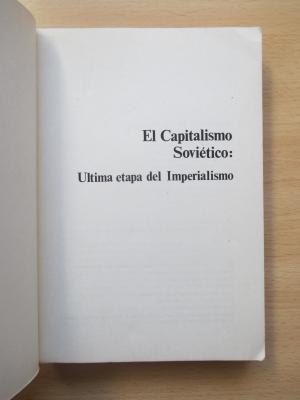
El capitalismo soviético: última etapa del imperialismo (1979)
By: thecollectiveThe following zines were published over the past month or so within the broad anarchist space. As always, we encourage folks to read, discuss, and engage with the ideas within. Organizing study groups, talk about them with your friends, leave copies in random places, or write scathing critiques of the ideas contained within and circulate them widely. Anarchist ideas are sharper when accompanied by a robust dialog and debate.
If you have suggestions for titles to include next month, let us know.
Below & Beyond Trump: Power and Counter-Power in 2017
This is a “strategy and analysis document” published by the Black Rose Anarchist Federation. It provides an analysis of the political context for social anarchists in 2017 and the prospects for “pro-organizational revolutionary anarchists” to intervene in the current period. The documents focuses on (briefly) understanding ruling class power, social movements, and offers suggestions for a path forward. In response to their understanding of the contemporary period, they call for building social movements from below, offensive campaigns, and developing explicitly socialist practices and programs. It reads a lot like a political party platform with a lot of vague statements, sloganeering, and solutions.
This is the fourth issue of a counter-information project based in Bloomington, Indiana called Plain Words. This issue features a few reports on actions in Bloomington (anti-logging and grand jury solidarity) alongside a number of longer essays. The stand-outs include “Mirror, Kaleidoscope, Dagger: What is Anarchism?” and an essay remembering the life of Haymarket martyr Louis Lingg.Continue reading “9 Anarchist Zines from December 2017, free download”
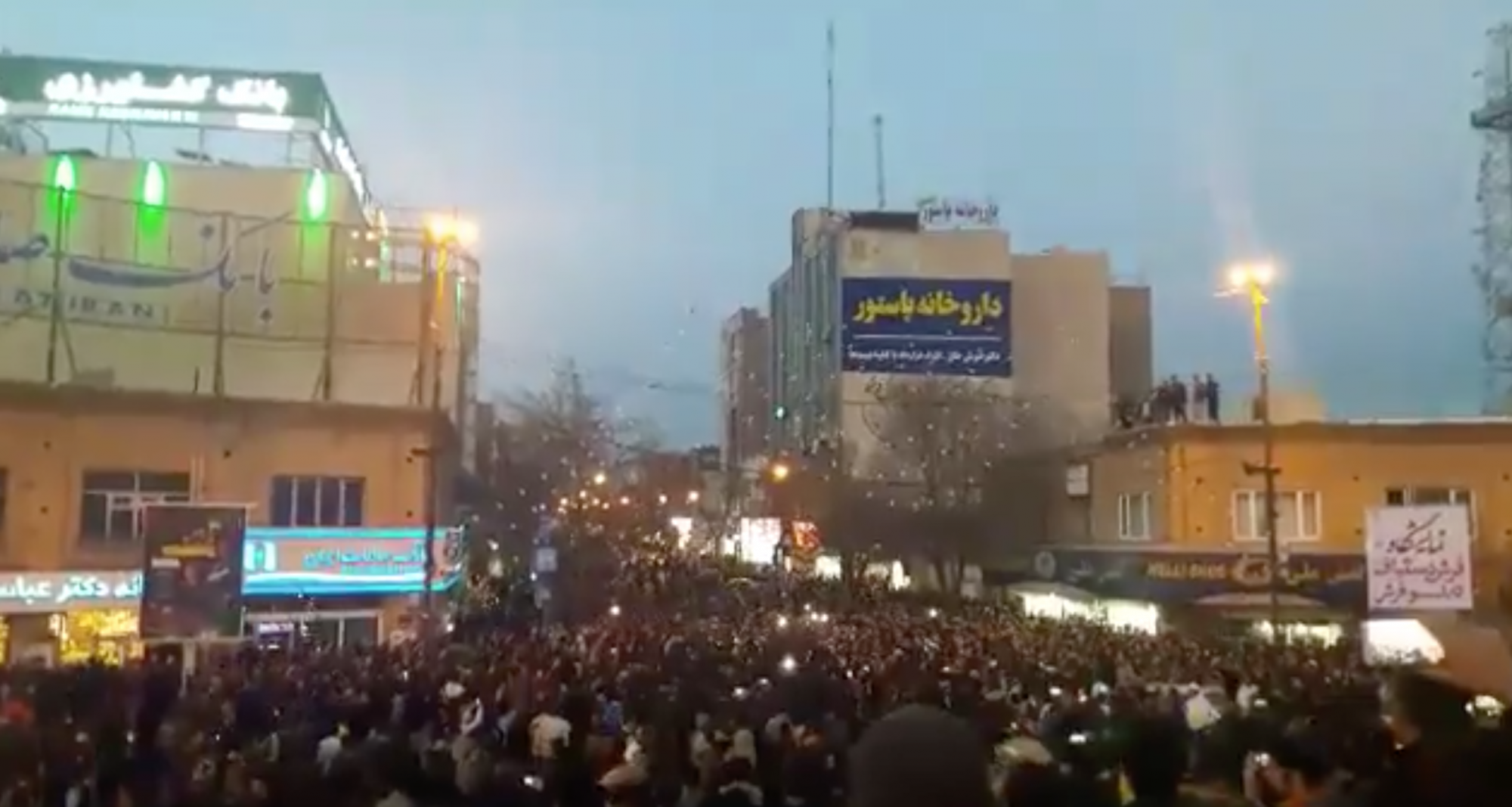
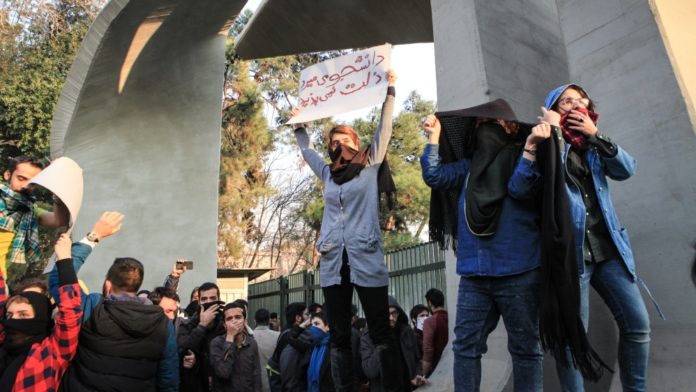
https://libcom.org/news/ We are publishing this dispatch direct from an activist in Iran, trying to make some sense of the current wave of protests. The situation is moving so quickly, and the protests sufficiently diffuse, that anyone claiming to know what will happen can be disregarded. The contribution we can make is to ask questions, to look at what has happened, is happening; and only from that speculate about what might happen in the future. We hope that more will contribute to this effort in the coming days and weeks.
We have lightly edited this piece for translation issues and to add footnotes.
— From Armin Sadeghi, January 4th 2018.
Are we waging a revolution in Iran? Perhaps not. But if we perceive the essence of a revolution as “the abolition of fear”, then everyone has heard (and seen) the Iranian people shouting with no fear that “the emperor has no clothes”.It is hard to anticipate beyond this, since the conflicting social forces have not yet fully unfolded; and it is almost impossible to grasp a revolution as it’s being made. But, we can speculate on the situation, just as Marx wrote to Ruge1: “The internal difficulties seem to be almost greater than the external obstacles.Continue reading “Local Activist on Iran protests: Bread. Jobs. Freedom.”
 ”People get together with a buzz of good-will to put their energy into cultural and practical things – brain-storming and building festivals for a wider public, putting on regular social events, bands, workshops, or maintaining and improving the infra-structure of ADM community: the mission to cover the roof with solar panels, to improve the roads and tracks, to lay down water pipes, make an internet network, grow a garden, collect scraps for the pigs, sow wildflower seeds… The whole is greater than the sum of its parts”.
 We transformed a disused, derelict shipyard from the Amsterdam Drydock Company into a thriving Living Experiment, sharing our space, visions and creations. We produce our own projects such as Green ADM, festivals, concerts, workshops and arts.
 We, the undersigned academics and human rights activists, demand that the leaders of Russia, Iran and the United States ensure that Turkey does not break the sovereignty of the Syrian borders and that the people of Efrîn in Syria can live in peace.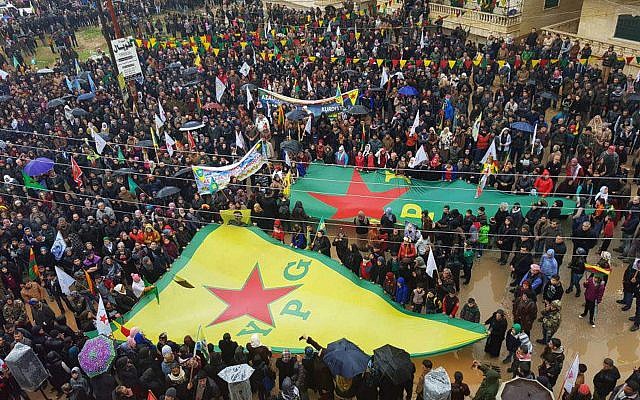





 We, the undersigned academics and human rights activists, demand that the leaders of Russia, Iran and the United States ensure that Turkey does not break the sovereignty of the Syrian borders and that the people of Efrîn in Syria can live in peace.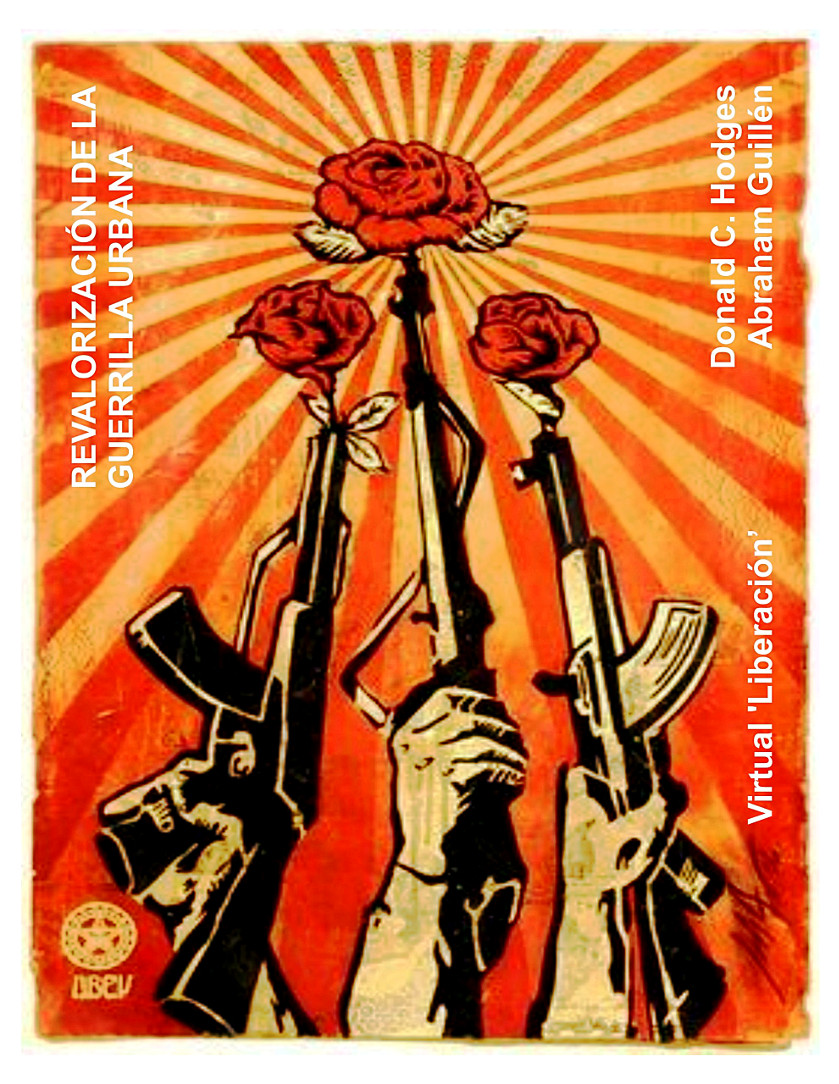



 The Free