shared with thanks… 242+ comments at original HERE> https://www.nytimes.com/interactive/2019/12/12/climate/texas-methane-super-emitters.html?searchResultPosition=6#commentsContainer
see also> Seeing is Believing, Earthworks: Community Empowerment against fracking pollution and climate change. HERE> .https://wp.me/pIJl9-e9f
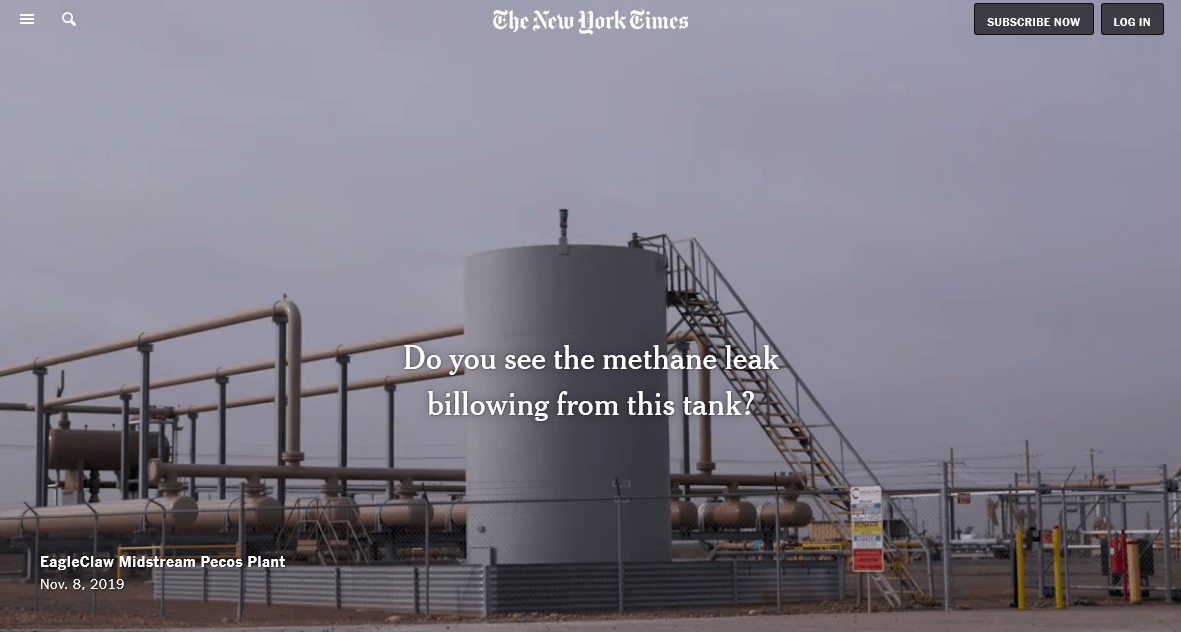
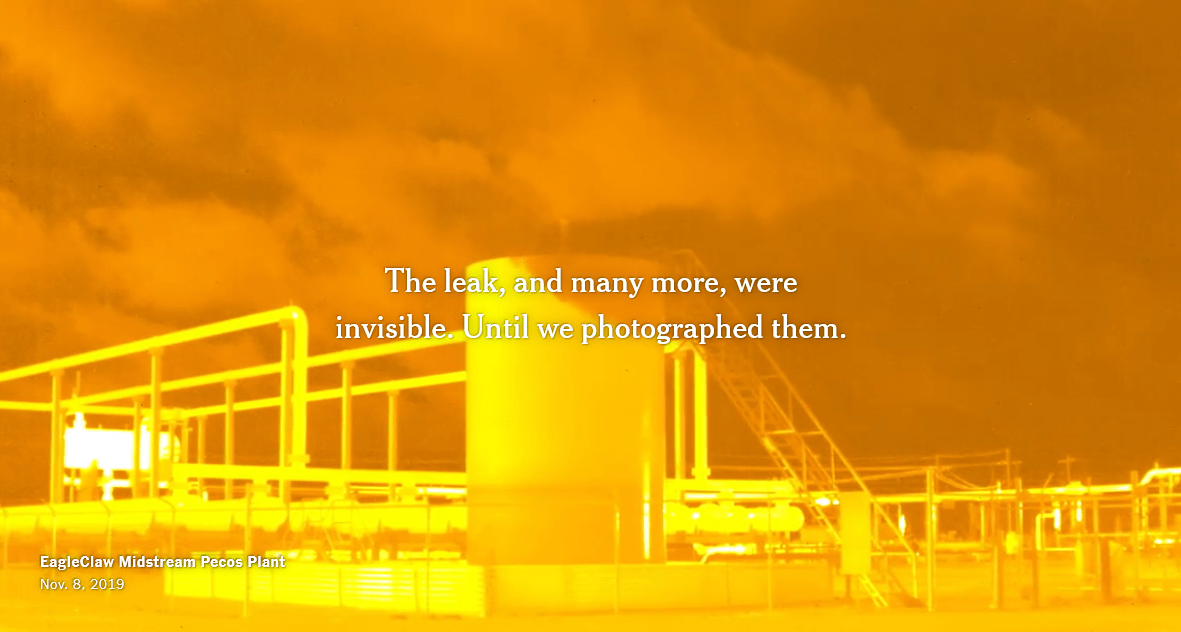
By Jonah M. Kessel and Hiroko Tabuchi Dec. 12, 2019
Immense amounts of methane are escaping from oil and gas sites nationwide, worsening global warming, even as the Trump administration weakens restrictions on offenders.
Jonah M. Kessel, a New York Times visual journalist, and Hiroko Tabuchi, a Times climate reporter, went to West Texas oilfields with a camera that can photograph methane.
To the naked eye, there is nothing out of the ordinary at the DCP Pegasus gas processing plant in West Texas, one of the thousands of installations in the vast Permian Basin that have transformed America into the largest oil and gas producer in the world.
There is a huge global spike in methane, one of the most potent greenhouse gases driving climate change over the last decade, according Harvard University Studies. The U.S. is the biggest culprit, mostly from oil and gas fracking wells, there are over a million of them, with half already abandoned. Obama introduced laws so that the industry would -voluntarily- at least measure the leaks. But even that is being repealed by the Trump administration, a criminal and ecocidal policy in the light of years of concrete scientific proof that the methane emissions are tipping us towards imminent uncontrollable climate chaos.. Controlling methane emissions would be a quick way to pause climate change, while CO2 remains in the atmosphere for many decades.
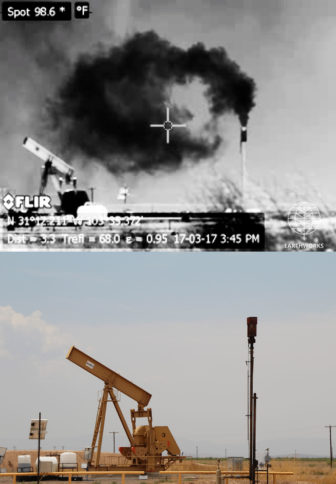
But a highly specialized camera sees what the human eye cannot: a major release of methane, the main component of natural gas and a potent greenhouse gas that is helping to warm the planet at an alarming rate.
Two New York Times journalists detected this from a tiny plane, crammed with scientific equipment, circling above the oil and gas sites that dot the Permian, an oil field bigger than Kansas. In just a few hours, the plane’s instruments identified six sites with unusually high methane emissions.
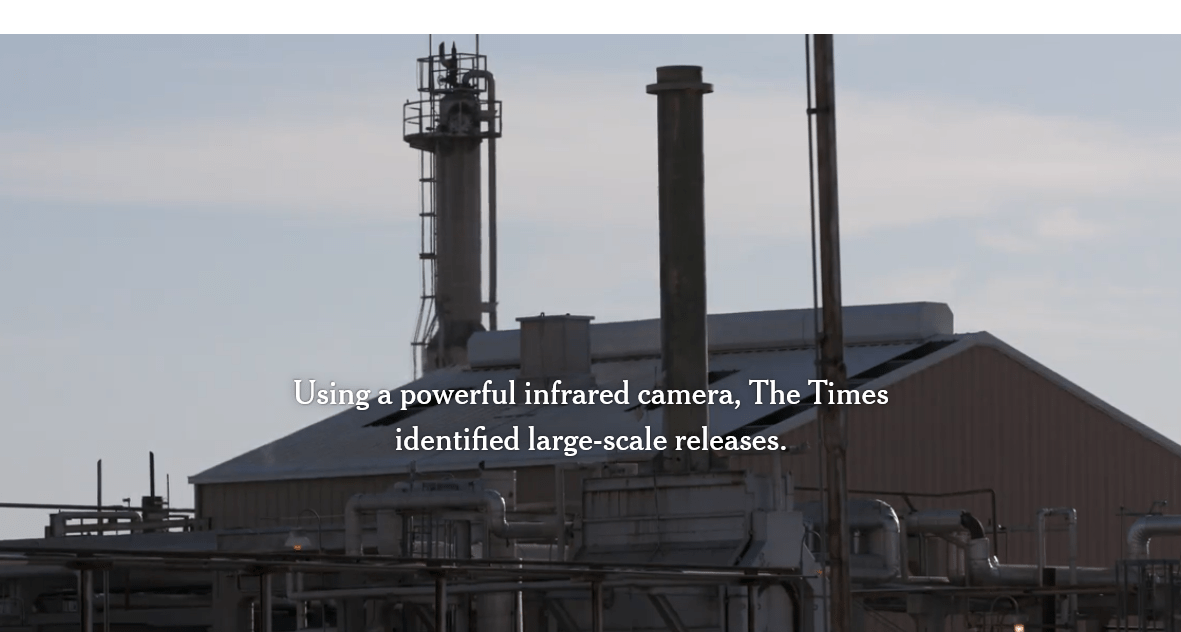
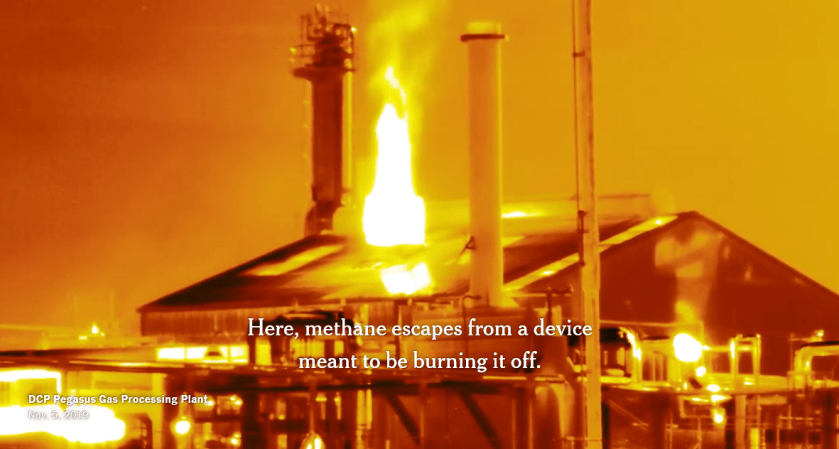
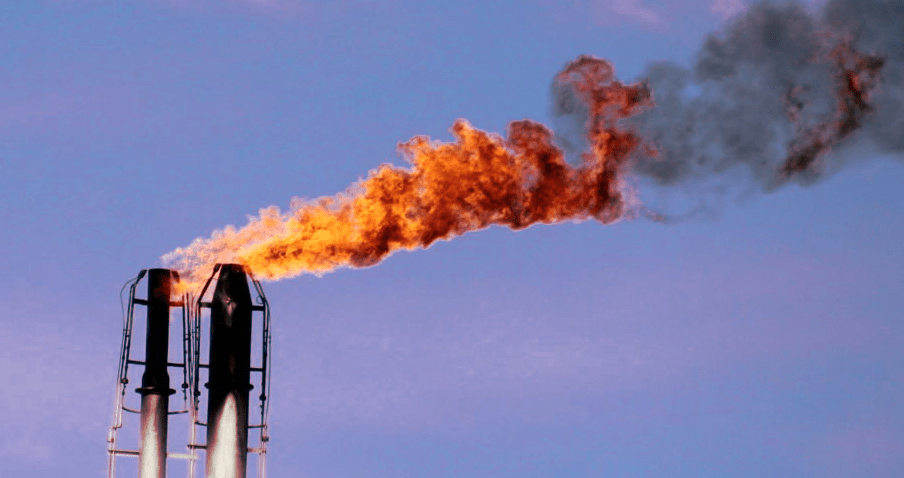
DCP Pegasus Gas Processing PlantNov. 5, 2019Using a powerful infrared camera, The Times identified large-scale releases. Here, methane escapes from a device meant to be burning it off.
Methane is loosely regulated, difficult to detect and rising sharply. The Times’s aerial and on-the-ground research, along with an examination of lobbying activities by the companies that own the sites, shows how the energy industry is seeking and winning looser federal regulations on methane, a major contributor to global warming.
Operators of the sites identified by The Times are among the very companies that have lobbied the Trump administration, either directly or through trade organizations, to weaken regulations on methane, a review of regulatory filings, meeting minutes and attendance logs shows. These local companies, along with oil-industry lobby groups that represent the world’s largest energy companies, are fighting rules that would force them to more aggressively fix emissions like these.
Next year, the administration could move forward with a plan that would effectively eliminate requirements that oil companies install technology to detect and fix methane leaks from oil and gas facilities. By the E.P.A.’s own calculations, the rollback would increase methane emissions by 370,000 tons through 2025, enough to power more than a million homes for a year.
Continue reading “It’s a Vast, Invisible Climate Menace. We Made It Visible.”