Does the West’s despairing of Ukrainian military prospects imply a coming draw-down on the war? Or alternatively, a western strategic shift towards a different mode of attritional war against Russia?
“[The Ukrainians are] still going to see, [whether] in the next couple of weeks, there is a chance of making some progress. But for them really to make the progress that would alter the balance to this conflict – I think, it’s extremely, highly unlikely” – an unnamed “senior Western diplomat [told CNN]”.
Yet, as one ‘war front’ bows out, an ‘out-of-view’ war on Black sea shipping has raised its head.
The ‘new war’ might alternatively be called the ‘Grain War’ – as representing the sequent to Moscow’s resiling from the ‘Grain Deal’ last month. To underline Moscow’s serious intent to terminate what, for Russia had proved to be a wholly unsatisfactory affair (amidst a general reneging on its terms), Moscow acted to incapacitate the port facilities of a number of Black Sea ports serving Ukraine, which it said had been used to store weapons (as well as to export grain).
On 19 July, Moscow warned that all vessels approaching Ukraine from the following day would be considered as potential carriers of military cargo, and treated accordingly. Insurance cover costs naturally soared.
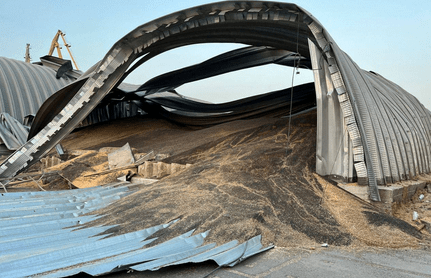
A few days later, on 24 July, the grain infrastructure at the Ukrainian port of Reni was destroyed. It was a ‘message’ to the West of Russian resolve to quit the grain deal.
Russia claimed that on 31 July, Ukraine had unsuccessfully attacked a Russian civilian ship and two naval vessels (using three unmanned maritime drones) in the Black Sea. Ukraine denied the attack, and said that it would never attack a civilian vessel. However, a month later, Ukraine admitted attacking a civilian tanker in Novorossiysk port on 4 August.
‘NATO’ then upped the stakes: Three civilian cargo vessels on 1 August entered the Ukrainian port of Izmail. This port – like Reni – lies on the Danube, a near-literal stone’s throw from (NATO) Romania. It was a NATO ‘taunt’ – the Black Sea is no ‘Russian lake’, it implied. And the vessels were docked within 500 metres of NATO ‘territory’. One vessel was owned by an Israeli company; another to a Greek, and the third to a Turkish-Georgian company – but they were all registered to states such as Liberia.
On 2 August, Russia flattened the grain silos of Izmail, using precision drones.
Ukraine is desperate to keep the grain deal alive. It represents ‘big money’ for the Ukrainian agri-business controlling these exports. And it represents ‘big money’ for intermediary Turkey, which processes the grain into flour, before selling it on (mostly to Europe, at a large mark-up).
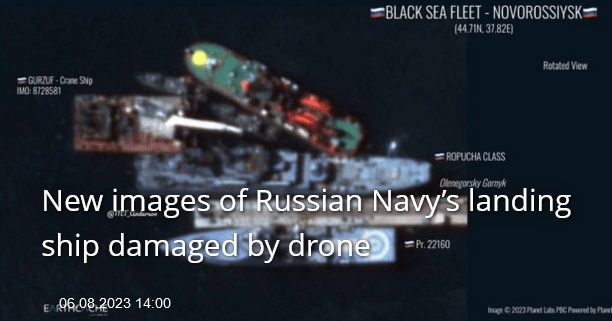
The ‘first round’ in this contest therefore was ‘Moscow’s’. But then NATO ‘upped the ante’ a second time, with two maritime ‘Ukrainian’ drone attacks: One on a small civilian empty crude tanker, and the second on a naval landing ship at anchor in the Novorossiysk port. Neither vessel sank, but both were seriously damaged.
This Novorossiysk attack however, is no ‘small fry’. The seaport, lying beyond the Crimean peninsula, is one of Russia’s largest by volume, and among the biggest in Europe – crucial to the export of Russian grain, oil, and other products to destinations around the world. It has been a hub of international commerce for Russia since the 19th century.
This plainly, therefore, is a serious challenge and a provocation directed at Moscow. Oleg Ostenko from Zelensky’s office followed up by saying that all Russia’s Black Sea ports henceforth were valid military targets for Ukrainian attack.
Several anti-fascist initiatives around the world use their knowledge of the working dynamics of networks and the internet to prevent the far-right from using it to spread their message
On June 21, 2020, Donald Trump had a public event in Tulsa (Oklahoma, USA) on his election campaign calendar, in the midst of the post-pandemic.
Some interesting facts about the choice of place and date: In 1921, Tulsa was the scene of one of the worst episodes of racist violence in the country, when a mob stormed the predominantly black neighborhoods and caused fires and 36 deaths.
Very shortly before Trump’s rally, in May 2020, the US police had choked George Floyd to death on a public street in Minneapolis, in broad daylight. And it also coincided with the annual ephemeris of Juneteenth, Emancipation Day, which commemorates the end of slavery and denounces the systemic oppressions still in force on racial grounds.
At the peak of covid-19, tickets were flying and the same organization boasted on Twitter that they had a million registered attendees. But this million ghosted Trump.
Despite the forecast of a messianic bath of the masses for the standard-bearer of white supremacism, at the hour of truth only 6,200 supporters of the tycoon-aggressor-neocon-tax evader-media personality who then presided over the United States showed up.
Photographs from that day show an empty stadium, with a meager presence of attendees wearing MAGA merchandise (the slogan Make America Great Again, associated with Trump) scattered in isolation among the 19,000 seats.
Where had all the ticket reservations gone? Had covid-19 forced Trumpism to abandon its denialism?
No, the answer lay on the internet, and in particular, in the digital gathering spaces of the transnational K-pop community.
K-poppers are fans of Korean pop music that has become a cult phenomenon since the beginning of the 21st century, spreading to neighboring countries and then gaining ground around the world. Nowadays, there are ‘stans‘ (unconditional followers) of this genre of all ages and backgrounds.
Despite the fact that popular music is often associated with demobilized young people and with political disaffection, the K-pop fan community has made its knowledge in digital environments available to various social movements.
In particular, the savoir faire when it comes to getting tickets to the coveted concerts or events of your favorite bands, and the expertise to turn something into a trend by flooding the networks with linked content to specific hashtags.
K-poppers and anti-fascists signed up in droves to attend the Trump rally. They prevented the provocation of white supremacism from materializing in Tulsa and boycotted its impact on and off the networks.
Trolling the president extended into a strategy of digital anti-fascism.
In fact, it was not the first or the last time that they organized on TikTok, Twitter or Instagram to do actions beyond their common passions.
The 'k-popper' community, fans of Korean pop, massively reserved seats at a Trump rally so that it was empty
In Myanmar, following the coup in 2021, some members of the K-pop community used Telegram and Signal as safer channels to spread information, disprove fake news and organize protests.
They also collected funds to support mobilizations in the streets or to financially support the legal defense of reprisals, just as they had done in Thailand in 2020.
Given the ambiguity of international reactions condemning the violent management of the protests, the government of Dina Boluarte seized power by shedding blood from day one.
A figure of more than 60 dead, hundreds injured with sequelae, and thousands of Peruvians from the provinces terrified (criminalized as terrorists) is an impartial balance of the human rights violations that have occurred in Peru since last December.
On the eve of the national holiday of July 28, the figure of Dina Boluarte was at stake and both the government and the population showed her cards.
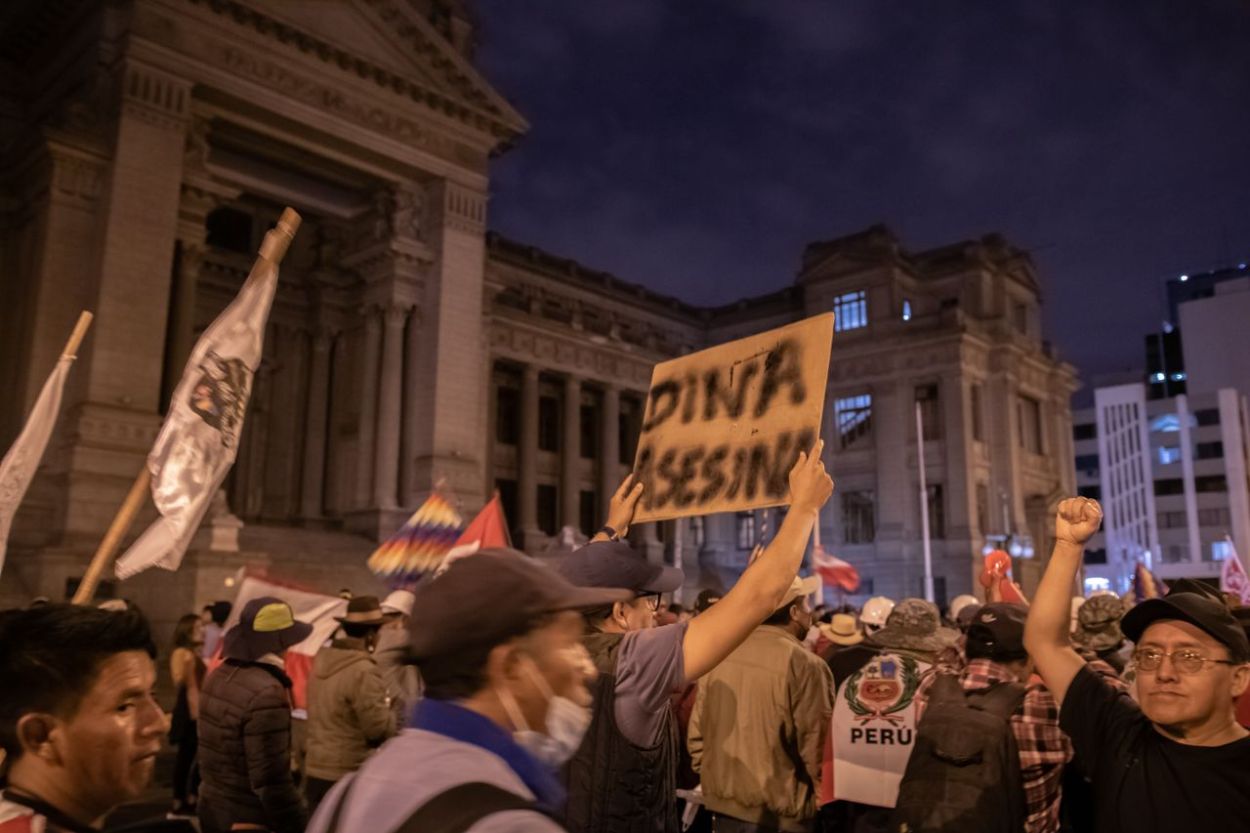
Foto: Manifestante en la Marcha Nacional en Lima, 22 de julio.
Two weeks of marches in Lima
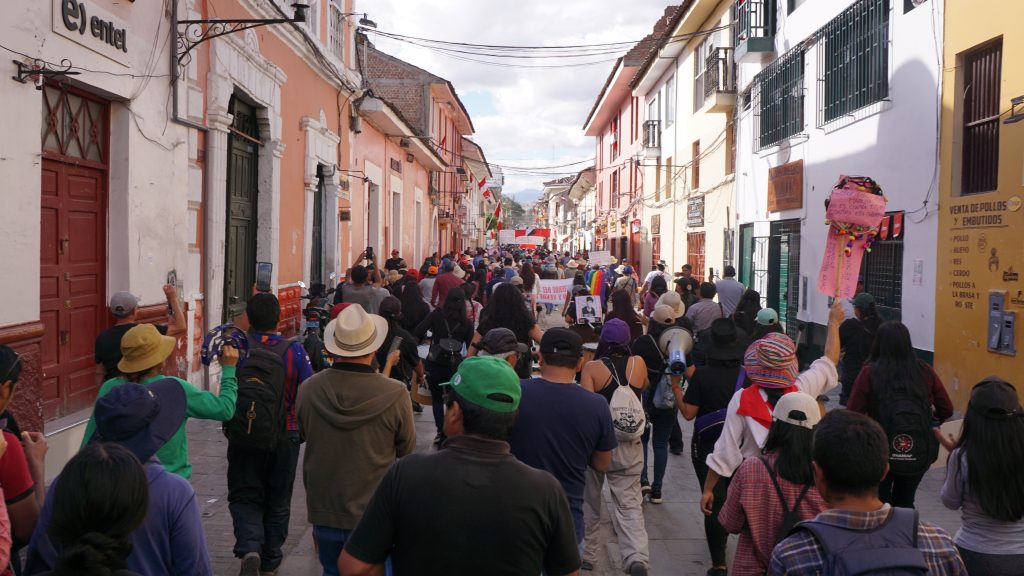
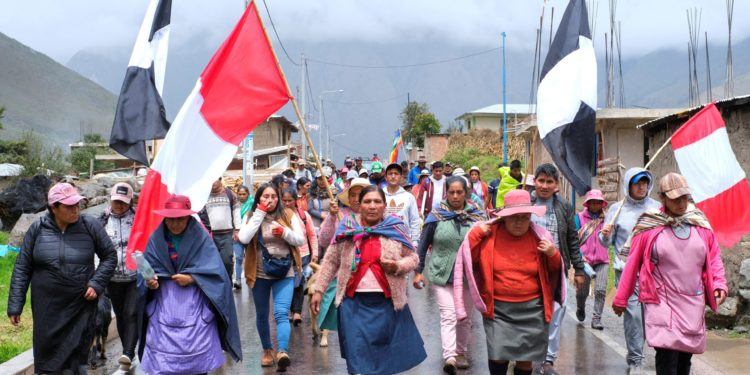
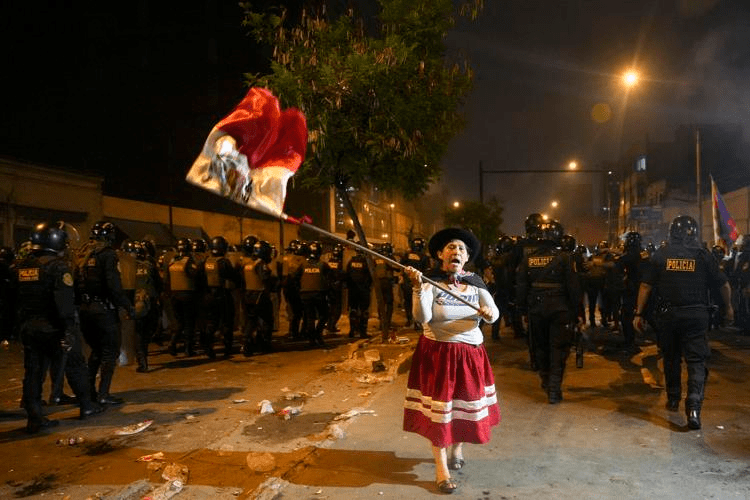
Reinforced by the provincial delegations that arrived in Lima, different marches have toured the capital of Peru to demand the resignation of Dina Boluarte and justice for the fallen.
During the July 19 convocation, known as the Toma de Lima, different demonstrations in which a wide range of popular organizations from all over Peru came together, have once again been repressed with tear gas and pellets.
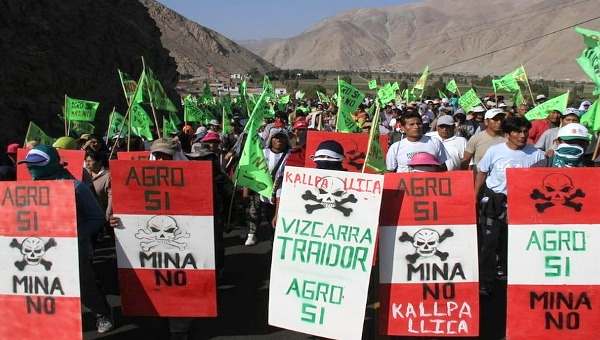
Beyond Lima, this call was actually a national mobilization, since that day there were massive marches in some 20 provincial capitals across the country.
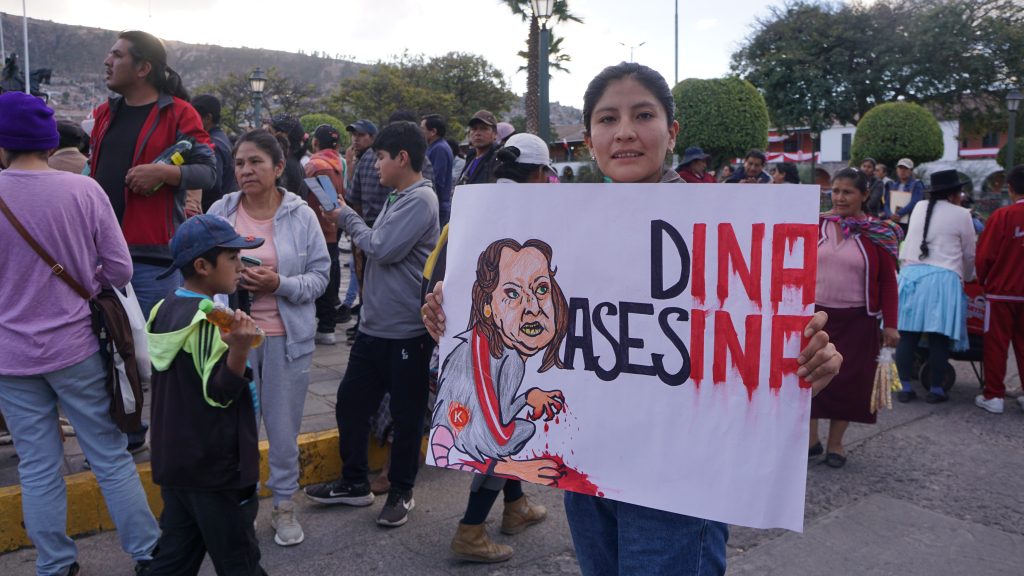
In Ayacucho, we participated in the mobilization day and verified the broad consensus of the organizations in the demands for justice and the demand for Dina’s resignation, for which they have composed several songs that were chanted in the square, at the end of the marches.
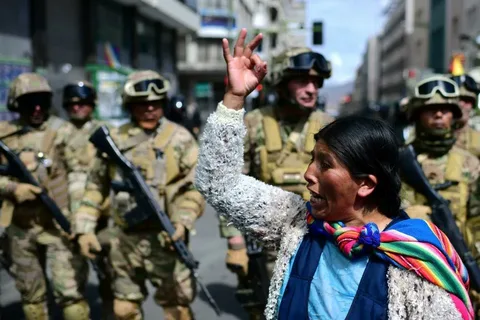
In the National March of Lima, called for July 22, the undersigned was gassed, like the rest of the protesters, when, led by Aymara women with the Andean flag in hand, they managed to reach the feet of the equestrian figure of General San Martin, iconic monument of the liberation of Peru to the Spanish Crown.
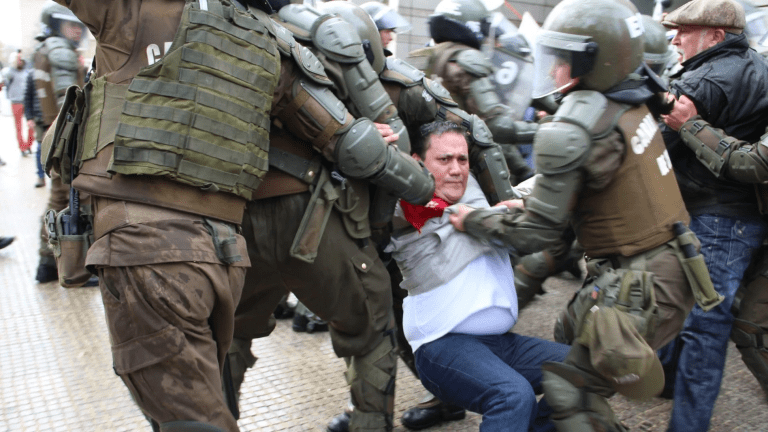
At this moment, under a cloud of corrosive gas, the police evacuated the square, throwing women from Puno to the ground and leaving new images of the treatment that the Peruvian State provides to the indigenous population.
This fact further inflamed social organizations in the southern Andean region of Peru, which announced new blockades and the intensification of the fight.
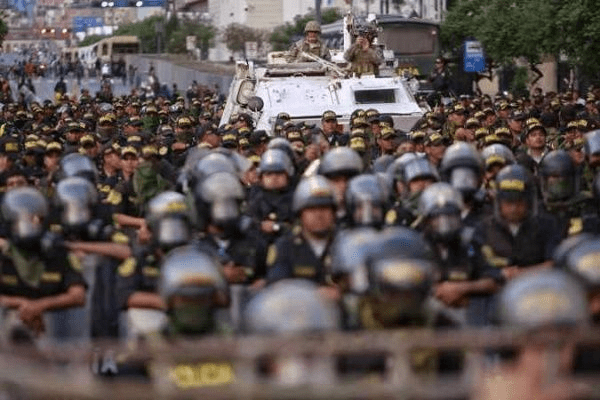
The National Holidays were approaching and the government of Dina Boluarte enlisted police and military forces to parade through the streets and guarantee order. From different parts of the country, social organizations would grease the provincial delegations for new marches in the capital.
On July 28, Dina Boluarte paraded through streets full of soldiers and tried not to listen to the public’s cries of disaffection. That day, scenes of indiscriminate repression were repeated, with the launching of gas bombs and pellets, resulting in dozens of injuries.
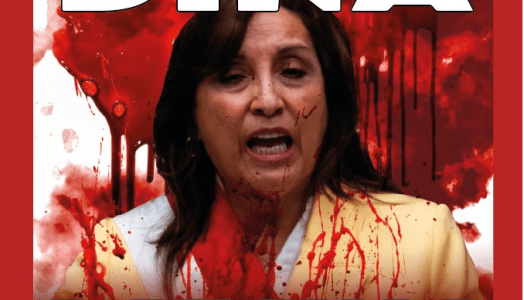
Several social leaders were detained, among them the social leader from Puno, Luis Cruz Laime, who was placed in pretrial detention until he was released on August 2 for lack of incriminating evidence. The common cry of Dina Asesina
Foto: Marchas en Ayacucho el día de la convocatoria de movilización del 19 de julio.
The situation in Peru is far from stabilizing. Elevated to power since the failed attempt to dissolve Congress by Pedro Castillo, on December 7, Dina Boluarte seems to have strong support from law enforcement and the army.
The country’s media groups support him in distributing a discourse of criminalization and racial hatred towards rural populations. “Terruqueo” is the strategy nicknamed in Peru to accuse any form of social protest as terrorist and to isolate, imprison or marginalize any social leader who publicly shows his opposition to the new regime.
Entire departments of the country, such as Ayacucho or Puno, are also labeled as terrorists, having suffered precisely in the past from the crossfire between Sendero Luminoso and State terrorism that dedicated itself to killing the population with impunity in the sinister decade of Alberto Fujimori’s dictatorship. .
Despite the factual support of the armed forces for the government of Dina Boluarte, its acceptance among the population is at a low point and the polls move around 90% disapproval. Figures that coincidentally are close to the percentage of votes that Pedro Castillo received in the most mobilized departments such as Puno, Apurímac and Andahuaylas.
These were precisely the regions hardest hit by the repression with lethal weapons in the first weeks of the interim government. Andahuaylas, Ayacucho, Cusco, Arequipa, Junín, La Libertad, Puno and Juliaca are the locations
s where the 60 murdered take place just weeks after the charge was released.
First trial in Andahuaylas
With the presidential band still to be disbanded, Dina Boluarte took the reins of the country on December 9 with a landing of members of the army’s special forces who assassinated five people in Andahuaylas and two more in all of Apurímac.
To prevent helicopters with reinforcements of weapons and troops from landing, the peasant populations neighboring the Huancabamba airport occupied the airstrip, where they were fired upon, leaving two dead and dozens injured.
In the city, police officers climbed onto the roof of a house neighboring the barracks and shot to death two young men who were in a green area far from the mobilization.
The mobilizations lasted several weeks and during them, the imprisonment of a journalist and a teacher falsely accused of having participated in the kidnapping for a few minutes of a policeman who had infiltrated the protests was also revealed.
Shots and deaths in the streets of Ayacucho
On December 15, lethal scenes were repeated in Huamanga, the capital of Ayacucho. According to interviewed testimonies, army troops withdrew from the airport to later round up protesters and the population that was passing by in the vicinity and leave them in the open space to shoot at point-blank range.
Among them was Edgar Prado, father of Sheila Prado Cisneros, who through rivers of tears told us how his father left the doorway of his house to help an injured person, and there he was hit by a bullet that destroyed his kidney and liver. .
«It hurts me a lot to be told that I am wasting my time and even worse that I am a terrorist. I will not stop until I find justice. I hope to receive international attention for this case, since in Peru there is no justice, seven months after the murder”.
Giovanna Mendoza Huaranca, is president of the Association of Relatives of Victims and Deceased of Ayacucho on December 15. She lost her brother John Henry, who had gone glass-buying for a Christmas charity chocolate party in her neighborhood.
Her mother, sick with cancer, stopped eating and died of sadness after two months. The trace of pain for the deaths has been impregnated in the streets of Huamanga, the capital of Ayacucho.
But the repression does not end with the deaths: the entire leadership of the Ayacucho People’s Defense Front was imprisoned. Five of them remain without freedom, accused of terrorism.
The Juliaca massacre
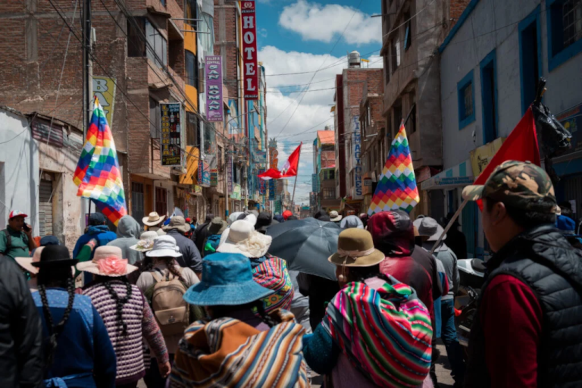
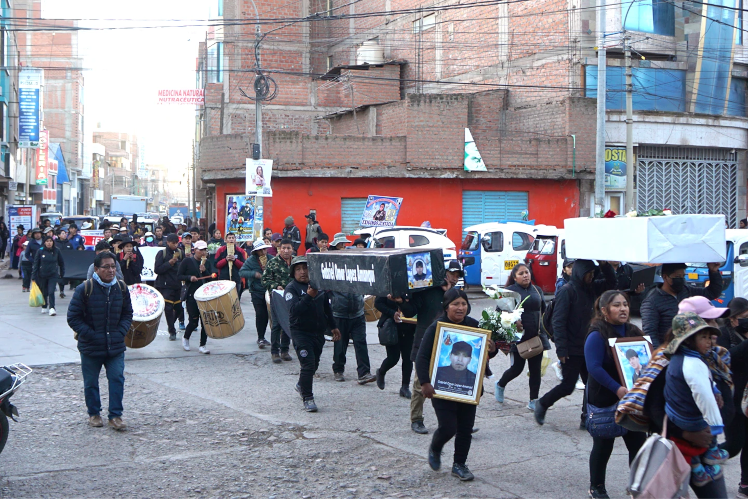
After the Christmas truce, where the social organizations postponed the mobilizations, on January 9 the military attack was repeated. Juliaca is the commercial capital of southern Peru
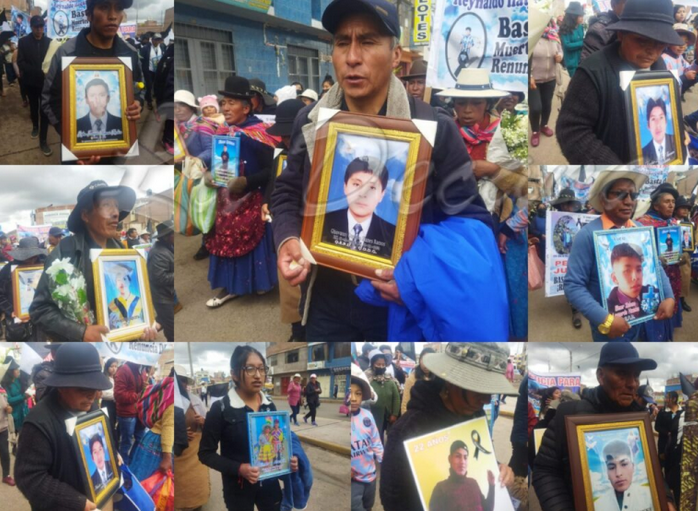
With a majority presence of the Quechua and Aymara population, this city was getting ready for mobilization when, once again from the airport, members of the army began shooting with rifles at the population that was mobilized in the street.
There are 16 dead in that massacre, to which must be added a policeman, whose body, burned in strange circumstances involving other police officers, appeared the following day next to a wrecked police car.
During the day and night, outpatient clinics were improvised in several squares and in a fuel pump, because the hospital could not supply. Interviewing relatives and journalists present that day, they describe their corridors full of wounded lying on a blood-soaked floor.
The same impression was collected by the relatives who entered the morgue to recognize the bled bodies. rule over death
It is difficult to understand the reasons for these and many other deaths that occurred in other rural departments such as Trujillo, Arequipa, Cusco, Puno or Junín, but pointing to the punishment and the imposition of fear to protest does not seem unreasonable.
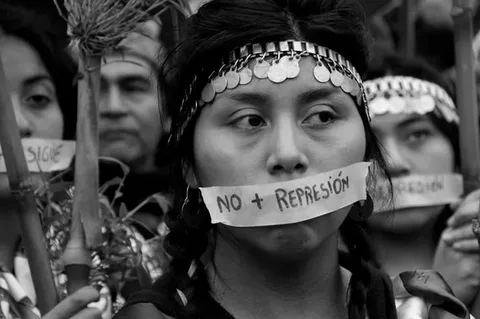
Nor is the lukewarm international reaction to these crimes understood, which have already been verified by different reports from international organizations1. The deep gap between the capital’s white ruling elite and the social reality of the rural periphery is evident.
On the other hand, the complicity and positioning of the country’s large media groups with the “terruqueadora” thesis managed by the government is significant, which judges and condemns based on racist prejudices towards the mobilized rural regions.
Why is Dina still in power? We have an explanation in the unwavering support of the armed forces and the national police of Peru, which are benefiting from budget increases in the current repressive escalation and the cover-up in the judicial cases that have been initiated for the aforementioned deaths.
Yet ruling over the death of the rural population is a giant with feet of clay. And on the soil of the country, in the provinces, there are many families that demand justice and reparation for their political rights.
The mobilization in the capital stops momentarily, but in the peripheries they do not give up. The protest, it is said, will continue.
Marc Gavaldà, Alerta Amazónica Collective (Project Violation of Human Rights in the South Andean region of Peru, Fons Autonòma Solidària – Autonomous University of Barcelona http://alertamazonica.wordpress.com) Note:
1 International Institute of Law and Society (2023), Dossier Peru: Crisis of political representation and indigenous demands for the decolonization of the State. http://www.derechoysociedad.org. International Commission on Human Rights (2023), Situation of Human Rights in Peru in the context of social protests. http://cidh.org. Human Rights Watch (2023), World Report 2023 Human Rights Watch. https://www.hrw.org/es/world-report/2023/country-chapters/peru
The ministry officially “thanked the support of the American government in the subjects of mining and energy and reasserted the determination of the
national government” to expand natural gas production and develop petrochemical production in the south of the country, the epicenter of the protests. Peru’s natural gas exports have almost doubled during the war in Ukraine and have gone primarily to Europe as an alternative to Russian energy.
Ante la ambigüedad de reacciones internacionales de condena frente a una gestión violenta de las protestas, el gobierno de Dina Boluarte agarró el poder derramando sangre desde el primer día.
Una cifra superior a 60 muertos, centenares de heridos con secuelas y miles de peruanos de provincia terruqueados (criminalizados como terroristas) es un imparcial balance de las vulneraciones a derechos humanos acontecidos en Perú desde el pasado mes de diciembre. En vísperas de la fiesta nacional del 28 de julio, la figura de Dina Boluarte estaba en juego y tanto gobierno como población mostró sus cartas.
Dos semanas de marchas en Lima
Reforzadas por las delegaciones provinciales llegadas a Lima, diferentes marchas han recorrido la capital del Perú para exigir la renuncia de Dina Boluarte y justicia para los caídos. Durante la convocatoria del 19 de julio, conocida como Toma de Lima, diferentes manifestaciones en las que confluyeron un amplio abanico de organizaciones populares de todo el Perú, han sido nuevamente reprimidas con gases lacrimógenos y perdigones.
Más allá de Lima, esta convocatoria fue en realidad una movilización nacional, ya que ese día, hubo marchas multitudinarias en unas 20 capitales de provincias de todo el país. En Ayacucho, participamos en la jornada de movilización y constatamos el amplio consenso de las organizaciones en las demandas de justicia y la exigencia de renuncia de Dina, a la cual le han compuesto varias canciones que fueron coreadas en la plaza, al terminar las marchas.
En la Marcha Nacional de Lima, convocada para el 22 de julio, quien suscribe fue gasificado, como el resto de manifestantes, cuando, liderados por mujeres aymaras con la bandera andina en mano, consiguieron llegar a los pies de la figura ecuestre del general San Martin, monumento icónico de la liberación del Perú a La Corona Española.
En este momento, bajo una nube de gas corrosivo, la policía desalojó la plaza tirando al suelo a mujeres puneñas y dejó nuevas imágenes del trato que dispensa el Estado peruano a la población indígena. Este hecho enardeció más aún a las organizaciones sociales de la región sur andina del Perú, que anunciaron nuevos bloqueos y la intensificación de la lucha.
Se acercaban las Fiestas Patrias y el gobierno de Dina Boluarte alistaba cuerpos policiales y militares para desfilar por las calles y garantizar el orden. Desde diferentes puntos del país, organizaciones sociales engrasarían las delegaciones provinciales para nuevas marchas en la capital.
El 28 de julio Dina Boluarte desfiló por calles llenas de militares e intentaba no escuchar los gritos de desafecto del público. Esa jornada se repitieron escenas de represión indiscriminada, con lanzamiento de bombas de gas y perdigones, con el resultado de decenas de heridos. Varios dirigentes sociales fueron detenidos, entre ellos el líder social puneño Luis Cruz Laime, al cual se le impuso prisión preventiva, hasta que el día 2 de agosto fue liberado por falta de pruebas incriminatorias.
El grito común de Dina Asesina
La situación en Perú está lejos de estabilizarse. Encumbrada al poder desde el intento fallido de disolución del Congreso por Pedro Castillo, el pasado 7 de diciembre, Dina Boluarte parece tener un férreo apoyo de las fuerzas del orden y el ejército. Los grupos mediáticos del país, le apoyan en distribuir un discurso de criminalización y odio racial hacia las poblaciones rurales. El “terruqueo” es la estrategia apodada en Perú para acusar de terrorista a cualquier forma de protesta social y aislar, encarcelar o marginar a cualquier líder social que muestre públicamente su oposición al nuevo régimen.
También departamentos enteros del país, como Ayacucho o Puno son etiquedados de terroristas habiendo sufrido precisamente en el pasado el fuego cruzado entre Sendero Luminoso y el terrorismo de Estado que se dedicó a matar impunemente a la población en la siniestra década de la dictadura de Alberto Fujimori..
A pesar del apoyo fáctico de las fuerzas armadas al gobierno de Dina Boluarte, su aceptación entre la población está en horas bajas y las encuestas se mueven alrededor de un 90% de desaprobación. Cifras que casualmente se acercan al porcentaje de votación que recibió Pedro Castillo en los departamentos más movilizados como Puno, Apurímac y Andahuaylas. Precisamente éstas fueron las regiones más castigadas por la represión con armas letales en las primeras semanas del gobierno interino. Andahuaylas, Ayacucho, Cusco, Arequipa, Junín, La Libertad, Puno y Juliaca son las localizaciones donde se producen los 60 asesinados apenas a semanas de estrenar el cargo.
Primer ensayo en Andahuaylas
Todavía con la banda presidencial por desplanchar, Dina Boluarte tomó el 9 de diciembre las riendas del país con un desembarco de efectivos de fuerzas especiales del ejército que asesinaron en Andahuaylas a cinco personas y dos más en todo Apurímac. Para evitar que aterrizasen helicópteros con refuerzos de armamento y efectivos, las poblaciones campesinas vecinas al aeropuerto de Huancabamba ocuparon la pista de aterrizaje, donde fueron disparados con balas, dejando dos muertos y decenas de heridos. En la ciudad, efectivos policiales se subieron a la azotea de una casa vecina al cuartel y dispararon hasta matar a dos jóvenes que estaban en una área verde alejada de la movilización.
Protesters march through Lima [Photo by Candy Sotomayor / CC BY-SA 4.0]
Las movilizaciones se prolongaron varias semanas y en el transcurso de ellas, trascendió también el encarcelamiento de una periodista y una maestra acusadas falsamente de haber participado en el secuestro durante unos minutos de un policía infiltrado en las protestas.
Disparos y muertes en las calles de Ayacucho
El 15 de diciembre, se repitieron escenas letales en Huamanga, capital de Ayacucho. Según testimonios entrevistados, efectivos del ejército se retiraron del aeropuerto para luego acorralar a manifestantes y población que transitaba por las inmediaciones y dejarlas en espacio abierto para disparar a quemarropa. Entre ellos estaba Edgar Prado, padre de Sheila Prado Cisneros, quien entre ríos de lágrimas nos narró como su papá salió del portal de su casa para socorrer un herido, y allí fue impactado por una bala que le destrozó el riñón y el hígado. «Me duele mucho que me digan que estoy perdiendo el tiempo y peor aún que soy terrorista. Yo no pararé hasta encontrar la justicia. Espero recibir atención internacional por este caso, ya que en Perú no hay justicia, a siete meses del asesinato«.
Giovanna Mendoza Huaranca, es presidenta de la Asociación de Familiares de Víctimas y Fallecidos del 15 Diciembre de Ayacucho. Ella perdió su hermano John Henry, que había ido a comprar vasos para realizar una chocolatada caritativa de navidad en su barrio.
Su madre, enferma de cáncer, dejó de comer y murió de tristeza a los dos meses. El rastro de dolor por las muertes ha quedado impregnado en las calles de Huamanga, capital de Ayacucho. Pero la represión no termina con las muertes: Toda la cúpula dirigencial del Frente de Defensa del Pueblo de Ayacucho fue encarcelada. Cinco de ellos siguen sin libertad, acusados de terrorismo.
La masacre de Juliaca
Pasada la tregua navideña, donde las organizaciones sociales aplazaron las movilizaciones, el 9 de enero se repite la embestida militar. Juliaca es capital comercial del sur de Perú. Con mayoritaria presencia de población quechua y aimara, esta ciudad se alistaba para la movilización cuando, de nuevo desde el aeropuerto, efectivos del ejército empezaron a disparar con fusiles a la población que se encontraba mobilizada en la calle. 16 son los muertos de aquella masacre, a la que hay que añadir un policía, cuyo cuerpo quemado en extrañas circunstancias que implican a otros efectivos policiales, apareció el día siguiente al lado de un coche policial siniestrado. Durante el día y la noche, se improvisaron ambulatorios en varias plazas y en un surtidor de combustible, porque el hospital no daba al abasto.
Entrevistando a familiares y periodistas presentes aquel día, nos describen sus pasillos llenos de heridos tirados por un piso encharcado de sangre. La misma impresión fue recogida por los familiares que entraron a la morgue a reconocer los cuerpos desangrados.
Gobernar sobre la muerte
Es difícil comprender las razones de estas y muchas otras muertes ocurridas en otros departamentos rurales como Trujillo, Arequipa, Cusco, Puno o Junín, pero apuntar al escarmiento y la imposición del miedo a protestar no parece descabellado. Tampoco se comprende la tibia reacción internacional ante estos crímenes, los cuales ya han sido verificados por diferentes informes de organismos internacionales1. Queda patente la profunda brecha entre la élite blanca gobernante capitalina y la realidad social de las periferia rural. Por otro lado, es significativa la complicidad y posicionamiento de los grandes grupos mediáticos del país con la tesis «terruqueadora» que maneja el gobierno, la cual juzga y condena en base a prejuicios racistas hacia las regiones rurales movilizadas.
¿Por qué Dina sigue en el poder? Una explicación la tenemos en el inquebrantable apoyo de las fuerzas armadas y la policía nacional del Perú, los cuales se están beneficiando en aumentos presupuestarios en la presente escalada represiva y el encubrimiento en los casos judiciales que se han iniciado por las citadas muertes.
Sin embargo gobernar sobre la muerte de la población rural es un gigante con pies de barro. Y en el suelo del país, en las provincias, son muchas las familias que reclaman justicia y reparación de sus derechos políticos usurpados. La movilización en la capital se detiene momentáneamente, pero en las periferias no se dan por vencidos. La protesta, queda dicho, continuará.
Marc Gavaldà, Colectivo Alerta Amazónica (Proyecto Vulneración de Derechos Humanos en la región Sur Andina de Perú, Fons Autonòma Solidària -Universitat Autònoma de Barcelona http://alertamazonica.wordpress.com)
Nota:
1 Instituto Internacional de Derecho y Sociedad (2023), Dosier Perú: Crisis de representación políticas y demandas indígenas para la descolonización del Estado. http://www.derechoysociedad.org . Comisión Internacional Derechos Humanos (2023), Situación de Derechos Humanos en Perú en contexto de protestas sociales. http://cidh.org. Human Rights Watch (2023), Informe Mundial 2023 Human Rights Watch. https://www.hrw.org/es/world-report/2023/country-chapters/peru
Rebelión ha publicado este artículo con el permiso del autor mediante una licencia de Creative Commons, respetando su libertad para publicarlo en otras fuentes.
It seems the first cases had nothing to do with the market in Wuhan. Also that the coverup of the USS Roosevelt outbreak. concealed the fact that the HORRIFIC COVID PANDEMIC had an almost ZERO death rate if not ‘treated’.
Or this should have been the obvious conclusion from a strangely-ignored antibody study The USS Theodore Roosevelt left San Diego on January 17, 2020. Some sailors had shore leave at a port of call in Vietnam March 5-9. There seems to have been little interest in the question of how crew members were first infected or when […]
By Monica Dutcher The families of four people who died from COVID-19 and one person injured by the virus are suing EcoHealth Alliance and the international nonprofit’s president, Peter Daszak, Ph.D., and a cohort of government and elected officials, hospitals, military personnel and others. According to a complaint filed Aug. 2 in the Supreme Court […]
Author: Mutual Aid Disaster ReliefTitle: A Love Letter To The FutureSubtitle: On mutual aid & building power while the lights are outSource: Retrieved on 8.7.2023 from The storms are coming. The water is rising in some places and running empty in others. The refugee situation now is just a glimpse at what it very…
Bruxelas (Bélgica), 14 de agosto de 2023 (SPS)- Em comunicado emitido a partir de Bruxelas, Omar Mansour, representante da Frente Polisario para a … Delegado da Frente Polisario na UE alerta para manobras hispano-marroquinas para contornar as decisões judiciais e explorar as águas saharauis


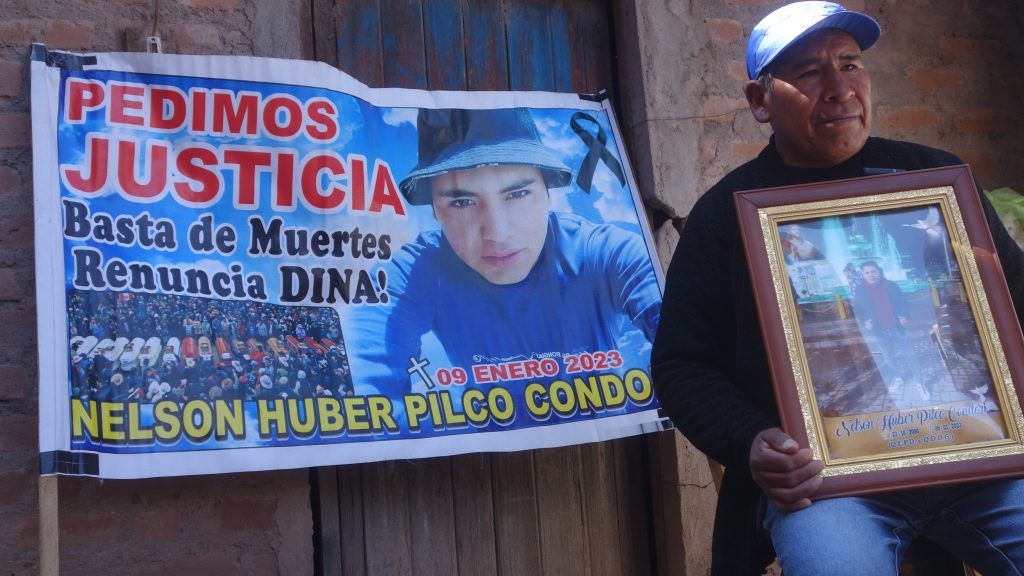 [Photo: Father of one of the victims killed by police bullets in Juliaca, on January 9]