This is from Doug and Stacey. We’ve posted their videos just twice so far on the topic of living off grid.
Here we have a topic rearing its head again … one that is of concern to all of us world wide as the global plans tighten up further, global food supplies manipulated and controlled (see the Ice Age Farmer for more info on that) and the promise from the globalists we’ll ‘own nothing and be happy’. We had hints of future control in NZ back with the Food Bill, threatening we could not share or our produce over the back fence. Nice try! Watch Kiwis!. So here it’s pointed out that the registering of your community garden with government is a red flag and about more than meets the eye … watch and listen to the video.
Politically, Australia, and all other exploiter nations will do anything necessary to keep the world divided between rich and poor nations. War, invasion, coups, IMF debt traps, trade wars, embargoes, and sanctions: these are all tools used by the imperialist countries.
The following was presented on the panel, The Need for Anti-Imperialism in Australia, which took place on day one of Red Ant’s Peace and Liberation Conference in August 2022.
Australian foreign policy has always been determined by its membership within a small club of imperialist powers that dominate the world economy, as well as by its ‘junior’ status within this club.
While putting the interests of Australian capital at the forefront, it has had to do so from a position of relative weakness vis-a-vis the largest powers, especially the United States.
Although Australia is indeed a ‘junior partner’ of the larger imperialist powers, it remains a powerful and constant source of imperialist oppression over non-imperialist nations in Asia and the Pacific.
The Australian ruling class supported the New Order dictatorship in Indonesia (1965-1998) and the invasion and brutal occupation of Timor Leste; has been involved in many acts of imperialist aggression such as the invasion of Vietnam as well as interventions in the Middle East (including two invasions of Iraq) and Afghanistan; and plays an ongoing policing role and interference in the affairs of Pacific Ocean neighbours including Australia’s former colony Papua New Guinea.
These are all measures aimed at securing the stability of the imperialist system and the ability of the Australian ruling class to systematically extract super-profits from the mass-exploitation and misery of workers inside Global South countries.
China has ZERO foreign bases in the Pacific but that doesn’t stop a multi billion military campaign against ‘Chinese Expansionism.
‘Great Power Conflict’
A complicated world situation has now developed where both socialist and left-wing governments – mostly in Latin America – as well as capitalist governments outside the imperialist core – such as China and Russia – are facing increased hostility from the rich countries.
“After a decade in which we fought two wars that cost us dearly, in blood and treasure, the United States is turning our attention to the vast potential of the Asia Pacific region.”
Under Trump, Obama’s “Pivot to Asia” gained greater weight as the ‘war on terror’ was replaced with ‘great power conflict’ as official US policy.
The long-term interests of the Australian working class don’t lie in a few crumbs that might fall from the table of the imperialist bourgeois! …They lie in overthrowing this rotten imperialist system that keeps billions of working and oppressed people in chains!
Brian Morris’s work as an academic over many decades has taken in everything from how cultures name things to how they interact with nature, religion and the concept of self. Since the 1960s he has also been active as an anarchist and has taken a particular interest in social ecology.
Brian has written for many publications including Freedom and has published several books on figures such as Peter Kropotkin, Mikhail Bakunin and Murray Bookchin, as well as taking on the topic of anarchism and ecology in a series of books such as Anthropology, Ecology, and Anarchism (PM Press) in 2014 and Visions of Freedom: Critical Writings on Ecology and Anarchism (Black Rose) in 2018.
Tell us about your early life and influences
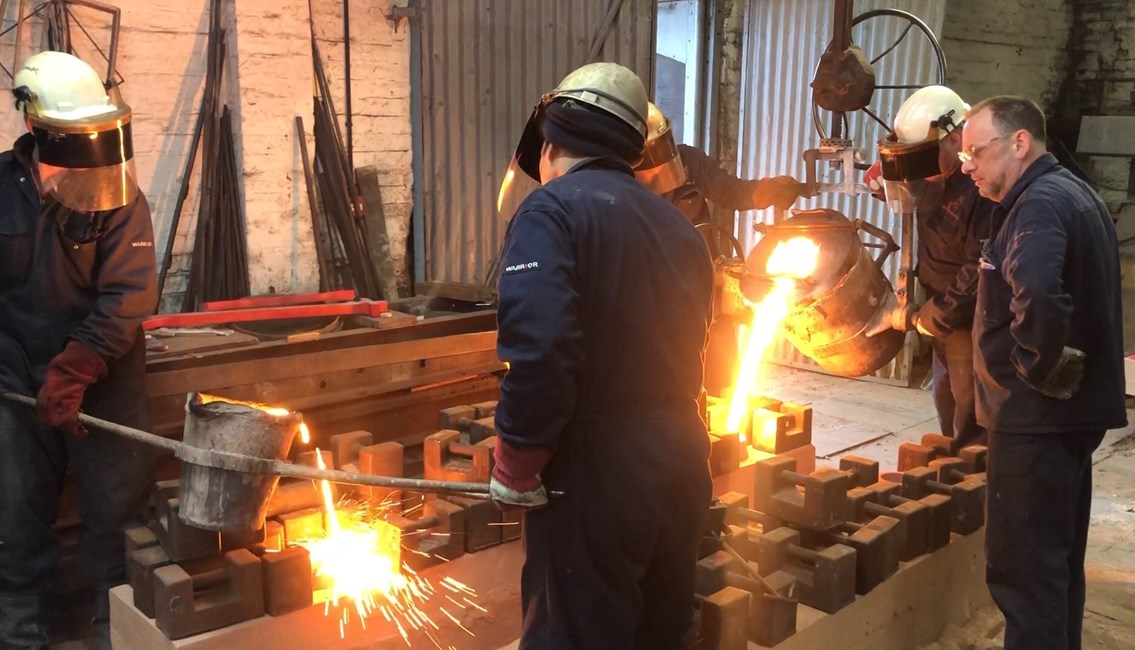
I am at heart a working-class lad from the Black Country, with a fascination for the natural world. I have had a somewhat odd academic background. I failed my eleven-plus and left school at the age of 15 to work in an iron foundry in West Bromwich, like all my male forebears.
While working in the foundry I severely damaged my right hand in a machine. For that I was awarded £120 working men’s compensation – a lot of money in those days.
This enabled me to leave home aged 20, after undertaking my two-year National Service as a seaman-navigator in the RASC. In October 1957 I sailed from Amsterdam to Cape Town, and after hitch-hiking around South-Central Africa for about five months I eventually obtained employment as a tea planter in Malawi (then Nyasaland). I worked as a tea planter for more than seven years, eventually sitting and passing five GCE “O” levels at the age of 29
I then returned to the UK. Failing to get into university to study biology (ecology) – my cherished ambition – I trained as a teacher at Brighton College of Education in the late 1960s. It was there that I first engaged in socialist politics.
The main intellectual influences on my life were not philosophers, nor even academics, but popular naturalists such as Charles Darwin, Ernest Thompson Seton Gordon and W. H. Hudson. As a teenager I avidly read their nature writings.
Apart from Darwin, all have been forgotten. My intellectual outlook on life has therefore always been one that is realist, historical and ecological – a form of evolutionary naturalism.
How did you get into anarchist politics?
Although I have always been something of a rebel – even as a boy I flouted the law of trespass – I became an anarchist largely due to two events in my life.
The first was that my wife, Jacqui, sensing, perhaps, my rebellious spirit, gave me as a birthday present in October 1965 George Woodcock’s Anarchism. Although much derided these days – quite unfairly – this book opened my eyes to what to me then was a completely new political vision.
The second event was a meeting on comprehensive education that I attended in February 1966, at Conway Hall in London. It was to hear a lecture on “Education or Indoctrination” by Madeline Simms. After the lecture a lively debate ensued during which a rather large Bakunin-like working class bloke spoke out forcibly about the rights of children. He appeared to be quite a misfit. I overheard one person remark, rather disparagingly: “Oh he’s only an anarchist.”
Madrid (ESC). – The Executive that governs in Spain surprises us more and more. This summer, Spain led the purchase of Russian gas and became the country that entered the most capital in Moscow in the midst of the war in Ukraine.
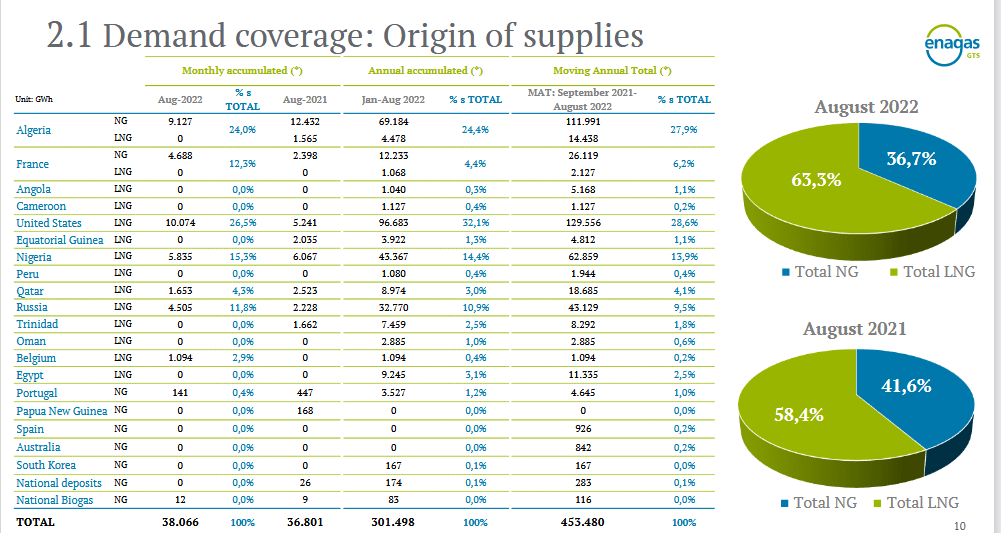
According to a report compiled by the Economist, since the war broke out in Ukraine, purchases of Russian gas from Spain have doubled, from 2,174 gigawatt hours (GWh) to 5,317 GWh, according to the latest Enagas bulletin for the month of July .
The spike in gas purchases by Spain from Russia occurs in the months of June and July. According to sources from the Sánchez government, this increase responds to the adjustment of the annual volumes of the amounts agreed in the contracts.
The government first blamed the increase in purchases of Russian gas for the diversion to Spain of two LNG ships after the suspension, for maintenance, of four regasification plants in France. But the gas purchases continue for many months, according to official Enagas reports.. only surpassed by huge purchases of US fracking gas. see chart below..
Diarmuid Breatnach (Reading time main text: 6 mins.) Propaganda is employed in wars and finds its most widescale application through the mass media. The belligerents want their own populations to support their war effort and to have other states support them. IRISH REPORTING ON THE SPANISH CIVIL WAR The hierarchy of the Catholic Church infamously […]


 OFF GRID with DOUG & STACY
 Sep 12, 2022 9:52 AM
 Top Articles







 The Free